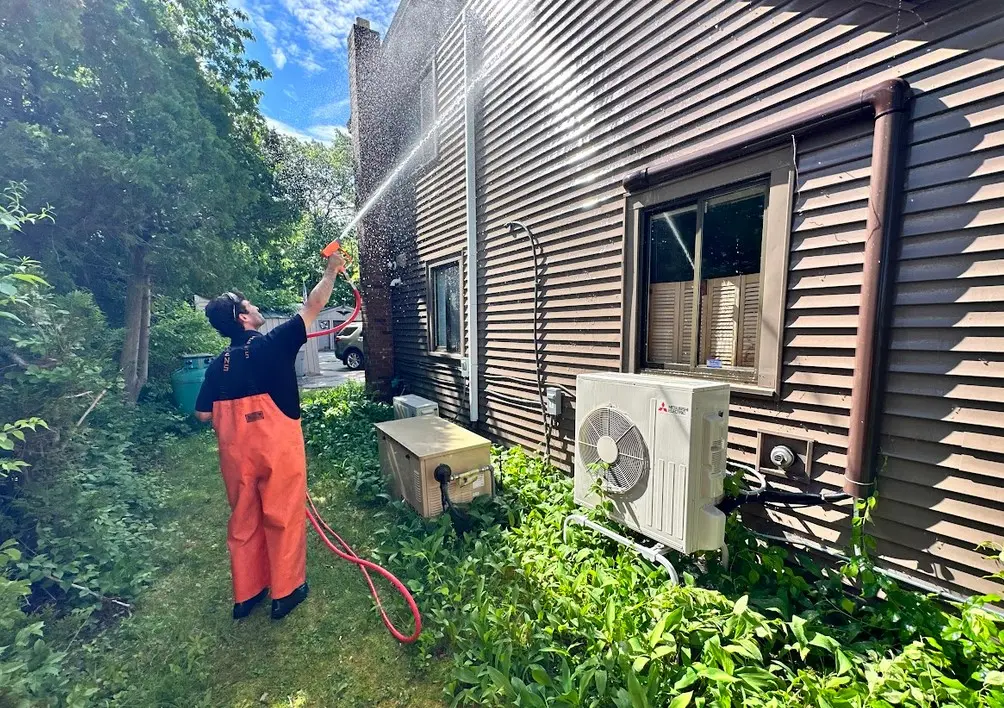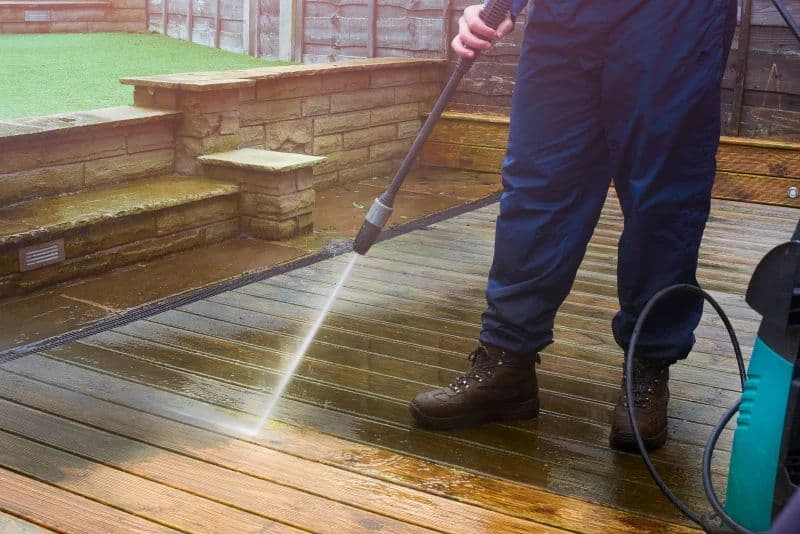
Composite decks, like those from Trex and Azek/TimberTech, are popular because they resist rot and require less upkeep than wood. However, improper cleaning can void warranties, which often cover 25 years of protection. Key points to remember:
- Pressure Washing Limits: Trex allows up to 3,100 PSI for newer models, while TimberTech caps it at 1,500 PSI. Early-generation Trex decks prohibit pressure washing entirely.
- Cleaning Methods: Use soft brushes, warm soapy water, and manufacturer-approved cleaners. Avoid bleach, acid-based products, and sanding.
- Timing: Clean twice a year (spring and fall) to prevent mold and debris buildup, especially in humid areas like New England.
- Hiring a Contractor: Ensure they follow manufacturer guidelines to avoid voiding your warranty. Ask about PSI, nozzle type, and cleaning techniques.
Proper care protects your investment and ensures your deck stays in great shape.
How to Clean Trex Composite Decking | Trex - YouTube

Composite Deck Warranties and What They Require for Cleaning
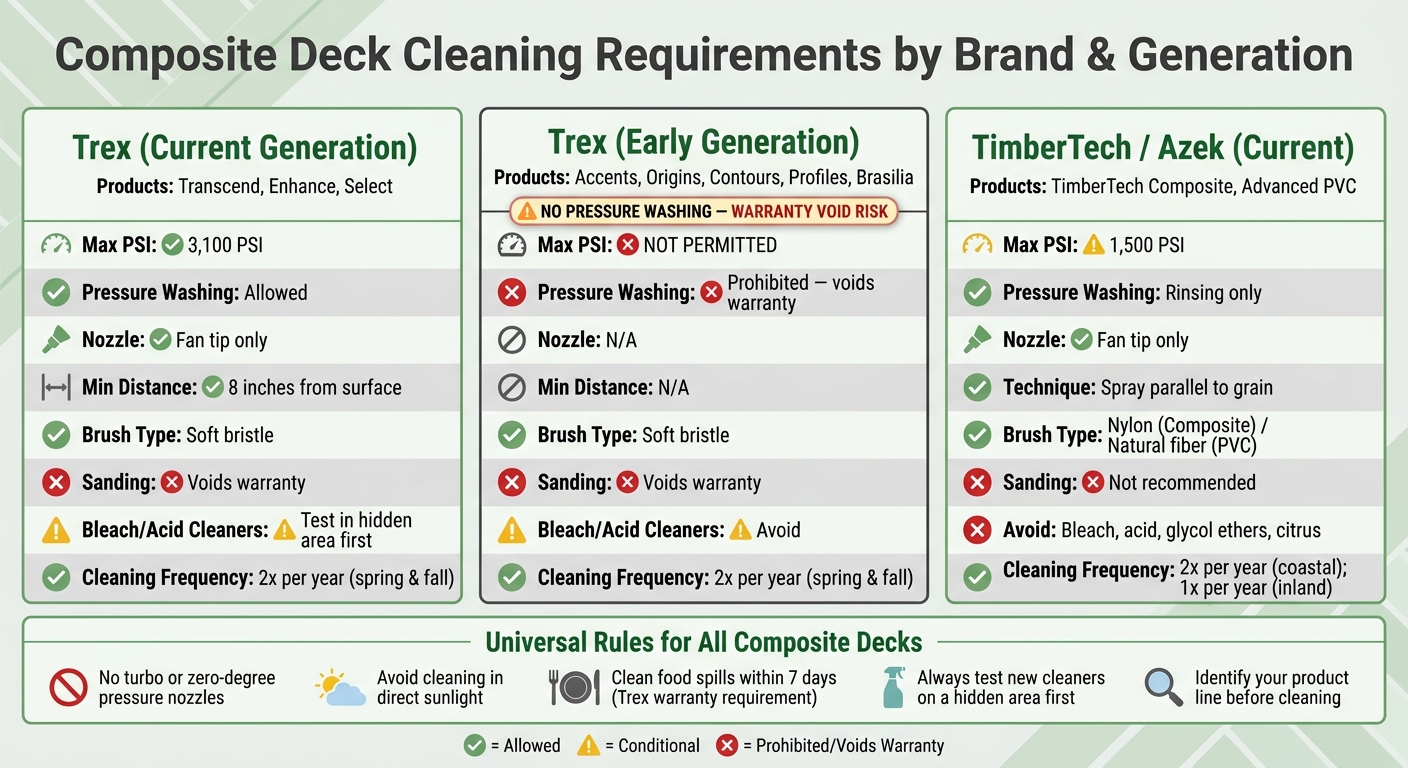
Composite Deck Cleaning Requirements by Brand & Generation
Composite deck warranties often provide extensive coverage - for instance, Trex offers a 25-year limited residential warranty for its high-performance lines. But this protection comes with strings attached. Manufacturers outline strict maintenance guidelines, and improper cleaning can void your warranty, even if accidental. Below, we break down the cleaning requirements for Trex and Azek/TimberTech products.
What Happens When You Use the Wrong Cleaning Method
Using the wrong cleaning techniques can cause irreversible damage to your composite deck and void the warranty. Trex, for example, warns that exceeding the recommended PSI or sanding the deck surface will void warranty protection for any resulting damage. Similarly, other missteps - such as using rubber-backed mats, harsh cleaners, or metal-edged tools - can harm the deck and fall outside warranty coverage.
Trex also includes specific rules for stain coverage. Food spills must be cleaned within seven days to qualify for warranty protection. Ignoring this timeline could lead to permanent stains that aren’t covered, no matter how well you maintain the deck otherwise.
The Two Brands Covered: Trex and Azek/TimberTech
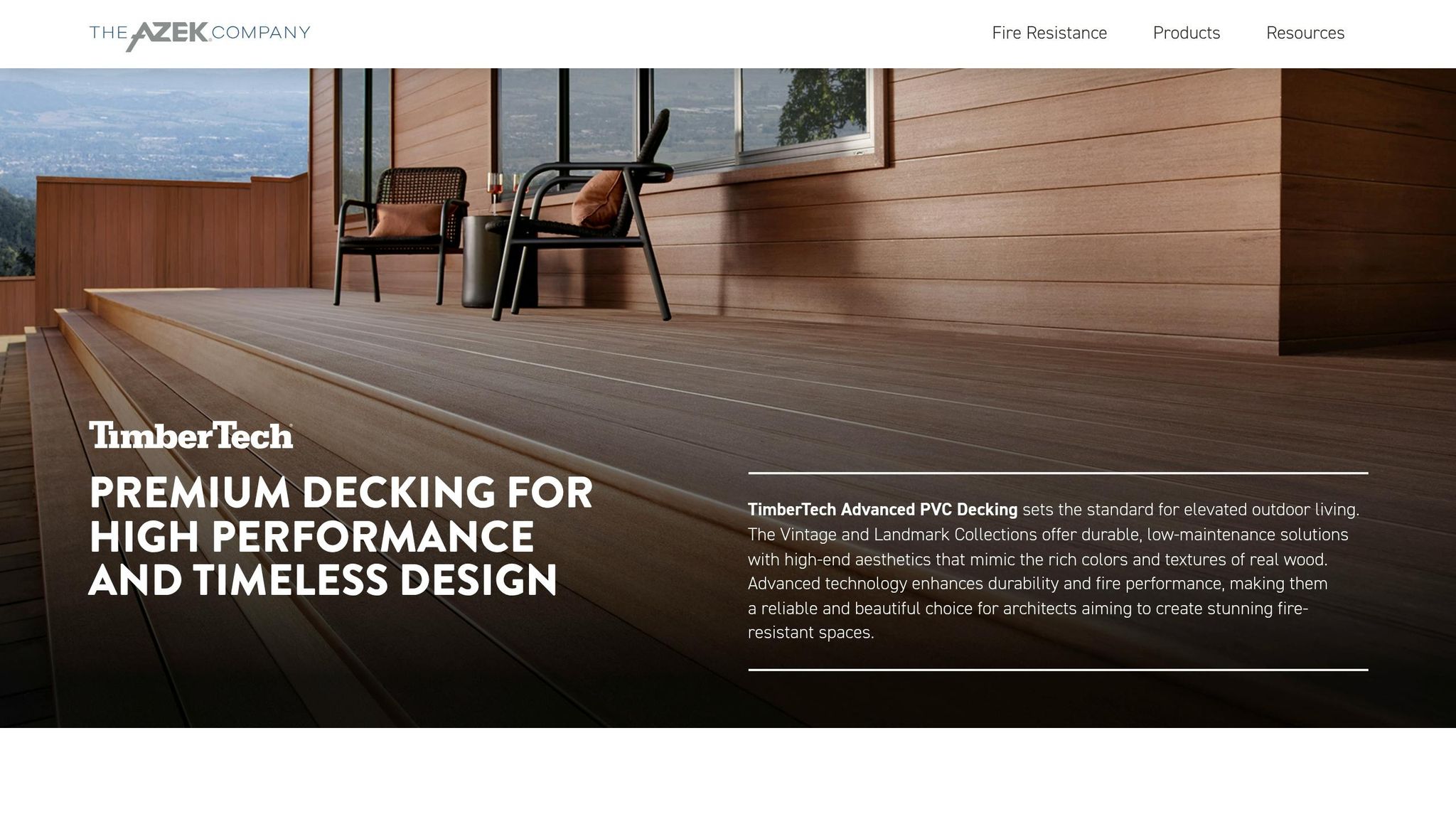
This section focuses on Trex and Azek/TimberTech, two brands that dominate newer constructions in New England. Both have detailed cleaning instructions, but the requirements vary not only between the brands but also across product generations. For instance, Trex's high-performance lines (like Transcend, Enhance, and Select) have different cleaning rules compared to its older lines, such as Accents or Origins. Similarly, TimberTech’s composite and PVC collections each come with unique cleaning recommendations.
| Feature | Trex (High-Performance) | Trex (Early-Generation) | TimberTech (Current) |
|---|---|---|---|
| Max PSI | 3,100 psi | Prohibited - voids warranty | 1,500 psi |
| Pressure Washing Allowed | Yes, with fan tip | No | Rinsing only |
| Recommended Brush | Soft bristle | Soft bristle | Nylon (Composite) / Natural fiber (PVC) |
| Sanding | Voids warranty | Voids warranty | Not recommended |
This table highlights the importance of tailoring your cleaning approach to your deck’s brand, product line, and age. The next section explains how to identify your deck type before starting any cleaning.
What to Do Before You Clean a Composite Deck
Skipping the prep work can lead to mistakes that might even void your warranty. Knowing your deck's specific brand, product line, and cleaning requirements is crucial before you start.
How to Identify Your Deck's Brand, Product Line, and Generation
Start by confirming the exact type of deck you have. For Trex decks, building codes require product information to be printed on the side of the boards. Look at the board ends and gaps for the product name - it will tell you everything you need to know.
Once you have the product name, match it to the correct generation:
- Current Trex (pressure washing allowed): Transcend, Enhance, Select
- Early-generation Trex (pressure washing not allowed): Accents, Origins, Contours, Profiles, Brasilia
- Current TimberTech (pressure washing for rinsing only): TimberTech Composite, Advanced PVC
- TimberTech specialty/discontinued lines: ReliaBoard, TwinFinish, Earthwood, Floorizon, DockSider
High-performance boards are capped, while older models are not. Double-check the product name printed on the boards to confirm this. Once identified, review the cleaning guidelines for your specific deck generation.
PSI Limits, Nozzle Types, and Cleaning Distances by Manufacturer
After identifying your deck, stick to the cleaning specifications provided by the manufacturer. Using incorrect settings can void your warranty.
| Manufacturer | Product Line | Max PSI | Nozzle | Distance / Technique |
|---|---|---|---|---|
| Trex | Current (Transcend, Enhance, Select) | 3,100 psi | Fan tip | Keep at least 8 inches away from the surface |
| Trex | Early-generation (Accents, Origins, etc.) | Not permitted | N/A | Pressure washing voids warranty |
| TimberTech | Current (Composite & Advanced PVC) | 1,500 psi | Fan tip | Rinse only - avoid blasting dirt |
| TimberTech | Specialty/discontinued lines | 1,500 psi | Fan tip | Spray parallel to the grain only |
For TimberTech decks, always spray with the grain to avoid scarring, which could void your warranty. Trex requires maintaining an 8-inch minimum distance - this is not a suggestion but a strict guideline.
"Trex does not recommend the use of a pressure washer on early-generation Trex decking. The use of a pressure washer on your deck surface could damage the decking surface and will void the warranty." - Trex Company, Inc.
Additionally, avoid cleaning TimberTech decks in direct sunlight. If the cleaner dries before rinsing, it can leave a white film that's hard to remove. To prevent this, clean on an overcast day or work in shaded areas whenever possible.
sbb-itb-238bf3c
Manufacturer-Approved Cleaning Steps for Composite Decks
With your deck's brand and generation identified, it's time to follow the proper cleaning steps to keep it in top shape while maintaining your warranty.
Trex: Cleaning Guidelines for Current and Early-Generation Products
For current-generation Trex decks (Transcend, Enhance, and Select), start by rinsing with a hose to clear away loose debris. Next, use warm, soapy water and a soft-bristle brush to scrub each board, paying extra attention to the embossed grooves where dirt tends to collect. If you opt for a pressure washer, make sure it stays at or below 3,100 PSI and use a fan tip nozzle. After scrubbing, rinse thoroughly to ensure no soap residue is left behind.
Keep in mind that bleach- and acid-based cleaners can alter the color of your boards. Always test these cleaners on a hidden area first to avoid surprises.
For early-generation Trex decks (Accents, Origins, Contours, Profiles, Brasilia), avoid pressure washing altogether. Instead, use a composite deck cleaner with a soft brush, and rinse with a garden hose. Trex advises cleaning these older boards twice a year - once in the spring and again in the fall - to prevent the buildup of pollen and debris. Following these steps ensures your deck stays in great condition while keeping your warranty intact.
Azek/TimberTech: Cleaning Standards and Recommendations
For TimberTech decks, pressure washing is allowed for rinsing only, with a maximum pressure of 1,500 PSI and a fan tip nozzle. When it comes to cleaning, TimberTech recommends using their proprietary TimberTech DeckCleaner™, which is bleach-free and biodegradable. Dilute the cleaner at a ratio of 1 part cleaner to 3 parts water - one gallon of this solution can cover up to 1,000 square feet. Use a medium to stiff nylon brush for composite boards and a stiff natural fiber brush for Advanced PVC (Azek) products.
Always clean along the grain of the boards, work in small sections, and avoid cleaning in direct sunlight. This helps prevent rapid drying and the appearance of white residue. Following these precautions will help protect your deck and ensure your warranty remains valid.
Soft Washing for Mold and Algae Removal
For persistent mold and algae issues, soft washing is an excellent option. This method uses a low-pressure application of a diluted cleaning solution to break down the biofilm of dirt, pollen, and organic material that mold and algae thrive on. Unlike pressure washing, soft washing relies on the cleaning solution to do the heavy lifting.
Soft washing works well for both Trex and TimberTech decks, especially since their embossed grooves can trap debris that high-pressure cleaning might miss. If you're curious about how soft washing compares to pressure washing, check out our post on the differences between the two methods. The key takeaway? The chemistry does the work, not the pressure - and that aligns perfectly with your deck's warranty requirements.
How New England's Climate Affects Composite Deck Maintenance
New England's weather, with its wet springs and humid summers, speeds up the buildup of organic material on composite decks. The mix of seasonal moisture, salty coastal air, and high humidity creates a perfect environment for mold to thrive. This buildup tends to occur faster in New England compared to many other regions, making it even more crucial to stick to manufacturer-recommended cleaning routines.
Why Mold and Mildew Build Up Faster in New England
Mold thrives on pollen, dirt, and other organic debris that settle into the grooves of composite decking. Trex explains it like this:
"If debris such as pollen and dirt remains on your composite decking surface for an extended period of time, mold can feed on the biofilm."
During April and May, Massachusetts and Connecticut experience intense pollen seasons. That pollen settles into the textured surfaces of composite boards, and by the time the humid months of July and August roll around, conditions are ripe for mold growth. It’s not just the mold itself that’s the issue - the biofilm that forms when debris is left uncleaned is what allows mold to flourish. Sticking to proper cleaning protocols can prevent this and ensure your warranty remains intact.
To reduce mildew risks, make sure there’s enough space between boards for proper drainage. Decks in coastal areas, where moisture and organic buildup are constant challenges, should be cleaned twice a year.
The Best Times of Year to Clean Your Deck in New England
Timing is everything when it comes to keeping composite decks clean in New England. The two best periods for cleaning are May through June and September.
A late May or early June cleaning clears away winter debris and spring pollen before summer’s humidity encourages mold growth. The September cleaning tackles the organic debris left behind by summer, ensuring it doesn’t sit under snow and ice all winter.
| Cleaning Window | Objective | Debris Removed |
|---|---|---|
| May–June | Pre-season reset | Winter debris, spring pollen, early mold |
| September | Post-summer maintenance | Summer organic buildup, algae, surface film |
Trex suggests cleaning composite decks twice a year - in spring and fall - especially for older products. For newer capped composites, like Trex Transcend or TimberTech Advanced PVC, annual cleaning may suffice for inland decks with good drainage. However, coastal decks should always stick to the twice-a-year schedule, regardless of the product type.
A quick tip: avoid cleaning in direct sunlight. The heat can cause water to dry too quickly, leaving behind a white residue that’s tough to remove. Early mornings on mild days are ideal for cleaning. By aligning your cleaning routine with these seasonal windows and following your deck’s maintenance guidelines, you’ll protect both its appearance and warranty.
How to Hire a Contractor Who Won't Void Your Warranty
Even with the most rigorous cleaning schedule, hiring a contractor who follows manufacturer guidelines is crucial. Using the wrong PSI, nozzle, or cleaning solution can void your deck's warranty, so it's essential to choose wisely.
Questions to Ask Before You Book a Deck Cleaning Service
Once you understand the proper cleaning protocols for your deck, the next step is ensuring your contractor is up to speed. Before booking, ask these key questions:
- "What PSI will you use?" Make sure the pressure stays within the manufacturer’s limits for your specific deck product.
- "What type of nozzle do you use?" Manufacturers recommend a fan-tip nozzle. Turbo or zero-degree tips can permanently damage composite boards.
- "How do you adjust your process for older decks?" A qualified contractor should know the difference between early-generation Trex (where pressure washing voids the warranty) and modern capped composite lines.
- "Does your solution contain bleach, acid, glycol ethers, or citrus?" Trex advises against bleach and acid, which can discolor the surface, while TimberTech prohibits certain chemicals entirely.
- "Do you spray with the grain on TimberTech boards?" Spraying against the grain can harm TimberTech materials, so this is a critical detail.
If a contractor struggles to answer these questions, it’s a sign to keep looking. Use this checklist to ensure you're hiring someone who knows how to clean your deck without risking its warranty.
What a Professional Composite Deck Cleaning Service Covers
A proper composite deck cleaning service does more than just spray water. Here’s what the process should include:
- Pre-rinsing to loosen dirt and debris.
- Scrubbing each board with the correct brush type: soft bristles for Trex and medium-to-stiff nylon for TimberTech.
- Applying a compatible cleaning solution approved by the manufacturer.
- Thorough rinsing to ensure no dirty water dries on the surface, which could leave an unattractive film.
Unlike wood decks, composite decks don’t need sealing. If a contractor suggests sealing or sanding, it’s best to decline. For more information on post-cleaning care, check out this guide to sealing after cleaning.
Finding a Qualified Deck Cleaning Contractor Near You
When searching for deck cleaning near me, focus on contractors familiar with your deck’s brand and product line. Ask for references from similar jobs and verify that they carry liability insurance for added peace of mind.
In areas like Needham, where Trex and TimberTech decks are increasingly popular, it’s important to find a local professional deck cleaning service that follows manufacturer-approved methods. ViewCrew Services, for example, serves MetroWest MA and Fairfield County CT, adhering strictly to the guidelines for Trex and TimberTech/Azek decks. Choosing a contractor who respects these standards is key to maintaining your deck’s warranty and ensuring it performs well for years to come.
FAQs
How do I know which Trex or TimberTech deck I have?
To determine the right cleaning method for your deck, start by checking your deck boards or installation paperwork for the product line name. If you have a Trex deck, the high-performance product lines include Transcend, Enhance, and Select. However, older Trex products like Accents or Brasilia are early-generation composites and should not be pressure washed.
For TimberTech decks, refer to your installation documents or the manufacturer's guidelines to identify your product line. If you’re uncertain about the exact line, it’s best to confirm this information before selecting a cleaning method.
Will pressure washing void my composite deck warranty?
Pressure washing your composite deck might void its warranty if not done properly. For current Trex products like Transcend, Enhance, and Select, pressure washing is permitted, but only under specific conditions: use a maximum of 3,100 PSI, a fan tip, and keep the nozzle at least 8 inches away from the surface. However, early-generation Trex products and TimberTech decks come with stricter cleaning guidelines. Always check your deck's product generation and the manufacturer's recommendations before using a pressure washer.
What should I ask a contractor to protect my warranty?
When hiring a contractor to clean your composite deck, it's crucial to ensure they follow proper guidelines to protect your warranty. Here are some key questions to ask:
- Can they identify your deck's generation? Older composite decking may have stricter rules, such as prohibiting pressure washing altogether.
- Do they know the correct pressure washing technique? If pressure washing is allowed, they should use a fan tip nozzle and keep it at least 8 inches away from the surface.
- Are they aware of the pressure limits for your deck's brand? For Trex decks, the pressure must not exceed 3,100 PSI. For Azek/TimberTech decks, the pressure should stay below 1,500 PSI.
By ensuring your contractor understands these specifics, you can help maintain your deck's integrity and warranty.