You should clean your roof every 1–3 years if you live in New England. Factors like climate, roof material, and shade impact this schedule. Homes in coastal or heavily shaded areas need cleaning more often (1–2 years), while sunny, open areas may stretch to 3–5 years. Regular cleaning prevents algae, moss, and lichen from damaging your roof and extends its lifespan.
Key points:
- New England climate (wet springs, humid summers, freeze-thaw winters) accelerates moss and algae growth.
- Soft washing is the safest method, using low-pressure and biodegradable solutions to protect shingles.
- Inspect your roof annually (late summer is ideal) for streaks, moss, or debris.
-
Cleaning intervals vary by roof type:
- Asphalt shingles: 2–4 years (1–2 if shaded/coastal).
- Cedar/wood: 2–3 years (1–2 if shaded).
- Metal: 3–5 years (1–2 if coastal).
- Tile/slate: 3–5 years (2–3 if shaded).
Regular maintenance can save you thousands by avoiding premature roof replacement.
How Often Does My Roof Need To Be Cleaned?
Cleaning frequency often depends on the presence of black streaks caused by Gloeocapsa Magma, which can damage shingles if left untreated.
sbb-itb-238bf3c
What Determines How Often You Should Clean Your Roof
How often you should clean your roof depends on its material and the environment it’s exposed to. Homes near the coast or in shaded areas tend to experience faster algae growth compared to properties in drier, open areas. To fine-tune your cleaning schedule, it’s a good idea to check manufacturer recommendations and consider regional factors.
What Roof Manufacturers Recommend
The Asphalt Roofing Manufacturers Association (ARMA) suggests inspecting asphalt shingle roofs at least once a year. They stress the importance of tackling biological stains - like algae, moss, and lichen - early. If these organisms penetrate the shingle's protective granule layer, the damage can become permanent.
ARMA also warns against using pressure washers, as they can strip away granules and lead to premature roof failure. Instead, they recommend a soft washing method: a low-pressure solution of bleach and water applied by professionals. This method not only protects your roof’s structure but also ensures your warranty remains intact. Major manufacturers like GAF, CertainTeed, and Owens Corning support these guidelines, and using high-pressure washing could void your warranty.
While manufacturer guidelines are a great starting point, the climate in your area plays a big role in determining how often you need to clean.
New England vs. National Cleaning Intervals
National recommendations suggest cleaning your roof every 3–5 years, which works for areas with slower biological growth, like drier climates. However, New England’s humidity and frequent rainfall call for a more aggressive cleaning schedule. ARMA’s warning against pressure washing highlights the importance of adapting to local conditions, especially in regions where moss and algae thrive - like on north-facing slopes or shaded properties.
In humid regions like the Northeast, professional roof cleaning is typically needed every 1–3 years. The Pacific Northwest, with its similar moisture levels, often requires annual cleanings. On the other hand, homes in the dry Southwest may go up to five years between cleanings. Relying solely on national averages might leave New England homeowners unprepared for the faster buildup of biological growth in their area.
How Climate and Roof Exposure Affect Cleaning Schedules
Climate Challenges Specific to New England
New England's unique weather patterns create the perfect environment for moss and algae to thrive on roofs. The combination of wet springs, humid summers, and freezing winters ensures roofs remain damp for long periods. In coastal towns like Beverly and Cohasset, the presence of salt air makes the situation worse by helping algae spores stick to shingles, as the salt provides a steady source of moisture.
Inland areas like Hopkinton, Sudbury, and Atkinson face a different challenge: dense tree coverage. Shaded, north-facing roofs in these areas often stay damp because they don’t get enough sunlight to dry quickly. This encourages moss growth. Amy Johnson from Associate Roofing explains the problem well:
"Moss holds water like a sponge, and in winter, that water freezes and expands. This lifts shingle edges, breaking their seal."
This freeze-thaw cycle is a particular issue in New England, making it necessary to clean roofs more frequently than in other parts of the country.
Cleaning Intervals by Roof Condition
The following table outlines cleaning recommendations based on roof conditions influenced by New England's climate:
| Roof Condition | Recommended Interval | Key Drivers |
|---|---|---|
| Heavy shade, coastal, or near water | Every 1–2 years | Salt air, constant dampness, limited sunlight |
| Moderate suburban exposure, partial shade | Every 2–3 years | Seasonal humidity and moderate tree debris |
| Full sun, open lot, well-ventilated ridge | Every 3–5 years | Minimal organic growth, standard weathering |
These intervals are a starting point, but they should be adjusted based on your roof's specific conditions. For example, a shaded, north-facing roof in Windham, NH, will likely need cleaning more often than a sunny, south-facing roof in a suburban neighborhood. Regular visual inspections can help you decide when it's time for cleaning.
When and How to Inspect Your Roof Each Year
To complement these cleaning intervals, make it a habit to inspect your roof annually. Late summer - August through early September - is the best time for this. Algae streaks are easier to spot after the humid summer months but before fall rains wash away surface buildup. If you see dark streaks or green patches, it’s a clear sign your roof may need cleaning.
During your inspection, pay close attention to areas that are prone to buildup: north-facing slopes, sections under tree canopies, and low-pitch areas where water tends to pool or drain slowly. Don’t forget to check your gutters - if they’re frequently clogged, it could mean moss or debris is coming from the roof.
For safety, use binoculars or take photos from the ground to check for early signs of trouble. Look for streaks running down from the ridge, green patches near edges, or pale, crusty spots that could indicate lichen. Spotting these issues early makes cleaning easier and helps maintain the integrity of your shingles.
How Roof Material Affects Cleaning Frequency
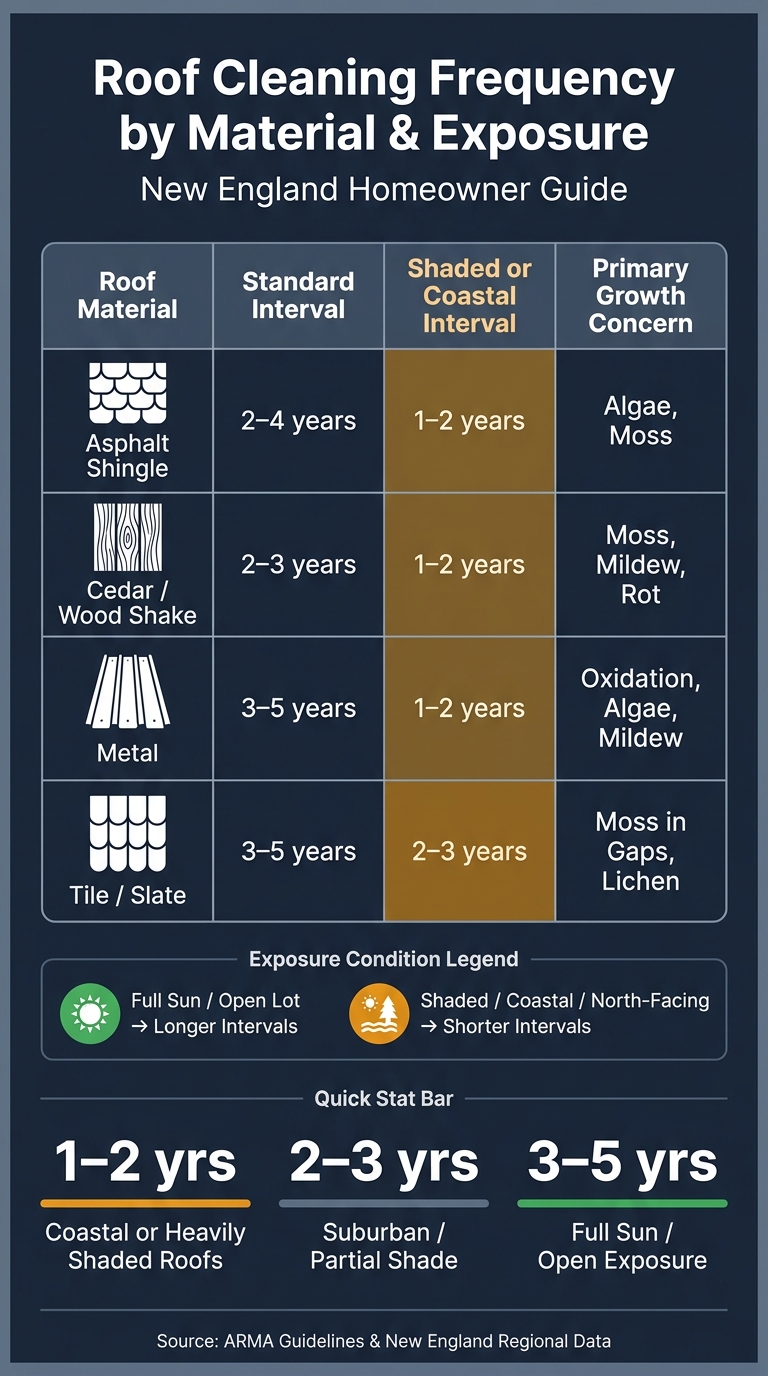
Roof Cleaning Frequency by Material & Climate in New England
The type of material your roof is made of plays a huge role in determining how often it needs to be cleaned. Each material reacts differently to moisture and organic debris, which means some roofs require more frequent maintenance than others. Knowing what your roof is made of helps you stay ahead of potential issues, like algae or moss buildup, before they cause visible damage.
Asphalt Shingle Roofs
Asphalt shingles are incredibly popular in New England, but they come with their own set of challenges. Modern asphalt shingles often contain limestone filler, which can encourage algae growth - especially in the humid climates of Massachusetts, New Hampshire, and Connecticut. Algae can become noticeable as soon as 1 to 3 years after a cleaning. According to the Asphalt Roofing Manufacturers Association (ARMA):
"Moss can be detrimental to asphalt shingle performance. Moss can cause the leading edges of the shingles to lift or curl, which increases the risk of shingle blow-off during wind events." - Asphalt Roofing Manufacturers Association (ARMA)
For most asphalt roofs in the region, cleaning every 2–4 years is a good rule of thumb. However, if your roof is shaded or faces north, you might need to clean it as often as every 1–2 years.
Cedar Shake and Wood Roofs
Cedar shake and other wood roofs have a rough, porous texture that holds onto moisture, making them a perfect breeding ground for moss. Over time, moss can weaken the wood fibers, and some manufacturers may void warranties if moss buildup isn’t addressed within 3 to 5 years. If your wood roof is under heavy tree cover - common in areas like Sudbury or Atkinson - you’ll likely need to clean it every 1 to 2 years. When cleaning wood roofs, it’s important to use oxygen bleach instead of chlorine bleach to avoid damaging the wood.
Metal, Tile, and Slate Roofs
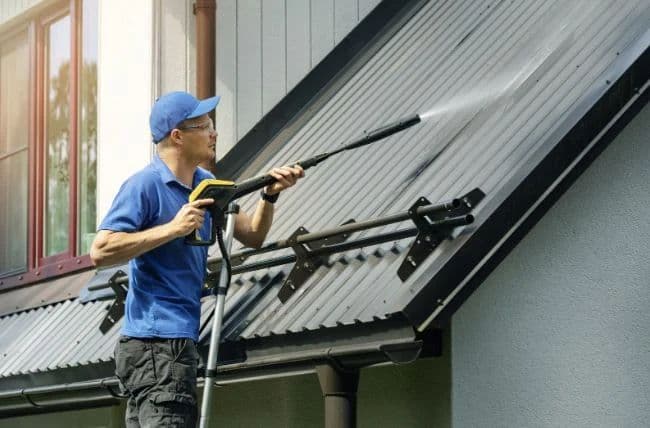
Metal roofs are the most resistant to organic growth. Thanks to their smooth, non-porous surface, algae and moss have little to cling to. In drier inland areas, metal roofs can often go 3 to 5 years without cleaning. But in coastal towns like Cohasset or Seabrook, where salt air and moisture are constant factors, cleaning might be needed every 1 to 2 years.
Tile and slate roofs are dense and non-porous, but moss can still grow in the gaps between tiles. This growth can eventually lift tiles or cause cracks, especially given the brittle nature of these materials. Professional soft washing is the safest way to clean these roofs. For homes in shaded or humid areas, a cleaning interval of 2 to 3 years is recommended, while roofs with better sun exposure might only need cleaning every 3 to 5 years.
| Roof Material | Standard Interval | Shaded or Coastal Interval | Primary Growth Concern |
|---|---|---|---|
| Asphalt Shingle | 2–4 years | 1–2 years | Algae, moss |
| Cedar / Wood Shake | 2–3 years | 1–2 years | Moss, mildew, rot |
| Metal | 3–5 years | 1–2 years | Oxidation, algae, mildew |
| Tile / Slate | 3–5 years | 2–3 years | Moss in gaps, lichen |
Why Soft Washing Is the Right Method for Roof Cleaning
Determining the best cleaning method is just as important as deciding when to schedule it.
What Soft Washing Is and Why It Works
Soft wash roof cleaning relies on a low-pressure system combined with a chemical solution - typically a mix of diluted sodium hypochlorite and biodegradable surfactants - to tackle algae, moss, and lichen at their roots. Operating at around 60–100 PSI, this method focuses on chemical action rather than brute force. The solution works by breaking down the molecular structure of organic growth, effectively eliminating it rather than just moving it around. This ensures longer-lasting results compared to high-pressure rinsing. Plus, soft washing aligns with manufacturer recommendations, offering a safe and effective approach.
The Asphalt Roofing Manufacturers Association (ARMA) explicitly advises against high-pressure washing, as it can strip protective granules from shingles, potentially causing premature roof failure.
This chemical-based approach is the foundation of professional roof cleaning techniques.
What a Professional Roof Cleaning Looks Like
Professional roof cleaning takes the soft washing process a step further, ensuring the roof's integrity is maintained throughout. It starts with a thorough pre-inspection to pinpoint any loose flashing or damaged shingles before applying any cleaning solution. Once the inspection is complete and landscaping is protected, the cleaning solution is applied and given time to work its magic. A gentle rinse then clears away debris. While black algae streaks usually vanish the same day, dead moss may take a few months - typically 3 to 6 - to naturally shed with the help of rain and wind.
Common Mistakes That Damage Roofs
Using the wrong cleaning methods can cause serious harm to your roof. High-pressure washers and abrasive tools like wire brushes can void warranties from major manufacturers like GAF, CertainTeed, and Owens Corning. These methods strip protective granules and accelerate shingle wear. Harsh chemicals can also weaken shingles over time. If a contractor can't confirm that their cleaning process complies with ARMA guidelines, it's a clear red flag. A trustworthy roof cleaning service will always explain their pressure settings and chemical formulas before starting the job, ensuring your roof is cleaned safely and effectively.
How to Plan Your Next Roof Cleaning
Combining Intervals with What You Can See
The cleaning intervals mentioned earlier are just a starting point - they aren’t set in stone. What’s happening on your roof should play a big role in deciding when it’s time to clean. A simple annual inspection from the ground with binoculars can reveal warning signs like dark streaks, green moss patches, or pale, crusty growths along the shingles. These issues are especially common on north-facing slopes or areas that stay shaded during the afternoon. If you can spot black streaks from the street, it’s a clear sign your roof is overdue for cleaning. Moss growth, in particular, needs immediate attention since it can lift shingles and trap moisture, leading to bigger problems.
Use these visual clues to tweak your cleaning schedule as needed.
In addition to what you see, keeping thorough records and preparing for insurance requirements can make roof maintenance easier.
Insurance and Roof Documentation
Some homeowners in Massachusetts have reported that insurance companies request current roof photos during policy renewals. Stains or moss-covered shingles can complicate these reviews and potentially lead to issues. That’s why it’s smart to keep a log of your cleaning dates along with before-and-after photos. These records can serve as proof if your insurer asks for documentation. For more insight, check out this helpful guide on how algae can affect your homeowner's insurance.
"New England homeowners are often obligated to keep their roofs clean to keep their warranties effective." - Trusted Roofing
To avoid complications, schedule a professional roof cleaning before your policy renewal period. Aligning your cleaning schedule with insurance requirements not only protects your roof but also ensures your policy stays intact.
Best Times to Schedule Cleaning in New England
In New England, the best time for roof cleaning is between late April and early October. This is because sodium hypochlorite, a common cleaning agent, works best when temperatures are above 50°F. That rules out most winter and early spring months. In mid-summer, however, the heat can cause the cleaning solution to evaporate too quickly, making late spring (April–May) and early fall (September–October) the most reliable times for cleaning.
Late summer is also a great time for your annual roof inspection. Algae streaks are often most visible before fall rains begin, and leaves start to block your view from the ground.
For areas like Rockingham County, NH, and Essex County, MA - where mature trees are common and cleaning is needed every 1–2 years - scheduling a spring cleaning can be especially helpful. As temperatures stabilize, demand for roof cleaning services usually increases, so booking early gives you more options and flexibility.
Conclusion
Roof cleaning schedules depend on factors like location, roof material, and environmental exposure. For instance, roofs in coastal or heavily shaded areas typically need cleaning every 1–2 years, whereas those in sunny, inland areas might only require it every 3–5 years. In New England, the region's unique weather patterns call for a tailored maintenance plan. Regardless of your roof's location, soft wash roof cleaning is the best method - it effectively removes algae, moss, and debris without damaging the protective granules. On the other hand, high-pressure washing can strip these granules, potentially shortening your roof's lifespan.
Make it a habit to inspect your roof every year, ideally in late summer. Watch for signs like dark streaks, green spots, or crusty growths - these indicate it’s time for cleaning.
"By investing in professional roof cleaning every few years, you are effectively buying an extra decade of life for your roof." - South Shore Window Cleaners
Regular cleaning can significantly extend your roof's life, taking it from 15 years to as much as 25–30 years. Considering that replacing a roof in New England can cost anywhere between $8,000 and $25,000, routine cleaning is a smart, money-saving choice. ViewCrew Services works with homeowners across Massachusetts, Southern New Hampshire, and Connecticut to ensure roofs stay clean, documented, and properly maintained for each home’s unique needs. Ready to protect your investment? Schedule your next roof cleaning service with trusted professionals today.
FAQs
How can I tell if my roof is due for cleaning?
Inspect your roof during late summer when signs of algae are easiest to spot. Keep an eye out for black streaks, green moss, or white/yellow lichen. Also, check for trapped debris, clogged gutters, or spots that remain damp or shaded. If you can see these issues from the curb, it’s probably time to call in a professional for a thorough cleaning.
Will roof cleaning void my shingle warranty?
Absolutely. The way you clean your roof can directly impact your warranty. Many asphalt shingle manufacturers caution that using high-pressure cleaning methods might void your coverage.
The Asphalt Roofing Manufacturers Association (ARMA) specifically advises against pressure washing. Why? It can lead to granule loss, which weakens the shingles and accelerates roof damage.
To safeguard your warranty, it’s essential to follow your manufacturer’s guidelines. Most recommend the soft washing method, which uses a low-pressure solution of bleach and water. Make sure any professional you hire sticks to these recommendations to keep your roof - and its warranty - intact.
Can I clean my roof myself, or should I hire a pro?
Hiring a professional for roof cleaning is a smart move. Taking the DIY route can be risky - there’s the danger of falling and the chance of damaging your roof. Professionals, on the other hand, use soft wash techniques, which are endorsed by the Asphalt Roofing Manufacturers Association (ARMA). This method avoids the harm that pressure washing can cause. Plus, they come equipped with the right safety gear and insurance, ensuring the job is done both safely and effectively.