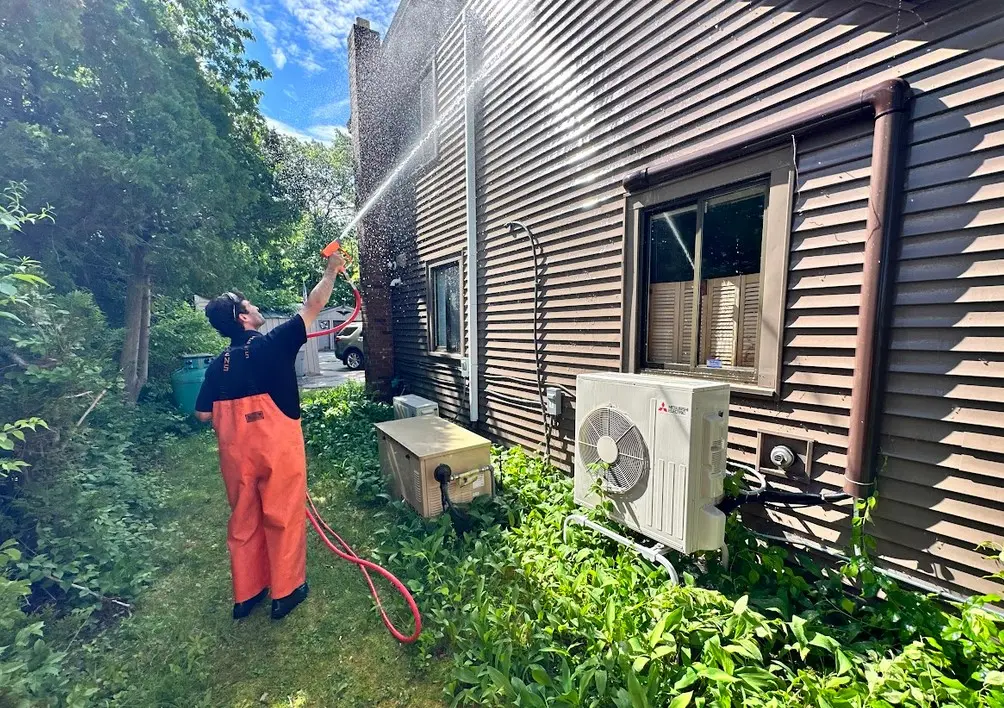
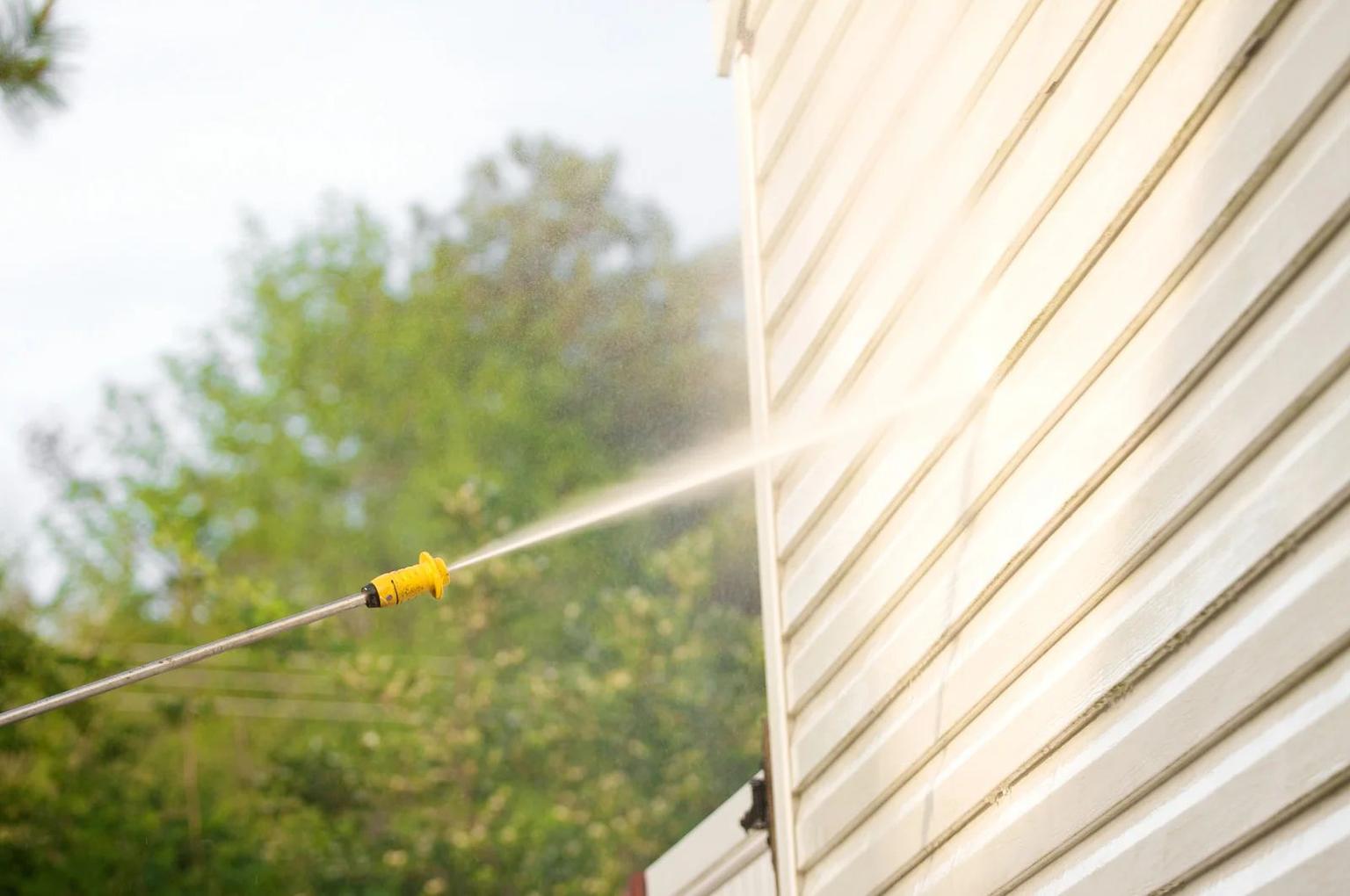
Soft washing is a safer, gentler alternative to pressure washing for cleaning your home’s exterior. Unlike high-pressure methods that can damage surfaces like roofs, siding, and wood, soft washing uses low-pressure water (under 500 PSI) combined with cleaning solutions to remove dirt, mold, algae, and mildew at their source. This method not only protects delicate materials but also prevents regrowth, keeping surfaces cleaner for longer.
Key Takeaways:
- Low Pressure: Operates at garden-hose-level pressure to avoid damage.
- Chemical Cleaning: Uses sodium hypochlorite and surfactants to break down organic growth.
- Surface-Specific: Ideal for roofs, siding, stucco, wood, and brick without risking harm.
- Long-Lasting Results: Kills mold and algae at their roots for extended cleanliness.
For tough surfaces like concrete, pressure washing is still effective. But for sensitive areas, soft washing ensures safety and longevity. Always consider professional services to achieve the best results without risking damage.
Soft Washing Explained: The Best Way to Clean The Exterior of Your Home Safely
sbb-itb-238bf3c
What Is Soft Washing and How Does It Work?
Soft washing is a cleaning method that uses low water pressure - staying under 500 PSI - and relies on chemical solutions to break down and remove contaminants at their source. The key ingredient is sodium hypochlorite, a salt-based bleach solution that effectively tackles green and black mold. Professional-grade sodium hypochlorite, typically at a strength of 12.5%, is more than twice as strong as household bleach (which is about 5–6%), ensuring a deep and thorough clean.
To enhance its effectiveness, a surfactant is added. Surfactants reduce water's surface tension, allowing the cleaning solution to spread evenly and remain on surfaces longer. This helps loosen dirt and grime more effectively. For roofs, a soft wash mix generally contains about 3% sodium hypochlorite, while siding requires a gentler 1% mix to avoid potential damage.
How Soft Washing Differs from Pressure Washing
The key distinction between soft washing and pressure washing lies in the cleaning method. Pressure washing, also known as water blasting, uses high-pressure water - sometimes reaching up to 4,000 PSI - to physically remove dirt and grime. Soft washing, on the other hand, relies on chemical solutions and operates at pressures below 500 PSI, making it much gentler on surfaces.
| Feature | Soft Washing | Pressure Washing |
|---|---|---|
| Pressure Level | Below 500 PSI | Up to 4,000 PSI |
| Primary Cleaning Action | Chemical solutions (sodium hypochlorite and surfactants) | Mechanical force (high-pressure water jet) |
| Water Usage | Gentle rinsing; avoids forcing water into materials | High-pressure force; may drive water into cavities |
| Best For | Roofs, house exteriors, siding, and delicate surfaces | Concrete, driveways, and surface prep |
Soft washing is particularly suited for delicate materials like house siding, roofs, and wood. High-pressure washing can risk forcing water into surfaces or causing physical damage, while the chemical approach of soft washing not only cleans but also addresses the root cause of stains.
Why Soft Washing Works for Organic Growth
One of the standout benefits of soft washing is its ability to target organic growth like mold, mildew, and algae at the source. Sodium hypochlorite breaks down the cellular structure of these organisms, effectively killing them and preventing regrowth. As Lucid Bots explains:
Using bleach also gets into and kills off any root systems to prevent further damage to the tiles and keep anything from growing back.
Soft Washing vs. Pressure Washing: Which Is Safer?
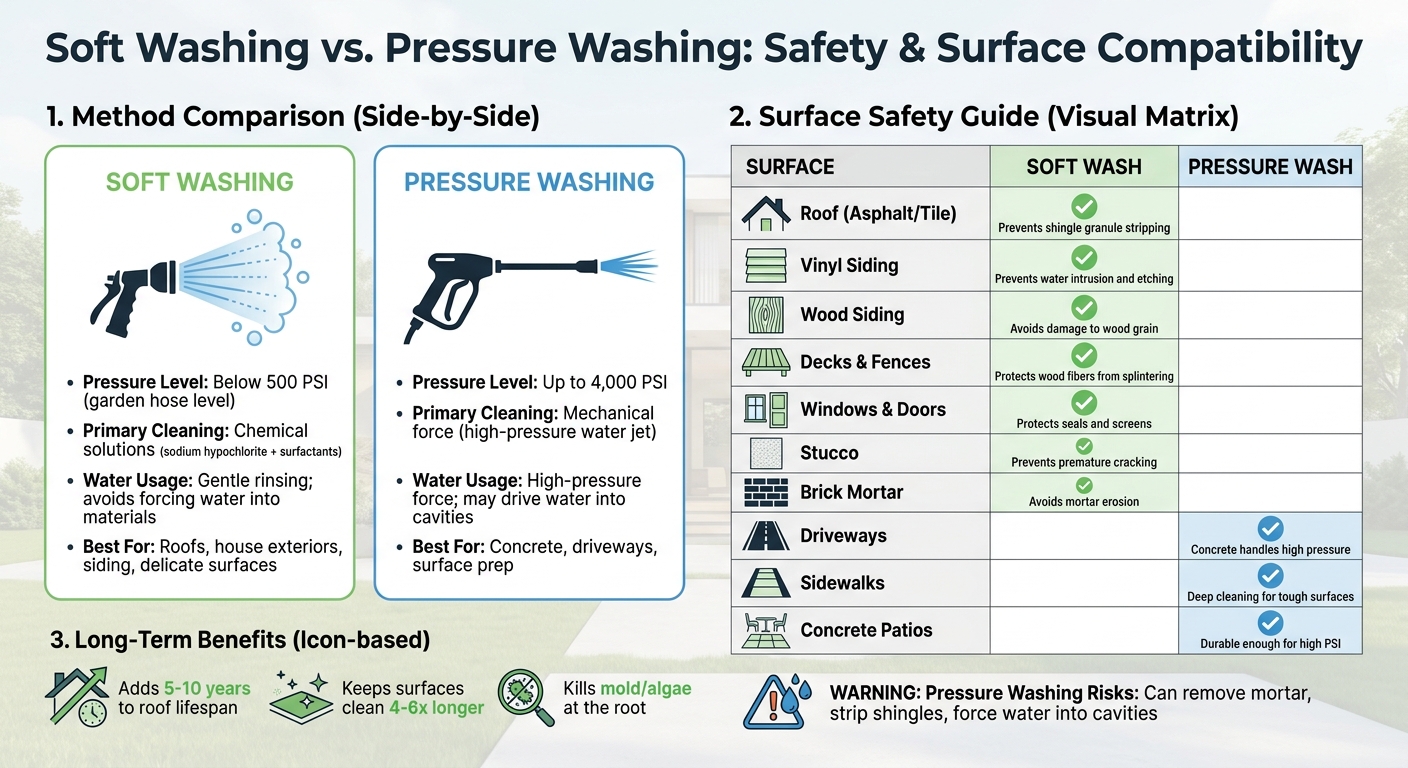
Soft Washing vs Pressure Washing: Safety Comparison Chart
Deciding between soft washing and pressure washing comes down to the type of surface you're cleaning and how much risk you're willing to take with potential damage. Pressure washing uses high PSI (pounds per square inch), which works great on tough surfaces but can harm more delicate materials like shingles, siding, or window seals.
Soft washing, on the other hand, operates at a much lower pressure - under 500 PSI, similar to your garden hose. Instead of relying on brute force, it uses specialized cleaning solutions to tackle organic growth like mold and algae at the source. While earlier sections explained how each method works, this section zeroes in on their safety and long-term effects.
This is why many professionals now lean toward soft washing for sensitive surfaces. As Men's Journal puts it:
"While pressure washing still plays an important role in cleaning harder surfaces, soft washing offers a safer way to clean the more sensitive parts of your home." - Men's Journal
The safety benefits of soft washing become even clearer when you consider its long-term impact. It can add 5 to 10 years to your roof's lifespan and keep surfaces cleaner 4 to 6 times longer by targeting the root causes of problems like mold and algae. Shawn Glover, VP of Sales at Pumptec, highlights the risks of using pressure washing where soft washing is better suited:
"Pressure washing surfaces that are intended to be soft washed brings a risk of damage. Mortar or grout can be removed... Asphalt can be removed during roof cleaning."
Comparison Table: Safety and Surface Compatibility
Here’s a quick look at which method works best for different surfaces:
| Surface | Recommended Method | Why? |
|---|---|---|
| Driveways and Sidewalks | Pressure Wash | Concrete is tough enough to handle high pressure for deep cleaning. |
| Roof (Asphalt/Tile) | Soft Wash | High pressure can strip shingle granules, reducing roof lifespan. |
| Vinyl and Wood Siding | Soft Wash | Prevents water from being forced into building cavities or etching. |
| Decks and Fences | Soft Wash | Avoids damage to wood grain or etching caused by high-pressure jets. |
| Windows and Doors | Soft Wash | Protects window seals and screens from being blown out by high PSI. |
For hard, durable surfaces like concrete driveways or brick patios, pressure washing is still the go-to method. But for roofs, siding, stucco, and wood, soft washing offers a safer option. It not only protects your property but also ensures a cleaner, longer-lasting result.
Surfaces Best Suited for Soft Washing
Roofs, Siding, and Stucco
Roofs, siding, and stucco are particularly sensitive to high-pressure cleaning methods. For example, asphalt shingles can lose their protective granules when exposed to intense pressure, which not only affects their appearance but might also void their warranty. Soft washing, which uses less than 500 PSI and relies on specialized cleaning solutions instead of sheer force, is a safer alternative. It effectively removes mold, algae, and dirt without risking damage, making it ideal for cleaning areas like house cladding, soffits, gutters, baseboards, and window frames. This method is especially beneficial for stucco, as high-pressure cleaning can cause premature cracking, while soft washing preserves its integrity. Similarly, vinyl siding, which can warp or dent under aggressive pressure, responds well to the gentler approach. The same principle applies to wood and brick surfaces, where high-pressure cleaning can compromise structural integrity over time.
Wood Decking and Brick Mortar
Wood and brick features, such as decks, fences, and window frames, also require a delicate touch. High-pressure washing can splinter wood fibers, strip protective finishes, and even force water deep into the material, potentially leading to rot and other structural issues. Wooden windows and doors are especially vulnerable, as water forced into the structure can cause leaks. Soft washing avoids these problems by cleaning safely while preserving painted or sealed finishes. Professionals often take extra precautions, like placing towels inside older wooden windows and doors, to catch any water drips during cleaning.
Brick surfaces, while generally durable, have their own vulnerabilities. The mortar between bricks can erode when exposed to high-pressure jets, which can weaken the structure over time. Soft washing offers a safer solution, effectively removing organic buildup and stains without damaging the mortar. This gentle method helps extend the life of your brickwork while maintaining its appearance and structural soundness.
How to Ensure Safe and Professional Soft Washing
Soft washing is ideal for cleaning delicate surfaces, but doing it safely and effectively requires following specific practices and maintaining professional standards.
Best Practices for Chemical Application
Handling cleaning chemicals correctly is essential for both safety and effectiveness. Start by protecting nearby plants and landscaping - move potted plants out of the way and cover surrounding vegetation with plastic sheeting to shield it from potential runoff. Before applying the solution to the entire surface, always perform a test patch in an inconspicuous area to ensure it won’t cause discoloration or damage.
When applying the cleaning solution, work from the bottom up to avoid streaking on dry areas. Allow the solution to sit for 10–15 minutes to break down organic growth, but don’t let it dry on the surface. Opt for biodegradable solutions whenever possible, and follow the manufacturer’s mixing instructions carefully. Using too strong a solution can damage surfaces, while a weaker mix won’t clean effectively. Adding specialized surfactants can improve how well the solution adheres to surfaces, and neutralizers can help protect plants from chemicals like sodium hypochlorite.
"Soft washing is a blend of art and science. It's about finding the right balance between the cleaning agents and the pressure used, ensuring surfaces are cleaned without being harmed." - Clean Direct
By combining proper chemical application with careful handling, professional soft washing achieves results that DIY methods often cannot match.
Why Professional Services Matter
While proper chemical use is crucial, the expertise involved in equipment handling and application techniques makes a significant difference. Professional tools operate at pressures far below 500 PSI, typically maintaining a gentle 150–300 PSI. This ensures surfaces are cleaned without risking damage.
Trained technicians evaluate the specific materials and condition of your home to determine the best chemical formulations and application methods. They spray at 85-degree angles to avoid forcing water into horizontal cladding gaps, which could lead to interior rot. Companies like ViewCrew Services employ insured professionals who bring this level of care and precision to every job. Unlike DIY approaches that may simply rinse away mold and algae, professional soft washing eliminates these growths at their root, providing longer-lasting results.
Conclusion
Soft washing does more than just clean - it helps maintain the durability and charm of your home's exterior. By relying on low-pressure water combined with carefully selected chemicals, this technique safeguards fragile surfaces like roof shingles, siding, and wooden decks. At the same time, it tackles mold, algae, and moss at their roots, ensuring a cleaner finish that lasts longer.
But it’s not just about appearances. Soft washing can also remove allergens, contributing to better air quality around your home. However, achieving these benefits requires the expertise of trained professionals.
"Soft washing is not just about cleaning; it's about preserving the beauty and integrity of your property." - Clean Direct
Professionals ensure the process is both safe and effective by carefully balancing chemical mixtures, controlling application times, and using just the right amount of pressure. They assess your home's specific needs to provide thorough cleaning without causing damage.
For homeowners in Massachusetts, Southern New Hampshire, and Connecticut, ViewCrew Services offers top-tier soft washing. Their insured technicians bring the right tools and expertise to protect your home's look and long-term value while delivering exceptional results.
FAQs
Will soft washing damage my plants or lawn?
Soft washing, when done properly, is gentle on your plants and lawn. It relies on low-pressure water combined with mild cleaning solutions to clean surfaces effectively without causing damage to your landscaping. With careful application, your greenery remains safe and unharmed.
How soon can I re-enter my home after soft washing?
You can typically return to your home 30 to 60 minutes after a soft washing. This allows enough time for the treated surfaces to be thoroughly rinsed and dried. However, factors like the specific cleaning products used, humidity levels, and temperature can affect the exact timing.
How often should my home exterior be soft washed?
It’s typically a good idea to soft wash your home every 1–2 years. However, if you live in a region with harsh winters or where debris tends to accumulate quickly, you might want to clean more often. Regular washing helps keep your home’s exterior in good condition and can prevent potential damage over time.