When hiring a house washing service, here's what you can expect:
- Methods Used: Professionals use two main techniques - pressure washing (high-pressure water, 1,500–4,000 PSI) for tough surfaces like concrete, and soft washing (low pressure, 150–300 PSI, with cleaning solutions) for delicate surfaces like vinyl siding, roofs, or wood.
- Cleaning Process: The process starts with a property inspection to identify issues like algae buildup or loose shingles. Teams prepare by covering plants, securing outdoor furniture, and protecting electrical outlets. Cleaning solutions are applied systematically, followed by a thorough rinse.
-
Costs: Prices vary based on factors like square footage, material type, and buildup level. For example:
- Average cost for a 2,000 sq. ft. home: $200–$300.
- Services like gutter cleaning or driveway washing may cost extra but can be bundled for savings.
- Time Required: Cleaning a typical home takes 2–4 hours, depending on size and condition.
- Choosing a Service: Look for licensed and insured companies. Ask about their cleaning methods, warranties, and how they protect landscaping. Request itemized quotes and verify satisfaction guarantees.
Professional house washing not only improves your home's appearance but also prevents long-term damage caused by mold, algae, and dirt. It's a cost-effective way to protect your property and maintain its value.
How To Wash A House (Step By Step Guide)
sbb-itb-238bf3c
House Washing Methods Explained
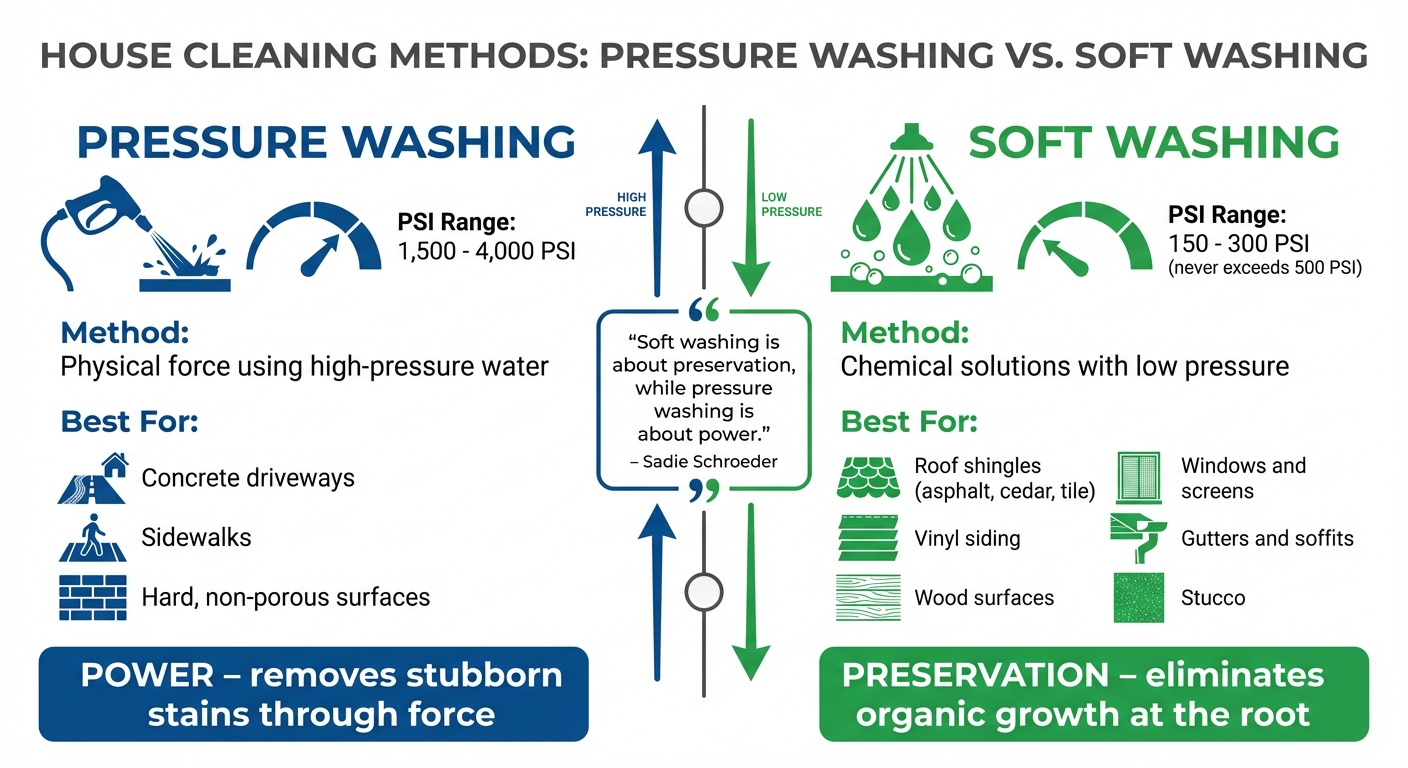
Pressure Washing vs Soft Washing: Methods, PSI Levels, and Best Surfaces
Pressure Washing vs. Soft Washing
When it comes to professional house washing, there are two main techniques: pressure washing and soft washing. These approaches differ significantly in how they clean - one relies on physical force, while the other uses chemical solutions.
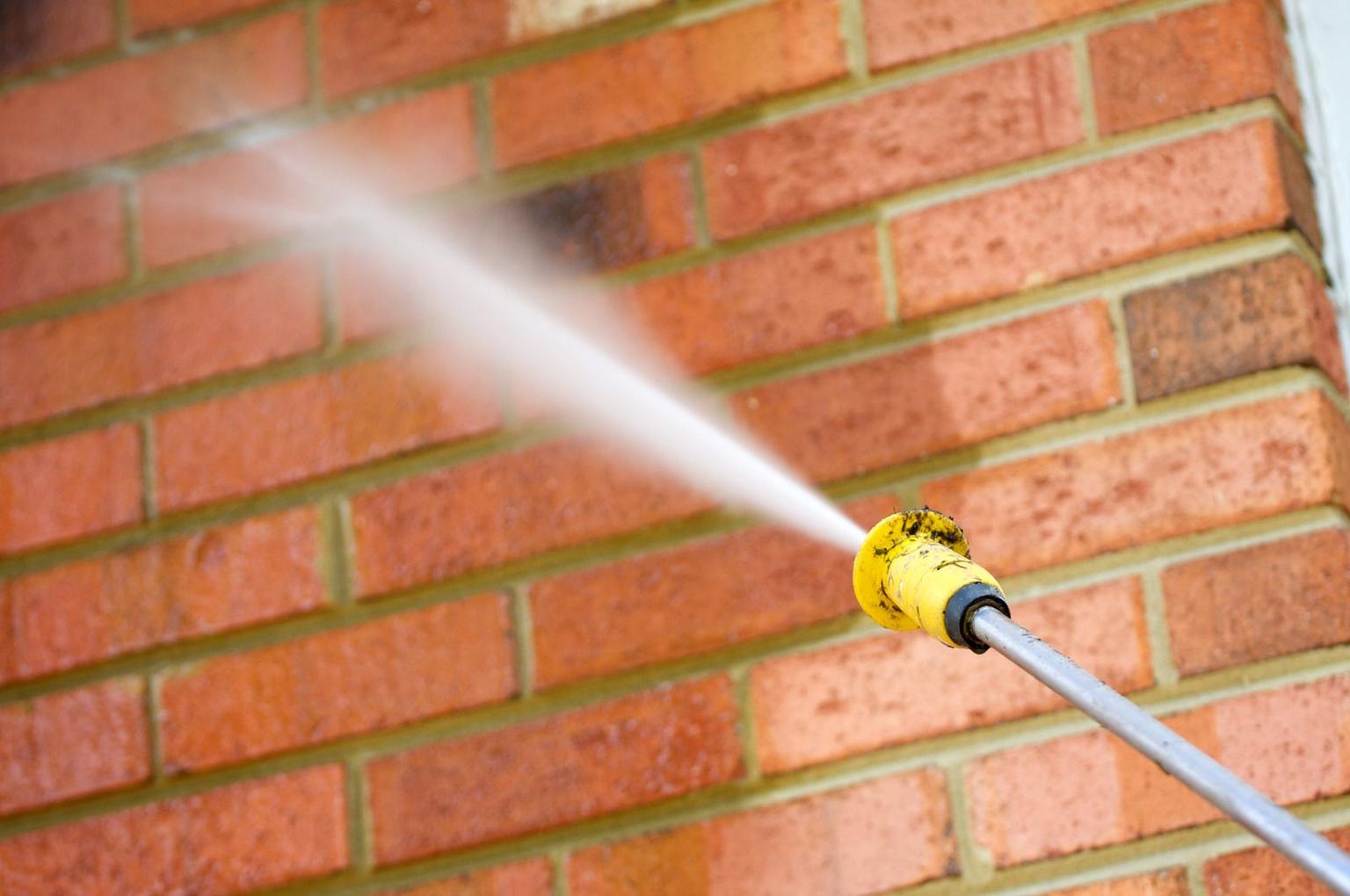
Pressure washing uses high-pressure water, typically ranging from 1,500 to 4,000 PSI, to blast away dirt, grime, and mold. On the other hand, soft washing operates at much lower pressure - usually between 150 and 300 PSI (never exceeding 500 PSI) - and depends on specialized cleaning detergents. These detergents target organic growth like algae and moss, eliminating them at the root. The lower pressure then rinses away the residue without causing damage.
"Soft washing is about preservation, while pressure washing is about power." – Sadie Schroeder, Veloci Performance Products
The choice between these methods depends largely on the surface being cleaned. Hard, non-porous surfaces like concrete driveways can withstand the intense force of pressure washing. In contrast, more delicate materials, such as roof shingles, vinyl siding, or wood, require the gentler approach of soft washing to avoid damage.
Common Surfaces and How They're Cleaned
Professionals adapt these cleaning techniques to suit different surfaces around your home. For instance, roofs should never be pressure washed. The high pressure can harm shingles, strip away asphalt granules, and even void manufacturer warranties. Instead, soft washing is the go-to method for roofing materials, whether they are asphalt, cedar, or tile.
When it comes to siding, whether it's vinyl, wood, or stucco, soft washing is preferred. This method helps protect the paint and prevents water from seeping behind the structure. Similarly, windows and screens are cleaned using soft washing to avoid cracking or breakage.
For tougher surfaces like concrete driveways and sidewalks, pressure washing is highly effective. These surfaces are durable enough to handle the force needed to remove stubborn stains. However, for wood decks and fences, soft washing is essential to prevent damage to the wood fibers.
Gutters and soffits are also cleaned with low-pressure techniques to avoid denting the metal or forcing water into ventilation openings. As for pavers and patios, professionals often combine both methods - starting with a soft wash to kill weeds and algae, followed by moderate pressure to clean debris from the joints.
What Happens During a Professional House Washing
Property Assessment and Consultation
Before cleaning starts, professionals begin with a detailed inspection of your property. This step helps identify any pre-existing issues, like cracked siding or loose shingles, which could worsen during the cleaning process. It's also a chance to address specific concerns, such as algae buildup on shaded areas or discolored gutters. The team then recommends the best cleaning methods for each surface. Once the assessment is done, preparations for a safe and thorough cleaning begin.
Preparation and Safety Steps
After the inspection, both you and the cleaning crew take steps to prepare the property. Start by moving outdoor furniture, decorations, or other items away from the house to allow easy access. Also, double-check that all windows and doors are securely closed.
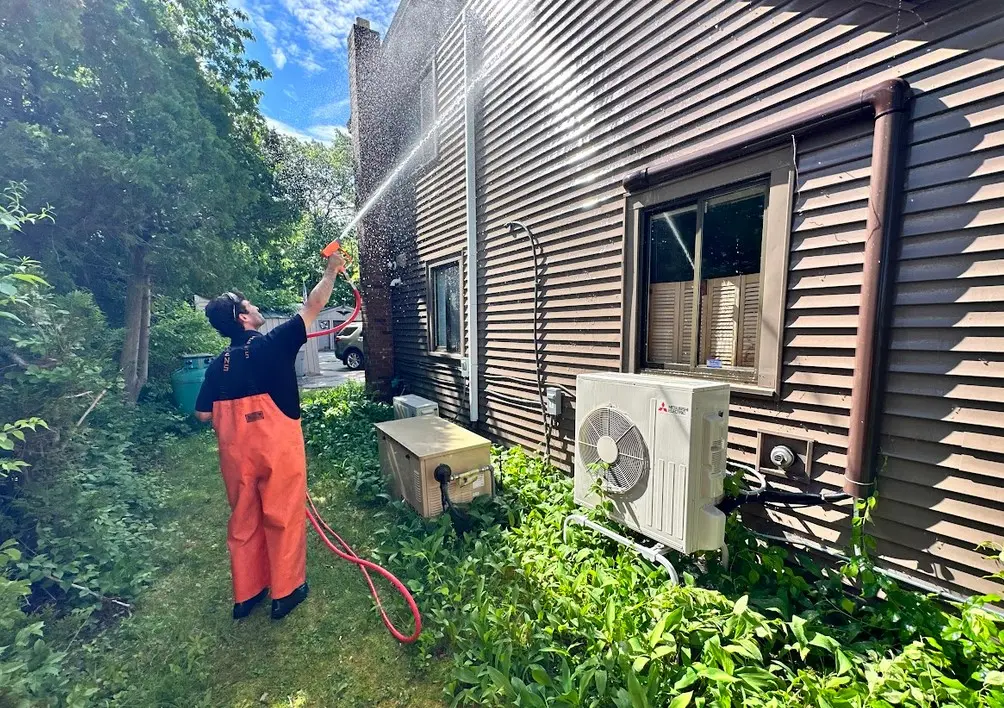
The cleaning team takes extra precautions to protect your home. They cover electrical outlets and light fixtures with waterproof materials, like plastic bags, to prevent any electrical issues. Landscaping gets special attention too - sensitive plants are pre-watered, and flower beds, shrubs, or ponds are shielded. To ensure safety, pets should stay indoors during the process to avoid noise and exposure to cleaning chemicals. Once these measures are in place, the crew is ready to begin.
The Cleaning Process
The cleaning process itself is methodical and efficient. Using specialized equipment, professionals apply a cleaning solution that typically includes sodium hypochlorite (bleach) at a concentration of 0.5% to 0.8%, combined with a surfactant (soap). This is done using a low-pressure system (under 500 PSI) to avoid damaging surfaces. The application starts at the bottom of the house and works upward to avoid streaking on dry areas. After the solution has had time to break down dirt and organic buildup, rinsing begins from the top down.
The cleaning team works systematically, starting with the gutters and moving to soffits, cladding, baseboards, and window frames. To prevent the solution from drying too quickly, they clean each side of the house when it's not in direct sunlight. Finally, they conduct a walkthrough with you to spot any missed areas or stubborn grime that might need another round of cleaning.
Understanding House Washing Costs
Once you’ve decided to deep clean your home’s exterior, it’s important to understand the costs involved.
What Affects the Price
The cost of house washing depends on several factors, including square footage, the type of material, the height of the home, the level of buildup, and any access challenges. Square footage is usually the biggest factor - professionals typically charge between $0.10 and $0.50 per square foot. For instance, cleaning a 2,100-square-foot, two-story home with moderate mold and algae buildup was priced at $578.57, which included specialized chemicals for soft washing and a 30% profit margin.
The material of your home also plays a big role. Porous surfaces like brick or stucco tend to absorb more cleaning solution and require more time to clean compared to vinyl siding, which can drive up costs. Multi-story homes add complexity and require special equipment, with prices ranging from $150–$750 for single-story homes to $700–$1,800 for three-story homes.
The extent of buildup is another critical factor. While light dirt is easy to clean, heavier issues like oil stains, oxidation, rust, or thick algae require more time and specialized chemicals. For example, an emergency oil stain removal for a retail parking lot was priced at $557.31, which factored in a 1.15× labor multiplier for same-day service and a 35% profit margin. Access challenges, such as tight walkways, limited water sources, or dense landscaping, can also slow the process and increase costs.
Bundling services can help reduce costs. For example, adding driveway cleaning (typically $100–$300) or gutter clearing ($0.50–$1.50 per linear foot) to your house washing package often lowers the overall price. Regular maintenance plans, such as quarterly or biannual cleanings, can also save you money compared to one-time deep cleans. Understanding these variables will help you compare quotes and choose the right service for your needs.
Getting a Quote and Job Duration
Getting a detailed estimate is key to understanding what you’ll pay. Most professionals provide written, itemized quotes that break down the base cleaning cost and any additional charges for specialized treatments like rust or oxidation removal. This ensures transparency and helps avoid surprise fees. On average, professional pressure washing costs $310, with typical prices ranging from $212 to $448. Many companies also have a minimum fee, usually between $100 and $250, to cover travel and setup costs.
When requesting a quote, be prepared to share specific details about your home, such as its square footage, the number of stories, the type of exterior material (vinyl, brick, stucco, or wood), and any visible issues like heavy stains or algae buildup. Don’t forget to mention any obstacles like gated areas or dense landscaping that might complicate equipment setup. It’s also wise to confirm that the company is licensed, bonded, and insured to protect your property from potential damage caused by high-pressure equipment.
The time required for house washing depends on the size and condition of your home. For an average-sized home (around 2,000 square feet), the job typically takes 2 to 4 hours. Smaller or less soiled properties might be done in as little as 30 minutes, while larger or more complex homes can take 3 hours or more. Companies like ViewCrew Services tailor their quotes to your home’s specific needs, ensuring clear pricing and realistic timelines before starting the job.
How to Pick a House Washing Service
Choosing a house washing service isn’t just about finding someone with a pressure washer - it’s about ensuring you hire professionals who know what they’re doing and can deliver safe, effective results.
Questions to Ask Before Hiring
Start by confirming that the company is both licensed and insured. They should have general liability insurance with coverage of at least $1,000,000 per occurrence. Additionally, workers' compensation is a legal requirement in 48 states and protects you from liabilities if an employee gets injured on your property. Always ask for proof of insurance before any work begins.
"Licensing shows the company operates legitimately, and insurance protects you if something goes wrong, whether it's accidental damage to your property or an injury on the job." – South Florida Soft Wash
Ask about the cleaning methods they use, especially for delicate surfaces like vinyl siding, stucco, or asphalt shingles. Soft washing, which uses low pressure (under 100 PSI), is the preferred method to avoid damage or voiding warranties [17,20]. Also, check how they handle chemical runoff and protect your landscaping to ensure your plants and local storm drains are safe.
Request references as well as before-and-after photos of homes that have similar materials to yours. This gives you a clear picture of what to expect [20,21]. Additionally, inquire about satisfaction guarantees or warranties. Many reputable companies offer written guarantees against algae regrowth, typically lasting one to three years. Ensure any warranty is documented in writing.
Don’t forget to clarify policies on weather-related rescheduling, cancellations, technician identification, and how they address accidental damage.
These questions not only help you screen potential services but also give you insight into their professionalism.
What Professional Service Looks Like
Beyond answering your questions, a professional house washing service stands out with clear communication and dependable service. They provide detailed, itemized quotes by area, ensuring you know exactly what you’re paying for. Many companies also send automated reminders a couple of days before your appointment, complete with technician photos and a specific arrival window.
Look for companies with customer-focused policies. For example, ViewCrew Services offers a 100% satisfaction guarantee, promising to address any missed spots promptly. This type of accountability shows they prioritize quality.
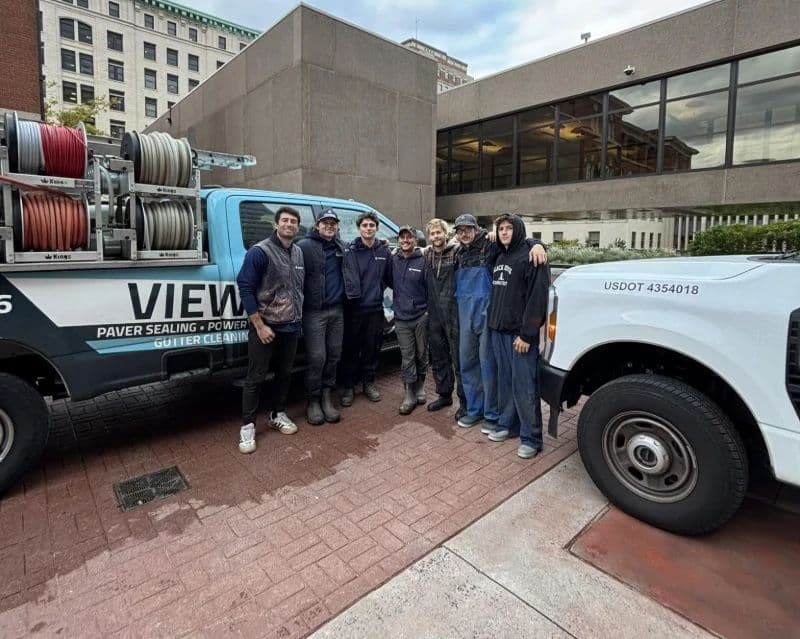
Professional technicians arrive in uniform and use proper safety gear, especially for roof work where OSHA fall protection standards apply at heights of six feet or more [17,21]. They’ll also take steps to protect outdoor furniture, cover plants, and manage runoff responsibly. Companies that specialize in soft washing, rather than offering it as an add-on service, often deliver better results because they have the expertise to handle the chemistry and techniques required for safe, effective cleaning.
Conclusion
Getting your house professionally washed does more than just freshen up its appearance - it helps protect your investment. By removing harmful mold, mildew, and algae, professional cleaning prevents these buildups from causing lasting damage, saving you from expensive structural repairs later on. For a standard 2,000-square-foot home, the cost typically falls between $200 and $300.
A clean exterior also improves safety by eliminating allergens and slippery algae. Plus, if you're planning to paint or stain your home, professional washing ensures the surface is clean and dry, which helps the new finish adhere better and last longer.
"Make sure you know your home's siding material before power washing. For example, what you think is stucco could really be styrofoam with a thin layer of concrete on top. This can be damaged easily with pressure washing." – Fred Hodge, President and Co-Founder at Clearview Washing
Choosing a professional service like ViewCrew Services means working with experts who use cleaning methods tailored to your home’s specific needs. They back their work with a 100% satisfaction guarantee, ensuring your home is spotless and that you’re informed every step of the way.
Regular house washing not only prevents harmful buildup but also keeps your home looking its best. It’s a simple yet effective way to maintain your property value while giving you peace of mind that your home’s exterior is well cared for.
FAQs
Will house washing damage my siding or roof?
When performed properly, professional house washing - whether using pressure washing or soft washing - won’t harm your siding or roof. Professionals rely on specific techniques and tools that ensure thorough cleaning while safeguarding the exterior of your home.
Do I need to be home during the wash?
You typically don’t need to be home while your house is being washed. Professional crews are skilled at handling the job efficiently without requiring the homeowner to be present. That said, it’s always smart to double-check with your service provider, such as ViewCrew Services, to confirm their specific policies. To make things easier, consider preparing your property beforehand - like moving outdoor furniture or potted plants out of the way - to help the process go as smoothly as possible.
How long will the clean look last?
The fresh appearance achieved through a house washing service can often last for several years. How long it stays that way depends on a few things, like the local climate, how well the property is maintained, and the techniques used during cleaning. Regular upkeep and minimizing exposure to harsh elements can go a long way in preserving those results.