When deciding between roof cleaning and roof replacement, the key factors are your roof's age, condition, and the type of issues present. Cleaning is a cost-effective option, typically ranging from $300 to $800, and can add 10–15 years to your roof's lifespan if the structure is still solid. On the other hand, replacement costs start at $5,000 and can exceed $25,000, but it's necessary when dealing with severe damage, leaks, or an aging roof.
Key Takeaways:
- Choose cleaning if your roof is under 15 years old, and issues like moss, stains, or algae are cosmetic.
- Opt for replacement if your roof is over 20 years old, has missing shingles, leaks, or sagging.
- Cleaning costs are about 5–10% of replacement costs, making it a smart choice for well-maintained roofs.
- Delaying replacement can lead to water damage, mold, and higher repair costs.
Quick Comparison:
| Factor | Roof Cleaning | Roof Replacement |
|---|---|---|
| Cost | $300–$800 | $5,000–$25,000+ |
| Lifespan Added | 10–15 years | 20–40+ years |
| When to Choose | Cosmetic issues, under 15 years old | Severe damage, 20+ years old |
| Risks of Delay | Minimal | Water damage, mold, higher costs |
For roofs nearing the end of their lifespan or with significant structural issues, replacement is the safer long-term solution. However, regular cleaning can extend the life of a younger, well-maintained roof. Always consult a professional for an inspection before making your decision.
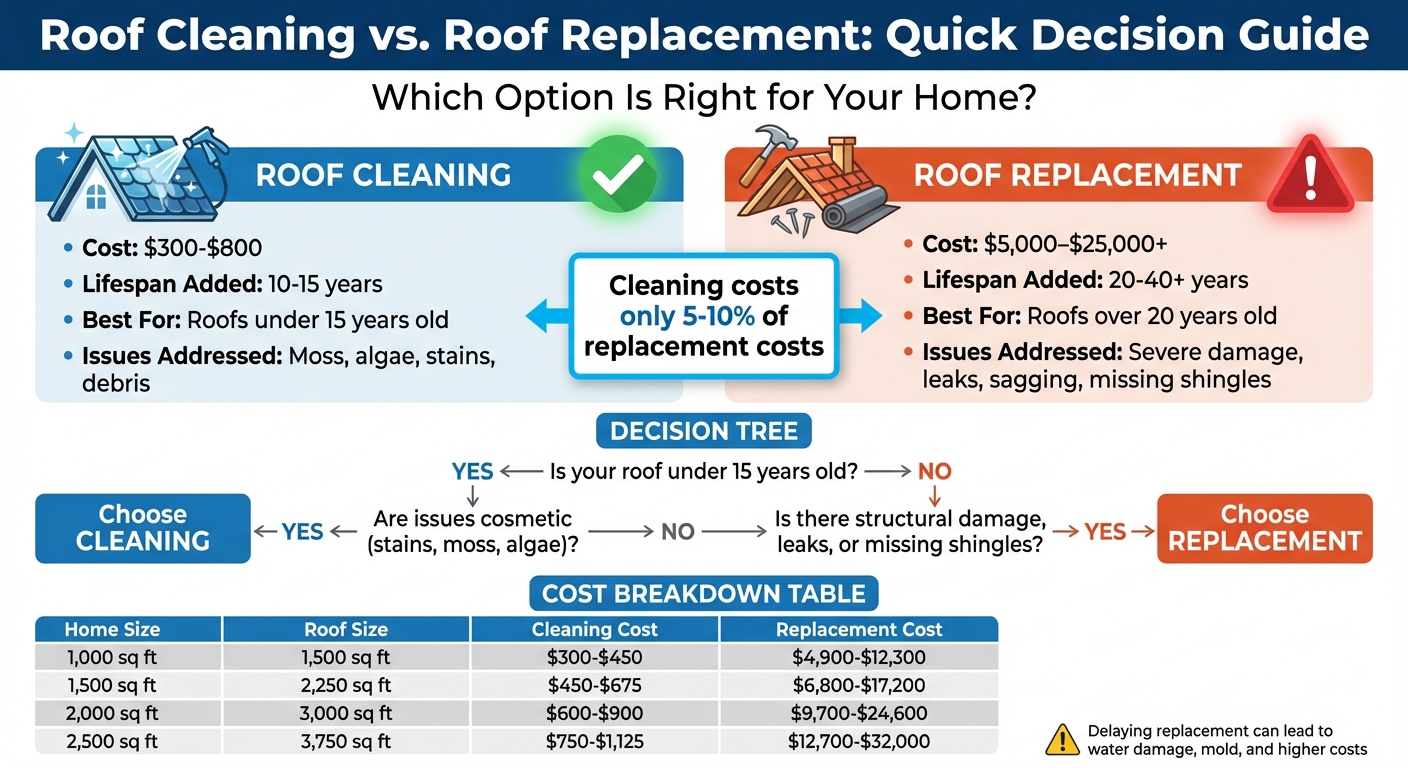
Roof Cleaning vs Replacement Cost and Decision Guide
Cedar Roof Cleaning vs Replacing
sbb-itb-238bf3c
When to Clean Your Roof Instead of Replacing It
Not every roof issue demands a full replacement. If your roof is structurally solid but looks stained or dirty, a professional cleaning might be all it needs to look new and last another 10 to 15 years. The key is determining whether the problem is purely cosmetic or if it affects the roof's integrity.
Signs Your Roof Needs Cleaning
Black streaks on shingles are often caused by Gloeocapsa Magma, a type of airborne algae that feeds on the limestone fillers in asphalt shingles. While these streaks are mostly aesthetic, professional cleaning can remove them effectively.
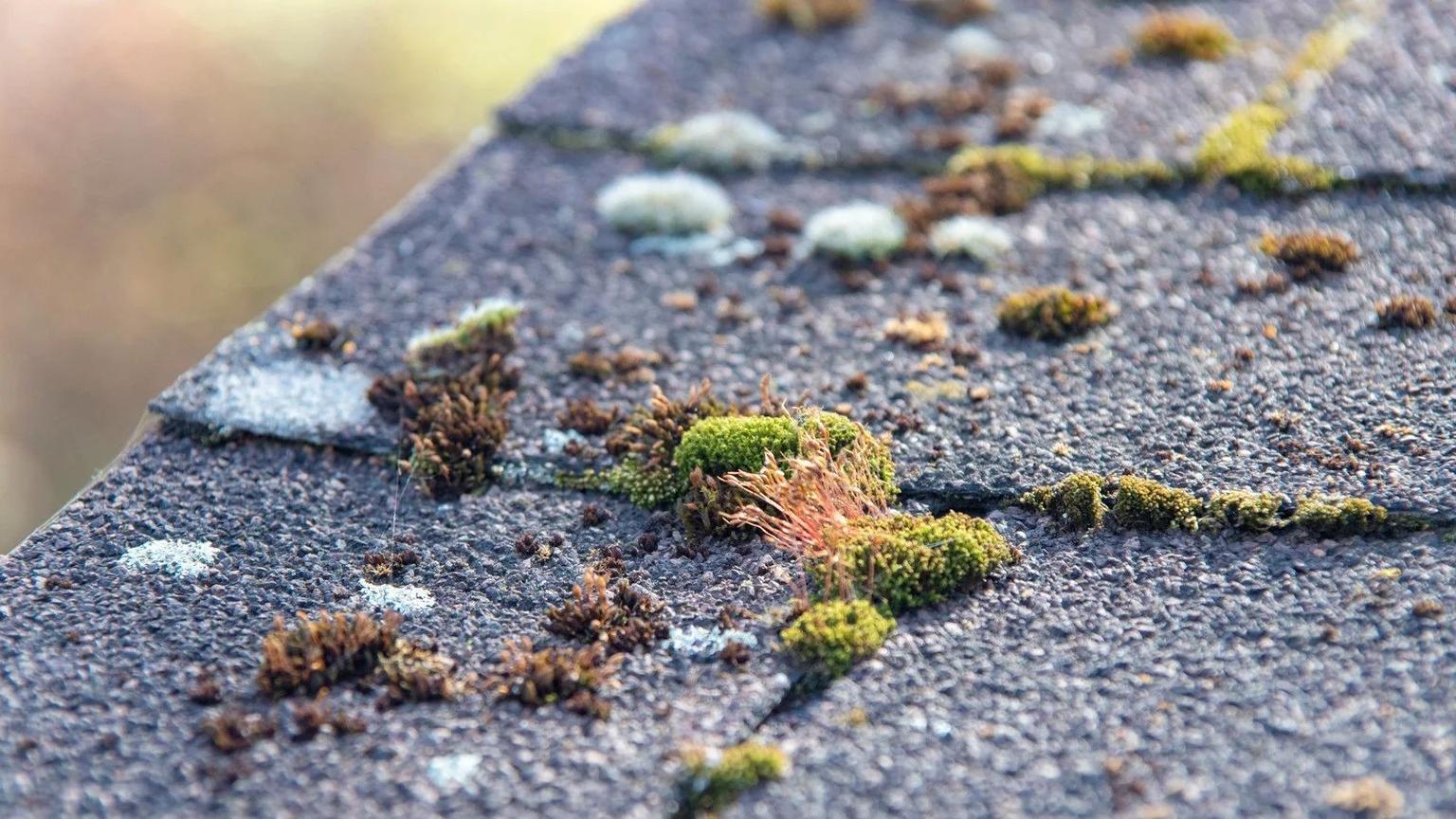
Moss and lichen, however, pose a bigger threat. Moss holds moisture against the roof, which can lead to rot if ignored. A roofing expert explains:
"When left alone, moss is your roof's worst enemy. It gets in between your shingles, jacks them up like little tents, and lets the water in." - West Seattle Window Cleaner
Other signs include debris buildup like leaves and twigs, clogged gutters caused by roof runoff, and general discoloration. If your shingles are still in good shape - meaning no curling, bald spots, or leaks - cleaning is likely sufficient. Spotting these signs highlights how cleaning not only restores the roof’s appearance but also adds long-term value.
Benefits of Professional Roof Cleaning
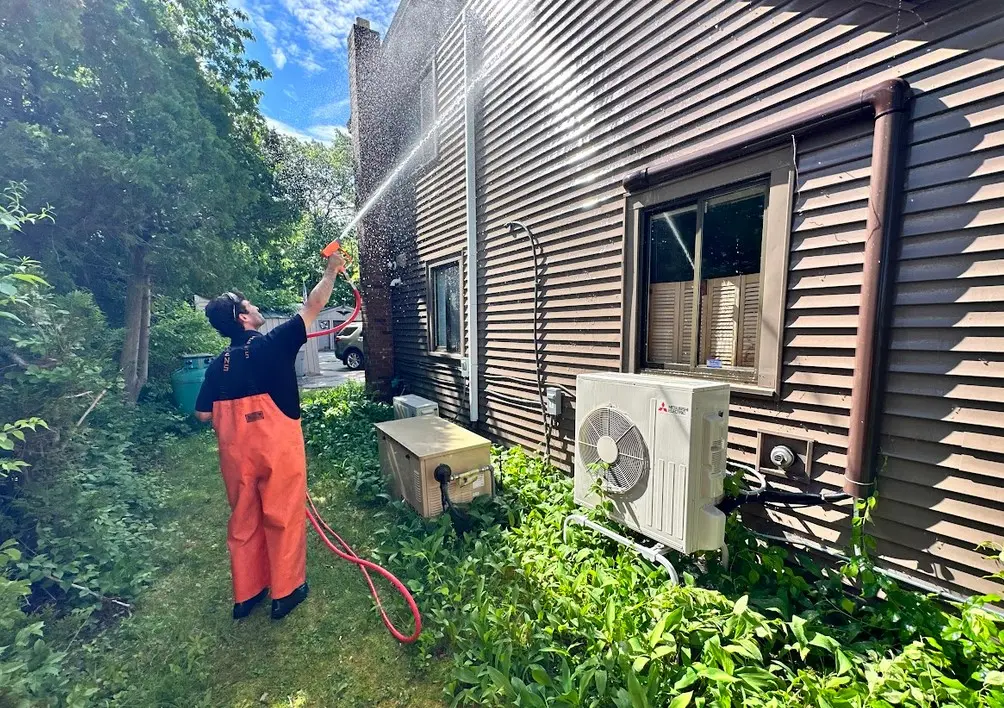
Professional roof cleaning typically involves a soft washing technique. This method combines low-pressure water with specialized cleaning solutions, removing moss and algae at the root without harming shingles or stripping away protective granules.
Cost-wise, professional cleaning ranges from $300 to $800, a far cry from the $5,000 to $25,000 price tag of a replacement. Plus, many manufacturers require regular professional maintenance to keep warranties valid, making cleaning a smart investment.
There’s also an energy-saving bonus. A clean roof reflects sunlight better, which can lower cooling costs by up to 15% in warmer climates. While cleaning offers plenty of advantages, it’s important to match this approach to your roof’s age and condition.
Roof Age and Condition: When Cleaning Works
Roofs under 20 years old with well-maintained shingles are often ideal candidates for cleaning instead of replacement. Asphalt shingle roofs typically last 15 to 20 years, but regular upkeep can stretch that lifespan to as much as 50 years.
Before scheduling a cleaning, inspect your shingles for granule coverage. If more than 40% of the granules are gone, leaving visible bald spots, cleaning won’t be enough, and replacement should be considered. But if the granules are intact and the roof deck is in good shape, cleaning can add years to your roof’s life.
When You Need to Replace Your Roof
When your roof starts showing severe signs of wear, replacing it might be your only safe and cost-effective option. Knowing when to replace instead of repair can help you avoid wasting money on fixes that won’t hold up. If cleaning and minor repairs no longer do the trick, these signs can guide you toward deciding on a full replacement.
Common Signs of Roof Damage
If your shingles are curling, cracking, or losing granules, your roof’s ability to shield your home from UV rays and water is compromised. A quick check of your gutters for excessive granule buildup - those tiny sand-like particles - can reveal whether your shingles are becoming brittle and losing their protective layer.
Inspect your attic on a sunny day. If you see sunlight streaming through the boards or notice water stains on ceilings, water has likely breached your roof’s defenses.
A sagging roofline is a major red flag. This visible dip could mean moisture has weakened the internal supports or decking, making repairs ineffective. Rusted, cracked, or missing flashing around chimneys and vents is another clue that your roof might be nearing the end of its lifespan.
A roofing expert once put it like this:
"Replacing a roof is like replacing tires. You can patch one puncture, but when the tread wears across the whole tire, performance and safety drop fast." - Ridgeline Roofing
As a general rule, consider replacing your roof if repair costs exceed 30% of what a new roof would cost.
Roof Age and Material Lifespan
The age of your roof plays a big role in determining when it’s time for a replacement. Even if there’s no visible damage, roofing materials naturally age and weaken over time. For instance, asphalt shingles have varying lifespans: basic 3-tab shingles last about 15 to 20 years, while architectural shingles can hold up for 30 years. Other materials are even longer-lasting - metal roofs can endure 40 to 70 years, clay or concrete tiles 50 to 100 years, and natural slate often outlives 100 years.
If your roof is nearing or has surpassed these age benchmarks, it’s likely time for a replacement. Additionally, many insurance companies adjust their coverage once a roof hits 15 to 20 years old, paying less on claims due to depreciation by switching from Replacement Cost Value (RCV) to Actual Cash Value (ACV).
| Roofing Material | Expected Lifespan (Years) | Primary Sign of Failure |
|---|---|---|
| 3-Tab Asphalt | 15–20 | Curling, cracking, bald spots |
| Architectural Asphalt | 20–30+ | Widespread granule loss, leaks |
| Metal (Standing Seam) | 30–70 | Rusted flashing, loose panels |
| Clay / Concrete Tile | 50–100 | Cracked tiles, heavy moss weight |
| Natural Slate | 50–100+ | Broken or sliding slates |
Risks of Delaying Roof Replacement
Putting off a roof replacement can end up costing you far more than the initial expense. Delays often lead to leaks that can cause rot in the roof decking, rafters, and support beams. Water damage can also ruin attic insulation, drywall, and ceilings. Persistent moisture creates the perfect breeding ground for mold and mildew, which can spread into walls and harm indoor air quality.
A failing roof can also wreak havoc on your home’s energy efficiency. Poor ventilation and damaged insulation force your HVAC system to work harder, driving up energy bills.
Another potential issue? Insurance companies may deny claims for interior damage if your roof is deemed too old or poorly maintained. On the flip side, a new roof can recoup 60% to 70% of its installation cost by boosting your home’s value. Waiting too long, however, can lower your property’s value and make it harder to sell.
Cost Comparison: Roof Cleaning vs. Roof Replacement
When weighing the condition of your roof against financial considerations, knowing the cost differences between cleaning and replacement is essential.
Price Breakdown for Cleaning and Replacement
Roof cleaning is far more affordable than a full replacement. On average, professional roof cleaning costs about $460 across the U.S., with most homeowners spending between $296 and $624. To put this in perspective, cleaning typically amounts to just 5% to 10% of the cost of a new roof. By comparison, replacing a roof costs an average of $9,533 nationwide, with prices ranging from $5,870 to $13,225.
Looking at costs by square footage highlights the gap even more. Cleaning costs between $0.15 and $0.70 per square foot, while replacement ranges from $4.00 to $11.00 per square foot. For a 2,000-square-foot home with about 3,000 square feet of roof area, cleaning expenses range from $600 to $900, while replacement costs could hit $9,700 to $24,600.
| Home Size (Sq. Ft.) | Approx. Roof Size (Sq. Ft.) | Cleaning Cost Range | Replacement Cost Range |
|---|---|---|---|
| 1,000 | 1,500 | $300 – $450 | $4,900 – $12,300 |
| 1,500 | 2,250 | $450 – $675 | $6,800 – $17,200 |
| 2,000 | 3,000 | $600 – $900 | $9,700 – $24,600 |
| 2,500 | 3,750 | $750 – $1,125 | $12,700 – $32,000 |
The type of roofing material also plays a big role in costs. Asphalt shingles generally run $5,800 to $20,000, metal roofing costs $5,700 to $25,000, and high-end slate can exceed $46,000. Cleaning costs, while much lower, still vary based on material. For instance, slate or tile roofs, which require soft washing, cost $0.50 to $0.90 per square foot, while asphalt shingles are more affordable at $0.25 to $0.45 per square foot.
Other factors can influence these estimates, as outlined below.
Factors That Affect Costs
Several variables can impact the total cost of cleaning or replacing your roof.
Roof pitch and stories are major factors. Steeper roofs and multi-story homes require extra precautions and labor, increasing cleaning costs by 25% to 50% and adding $1,000 to $3,000 to replacement labor costs. Multi-story homes also face surcharges, with cleaning costs increasing by $0.10 to $0.20 per square foot for each additional story.
Your location can also make a big difference. Homeowners in high-cost cities like New York or San Francisco often pay 25% to 40% more than the national average for cleaning. Replacement costs vary regionally as well, partly due to permit fees, which range from $100 to $1,400. Since labor accounts for 60% of replacement costs, areas with higher wages naturally see higher prices.
The condition of your roof can lead to unexpected expenses. Severe moss or lichen growth can increase cleaning costs by 40% to 60%. For replacements, hidden damage to the decking - often discovered after removing old shingles - can add $2.20 to $3.00 per square foot, or $70 to $100 per sheet of plywood. Mold remediation, if needed, can cost an additional $500 to $3,000.
Understanding these factors helps you assess whether cleaning or replacement is the better financial and practical choice for your roof. By breaking down the costs and variables, you can make a well-informed decision about maintaining or upgrading your roof.
Inspection Checklist: Cleaning or Replacement?
Before deciding whether to clean or replace your roof, it’s crucial to conduct a detailed inspection. This can help you identify the best course of action for your specific situation.
Key Points to Inspect
Start by examining your roof from the ground using binoculars. Look for missing shingles, curling edges, or exposed underlayment. Dark streaks or moss might only affect the appearance, in which case cleaning could be enough. However, shingles that are curling, cupping, or cracking often signal structural damage, which may require replacement.
Check your gutters and downspouts for sediment buildup. This can indicate granule loss, leaving the asphalt vulnerable to UV damage and speeding up shingle wear. Pay special attention to the flashing around chimneys, vents, and valleys - look for rust, gaps, or dried-out sealants that could allow water to seep in.
Inside your attic, inspect during daylight hours for light filtering through boards, dark spots on the sheathing, rusty nails, or damp insulation. After a rainstorm, check for drips or musty odors, as these may point to serious issues. If it’s safe to do so, walk on your roof to feel for soft spots or sagging areas, which could suggest moisture-related damage to the decking or framing.
"A roof usually fails in patterns, not all at once. The key is spotting the early signals before water reaches decking, insulation, or drywall inside your home." - Whiting Roofing
Lastly, compare your roof's age to its expected lifespan. For example, three-tab asphalt shingles typically last 15–25 years, while architectural shingles can last 20–30+ years. If your roof is approaching 80% of its lifespan and shows multiple signs of wear, replacing it may be the most cost-effective choice in the long run.
A thorough self-inspection can help you decide whether you need professional input.
Getting a Professional Assessment
If your roof is over 10 to 15 years old, has endured a severe storm, or shows any of the issues mentioned above, it’s a good idea to arrange a professional inspection. Basic inspections generally cost between $120 and $321, while more detailed evaluations - including attic checks and photo documentation - can range from $300 to $750 or more.
A professional inspection provides a written report with photographs and clear recommendations on whether to repair, clean, or replace your roof. Always ensure the inspector is licensed, insured, and bonded.
For expert roof assessments, ViewCrew Services can help you make informed decisions. Their soft washing specialists can evaluate whether organic growth is purely cosmetic or if it’s starting to compromise your roof’s structure. This ensures you choose the right solution tailored to your home’s specific needs.
Why Choose ViewCrew Services for Roof Cleaning
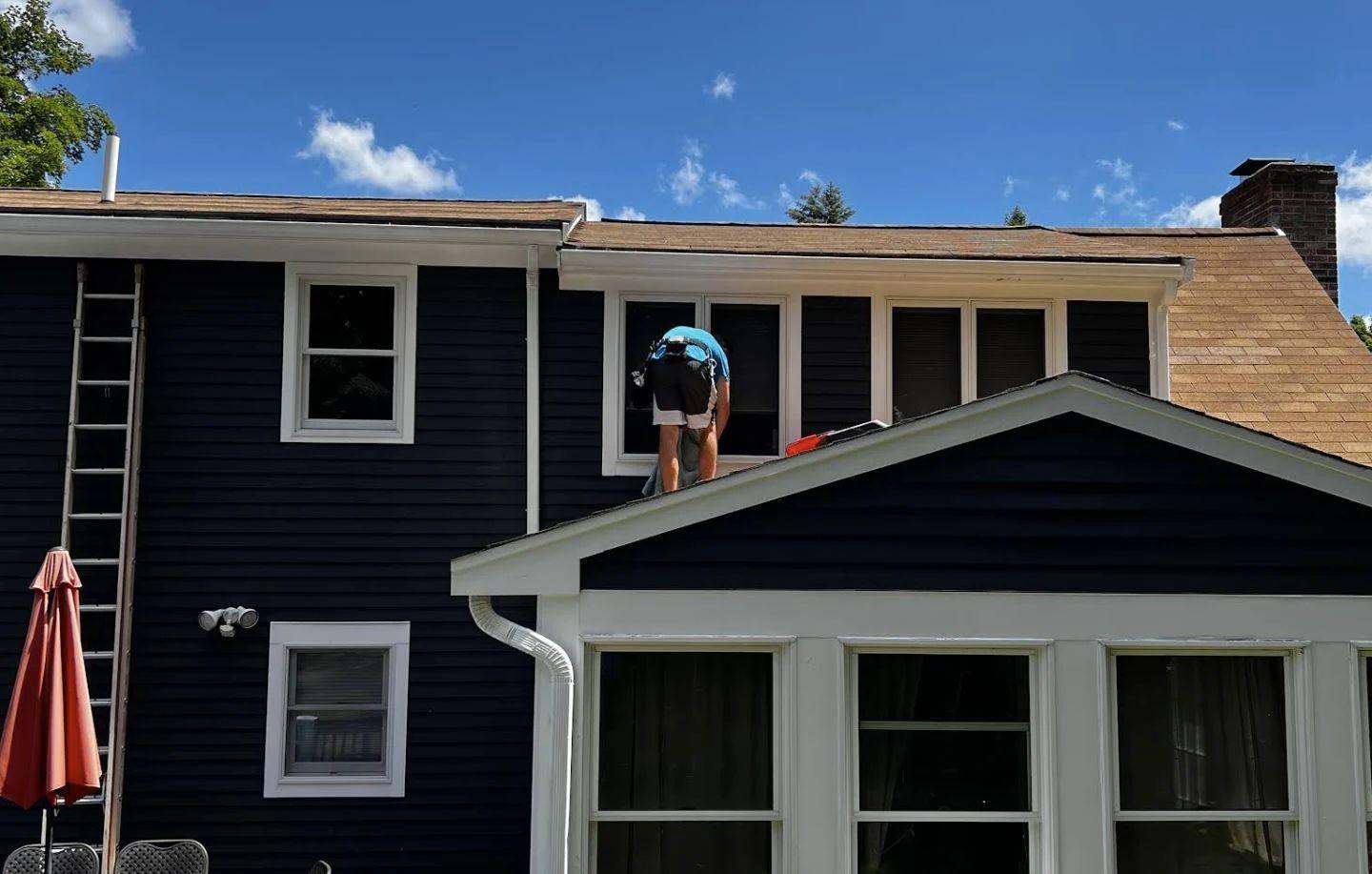
If your roof needs cleaning, it's important to rely on a trusted service to protect your investment. When a roof looks worn but remains structurally solid, the professionals at ViewCrew Services use their soft washing expertise to extend its lifespan without compromising its integrity.
Soft Washing Expertise and Safety
ViewCrew Services employs a soft washing technique that avoids the risks of high-pressure cleaning. This method uses low-pressure water combined with eco-friendly cleaning solutions to target moss, algae, and lichen at their roots, rather than just scrubbing them off the surface. By using this approach, they help maintain the strength of your shingles and reduce the chances of leaks. Every roof is inspected beforehand to ensure the safest and most effective cleaning process, and all technicians are fully insured for your peace of mind.
"House washing will kill natural growth at the root, so your home's exterior will remain clean for a longer amount of time." - ViewCrew Services
Customer Satisfaction and Service Area
With over 1,000 five-star Google reviews and a perfect 5.0-star rating, ViewCrew Services has built a reputation for reliability and exceptional results. They back every job with a 100% satisfaction guarantee, offering free follow-up visits to address any concerns. Operating across Massachusetts (including North Andover, Metro West, South Shore, and Essex County), Southern New Hampshire (Rockingham and Hillsborough Counties), and Connecticut (Stamford and Fairfield County), the company handles thousands of residential and commercial cleaning projects each year. This consistent track record not only fosters trust but also helps homeowners save money in the long run.
Cost-Effective Maintenance Solutions
Roof cleaning is a practical and budget-friendly alternative to replacing your roof, which can be significantly more expensive. Regular cleanings help extend the life of your roof and prevent costly repairs. ViewCrew Services provides free, no-obligation estimates, giving you a clear picture of your roof's condition before committing to any service.
"Professional soft washing safely removes damaging algae and moss growth, helping prevent costly repairs and significantly prolonging your roof's lifespan." - ViewCrew Services
Routine maintenance also helps avoid potential issues with insurance providers, as many monitor for moss and algae buildup that could lead to policy cancellations. Spring is an ideal time for roof cleaning in New England, as it clears away grime, salt deposits, and winter debris, ensuring your roof is ready for the warmer months ahead.
Conclusion
When deciding what to do about your roof, focus on three key factors: its age, overall condition, and the type of damage present. If your roof is less than 15 years old and the main concerns are moss, algae, or dark streaks, a professional cleaning could extend its life by another 10 to 15 years. This service typically costs between $300 and $800. On the other hand, roofs older than 20 years with issues like curling shingles, significant granule loss (over 40%), or structural problems such as sagging often require full replacement. Replacing a roof can cost anywhere from $5,000 to $15,000 but offers protection for 20 to 40 years.
A helpful guideline to keep in mind is the 30% rule: if repair costs exceed 30% of what a full replacement would cost, it’s usually better to invest in a new roof. Additionally, keeping cleaning expenses around 5–10% of a replacement cost emphasizes the value of regular maintenance. By reviewing these indicators, you can better understand the costs involved and determine the next steps for your roof.
It’s also crucial to get a professional evaluation. Hidden issues like moisture damage or deck rot aren’t always visible, and only an expert can uncover these problems. Companies like ViewCrew Services offer free, no-obligation estimates and promise to return your call within 24 hours. Their soft washing method effectively removes harmful growth without harming your shingles, and their 100% satisfaction guarantee ensures they’ll address any concerns you might have.
Whether you’re considering a cleaning or exploring replacement options, taking action now can prevent minor issues from turning into expensive repairs. Reach out to ViewCrew Services at (978) 480-8364 or request an estimate online to better understand your roof’s condition and identify the most cost-effective solution.
FAQs
Will roof cleaning void my warranty?
Roof cleaning might void your warranty if it's done incorrectly. Methods like pressure washing can harm shingles or strip away protective coatings. This kind of damage often leads manufacturers or installers to deny warranty claims. To avoid problems, always review your warranty terms and hire professionals who use approved cleaning methods.
Can soft washing damage shingles or remove granules?
Soft washing, when executed correctly, relies on low pressure and specially formulated cleaning solutions. This approach minimizes the risk of damaging shingles or dislodging granules. With proper techniques, it ensures the roof is cleaned thoroughly without compromising its structure or materials.
How often should I have my roof cleaned?
Most professionals suggest cleaning your roof every 1 to 5 years. The frequency depends on factors like the type of roofing material, your local weather, and conditions around your home - like overhanging trees or heavy rainfall. Keeping up with regular maintenance can help stop problems like moss or algae growth and extend the life of your roof.