Graffiti can cause serious damage to brick, concrete, and wood surfaces, leading to high cleanup costs and reduced property values. Here's what you need to know:
- The Problem: Graffiti seeps into porous materials, leaving permanent stains or "ghosting." Cleanup can cost $300–$800 per incident.
- The Solution: Anti-graffiti coatings create a protective barrier, making cleanup easier and up to 80% cheaper.
-
Types of Coatings:
- Sacrificial: Temporary barrier that must be reapplied after cleaning.
- Non-Sacrificial: Long-lasting protection that doesn't require reapplication.
- Key Steps: Proper surface preparation (cleaning, sealing) is essential for effective coating application.
Removing graffiti quickly (within 24 hours) reduces re-tagging by 80%. For long-term protection, choose the right coating and maintain surfaces regularly.
Anti-Graffiti Coatings
sbb-itb-238bf3c
Types of Anti-Graffiti Coatings
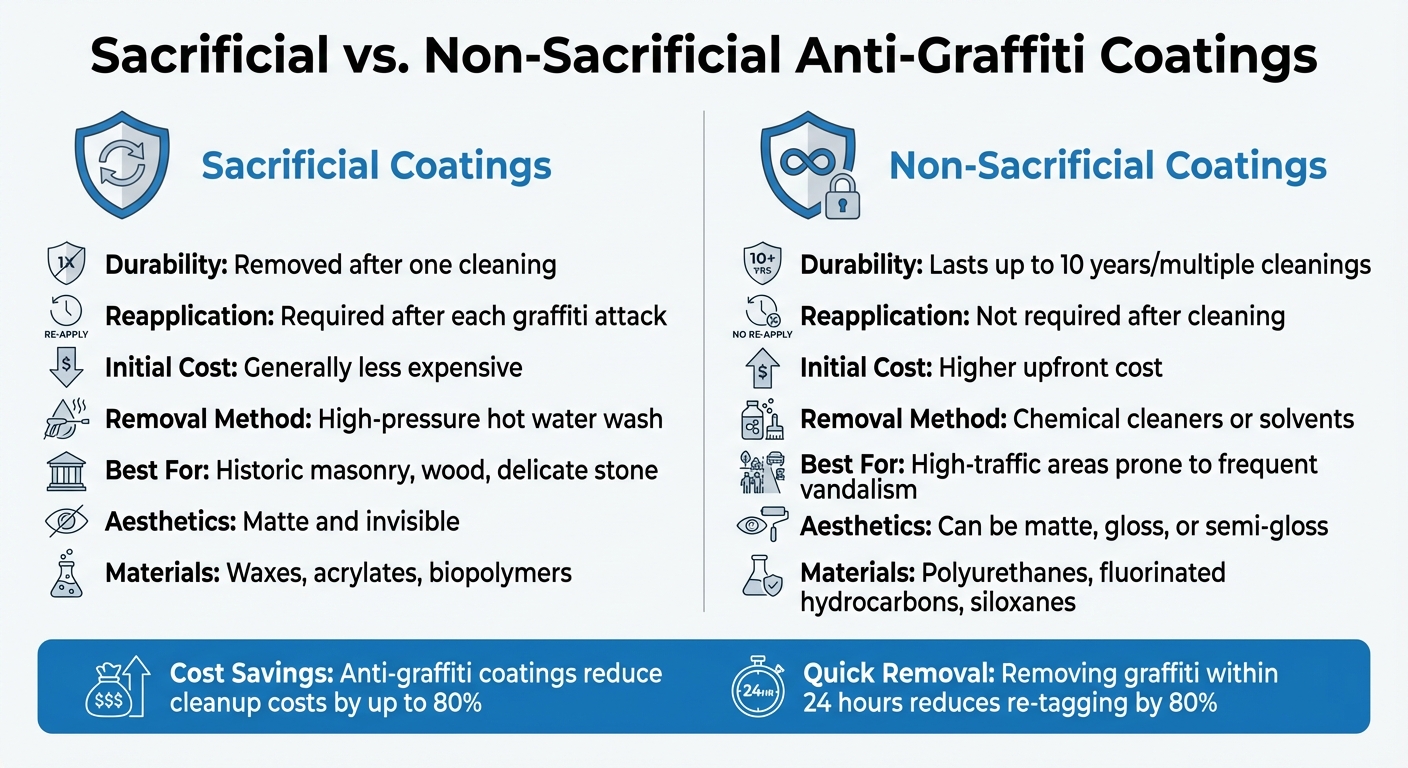
Sacrificial vs Non-Sacrificial Anti-Graffiti Coatings Comparison
When it comes to protecting surfaces from graffiti, there are two main types of coatings to consider: sacrificial and non-sacrificial. Each has its own method of operation and is suited to specific situations. Here's a closer look at how these coatings work and their ideal applications.
Sacrificial Coatings
Sacrificial coatings work by forming a temporary, removable barrier over the surface. These coatings, often made from waxes, acrylates, or biopolymers, create a clear layer that gets washed away along with the graffiti when cleaning is required. While this approach preserves the natural look of the surface, it does mean the coating must be reapplied after each cleaning.
This type of coating is a good choice for historic buildings, natural stone, or delicate masonry, where maintaining breathability and avoiding damage to the material are crucial. For example, products like VandlTop are designed specifically for older brick or wood surfaces, allowing graffiti removal with low-pressure hot water to minimize erosion risks. While the initial cost is often lower, repeated reapplications can make this method more labor-intensive over time, especially in areas prone to frequent vandalism.
Non-Sacrificial Coatings
Non-sacrificial coatings, also called permanent coatings, offer a more durable solution. Made from materials like polyurethanes, fluorinated hydrocarbons, or siloxanes, these coatings form a long-lasting barrier that prevents spray paint from bonding to the surface. High-quality options, such as VandlGuard, can remain effective for up to 10 years, even after multiple cleanings. Unlike sacrificial coatings, they do not require reapplication after every graffiti removal, making them a cost-effective choice for high-traffic areas.
However, there are some considerations. Permanent coatings may alter the appearance of the surface, often adding a gloss or semi-gloss finish. Additionally, certain formulations can become cloudy or peel after prolonged exposure to UV sunlight, so testing a small area beforehand is recommended. For unpainted porous surfaces like bare brick or concrete, applying a water-repellent sealer as a base coat is often necessary to ensure proper adhesion. Proper preparation of the surface is key to maximizing the performance of these coatings.
| Feature | Sacrificial Coatings | Non-Sacrificial Coatings |
|---|---|---|
| Durability | Removed after one cleaning | Lasts up to 10 years/multiple cleanings |
| Reapplication | Required after each graffiti attack | Not required after cleaning |
| Initial Cost | Generally less expensive | Higher upfront cost |
| Removal Method | High-pressure hot water wash | Chemical cleaners or solvents |
| Best For | Historic masonry, wood, delicate stone | High-traffic areas prone to frequent vandalism |
| Aesthetics | Matte and invisible | Can be matte, gloss, or semi-gloss |
Surface Preparation for Anti-Graffiti Coatings
Getting the surface ready is a crucial step to ensure that anti-graffiti coatings stick well and offer the protection they’re designed for.
Cleaning and Drying
Before cleaning, check the surface for issues like decay, porosity, or sugaring (a powdery residue). It’s important to remove all contaminants - this means graffiti, road grime, grease, wax, oil, and leftover paint. Protect areas you don’t want to treat by masking them off beforehand.
Start with the least aggressive cleaning methods. Use pH-neutral soap and water first, then move on to chemical strippers or abrasives if necessary. For materials like brick and concrete, stick to low-to-medium pressure (100–400 psi). Keep the nozzle at least 12 inches away from the surface to avoid damage.
"There's no one-size-fits-all when cleaning buildings; brick, granite, and concrete can handle more pressure, but product knowledge is always key to maximizing results." - Reggie Thomas, Director of Community Management, Evergreen Management Group
For vertical surfaces, gels or poultices work well to control chemical penetration and minimize mess. Always test a small, hidden patch (6" x 6") to figure out the right dwell time for cleaning agents and to confirm the surface won’t be damaged. If you’re using alkaline cleaners on masonry, wet the surface first and rinse from the bottom up. Also, note that fresh concrete needs at least 28 days to cure before applying any coating. Only apply coatings when the temperature is between 45°F and 95°F, and avoid application if the relative humidity is above 95%.
Once the surface is clean and fully dry, move on to sealing porous materials to ensure even coating adherence.
Sealing Porous Materials
Sealing is essential to stop graffiti pigments from soaking into porous materials like brick and unpainted wood, which can lead to ghosting even after cleaning.
Using a primer or water-repellent sealer (such as PX 07) can also help avoid the darkening effect that often happens when coatings are applied directly to absorbent materials like concrete or sandstone. This step maintains the original look of the surface while also reducing coating absorption, which can save on material costs. Sealing ensures the coating forms an even, thick layer over any cracks or irregularities, making the topcoat application smoother.
Make sure the surface is completely dry and free of frost before sealing. Wait at least an hour after priming before applying the anti-graffiti coating. Some sacrificial coatings can be applied to a slightly damp surface, and in hot weather, lightly dampening the wall can actually help when using certain water-based coatings.
| Surface Type | Recommended Cleaning Method | Preparation Requirement |
|---|---|---|
| Brick | Low-pressure wash (100-400 psi) or chemical gel | Must be free of ivy and dirt; prime to prevent darkening |
| Concrete | commercial pressure wash or solvent wipe | Must cure for 28 days if fresh; prime porous areas |
| Wood | Gentle scrubbing or low-pressure wash | Check for decay; ensure frost-free and seal to prevent absorption |
| Painted Surfaces | Sensitive surface removers and damp cloth wipe | Ensure existing paint is well-adhered |
Recommended Coatings by Surface Type
Choosing the right coating for brick, concrete, or wood surfaces is essential to protect against graffiti while preserving the natural appearance of each material.
Brick Coatings
For brick surfaces, KNIGHTSHIELD KS-5300 offers a silicone-based, non-sacrificial solution that chemically bonds to cement-based materials. This coating creates a translucent, semi-gloss finish and uses hydrophobic properties to make graffiti removal easy with a cold-water pressure washer set at 1,200 psi - without damaging the protective layer. It has a VOC content of 46 g/L and provides coverage of about 160 sq. ft. per gallon with a 10-mil wet film thickness.
Another option is Blok-Lok™ with Graffiti Control, a water-based silane/siloxane hybrid that forms an invisible, breathable barrier through its "Micro-Lok" technology. With a VOC level of 20 g/L, it offers up to a 5-year graffiti protection warranty (10 years for water repellency). A 32oz concentrate can make 5 gallons of solution. Concrete surfaces can also benefit from these coatings, as their formulations accommodate the unique porosity of such materials.
Concrete Coatings
Concrete surfaces require coatings that protect while allowing the material to breathe. KNIGHTSHIELD KS-5300 works well on concrete, forming chemical bonds without the need for primers or abrasive preparation. For a more discreet finish, Blok-Lok™ with Graffiti Control provides both water repellency and graffiti resistance, all while maintaining the concrete's natural look.
Another excellent option is Iso-Tek 8515, a breathable topical treatment specifically designed for concrete. It offers protection against water, salt, and graffiti, with coverage ranging from 125 to 250 sq. ft. per gallon, depending on the surface's porosity. This product generally requires 2–3 coats and performs best when applied at surface temperatures between 40°F and 85°F. Note that new concrete must cure for at least 28 days before application.
| Feature | Iso-Tek 8515 | KNIGHTSHIELD KS-5300 | Blok-Lok w/ Graffiti Control |
|---|---|---|---|
| Type | Breathable Topical | Silicone | Silane/Siloxane Hybrid |
| Finish | Invisible / Natural | Semi-gloss | Invisible / Natural |
| VOC Level | Ultra Low | 46 g/L | 20 g/L |
| Coverage | 125–250 sq. ft./gal | 160 sq. ft./gal | Varies (flood coat) |
| Application | 2–3 coats | Single coat (usually) | Flood coat |
Wood Coatings
Wood surfaces need coatings that offer invisible, breathable protection to prevent moisture buildup and decay. Blok-Lok™ with Graffiti Control is a great choice, as it preserves the wood's natural texture and color while providing effective protection. Its water-based formula is easy to clean up and has a low VOC content of 20 g/L.
For even greater durability, Micro-Seal® with Graffiti Control is a high-solids silane/siloxane blend with 0 g/L VOCs. This product delivers invisible protection against moisture and graffiti, with a 1-gallon concentrate yielding 10 gallons. KNIGHTSHIELD KS-5300 can also be applied to wood, though its semi-gloss finish may slightly alter the material's natural appearance.
Wood coatings are best applied with an airless sprayer to ensure even coverage. Always start with a clean, dry, and frost-free surface for optimal results.
Selecting the right coating is just the beginning. Proper application and routine maintenance, discussed in later sections, are key to ensuring long-lasting graffiti protection.
Application and Maintenance
How to Apply Coatings
Getting the application process right is key to ensuring long-lasting protection and performance. Professionals generally follow a structured process that includes these five steps: cleaning and preparing the surface, repairing any damage, applying a primer (if needed), applying the coating (usually in two layers), and allowing a curing period of 24–48 hours. For DIY enthusiasts, airless sprayers with 515 or 615 tips work well for larger areas, while brushes or rollers are better suited for smaller sections.
Temperature matters. Apply coatings when it's between 45°F and 95°F to ensure proper adhesion. Most exterior surfaces need at least two coats, while interior painted surfaces often require three. The coating becomes water-resistant in about 2 hours, fully dries in 4 hours, and reaches complete curing in 72 hours. Before committing to a full application, always test the coating on a small, inconspicuous area to check for any unexpected discoloration or reactions. For porous materials like brick or concrete, some sacrificial coatings can even be applied to slightly damp surfaces.
Once the coating has fully cured, having a solid plan for graffiti removal and coating reapplication is just as important.
Removing Graffiti and Reapplying Coatings
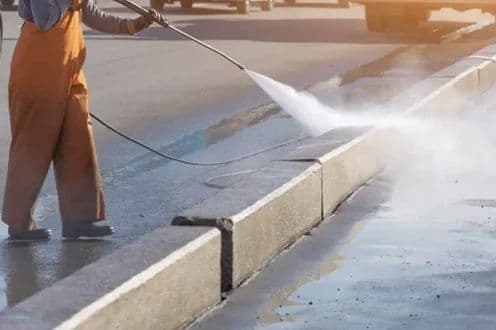
The method for graffiti removal depends on whether you’re working with a sacrificial or non-sacrificial coating. Sacrificial coatings are designed to come off along with the graffiti. Removal involves using hot water pressure washing at around 194°F, which melts the wax-based barrier and lifts the paint simultaneously. However, this process requires reapplying the coating immediately after each cleaning.
Non-sacrificial coatings simplify the cleanup process significantly. Graffiti can be removed using a pressure washer set between 100 and 400 psi or with mild solvents. These coatings remain intact, so there’s no need to reapply them after cleaning. According to Marcello Tronci, Senior Structural Engineer at CTLGroup:
The most common water-based cleaning method by far is pressure washing, in which a low- to medium-pressure spray (100 to 400 psi) is applied to the surface of the building.
Timing is crucial. Removing graffiti within 24 hours can reduce the likelihood of re-tagging by up to 80%. For vertical surfaces, gel-based removers work well because they stay in place during application. After using chemical strippers, make sure to rinse thoroughly to remove any residue that could harm the surface.
Anti-graffiti coatings can cut long-term cleanup costs by as much as 80%. If a property experiences two or more graffiti incidents annually, these coatings often pay for themselves within the first year. Regular maintenance and quick removal not only protect surfaces but also help preserve property value. For professional help with surface preparation, cleaning, or graffiti removal, ViewCrew Services offers exterior cleaning solutions across Massachusetts, Southern New Hampshire, and Connecticut.
Conclusion
When it comes to keeping brick, concrete, and wood surfaces graffiti-free, the right combination of protective coatings and consistent maintenance is key. Since these materials are porous, graffiti can seep deeply into the surface, often leaving behind faint marks or "ghosting." Using specialized anti-graffiti coatings not only prevents this but also makes cleanup easier and less damaging to the material. Breathable coatings are especially useful, as they allow trapped moisture to escape, reducing risks like freeze-thaw damage while still providing a strong barrier.
Anti-graffiti coatings can significantly reduce cleanup costs - by as much as 80% - and often pay for themselves within a year if a property experiences repeated tagging incidents. Removing graffiti quickly, ideally within 24 hours, can also lower the chances of re-tagging by 80%. These advantages highlight the value of regular maintenance.
For long-term protection, it’s important to clean surfaces thoroughly, repair any damage promptly, and seal porous areas. Testing a small, hidden section before applying a coating across a larger area is always a smart move. Sacrificial coatings are ideal for preserving heritage brick and natural stone, while permanent coatings are better suited for busy concrete areas that see frequent vandalism.
Professional care is just as important as the coatings themselves. Experienced technicians understand how to handle different materials, from selecting the right cleaning solutions to adjusting pressure levels, and they can respond quickly to new graffiti.
If you’re looking for expert exterior commercial cleaning and protection, property owners in Massachusetts, Southern New Hampshire, and Connecticut can turn to ViewCrew Services. Their team specializes in pressure washing and exterior care to help keep your brick, concrete, and wood surfaces clean and well-protected.
FAQs
Which anti-graffiti coating is best for my surface?
The right anti-graffiti coating for you depends on your surface, specific needs, and how often graffiti appears. Sacrificial coatings work well on surfaces like heritage brick or natural stone. They form a protective layer that can be removed along with the graffiti but require reapplication after each cleaning. On the other hand, permanent coatings offer a durable solution for areas prone to frequent vandalism. These allow for repeated cleanings without needing to reapply the coating. If you're dealing with low-risk areas, sacrificial coatings are often more budget-friendly, while permanent options are better suited for high-risk surfaces.
Will an anti-graffiti coating change the surface look?
An anti-graffiti coating comes in both clear and pigmented varieties. These coatings are specifically made to shield surfaces while preserving or enhancing their original look. This ensures that the surface's color or overall aesthetic remains unaffected.
Can I apply anti-graffiti coating myself or hire a pro?
You have two options when it comes to applying anti-graffiti coatings: doing it yourself or hiring a professional. If you're considering sacrificial coatings, they tend to be easier to apply and are often manageable as a DIY project. On the other hand, permanent coatings - like polyurethane or fluoropolymer - are trickier. These require professional application to ensure they’re applied evenly and last as intended.
For larger or more complex surfaces, it's usually best to bring in a pro. This not only ensures a high-quality finish but also helps avoid any accidental damage to the surface during application.