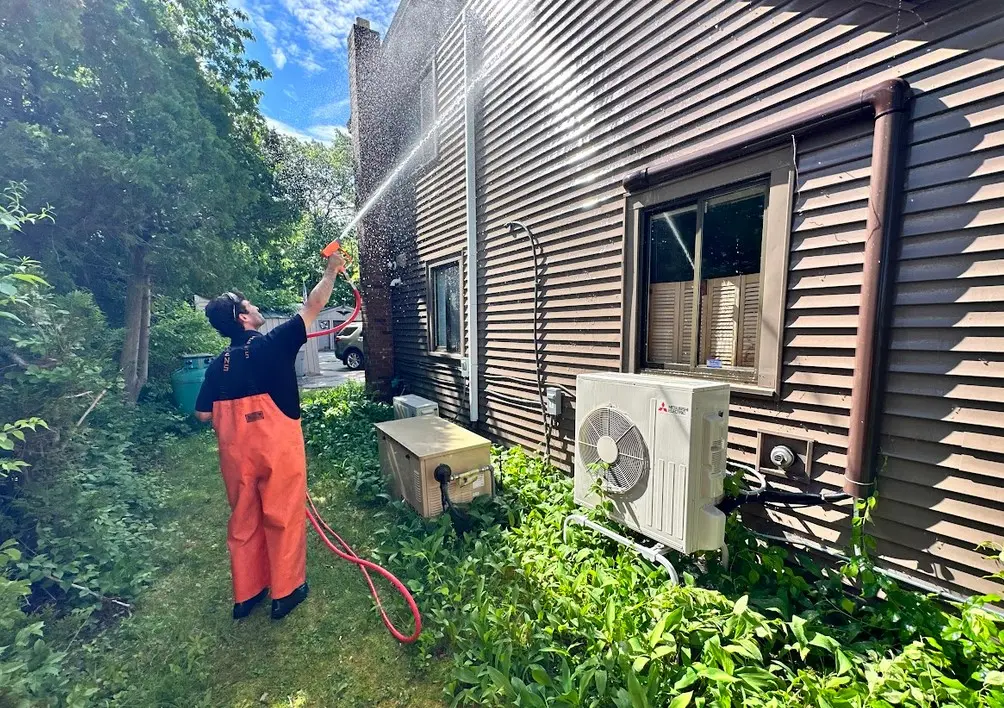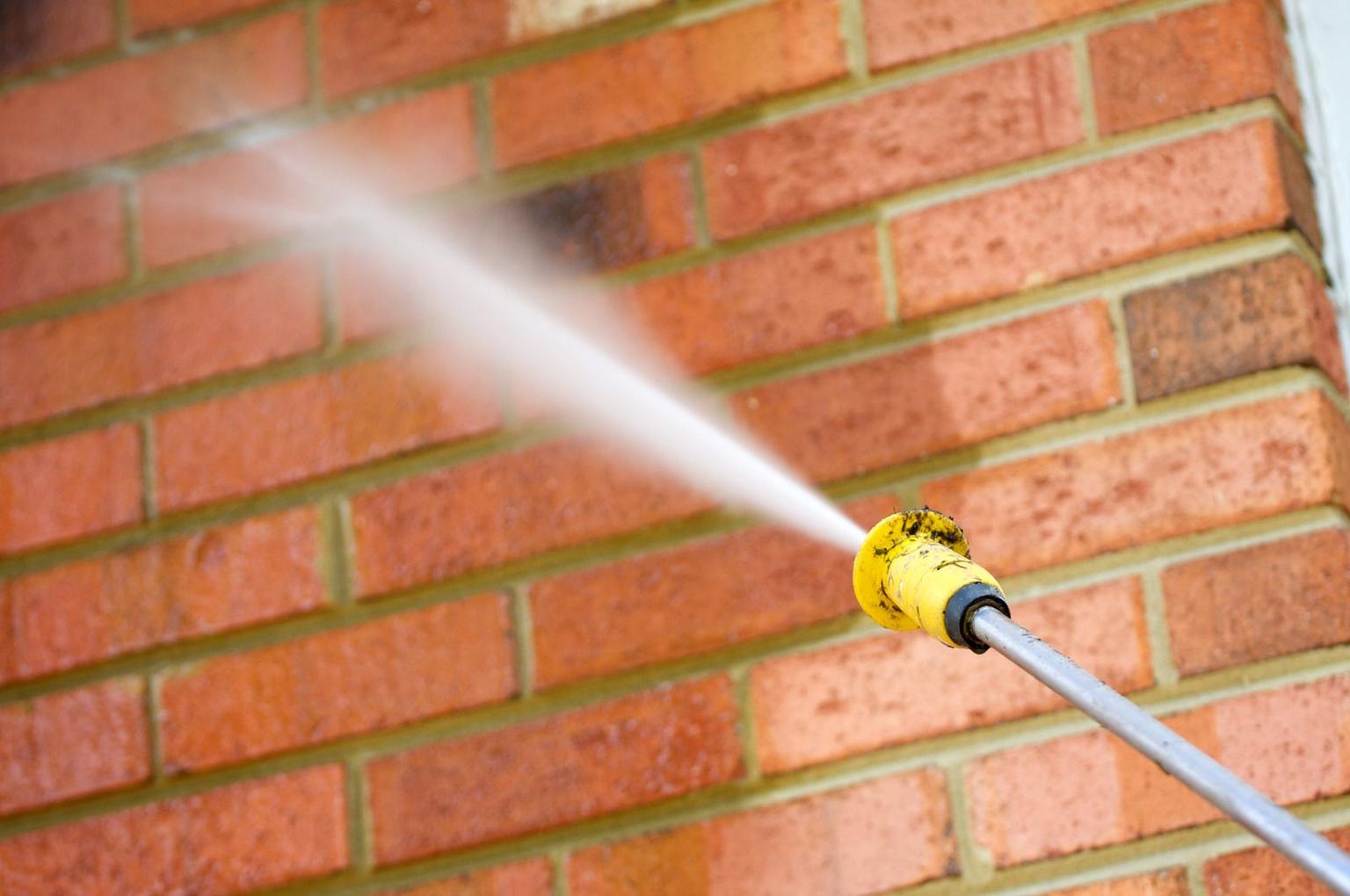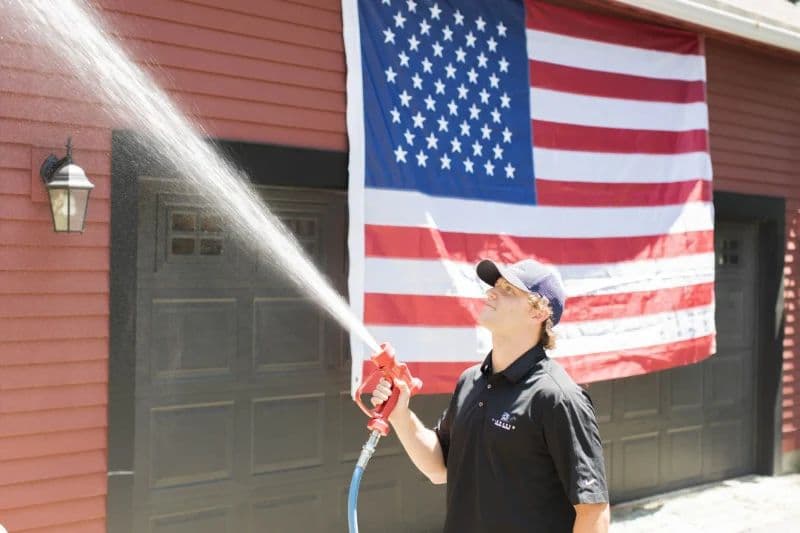
Soft washing is a safer cleaning method for delicate surfaces like roofs, siding, and wood, using low pressure and biodegradable chemicals. Choosing the right service is essential to avoid damage and ensure proper cleaning. Here's a quick guide to help you make the best decision:
- Check Experience: Look for providers specializing in soft washing with years of experience. Ask for before-and-after photos and references.
- Verify Insurance and Licensing: Ensure they have pollution liability insurance and a valid pesticide applicator license.
- Review Cleaning Solutions: Confirm they use EPA-approved, biodegradable products and have a plan to manage chemical runoff.
- Read Reviews and Guarantees: Look for detailed customer reviews and written satisfaction guarantees.
- Compare Quotes: Request itemized estimates and ensure the scope of work is clear.
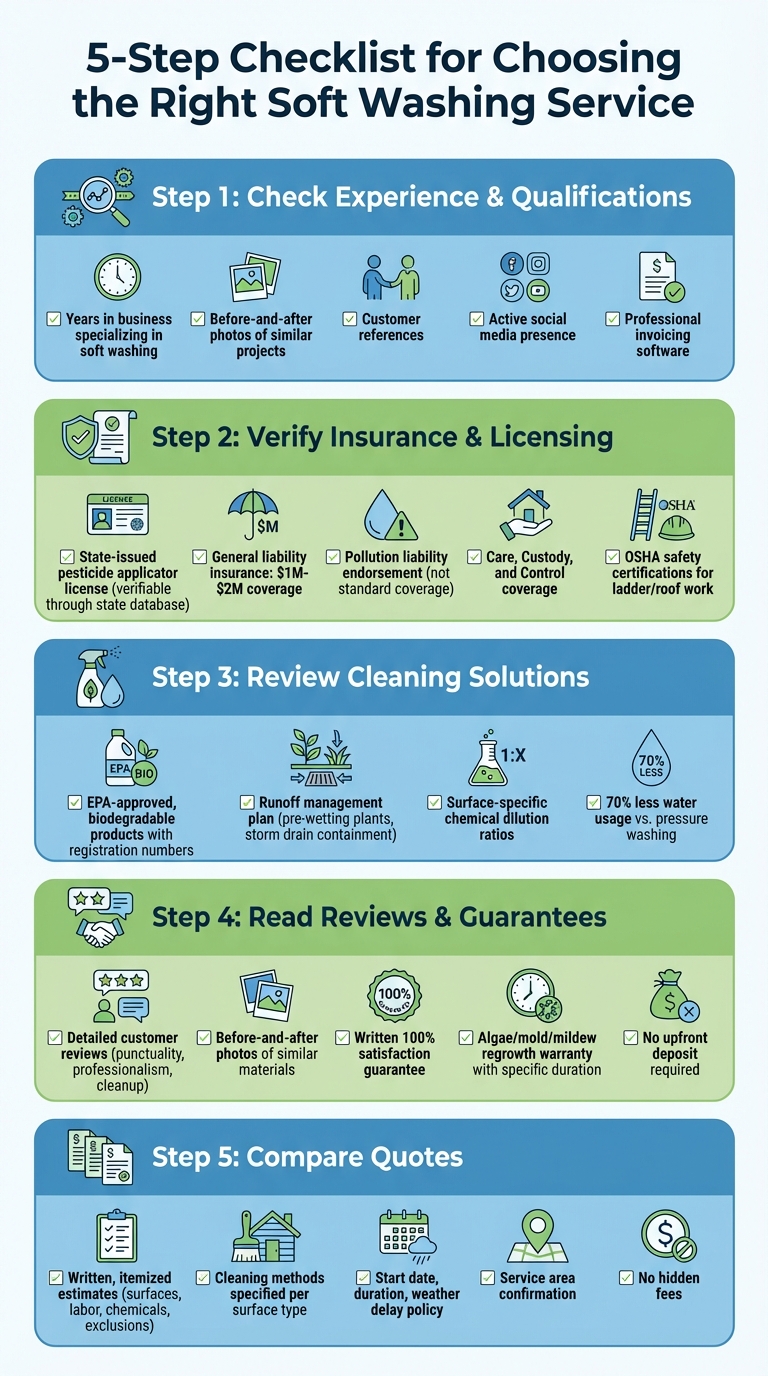
5-Step Checklist for Choosing a Soft Washing Service Provider
Check Experience and Qualifications
The length of time a provider has been in business often reflects their expertise in soft washing. Don’t hesitate to ask how long they’ve been operating and whether soft washing is their primary focus or just one of many services they offer. Companies that specialize exclusively in soft washing tend to have more refined skills in this area.
Ask for before-and-after photos of projects similar to yours - whether it’s vinyl siding, stucco, or asphalt shingles. These examples can help you gauge their ability to clean various surfaces without causing damage. Additionally, reaching out to previous customers can provide valuable insights into their professionalism and how long the cleaning results typically last.
An active presence on social media platforms like Instagram or Facebook is another good sign of an established business. The use of professional invoicing software can also confirm their legitimacy. NYC Power Wash highlights the importance of experience and credibility:
"Professional technicians have over 5 years experience. They are insured, and reliable. You can be at ease with an NYCPW on the job in your home or business."
Familiarity with local conditions further enhances a provider’s ability to handle unique, region-specific challenges.
Find a Provider with Local Knowledge
Local climate plays a significant role in how organic growth develops. For example, areas with rainy springs and humid summers often experience faster growth of algae, mold, and mildew. Providers who understand these conditions can adjust their chemical solutions and techniques to protect your landscaping while ensuring effective treatment.
Seasonal awareness is another advantage of hiring a local contractor. In regions like the Northeast, experienced providers know how to plan around winter shutdowns and schedule work during optimal weather conditions. They’re also familiar with the specific types of organic growth common to the area, allowing them to target the root cause rather than just removing surface buildup.
This local expertise also ties into the importance of verifying proper insurance and licensing.
Confirm Insurance and Licensing
Licensing isn’t just a formality - it’s a legal requirement and a clear indicator of a trustworthy provider. For instance, sodium hypochlorite, a common soft washing chemical, is regulated as a pesticide under the Federal Insecticide, Fungicide, and Rodenticide Act (FIFRA). This means technicians must hold a state-issued pesticide applicator license. You can verify their license number through your state’s public database.
Standard general liability insurance for exterior cleaning typically covers between $1 million and $2 million in damages, but this might not be enough. Make sure the contractor also has a pollution liability endorsement to cover chemical-related incidents, as standard policies often exclude these. Request a Certificate of Insurance (COI) that lists you as an additional insured and confirms pollution coverage.
Additionally, confirm that the contractor has "Care, Custody, and Control" coverage, which protects your property during the job. If the work involves ladders or roof access, ensure the technicians have OSHA safety certifications. Without these protections, you could face risks like regulatory violations or penalties for environmental discharge.
Essential qualifications for contractors include:
- A verified, up-to-date pesticide applicator license
- Pollution liability insurance beyond standard general liability
- Use of EPA-approved products with proper labeling
- A runoff plan to protect surrounding vegetation
- Adjusted chemical mix ratios for different surfaces, like roofs versus siding
(Source: National Softwash Authority [4])
sbb-itb-238bf3c
Review Cleaning Solutions and Environmental Safety
When it comes to soft washing, selecting the right cleaning solutions is critical - not just for effective cleaning, but also for protecting your surroundings. The products used can impact your landscaping, pets, and even local water supplies. Opting for biodegradable detergents ensures they break down naturally without leaving harmful residues behind. These options not only safeguard the environment but also reduce exposure to harsh fumes typically associated with industrial cleaners.
It's a good idea to ask your contractor for the EPA registration numbers of the cleaning products they use. You can verify these through the EPA Pesticide Product Label System. Jasper Hawkins from Southeast Softwash highlights the importance of this practice:
"By using biodegradable detergents, you can clean your property without polluting the ecosystem."
Contractors should also have clear plans for managing runoff. This might include pre-wetting plants, setting up containment around storm drains, and rinsing surfaces thoroughly to limit chemical runoff.
Another benefit of soft washing? It uses up to 70% less water compared to traditional pressure washing. This conservation effort reduces the volume of runoff, which can carry contaminants into local drainage systems. Performance Pressure & Soft Washing, LLC emphasizes:
"Soft washing can utilize up to 70% less water, making it a far more sustainable option. This not only saves precious water resources but also reduces the runoff carrying potential contaminants into the drainage systems."
It's also important to confirm whether the contractor adjusts chemical concentrations based on the surface being cleaned. Using the same high-strength solution on delicate wood or painted surfaces as on a roof is a major red flag. Proper dilution not only protects your property but also minimizes environmental risks.
By focusing on product safety and runoff management, contractors can help ensure compliance with environmental standards.
Verify Compliance with Local Regulations
Beyond choosing eco-friendly products, it's essential to ensure that the contractor adheres to local regulations. This step is crucial for protecting both your property and the broader community.
Start by reviewing the company's Certificate of Insurance. Look for a pollution liability endorsement, as standard general liability policies often exclude coverage for chemical-related incidents. Without this endorsement, you could be held responsible for environmental damage or violations affecting neighboring properties. The National Softwash Authority warns:
"Unqualified operators using incorrect dilution ratios or unlicensed pesticide applications can cause surface damage, vegetation loss, or regulatory violations that fall on the property owner."
Research Customer Reviews and Service Guarantees
After ensuring a company uses safe products and complies with local regulations, the next step is to evaluate their reliability. Customer reviews can provide insight into how well a contractor lives up to their promises, while service guarantees reflect their confidence in the work they deliver. Combining technical expertise with positive customer feedback gives you a clearer picture of overall service quality.
Check Online Reviews and Before-After Photos
Dive into customer reviews for detailed accounts of their experiences. Look for comments that go beyond generic praise like "Great service." According to Trustpilot, an effective review should include "enough detail to give others a feel for what happened. Explain which factors contributed to your positive, negative or just so-so experience".
Pay attention to recurring themes such as punctuality, professionalism, and thorough cleanup. Reviews highlighting clear communication and a lack of high-pressure sales tactics are especially valuable. For example, James G., a satisfied customer, shared:
"Alan walked us around and made sure we were satisfied with the work before they left. Very pleased all in all".
This kind of follow-up process is a good indicator of a company that values quality and customer satisfaction.
Before-and-after photos can also speak volumes about a contractor’s skills. Focus on images of homes with materials similar to yours, whether it’s vinyl siding, stucco, or asphalt shingles. A company that hesitates to provide visual proof or references might signal potential quality concerns. Reviews should also confirm that the worksite was left clean and tidy after the job.
Once you’ve assessed the company’s performance through reviews and photos, the next step is to confirm their commitment to quality with clear, written guarantees.
Find Companies with Satisfaction Guarantees
A written satisfaction guarantee is a strong sign of a contractor’s dedication to delivering excellent work. Seek out companies that offer 100% satisfaction policies, where payment is only required once you’re completely happy with the results. For instance, Alabama SoftWash emphasizes:
"You will be charged when we are finished, and you are satisfied".
Ask about warranties that cover the regrowth of algae, mold, or mildew. These warranties should include a specific duration and be documented in writing. Some top-rated contractors go even further, offering financial backing like a $5,000 satisfaction guarantee to protect your investment. As South Florida Soft Wash explains:
"a company that's willing to offer this kind of protection shows confidence in its methods and a commitment to customer satisfaction".
Avoid contractors who only provide verbal or vague guarantees. Reputable companies will supply detailed, itemized estimates that outline post-treatment steps and conditions for re-treatment. Trustworthy providers often require no upfront deposit, with full payment due only after you’ve confirmed the job meets your expectations.
When reviewing guarantees, ask for a breakdown of what’s covered and how long the protection lasts. Then, cross-check these policies against customer reviews to ensure the company consistently delivers on its promises.
Compare Quotes and Service Coverage
After confirming a contractor's reliability, the next step is to assess their pricing and the scope of their services. A detailed and transparent quote not only outlines what’s included but also reflects the contractor’s organization - helping you avoid unexpected charges down the line.
Get Custom Quotes with Clear Details
Once you’ve verified the quality of service, it’s time to focus on the clarity of the quotes. Always request a written, itemized estimate that specifies which surfaces will be cleaned - like vinyl siding, soffits, gutters, or driveways. The quote should also include labor costs, chemical expenses, and any exclusions, such as “oil stain removal not included” or “no roof work.” Additionally, it should detail the cleaning methods for each surface, such as soft washing for delicate materials like vinyl and stucco, and pressure washing for tougher surfaces like concrete.
A professional quote should break down all costs, including labor, preparation, and any neutralization steps. Written estimates are essential to avoid hidden fees. Be sure to ask about conditions that could lead to extra charges, such as heavy staining, ladder work, or moving outdoor furniture. This way, you can make an apples-to-apples comparison between quotes. A trustworthy contractor will also include logistical details like the start date, estimated project duration, and their policy on weather delays. Make sure the procedure and costs for addressing unsatisfactory results are clearly outlined in writing as well.
After reviewing the quote, confirm that the contractor can service your location.
Confirm Service Area and Availability
Not all soft washing providers operate in every area or offer every type of service. Check the company’s “Service Area” page or ask directly to confirm they serve your city or county. Local availability is just as critical as technical skill to ensure a smooth and efficient job.
Make sure the contractor offers the specific cleaning services you need, whether that’s roof cleaning, patio washing, or gutter brightening. For example, roof cleaning often requires precise chemical mixtures (typically 3% to 6% sodium hypochlorite) and specialized tools. A provider unfamiliar with local architectural styles or regulations may not have the expertise to handle sensitive surfaces safely.
Additionally, ask about their availability to schedule the service at a time that works for you, especially during busy seasons. Confirming the service area and scheduling upfront can also help you avoid surprise travel fees and ensure the contractor has the necessary equipment to access your property.
Avoid Common Mistakes When Hiring
Even with research, quotes, and reviews in hand, homeowners often make mistakes when hiring contractors. These errors can lead to property damage, legal trouble, or unexpected expenses. Knowing what to avoid can help protect your home and wallet.
Recognize Warning Signs
One major red flag is insurance gaps. While most contractors carry General Liability insurance, not all have a pollution liability endorsement, which is essential for chemical applications. Always request a Certificate of Insurance (COI) that lists you as an additional insured and ensures this specific coverage is included.
Another critical issue is licensing failures. If a contractor can’t provide a valid pesticide applicator license number, it’s best to look elsewhere. Proper licensing not only ensures compliance with federal laws but also shields you from potential liability.
Avoid contractors who provide vague or verbal estimates. Instead, insist on detailed, written estimates that clearly outline labor, materials, and preparation costs. Be wary of anyone using unlabeled chemicals or mixing chemicals on-site without clear labels. Professional-grade products should always display EPA registration numbers. Additionally, steer clear of companies that apply the same chemical concentration across all surfaces. For example, roof-mix concentrations (3–6% sodium hypochlorite) can cause severe damage to painted surfaces or wood if improperly adjusted.
Spotting these warning signs is crucial, but ensuring the contractor uses the right equipment is just as important.
Confirm Proper Equipment Use
Soft washing requires specialized low-pressure systems (40–60 PSI) designed for precise chemical mixing. A common mistake is hiring a pressure washing company that claims to offer soft washing but simply attaches a low-pressure nozzle to a high-pressure washer. This approach can still damage delicate surfaces like shingles or stucco.
Ask contractors detailed questions about their equipment. Professional setups include dedicated pumps with proportioners or mixing manifold systems, allowing for precise chemical adjustments suited to different surfaces. The cleaning effectiveness should come from the chemical dwell time, not high-pressure force. If a contractor struggles to explain their equipment or techniques, it’s a clear sign they may lack the expertise needed for the job.
Conclusion
Take the time to review credentials, cleaning techniques, and written estimates to protect your property. Ensure your contractor has a valid pesticide applicator license and carries insurance that includes a pollution liability endorsement. This step safeguards you from potential liabilities if something goes wrong.
Opt for biodegradable, EPA-approved solutions tailored to the specific surfaces being cleaned. A skilled cleaning contractor — like View Crew Services, which built its process around exactly these standards — will not only understand these nuances but will also be transparent about their process and methods.
Document everything. Confirm all safety measures and cleaning methods in writing. Insist on detailed, itemized estimates instead of verbal agreements or lump-sum quotes. A clear breakdown of labor, chemical costs, surface preparation, and runoff management will help you make informed comparisons between services and avoid hidden fees.
FAQs
Will soft washing harm my plants or pets?
Soft washing is gentle on plants and pets when done with eco-friendly cleaning solutions and low-pressure methods. These techniques minimize potential damage far more effectively than high-pressure washing. Make sure to check with your service provider to ensure they use environmentally safe products and take steps to safeguard your landscaping and animals throughout the cleaning process.
How long should soft washing results last?
Soft washing results generally last between 1 to 3 years, but this can vary based on factors like weather conditions and how well the area is maintained. With regular upkeep, you can keep your surfaces looking clean and your home visually appealing for a longer period.
What should I ask for to prove a company is properly licensed and insured?
When hiring a company, always ask for proof of their license and insurance. Specifically, request documentation that confirms they are legally licensed to operate in your area and carry insurance, including general liability and workers’ compensation. Reputable companies will have no issue providing these details. If they hesitate or outright refuse, treat it as a warning sign and explore other options.