Black streaks on your roof are caused by algae (Gloeocapsa magma), which feed on the limestone in asphalt shingles. These streaks not only affect appearance but can also damage shingles, reduce their lifespan, and increase cooling costs. To safely clean your roof, follow these steps:
- Inspect your roof for damage before cleaning. Check shingles, gutters, and attic for signs of wear or leaks.
- Use safety gear like a harness, non-slip boots, and goggles. Protect plants and property by soaking vegetation and covering delicate areas.
-
Choose a cleaning method:
- Chlorine Bleach Solution: Mix bleach and water, spray on streaks, then rinse.
- Oxygen-Based Cleaner: A gentler, eco-friendly option.
- Soft Wash: Low-pressure cleaning with biodegradable solutions, often done by professionals.
- Hire professionals if the roof is fragile or heavily stained. Services like ViewCrew offer tailored soft washing with a satisfaction guarantee.
To prevent streaks from returning, install zinc or copper strips along your roof's ridge and maintain your roof regularly by trimming branches and cleaning gutters. These steps can extend your roof's life and save on repair costs.
How to Remove Algae and Black Stains from Asphalt Shingle Roof
Safety Steps Before You Start Cleaning
Start by examining your roof from the ground using a pair of binoculars. Look for missing, cracked, or curled shingles, as these could indicate existing damage that cleaning might worsen. If you notice that more than 25% of your roof's surface is compromised, a full replacement might be necessary instead of cleaning.
Check for any sagging areas, warped sections, or rust on metal flashings, which could signal structural issues needing professional attention before cleaning. Take a look at your gutters as well - excessive granule buildup can mean your shingles are deteriorating and may not withstand a thorough cleaning. For roofs older than 20 years, pay extra attention to shingle curling or buckling, as these signs suggest the roof could be too fragile for cleaning.
Don’t skip inspecting your attic. Look for signs like daylight seeping through the boards, musty smells, or water stains on the underside of the roof sheathing. These could indicate active leaks that should be repaired before applying any cleaning solutions.
Once you’ve confirmed your roof is in suitable condition, it’s time to focus on safety gear and measures to protect your property.
Gather Safety Gear and Protect Your Property
After ensuring it's safe to clean, prioritize your safety and take steps to safeguard your surroundings. Equip yourself with a safety harness, non-slip boots, protective gloves, and safety goggles to prevent falls and protect against debris and cleaning chemicals.
Before starting, soak all nearby plants, shrubs, and grass with fresh water. This minimizes their absorption of harmful sodium hypochlorite found in bleach-based cleaners. As soft wash expert Jay Racenstein advises:
"If there's one golden rule of plant protection during soft washing, it's this: keep the plants soaked with fresh water."
Use breathable materials like Tyvek to cover delicate plants instead of plastic tarps, which can trap heat and potentially harm vegetation on hot days. Protect your downspouts by securing heavy-duty bags or buckets to collect chemical runoff. Move outdoor furniture away from the house to avoid damage from overspray.
Work with a partner who can assist and keep an eye on safety. Only clean on days with calm weather - no wind, no rain, and moderate temperatures. To reduce the risk of accidents and prevent damage to shingles, use tools like telescopic poles or water-fed wands instead of walking extensively on the roof.
3 Methods for Removing Black Streaks
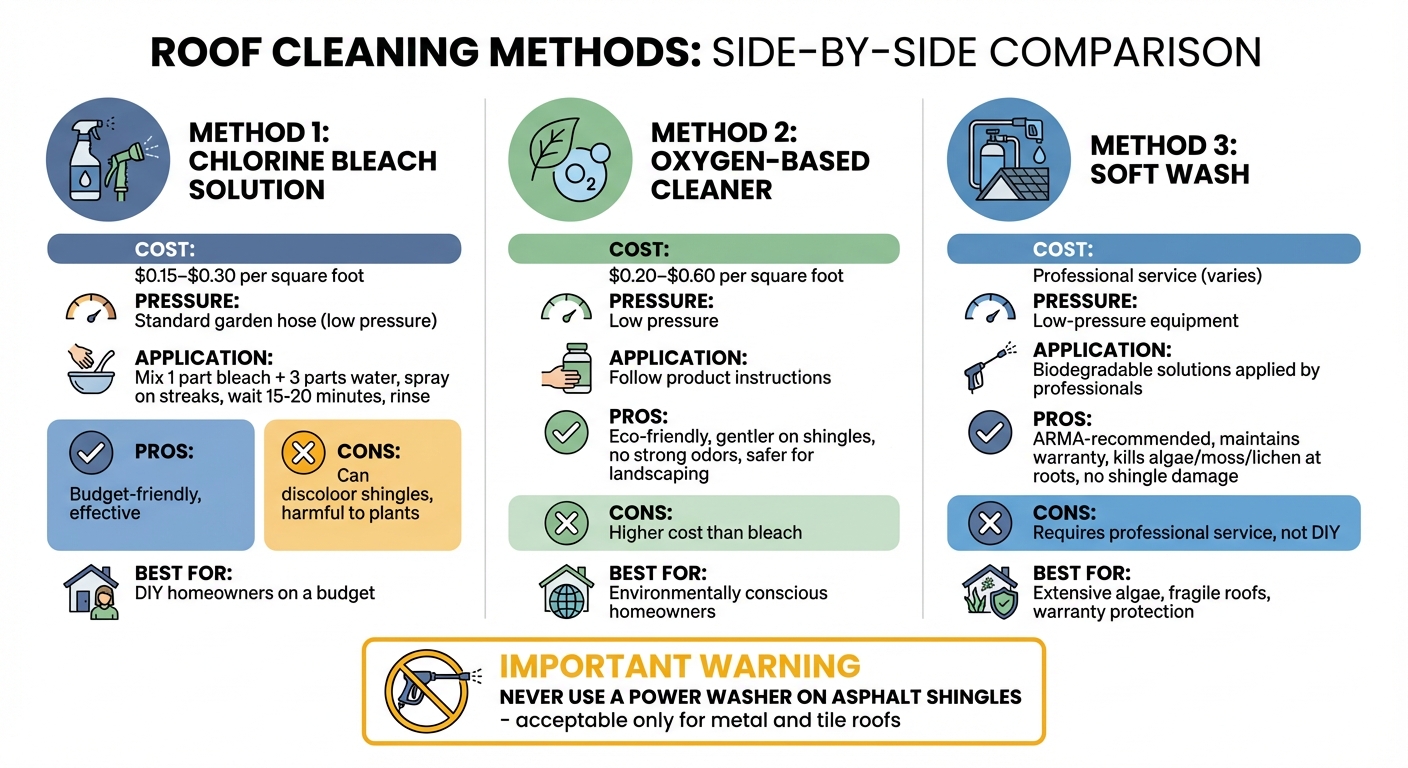
3 Roof Cleaning Methods Comparison: Costs, Safety & Effectiveness
Once your roof is prepped and your property is protected, it’s time to tackle those black streaks caused by the algae Gloeocapsa magma. Here are three approaches, each with its own strengths, costs, and considerations.
Chlorine Bleach Solution Method
This method involves mixing one part chlorine bleach with three parts water in a garden sprayer. Spray the solution directly onto the streaked areas and let it sit for 15–20 minutes to break down the algae. Afterward, rinse the roof thoroughly with a standard garden hose - never use a pressure washer, as it can strip the protective granules off asphalt shingles.
While this is a budget-friendly option (costing around $0.15–$0.30 per square foot), exercise caution. Bleach can discolor shingles and harm nearby plants if they’re not adequately shielded.
Oxygen-Based Cleaner Method
Oxygen-based cleaners are a gentler, more eco-conscious alternative. These commercial products come with specific instructions to ensure proper use. They’re less likely to emit strong chemical odors and won’t pose as much risk to your landscaping.
This option typically costs between $0.20 and $0.60 per square foot, making it a great choice for those prioritizing safety and environmental impact.
Soft Wash Method
The soft wash method uses low-pressure equipment combined with biodegradable, eco-friendly solutions to clean your roof. Recommended by the Asphalt Roofing Manufacturers Association (ARMA) for maintaining warranty coverage, this technique is effective at killing algae, moss, and lichen without damaging shingles.
One expert highlights the importance of avoiding high-pressure washing:
"Never use a power washer on a shingle roof; it is acceptable only for metal and tile roofs."
Since soft washing requires specialized equipment and expertise, it’s usually performed by professionals. While it’s not a DIY method, it’s a reliable option for those seeking thorough results without risking roof damage.
sbb-itb-238bf3c
Professional Roof Cleaning with ViewCrew Services

When dealing with extensive algae or other roof issues, professional cleaning can be the safest and most effective solution. ViewCrew Services offers expert roof cleaning throughout Massachusetts, Southern New Hampshire, and Connecticut. They use specialized techniques designed to remove black streaks and other buildup while protecting your shingles. This professional approach goes beyond DIY methods by focusing on safety and long-term roof health.
ARMA-Recommended Soft Wash Systems
ViewCrew relies on soft washing, a method recommended by the Asphalt Roofing Manufacturers Association (ARMA). This low-pressure system uses specially formulated cleaning solutions combined with gentle water pressure to target algae, moss, and lichen at their roots. Unlike high-pressure washing, soft washing preserves the protective granules on shingles and prevents water from being forced underneath them, which could lead to leaks or other damage.
High-pressure washing can harm shingles, void warranties, and even shorten your roof's lifespan. ViewCrew’s soft wash system avoids all these risks, making it an ideal choice for asphalt shingles. It delivers professional results while safeguarding your roof's warranty and durability.
In addition to using proven cleaning methods, ViewCrew customizes their services to address the specific needs of each roof.
Custom Solutions and Satisfaction Guarantee
No two roofs are exactly alike, which is why ViewCrew’s fully insured technicians take the time to assess your roof and create a tailored cleaning plan. This ensures optimal results while maintaining your roof’s structural integrity. Their personalized approach means you get precisely what your roof needs - nothing more, nothing less.
To back their work, ViewCrew offers a 100% satisfaction guarantee. Their promise is straightforward:
"If for any reason if our services were not completed to your satisfaction, we will return FREE of charge to resolve any issues until you are happy."
With over 1,000 five-star reviews and a perfect 5.0 rating in areas like North Andover, Walpole, Nashua, Windham, Stamford, and Ridgefield, ViewCrew has earned a reputation for professionalism and dependability. Homeowners can easily get started by requesting a free, no-obligation estimate.
How to Prevent Black Streaks from Coming Back
Once your roof is clean, the challenge is keeping it that way. Without taking preventive steps, black streaks can reappear within 12–24 months on untreated asphalt shingles, especially in humid areas. By combining passive protective measures with routine maintenance, you can significantly delay the return of these unsightly streaks.
Install Algae-Resistant Features
After cleaning your roof, installing zinc or copper strips along the ridge can help maintain its clean appearance. When it rains, water flows over these metal strips, releasing ions that inhibit algae growth. Even at concentrations as low as 0.5 parts per million, these ions are effective at keeping algae at bay. Typically, a single strip protects an area 10 to 15 feet downslope, depending on factors like roof pitch and local rainfall patterns.
- Zinc strips are a versatile option, suitable for asphalt, concrete, and metal roofs.
- Copper strips are more potent in preventing algae but may develop a green patina over time. Keep in mind that copper should never come into contact with aluminum gutters or fasteners, as this can lead to galvanic corrosion.
For roofs with more complex designs, such as those with hip-and-valley structures, it's a good idea to install strips along both ridges and hip lines to ensure full coverage. However, remember that these strips are preventive tools only. They won’t eliminate existing algae, so they should be installed on a new roof or right after a professional cleaning.
Follow Regular Maintenance Practices
Consistent maintenance plays a huge role in keeping your roof streak-free for the long haul. Here are a few steps to include in your routine:
- Trim back tree branches and clear out gutters to boost sunlight exposure and reduce moisture retention.
- Pay extra attention to north-facing roof slopes, as they receive less sunlight and tend to stay damp longer, making them more prone to algae growth.
In addition to these practices, schedule a professional soft wash every 3–5 years or as soon as you notice early signs of staining. Between these cleanings, an annual liquid biocide rinse can help slow down algae regrowth. By combining preventive installations with regular care, you can extend the life of your roof and reduce the need for frequent cleanings.
Conclusion: Maintain a Clean and Protected Roof
Those black streaks on your roof aren't just unattractive - they’re a sign that algae (Gloeocapsa magma) is feeding on the limestone in your asphalt shingles. Left unchecked, this can lead to premature damage and costly repairs. The good news? Using safe, low-pressure techniques like soft washing, you can remove algae effectively without harming your shingles, preserving both your roof's lifespan and its energy efficiency. But cleaning alone isn’t enough - prevention matters just as much.
Preventive steps, like installing metal strips and scheduling regular maintenance, can help keep your roof streak-free for the long haul.
For comprehensive protection, ViewCrew Services combines specialized equipment with eco-friendly biocides to tackle not just algae but also underlying issues like loose shingles or structural concerns. Their adherence to industry-recommended soft wash systems, paired with a 100% satisfaction guarantee, ensures your roof gets the care it deserves.
To keep your roof in top shape, aim for professional roof cleanings every 2–3 years, annual inspections, and regular debris removal. These steps not only protect your roof’s integrity but also reduce heat absorption and maintain your property’s value. Ignoring algae growth, on the other hand, could void manufacturer warranties and lead to unexpected repair bills.
A clean roof is more than just curb appeal - it’s about protecting your investment and extending the life of your roof. Proactive care now can save you from the headache and expense of a full roof replacement later.
FAQs
Will cleaning remove roof algae permanently?
Cleaning is a great way to get rid of black streaks caused by algae and dirt, but it’s not a permanent fix for algae itself. If your roof or surfaces continue to have moisture and shade, algae can return. To keep it from coming back, regular upkeep and tackling these conditions are key.
Can roof cleaning void my shingle warranty?
Using the wrong cleaning methods - like applying harsh chemicals or using high-pressure washing - can harm the protective coating on your shingles. This damage might even void your manufacturer’s warranty. To protect your roof and your investment, stick to gentle, roof-safe cleaning techniques.
How do I know if my roof is too damaged to clean?
If you're wondering whether your roof is too damaged to clean, look for clear warning signs. These include active leaks, missing shingles, edges that are curling, or extensive soft spots across the surface. A good rule of thumb: if over 25% of the roof shows damage, replacing it might be a smarter move than trying to clean it. When in doubt, reach out to a roofing professional to assess the situation and help you avoid further complications while staying safe.