Soft wash roof cleaning is a safe, low-pressure method for cleaning roofs, using chemical solutions to remove algae, moss, and lichen without damaging the roof's surface. Unlike high-pressure washing, which can strip away protective shingle granules and void warranties, soft washing operates below 500 PSI and targets biological growth at its roots. This method preserves your roof's lifespan, improves its appearance, and aligns with manufacturer recommendations.
Key Points:
- Pressure: Soft washing uses 40–80 PSI, similar to a garden hose, versus 1,500–4,000 PSI in pressure washing.
- Chemicals: Sodium hypochlorite (1–6%) and surfactants are applied for deep cleaning.
- Results: Lasts 2–4 years compared to 6–12 months with pressure washing.
- Roof Types: Works for asphalt shingles, clay tiles, wood shakes, metal, and flat membranes.
- Cost: While more expensive upfront ($400 vs. $150 for pressure washing), it saves money long-term by reducing roof wear and replacement costs.
Soft washing is recommended by the Asphalt Roofing Manufacturers Association (ARMA) for asphalt shingles and is safer for delicate roof materials. Professionals use specialized equipment and techniques to protect your roof, landscaping, and warranties. Regular cleaning every 1–2 years ensures your roof stays in great condition.
The SAFEST Way to SOFT WASH a Roof (full tutorial)
What Is Soft Wash Roof Cleaning?
Soft wash roof cleaning is a method that uses low-pressure water and specialized chemical solutions to clean roofs by removing dirt, algae, mold, and mildew. Unlike high-pressure cleaning systems that operate between 1,500 and 3,000 PSI, soft washing uses much lower pressures, typically around 40 to 80 PSI - similar to the pressure of a garden hose. This approach relies on a chemical process to thoroughly eliminate contaminants without damaging the roof.
The process hinges on what's called "chemical dwell time." A diluted sodium hypochlorite solution (with a concentration of 1% to 6%) mixed with surfactants is applied to the roof. This solution is left to sit for 10 to 30 minutes, allowing it to penetrate and destroy the root structures of organisms like moss rhizoids and lichen rhizines. Instead of simply washing them away, soft washing ensures these growths are killed at their source.
"Soft washing is defined by two primary characteristics: operating pressure and chemical application. Water delivery occurs at or below 500 PSI... combined with a dwell-time chemical solution applied before rinsing."
This method is particularly effective against organisms such as Gloeocapsa magma, moss, lichen, mold, mildew, and other organic debris. While the biocidal solution works immediately, it may take 30 to 90 days for natural rainfall to completely remove any remaining residue. By targeting harmful growths and preserving the roof’s protective features, soft washing helps extend the life of your roof.
One of the biggest benefits of soft washing is that it protects the ceramic granules on asphalt shingles. These granules are essential for shielding the roof from UV damage. In contrast, high-pressure washing can strip these granules away, leading to faster wear and potentially voiding manufacturer warranties. To ensure safe and effective cleaning, professionals use 12-volt or gas-powered diaphragm pumps specifically designed for this low-pressure method.
Soft Wash vs. Pressure Washing
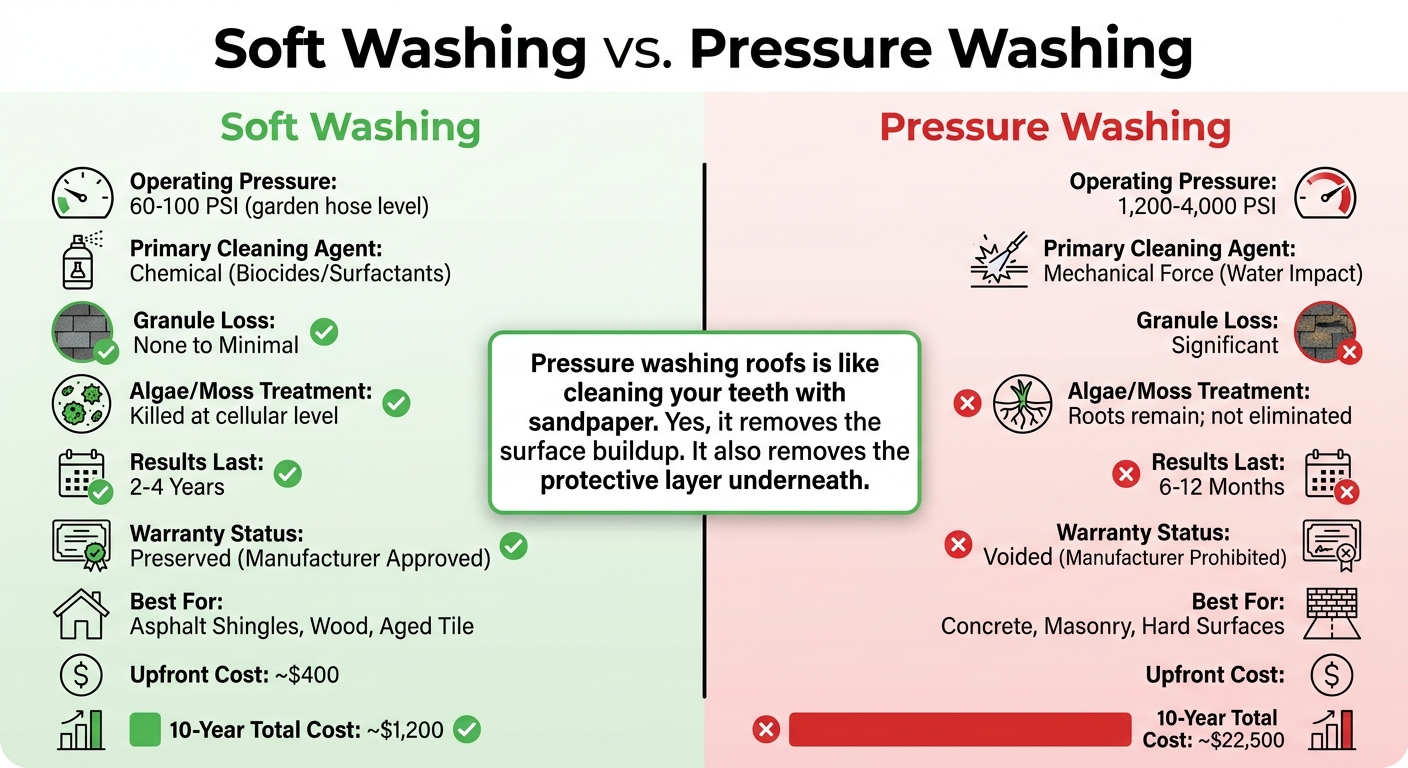
Soft Washing vs Pressure Washing: Comparison Chart for Roof Cleaning
The main difference between soft washing and pressure washing comes down to the pressure used and how each method cleans. Soft washing operates at a gentle 60–100 PSI, comparable to a garden hose, while pressure washing blasts water at a much higher 1,200–4,000 PSI. This extreme force can be harmful, particularly for delicate surfaces like roofs. Soft washing relies on chemical solutions - such as sodium hypochlorite and surfactants - to kill algae, moss, and lichen at their roots. In contrast, pressure washing uses sheer mechanical force to remove surface debris but doesn’t address the root systems of these organisms.
This difference in cleaning approach has a direct impact on your roof’s lifespan. Pressure washing can strip away the ceramic granules on asphalt shingles, which are essential for UV protection, and may even lift shingle edges. This can lead to water damage, leaks, and rot. Major roofing manufacturers like GAF, Owens Corning, and CertainTeed explicitly state that pressure washing voids their warranties. On the other hand, the Asphalt Roofing Manufacturers Association (ARMA) approves low-pressure chemical cleaning methods.
"Pressure washing roofs is like cleaning your teeth with sandpaper. Yes, it removes the surface buildup. It also removes the protective layer underneath."
- Florida Roof Cleaning
Soft washing has another advantage - its results last much longer. By targeting growth at the cellular level, soft washing keeps your roof clean for 2–4 years, compared to just 6–12 months with pressure washing. Here’s a side-by-side comparison to highlight the differences:
| Feature | Soft Washing | Pressure Washing |
|---|---|---|
| Operating Pressure | 60–100 PSI | 1,200–4,000 PSI |
| Primary Agent | Chemical (Biocides/Surfactants) | Mechanical Force (Water Impact) |
| Granule Loss | None to Minimal | Significant |
| Algae/Moss Roots | Killed at the cellular level | Not eliminated; roots remain |
| Result Duration | 2–4 Years | 6–12 Months |
| Warranty Status | Preserved (Manufacturer Approved) | Voided (Manufacturer Prohibited) |
| Best For | Asphalt Shingles, Wood, Aged Tile | Concrete, Masonry, Hard Surfaces |
The numbers speak for themselves. While pressure washing might seem cheaper upfront - around $150 compared to $400 for soft washing - the long-term costs tell a different story. Over a 10-year period, frequent pressure washing and premature roof replacement can add up to $22,500. In contrast, soft washing costs approximately $1,200 in the same timeframe. These differences make soft washing the smarter choice for both roof preservation and long-term savings.
Which Roof Types Work Best with Soft Washing
Soft washing is a versatile cleaning method that works well for most residential roof types. However, the technique needs to be adjusted based on the specific roofing material to ensure effective cleaning while preserving the roof's integrity.
Asphalt shingles dominate U.S. residential roofs, covering about 75% of homes. The Asphalt Roofing Manufacturers Association recommends low-pressure chemical cleaning for these shingles. This method effectively removes algae without causing granule loss, which helps maintain warranties. For asphalt shingles, a sodium hypochlorite solution (3% to 5%) is commonly used, with pressures kept below 500 PSI.
Clay and concrete tiles are more fragile and porous, making them susceptible to damage from high-pressure cleaning. Clay tiles, in particular, require extra care, with pressures kept under 800 PSI (compared to 1,200 PSI for concrete tiles). A 3% to 5% chemical mix is applied to penetrate the surface and eliminate algae and moss.
Wood shingles and shakes need an even gentler approach. To protect the wood fibers, sodium hypochlorite concentrations should stay below 1.5%. Many professionals opt for oxygen bleach (sodium percarbonate) to sanitize wood without stripping its natural oils. Pressure settings should not exceed 600 PSI to avoid raising the wood grain.
Metal roofing can also be cleaned with soft washing, but it requires specific adjustments. Lower bleach concentrations (2% or less) combined with a corrosion inhibitor are recommended to prevent oxidation and protect factory coatings. Pressure should stay below 500 PSI, and special care should be taken to avoid bleach-based solutions on copper flashing, as they can cause corrosion.
Low-slope and flat membranes like TPO and EPDM require cleaning solutions approved by the manufacturer. These synthetic materials are sensitive to certain chemicals, which could damage seams and adhesives. Always confirm chemical compatibility with the manufacturer and use pressures below 400 PSI to avoid punctures. Additionally, if the roof has visible structural damage - such as missing shingles, cracked tiles, or open seams - soft washing should be avoided, as chemicals could seep into compromised areas and worsen the damage.
Tools and Cleaning Solutions Used in Soft Washing
Soft washing relies on specialized tools that work differently from traditional pressure washers. At its core is a low-pressure pump system - either a 12-volt electric pump or a gas-powered diaphragm pump - that applies cleaning solutions at pressures ranging from 40 to 500 PSI. These systems often come mounted on trailer rigs equipped with tanks holding 100 to 500 gallons, ensuring uniform application and effective rinsing over large roof areas. A key component of the setup is the chemical delivery system, which allows precise dilution and application of cleaning agents.
The chemical delivery system uses downstream injectors and metering tools to achieve accurate dilution ratios. The primary cleaning agent is sodium hypochlorite (commonly known as bleach), typically diluted to provide active chlorine concentrations between 1% and 6%, depending on the roof material. Bulk sodium hypochlorite, sold in strengths of 10% or 12.5%, costs around $2 to $3 per gallon. To enhance effectiveness, surfactants are added to help the solution adhere to sloped surfaces and penetrate porous materials where algae and moss thrive. For more sensitive surfaces, such as wood shakes or areas requiring an eco-friendlier approach, sodium percarbonate offers an alternative. While less aggressive than sodium hypochlorite, it works more slowly.
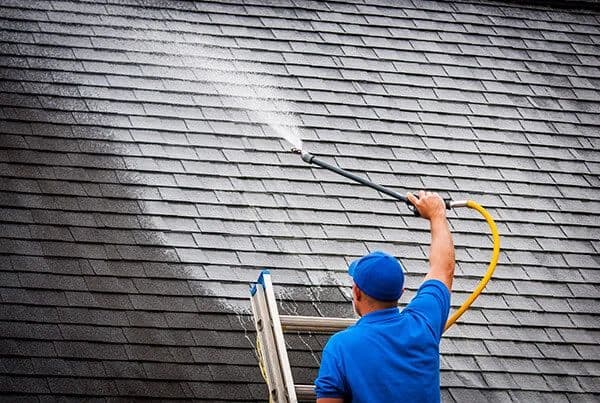
Nozzle selection is another critical factor in soft washing. A color-coded system helps professionals choose the right nozzle for the job. Black tips (65°) are used for applying chemicals at ultra-low pressure, while white tips (40°) create a wide fan spray for gentle rinsing. These nozzles ensure low pressure, protecting shingles from damage. In contrast, high-pressure nozzles like red or yellow tips, often used in pressure washing, can strip away protective granules. For added safety and convenience, telescoping wands allow technicians to apply solutions from the ground, even on roof pitches as steep as 8:12, minimizing the risk of falls.
Handling the chemicals used in soft washing requires proper safety precautions. Essential gear includes nitrile or neoprene gloves, face shields, chemical-resistant suits, and respiratory protection to guard against sodium hypochlorite exposure and fumes. For roof pitches steeper than 4:12, OSHA regulations mandate personal fall arrest systems, such as harnesses and anchor points. Additionally, operators must comply with OSHA's Hazard Communication Standard and EPA guidelines for managing chemical runoff.
The precision of professional-grade equipment is a major advantage. According to the National Roof Cleaning Authority:
"Nozzle wear degrades orifice geometry over time, causing pressure spikes that can damage surfaces - nozzle inspection and replacement is a standard maintenance interval in professional operations".
With professional metering systems, the chemical mix is carefully calibrated to eliminate organisms at their roots while ensuring the roof remains intact and undamaged.
sbb-itb-238bf3c
How the Soft Wash Process Works
Soft washing relies on carefully applied chemicals rather than brute force to clean surfaces effectively. It all starts with a pre-inspection and site assessment, where technicians take a close look at the roofing material - whether it's asphalt, tile, or metal - and assess the extent of growth like algae, moss, or lichen. They also check for any structural issues, such as cracked tiles or missing shingles, that might complicate the cleaning process. This step ensures the cleaning plan is customized to suit the roof's specific needs.
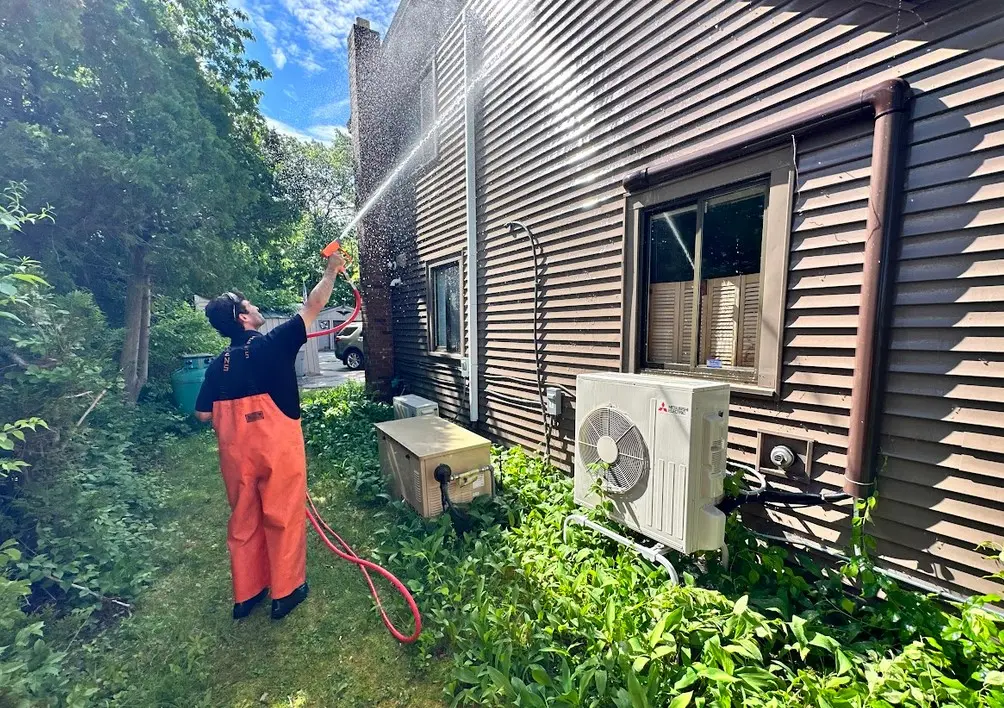
Before applying any cleaning solutions, surface preparation is essential. Plants, shrubs, and grass in the area are pre-wet to create a protective barrier against chemical runoff. Windows, doors, and HVAC intake vents are secured to prevent the cleaning solution from entering the home. The cleaning mixture - typically a blend of sodium hypochlorite (1% to 6%) and a surfactant - is then prepared, tailored to the roof's material.
During the application phase, low-pressure pumps, operating between 40 and 100 PSI, are used to apply the solution. Technicians use a 40° fan-tip nozzle to ensure even coverage, working from the bottom up to prevent streaking caused by runoff. The solution is left to sit for a specific dwell time, giving it enough time to kill algae, moss, and other organisms down to their roots.
Once the dwell time is complete, a low-pressure rinse washes away the chemical residue and neutralized biological matter. This rinse speeds up the cleaning results, though streaks from dead algae may still take 30 to 90 days to fade completely. For metal and wood roofs, rinsing is especially important to prevent issues like oxidation or fiber damage. The process wraps up with a post-treatment inspection, where technicians confirm the results and document their work with photos.
For roofs with pitches up to 8:12, ground-level application using telescoping wands is often an option, reducing the need for technicians to climb onto the roof. This safety-focused approach, along with precise chemical application, ensures a thorough clean without risking damage to the roof’s structure.
Benefits of Soft Wash Roof Cleaning
Soft washing offers a range of benefits, starting with its ability to extend your roof's life by an estimated 17 years. This means delaying the hefty expense of a full roof replacement. Moss and algae can trap moisture, leading to shingle rot and eventual deterioration. By removing these harmful elements, soft washing helps protect your roof’s structural integrity. It also preserves the granules on your shingles, which are essential for keeping your roof waterproof. In fact, the Asphalt Roofing Manufacturers Association (ARMA) recommends low-pressure chemical cleaning over high-pressure methods, as the latter could void manufacturer warranties.
Another advantage is improved energy efficiency. Dark algae and grime absorb heat, which can drive up cooling costs during warmer months. Cleaning your roof allows it to reflect sunlight effectively, helping to regulate indoor temperatures and reduce energy bills. Plus, a clean roof reveals its original color, enhancing your home’s curb appeal.
Soft washing is also a more eco-conscious option. By extending your roof’s lifespan, it reduces waste. The process uses low chemical concentrations, and professionals often include neutralizing agents to minimize the environmental impact of runoff before it reaches the soil or drainage systems. To keep these benefits going, experts recommend scheduling a professional cleaning every 1–2 years. This regular maintenance not only prolongs the life of your roof but also reflects the thorough care that soft washing provides.
Common Mistakes to Avoid
One big mistake people make during roof cleaning is applying too much pressure. Most pressure washers operate at 1,500 to 4,000 PSI, which can strip the ceramic granules off asphalt shingles. These granules are crucial because they provide UV protection, and losing them can void warranties and cut a roof's lifespan in half - from 15 years to just 7 years. Soft washing, on the other hand, uses a much gentler pressure of 60–100 PSI (comparable to a garden hose), which protects both the shingles and the warranty.
Another key point is safeguarding your landscaping. While the sodium hypochlorite used in soft washing is diluted to a safe 1% to 3% concentration, it can still harm plants if runoff isn’t managed properly. To prevent this, pre-wet the surrounding vegetation to create a protective barrier. During the cleaning process, keep rinsing the plants and finish with a thorough rinse to wash away any lingering chemicals.
Skipping the rinsing step is another common issue. If chemicals or debris are left behind, they can cause problems later. Rinsing is essential to physically remove the dead biomass left by the cleaning solution. Using low-pressure water (ideally the same pressure as a garden hose and never exceeding 500 PSI) ensures no chemical residue remains on the roof. Neglecting this step, combined with using excessive pressure, can undo the benefits of soft washing.
Lastly, avoid attempting roof cleaning on your own. DIY cleaning might seem like a money-saver, but lack of experience can lead to costly mistakes. For example, using a pressure washer incorrectly can damage the roof, requiring frequent repairs or replacements. While professional soft washing might cost more upfront, it lasts 2–4 years and offers better value in the long run. Also, make sure your contractor has specific roof cleaning insurance - general pressure washing policies often don’t cover roof damage.
Why Choose ViewCrew Services for Soft Wash Roof Cleaning
Keeping your roof in good condition is crucial, and ViewCrew Services has built a reputation for doing just that. With over 1,000 projects completed across Massachusetts, Southern New Hampshire, and Connecticut, their experience speaks volumes. Their 5.0-star rating, based on more than 1,000 online reviews, highlights their dedication to top-notch service and customer satisfaction. They even report a 100% happy client rate, which shows how much they prioritize quality and care.
Getting started with ViewCrew Services is straightforward. They offer a free, no-obligation estimate, where a team member will take the time to walk you through the process. This ensures you know exactly what your roof needs and how the soft wash method will work for your specific roof type - whether it's asphalt shingles, tiles, or metal. They stand by their work with a guarantee: if you’re not satisfied, they’ll come back and fix it at no extra cost. Plus, they’re fully insured for all service locations, giving you added peace of mind.
"We guarantee superior service - if you're not satisfied, we return free of charge until your expectations are met."
- ViewCrew Services
ViewCrew Services operates in North Andover and Metro West in Massachusetts, Southern New Hampshire, and Stamford, Connecticut. They use low-pressure water combined with eco-friendly cleaning solutions designed for delicate roof surfaces. This method ensures your roof gets a deep clean without risking any damage to its structure.
What sets them apart? Their 100% satisfaction guarantee. If something isn’t up to your standards, they’ll return to make it right - at no additional cost. This commitment not only protects your roof but also helps extend its lifespan, reinforcing the long-term benefits of soft wash cleaning.
Conclusion
Soft wash roof cleaning is an essential part of maintaining your home's structure and protecting your investment. Unlike high-pressure methods, soft washing operates at or below 500 PSI and relies on chemical dwell time to safely remove biological growth like Gloeocapsa magma, moss, and lichen. This approach avoids granule loss and material damage, aligning with ARMA's recommendations to preserve roof materials and maintain manufacturer warranties.
Beyond protecting your roof, soft washing improves curb appeal by eliminating unsightly dark streaks and stains. It also extends your roof's lifespan by addressing harmful organisms that can lead to premature wear and tear. These benefits highlight why a properly executed soft wash is so important.
When hiring a contractor, make sure they are state-licensed and insured for chemical applications. It's also wise to confirm they take precautions, such as pre-wetting your landscaping, to minimize chemical runoff and protect your plants.
If you're ready to protect your roof and enhance your home's appearance, ViewCrew Services offers free, no-obligation estimates and a 100% satisfaction guarantee. Serving Massachusetts, Southern New Hampshire, and Connecticut, their team uses eco-friendly solutions specifically designed for delicate roof surfaces. Regular soft washing can help you avoid costly repairs while keeping your roof looking its best.
FAQs
Will soft washing void my roof warranty?
Soft washing, when done properly, typically won't void your roof warranty. This method relies on a low-pressure, chemical-based process specifically designed to be gentle on roofing materials, as long as it adheres to manufacturer-approved techniques and solutions.
Is soft wash runoff safe for plants and pets?
Soft wash runoff can be safe for plants and pets when handled carefully. To protect your landscaping, pre-wet any nearby plants before starting the cleaning process. This helps dilute any chemicals that might come into contact with them. If your home doesn’t have gutters to direct the runoff, consider using barriers or other protective measures to minimize exposure. These precautions go a long way in keeping your roof clean while ensuring the safety of your greenery and furry friends.
How soon will my roof look fully clean after soft washing?
Your roof will typically look completely clean just a few hours after the soft washing process is finished. The chemical solution works to remove stains and organic growth, giving your roof a fresh and renewed appearance.