Proper roof cleaning is essential to protect your home and extend the lifespan of your roof. Neglecting this task can lead to algae, moss, and debris buildup, which may cause structural damage, void warranties, and complicate insurance claims. Here's what you need to know:
- Soft Washing is Best: For most residential roofs, soft washing (low-pressure water with cleaning agents) is safer and more effective than pressure washing, which can damage shingles.
- Regular Cleaning Saves Money: Cleaning every 2-5 years (depending on your climate) prevents costly repairs and ensures your roof stays in good condition.
- Inspect Before Cleaning: Check for damage like curled shingles or granule loss before starting. If more than 25% of your roof is damaged, replacement may be necessary.
- Safety First: Use proper equipment like ladders, harnesses, and non-slip footwear, or hire professionals for steep or multi-story roofs.
Quick Tip: Soft washing removes biological growth at its roots, offering longer-lasting results compared to pressure washing, which only clears surface debris.
Protect your investment by cleaning your roof the right way or consulting a professional if needed.
The SAFEST Way to SOFT WASH a Roof (full tutorial)
sbb-itb-238bf3c
Roof Cleaning Methods Explained
Soft Washing vs Pressure Washing: Roof Cleaning Methods Compared
Picking the right cleaning method for your roof isn't just about appearances - it's about protecting your roof's structure and avoiding costly repairs. When it comes to roof cleaning, there are two main approaches: soft washing and pressure washing. These methods differ significantly, not only in water pressure but also in their effectiveness and long-term impact on your roof.
Soft Washing vs. Pressure Washing
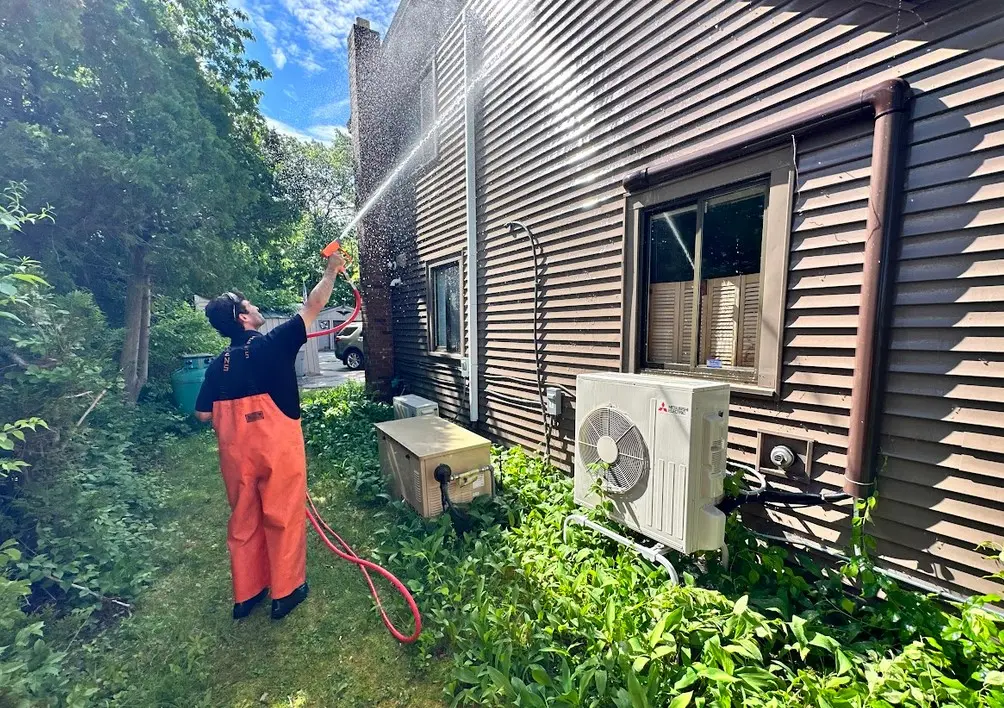
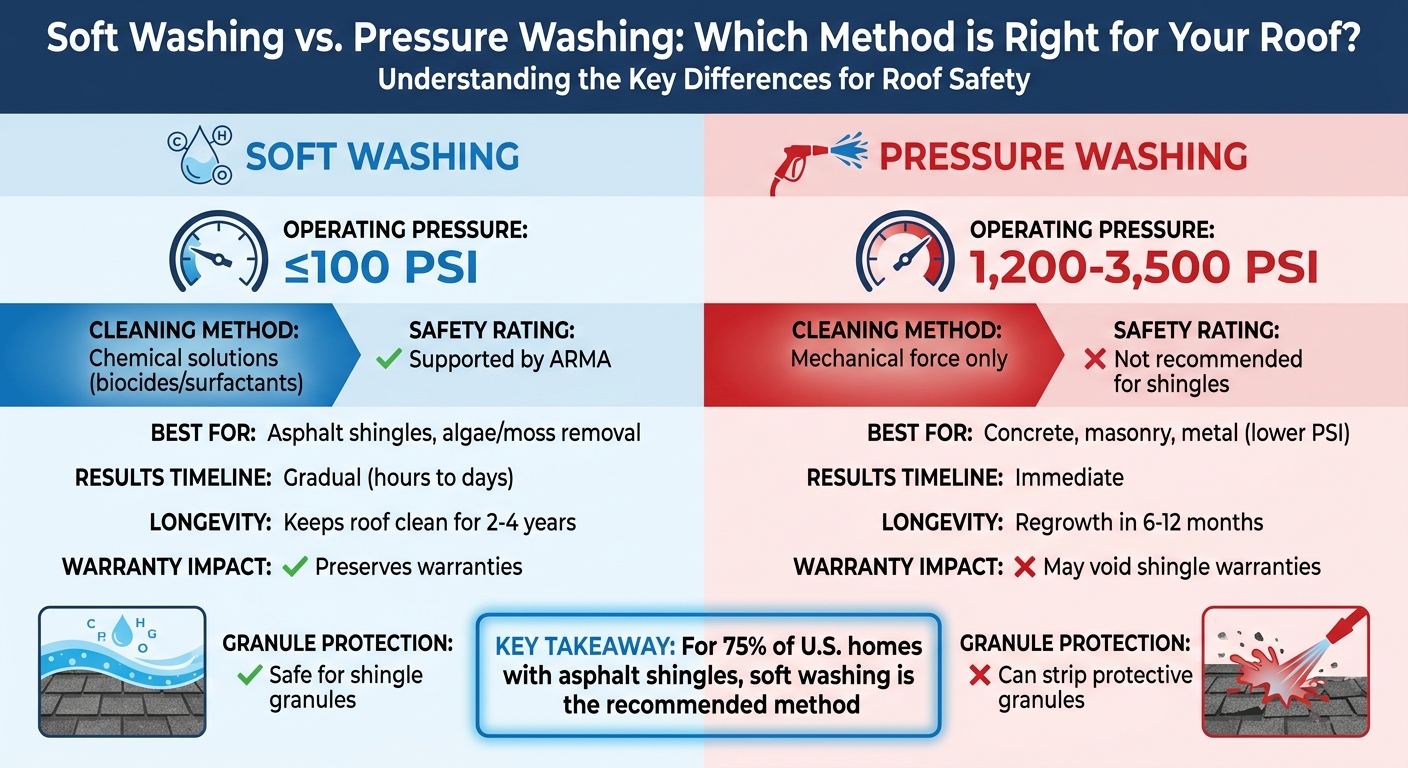
Soft washing relies on low-pressure water (≤100 PSI) combined with chemical solutions to tackle biological growth like algae and moss. Left untreated, this growth can even lead to insurance cancellation risks. Typically, a sodium hypochlorite solution (1%–6%) is applied and left to work for 10 to 30 minutes before being gently rinsed away. This method targets the root of the problem, ensuring a deeper clean.
Pressure washing, on the other hand, uses high-pressure water (1,200–3,500 PSI) to blast away surface debris. While it delivers instant visual results, it doesn't address the underlying biological growth. As the National Roof Cleaning Authority explains:
"Effective biological kill is a chemical function, not a mechanical one, on granule-coated substrates."
Here’s a quick comparison of the two methods:
| Feature | Soft Washing | Pressure Washing |
|---|---|---|
| Operating Pressure | ≤100 PSI | 1,200–3,500 PSI |
| Cleaning Agent | Chemical solutions (biocides/surfactants) | Mechanical force |
| Shingle Safety | Supported by ARMA | Not recommended; can cause damage |
| Best Use Case | Asphalt shingles, algae/moss removal | Concrete, masonry, metal (lower PSI) |
| Results | Gradual (hours to days) | Immediate |
| Warranty Impact | Preserves warranties | May void shingle warranties |
Source: [3]
Why Soft Washing Works Best for Home Roofs
For most residential roofs - especially those with asphalt shingles - soft washing is the safer and more effective choice. The Asphalt Roofing Manufacturers Association (ARMA) specifically endorses low-pressure bleach applications while cautioning against pressure washing. Why? Because asphalt shingles are coated with ceramic granules designed to shield against UV damage. High-pressure washing can strip away these granules, exposing the fiberglass mat beneath. This accelerates wear and significantly shortens the roof's lifespan.
Even if a pressure washer uses a wide-angle nozzle, it doesn't mitigate the risks. The National Roof Cleaning Authority clarifies:
"A 40-degree nozzle at 2,500 PSI still delivers high-pressure impact to the substrate... Soft washing is defined by system operating pressure, not nozzle geometry."
Soft washing not only protects your shingles but also delivers longer-lasting results. While pressure washing clears surface debris, it doesn't kill organisms at their roots. That means regrowth can occur in just 6 to 12 months. In contrast, soft washing keeps your roof clean for 2 to 4 years.
To ensure a safe and effective cleaning process, pre-wet nearby plants to minimize chemical exposure, and manage runoff to meet environmental guidelines.
Checking Your Roof's Material and Condition
Before diving into roof cleaning, it's crucial to identify your roof's material. Using the wrong cleaning method can lead to voided warranties, leaks, or even accelerated wear and tear. Start by inspecting your roof from the ground and reviewing any documentation you have. This step can save you from costly mistakes.
How to Inspect Your Roof for Damage
Start your inspection from the ground using binoculars. Look for signs like missing, cracked, or curled shingles. Uneven coloring can indicate localized damage or the presence of algae or moss. Check your gutters for an unusual amount of shingle granules - this could mean your roof is wearing out and may not withstand cleaning.
Don’t forget to check your attic. Look for daylight coming through the roof boards or water stains and damp spots on the ceiling, which could mean your roof’s barrier has been compromised. From the outside, observe the rooflines for sagging or dips - these might signal structural problems that make walking on the roof unsafe. Additionally, keep an eye out for rust on metal flashings, peeling sealant, or exposed nail heads, as these can lead to water infiltration.
If you find that more than 25% of your roof is damaged, replacing it might be a more practical and safer option. Once you’ve assessed the condition of your roof, match your findings with the right cleaning method.
Matching Cleaning Methods to Roof Materials
The type of roof material you have will determine the cleaning method you should use. For example, asphalt shingles, which cover about 75% of U.S. homes, require soft washing to avoid damaging the granules. Using the wrong method can void the 10-year performance warranty on algae-resistant shingles. Tile and metal roofs are sturdier, but clay tiles can crack under pressure, and metal roofs require pH-neutral cleaners to protect their coatings. Wood and slate roofs are particularly delicate - high-pressure washing can raise the wood grain or cause slate to fracture.
Here’s a quick reference guide for cleaning different roof materials:
| Roofing Material | Recommended Method | Max Pressure (PSI) | Key Risk |
|---|---|---|---|
| Asphalt Shingles | Soft Wash | < 500 | Granule loss; warranty issues |
| Concrete Tile | Soft Wash / Low-Pressure | < 1,200 | Cracking at seams |
| Clay Tile | Soft Wash only | < 800 | Cracking under pressure |
| Metal (Coated) | Low-Pressure Wash | 1,000–1,500 | Panel seam leaks; oxidation |
| Wood Shingles | Soft Wash / Manual | < 600 | Grain raising; fiber damage |
| Slate | Manual / Very Low Pressure | < 400 | Fracturing; delamination |
To identify your roof material, rely on visual cues like texture and shape, and consult your home’s documentation or warranties. If you’re unsure, take the time to confirm before choosing a cleaning method. It’s better to double-check than to risk damaging your roof.
Safety Equipment and Cleaning Tools You'll Need
Once you've evaluated your roof's condition and chosen the right cleaning method, having the proper safety gear and tools is essential. Roof cleaning can be risky, especially since falls are the leading cause of roofing-related fatalities. The good news? Many tasks can be done safely from the ground.
Required Safety Equipment
If you need to access your roof, start with a fiberglass ladder. Unlike metal ladders, fiberglass won't conduct electricity, which is especially important near power lines. Make sure the ladder is stable, with secure footing and locked mechanisms. For roofs with a pitch of 6:12 (approximately 26.6°) or steeper, OSHA requires fall protection systems for any work done at heights of 6 feet or more.
For steep roofs, a safety harness with shock-absorbing lanyards is vital. These lanyards are designed to reduce the impact of a fall. As Bear from Pressure Washing Resource explains:
"What I am currently using has a sown in portion near the harness attachment that splits if someone were to fall. Takes most of the force of the jerk to make the fall a little more subtle."
Ensure safety leads are anchored to stable structures like patios or decks, especially on slippery, mossy surfaces. Wear non-slip footwear, such as roofing shoes or flat-soled sneakers, to maintain traction on wet or metal roofs. Protect your eyes with safety glasses to shield against flying debris and chemical splashes, and use work gloves to guard your hands from sharp edges and harsh cleaning agents.
Cleaning Tools That Get the Job Done
The safest way to clean your roof is by staying on the ground and using tools designed for long-distance cleaning. Telescopic poles with scrapers or soft brushes let you remove moss and algae without climbing. For rinsing, a garden hose with a spray nozzle is gentle enough for most roof types. Avoid pressure washers exceeding 1,500 PSI, as they can damage asphalt shingles and void warranties.
To apply cleaning solutions, use a pump sprayer or garden sprayer for even application. Some commercial cleaners even come with hose-end sprayers for easier coverage of larger roofs. Let the solution sit for 15–20 minutes to loosen moss and algae before rinsing thoroughly. Protect your landscaping by covering plants with tarps and pre-watering them to dilute any runoff. These tools not only help you clean safely but also extend your roof's lifespan.
How to Clean Your Roof: Step-by-Step
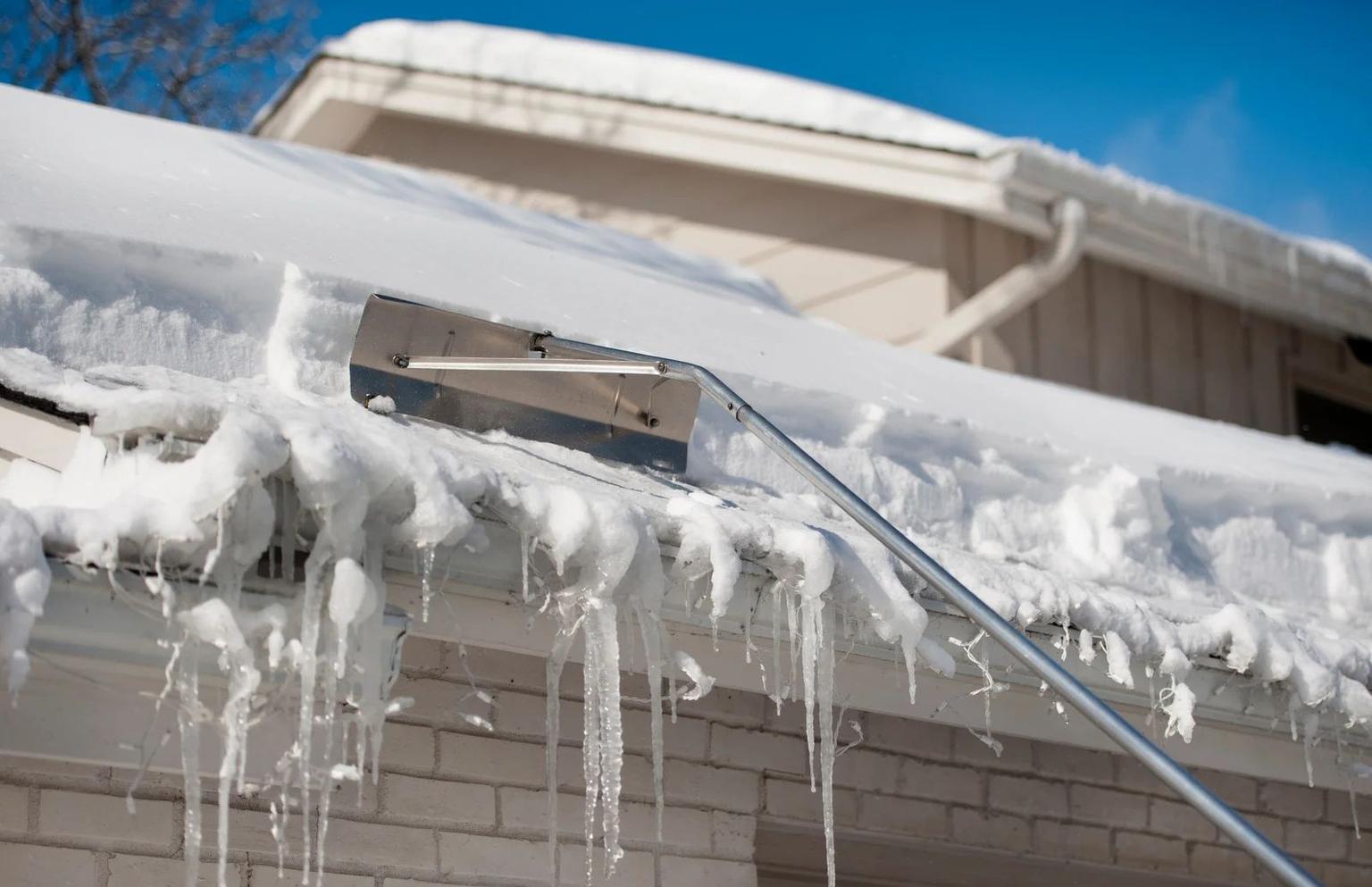
Taking the right steps to clean your roof not only boosts its curb appeal but also helps it last longer. Start on a dry, overcast day with mild temperatures. Use a roof rake or leaf blower to clear away loose debris, and protect your plants by covering them with plastic tarps to guard against chemical runoff.
How to Apply Cleaning Solutions
Once your roof is free of loose material, it’s time to apply a cleaning solution. Always test the solution on a small, inconspicuous area first to ensure it won’t harm your shingles. For asphalt shingles, a common mix is one part bleach to three parts water, or you can opt for industrial-strength vinegar (just never mix bleach and vinegar). Use a pump sprayer to evenly apply the solution from the top of the roof downward. Let it sit for 15–20 minutes, giving it time to break down moss, algae, and grime.
Rinsing and Checking Your Work
After letting the solution sit, it’s time to rinse. Use a garden hose on a low-pressure setting and rinse from the top down - avoid using a pressure washer, as it can damage shingles. For stubborn spots, gently scrub with a soft-bristled brush and rinse again. Don’t forget to clean out your gutters and check the downspouts for clogs. If you notice a lot of shingle granules in the gutters, it could be a sign that your roof is wearing out. Finally, remove the tarps from your plants and rinse them thoroughly with clean water. Cleaning your roof every one to three years can help prevent moss and algae buildup, which can lead to leaks and premature aging of your shingles.
When to Hire a Professional
Some roof cleaning projects are better left to the experts. Knowing when to step back and call in professionals can save you from unnecessary risks and potential damage.
Warning Signs You Need Professional Help
- Steep or multi-story roofs: If your roof has a pitch of 6:12 or steeper, or your home is multi-story, the risk of falls skyrockets. According to the CDC, falls from ladders and roofs are one of the leading causes of construction-related fatalities.
- Delicate roofing materials: Roofs made of tile, slate, or metal need specialized care. Walking on tile or slate can cause cracks, so professionals use harness-and-anchor systems to avoid damage. Metal roofs, on the other hand, require pH-neutral or specific cleaning agents to prevent chemical reactions that could harm the material.
- Structural damage or post-storm issues: If you notice lifted shingles, damaged flashing, or other signs of wear, attempting a DIY cleaning could worsen the problem or even affect your insurance claims. Additionally, using high-pressure cleaning methods (over 1,500 PSI) can void shingle warranties. Professionals rely on soft washing techniques, which operate at much lower pressures - typically under 100 PSI - to clean effectively without compromising your roof.
Recognizing these red flags early can help you safeguard your roof and avoid costly repairs down the line.
Why Choose ViewCrew Services

ViewCrew Services brings expertise, advanced tools, and eco-conscious practices to roof cleaning. Operating in Massachusetts, New Hampshire, and Connecticut, they use calibrated soft-wash systems with sodium hypochlorite concentrations between 3% and 6%. This approach ensures thorough cleaning while protecting your roof.
Before hiring any contractor, confirm they have general liability insurance with at least $1,000,000 per-occurrence coverage and workers' compensation (mandatory in 48 states). ViewCrew technicians not only meet these standards but also follow strict safety protocols, including fall protection and runoff containment. They tailor their cleaning methods to your roof’s specific material and condition, helping to preserve its integrity and extend its lifespan.
Conclusion
Taking care of your roof is a must to protect your home and the investment you've made in it. A clean roof not only keeps your property looking great but also prevents damage over time. Biological growth, like Gloeocapsa magma, can weaken shingles, while regular cleaning helps avoid water pooling, rot, and other issues that could shorten your roof's lifespan. In fact, proper maintenance can add 10 to 20 years to its life. Plus, it ensures compliance with manufacturer warranties and can keep you in good standing with homeowners associations in states where exterior standards are enforced, such as the 32 states that impose these rules.
Choosing the right cleaning method is key. Soft washing is a safe option that uses low-pressure chemical treatments (under 500 PSI) to remove harmful organisms without damaging the roof's protective granules. It’s important to match the cleaning method to your roof type, take precautions to protect nearby plants from runoff, and always use appropriate safety gear. These considerations are crucial, especially if you're thinking about tackling the job yourself.
For steep roofs, delicate materials, or visible damage, it’s best to call in professionals. Falls from ladders and roofs are a major cause of construction-related injuries and fatalities. Professional cleaners bring specialized equipment, follow OSHA safety standards, and have the expertise needed to clean your roof thoroughly without causing harm.
If you’re a homeowner in Massachusetts, Southern New Hampshire, or Connecticut looking to protect your roof without cutting corners, ViewCrew Services offers soft washing tailored to your roof’s specific needs. Their insured technicians follow strict safety guidelines and use proven methods to keep your roof in top condition. Reach out for a free estimate and take the first step toward extending your roof’s life.
FAQs
Will roof washing void my roof warranty?
Using cleaning methods that aren't approved, such as high-pressure washing, can put your roof warranty at risk. This happens particularly when the process causes damage to roofing materials or goes against the maintenance rules outlined by the manufacturer. To prevent problems, always review your warranty terms and stick to the recommended cleaning practices.
How can I tell if my roof is too damaged to clean?
If your roof has serious problems like missing shingles, deep cracks, or significant structural damage, it might be too damaged to clean. Attempting to clean it could make the situation worse. In such cases, it's a good idea to have a professional inspect your roof to decide whether it's safe to clean or if repairs should be done first.
How can I protect my plants and landscaping from runoff?
To protect your plants during roof washing, take a few simple precautions. Start by bagging downspouts to stop contaminated runoff from reaching your landscaping. After cleaning, make sure to rinse the area thoroughly to wash away any chemical residues. Using a surfactant can help minimize runoff and reduce the spread of chemicals. Lastly, give your plants a good rinse with water afterward to neutralize any remaining chemicals and keep them safe.