Yes, soft washing effectively removes algae, mold, and mildew from various surfaces. Unlike pressure washing, which only cleans surface stains, soft washing uses low-pressure water and biocidal cleaning solutions to kill these organisms at their roots. This method is safer for delicate materials like roofs, siding, and wood, preventing damage and ensuring longer-lasting results.
Key Points:
- How It Works: Soft washing uses chemical solutions (e.g., sodium hypochlorite) to break down and eliminate biological growth deep within porous surfaces.
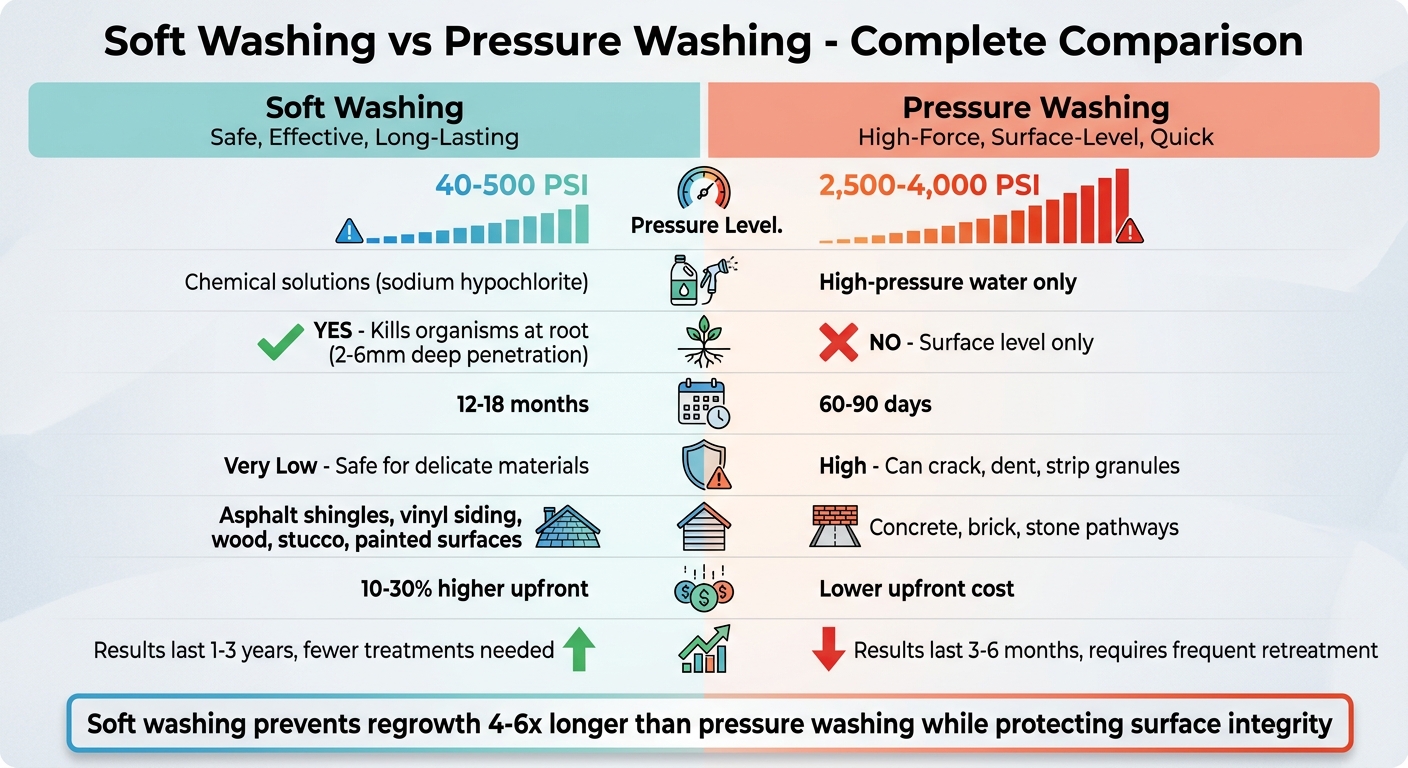
- Safer Than Pressure Washing: Operates at lower pressure (40–500 PSI) to avoid surface damage, unlike high-pressure washing (2,500–4,000 PSI).
- Long-Lasting Results: Soft washing prevents regrowth for 12–18 months, compared to 60–90 days with pressure washing.
- Best For: Asphalt shingles, stucco, vinyl siding, wood, and concrete.
Quick Comparison: Soft Washing vs. Pressure Washing
| Feature | Soft Washing | Pressure Washing |
|---|---|---|
| Pressure Level | 40–500 PSI | 2,500–4,000 PSI |
| Cleaning Method | Chemical solutions | High-pressure water |
| Root Removal | Yes | No |
| Regrowth Timeline | 12–18 months | 60–90 days |
| Surface Damage Risk | Low | High |
| Cost Per Visit | Higher upfront | Lower upfront |
Soft washing is a more thorough and surface-friendly option for tackling algae, mold, and mildew. Regular treatments every 1–3 years can help maintain your property while reducing long-term maintenance costs.
Soft Washing vs Pressure Washing: Complete Comparison Guide
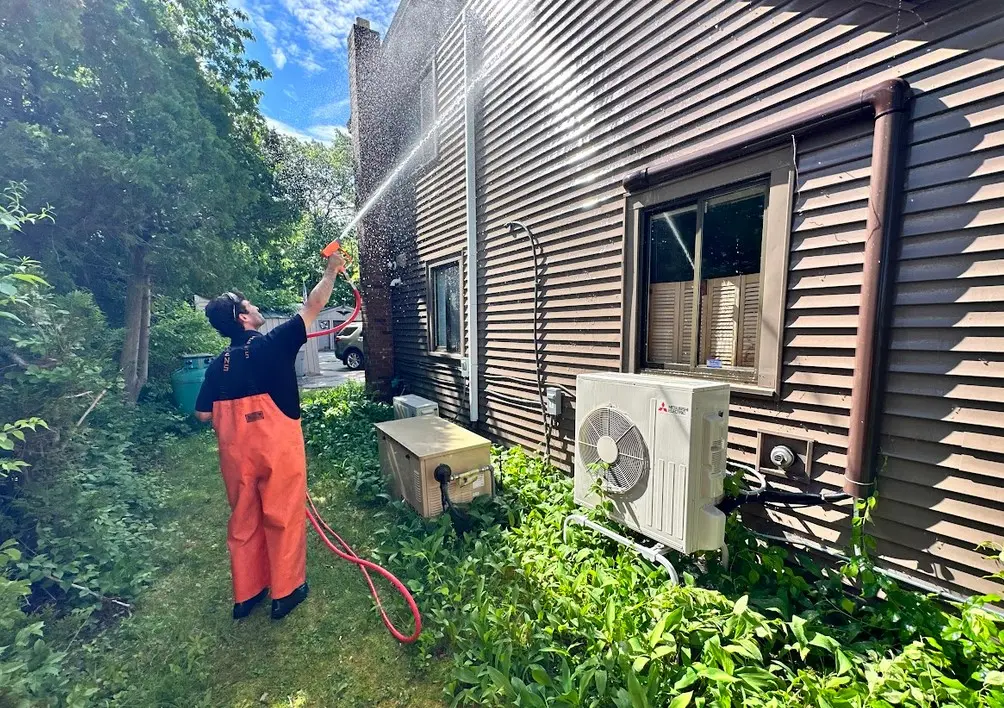
Soft Washing This Home Was SO Satisfying
sbb-itb-238bf3c
How Soft Washing Removes Biological Growth
Soft washing relies on chemical action rather than brute force. It uses specially formulated cleaning solutions, primarily sodium hypochlorite (NaOCl), which act as oxidizing biocides. These chemicals break down cellular proteins, damage lipid membranes, and destroy chlorophyll in algae like Gloeocapsa magma - the culprit behind those black streaks on roofs and other surfaces.
What sets soft washing apart from pressure washing is its ability to penetrate porous materials. This method targets the hyphae - the root-like threads of mold and mildew - that burrow 2–6 millimeters (about 1/16 to 1/4 inch) into surfaces like wood, concrete, and stucco. By addressing the growth at its source, soft washing not only removes visible stains but also helps maintain the surface's integrity.
The Science Behind Soft Washing
For soft washing to work effectively, the cleaning solution needs time to do its job. After being applied, it sits on the surface for a dwell period ranging from 5 to 30 minutes, depending on the material and severity of the biological growth. During this time, the biocide penetrates the pores of the material, killing the organisms deep within.
"The process is distinguished from pressure washing not merely by pressure differential but by its reliance on chemical dwell time and biocidal action as the primary removal mechanism." – National Softwash Authority
Sodium hypochlorite concentrations in the solution range from 1% to 6%, adjusted based on the level of contamination. Surfactants are included to reduce surface tension, ensuring the solution clings to vertical or sloped areas like roofs and siding and penetrates more effectively. For algae on surfaces, a 1%–3% concentration with a 5–10 minute dwell time is usually sufficient. However, tougher mold in materials like wood or stucco may require 4%–6% concentrations and longer dwell times, up to 30 minutes.
Next, we’ll look at how soft washing's low-pressure approach protects your surfaces.
Why Low Pressure Protects Your Surfaces
Soft washing uses pressures between 40 and 500 PSI, comparable to a garden hose on its lowest setting. This is a stark contrast to traditional pressure washing, which operates at 1,500–4,000 PSI. The lower pressure is key to preventing damage - high-pressure washing can gouge wood, strip paint, dent vinyl siding, and even dislodge the protective granules on asphalt shingles.
In fact, the Asphalt Roofing Manufacturers Association (ARMA) specifically advises against using high-pressure washing for algae removal. They recommend low-pressure chemical washing instead, as high-pressure methods can void roofing warranties. By relying on low pressure and the power of chemistry, soft washing removes biological growth while safeguarding the structural and aesthetic integrity of your surfaces.
What Surfaces Can Be Soft Washed
Soft washing is a gentle yet effective cleaning method for a variety of exterior surfaces, particularly those that can be damaged by high-pressure washing. Knowing which materials are best suited for this technique ensures you can maintain your property while tackling algae, mold, and mildew.
Roof Cleaning
Asphalt shingles are the most widely used roofing material in the U.S., but they’re highly susceptible to damage from high-pressure washing. The powerful spray can strip away the granules that protect shingles from UV rays, break the tar seal between layers, and even void your warranty. In fact, the Asphalt Roofing Manufacturers Association (ARMA) specifically endorses low-pressure chemical cleaning as the preferred method for removing algae from shingles.
Roof soft washing targets algae at its root without the need for scrubbing, preserving the roof’s integrity. This method is also ideal for clay tiles and north-facing slopes, where algae and mold tend to thrive. Eliminating black streaks caused by algae can even improve energy efficiency by allowing shingles to reflect heat instead of absorbing it.
Soft washing doesn’t stop at roofs - it’s equally effective for cleaning adjacent siding and wall surfaces.
Siding and Walls
Soft washing is a safe and efficient way to clean vinyl, wood, stucco, brick, and composite siding. Unlike high-pressure washing, which can crack vinyl, splinter wood, gouge stucco, or peel paint, soft washing gently removes biological growth without harming the surface or forcing water behind panels.
The cleaning solution is allowed to sit briefly, giving it time to break down mold and mildew without the need for harsh scrubbing. For painted surfaces, this method protects the finish while addressing the discoloration and damage caused by mold and mildew.
Wood structures like decks and fences are especially prone to damage from high-pressure washing. A strong water stream can etch the wood grain, create splinters, and force water deep into the material, leading to rot. Soft washing, on the other hand, safely removes mold and other contaminants while preserving the wood’s structural soundness.
Soft washing isn’t limited to vertical surfaces - it’s also a great option for cleaning hardscapes like driveways and patios.
Driveways and Patios
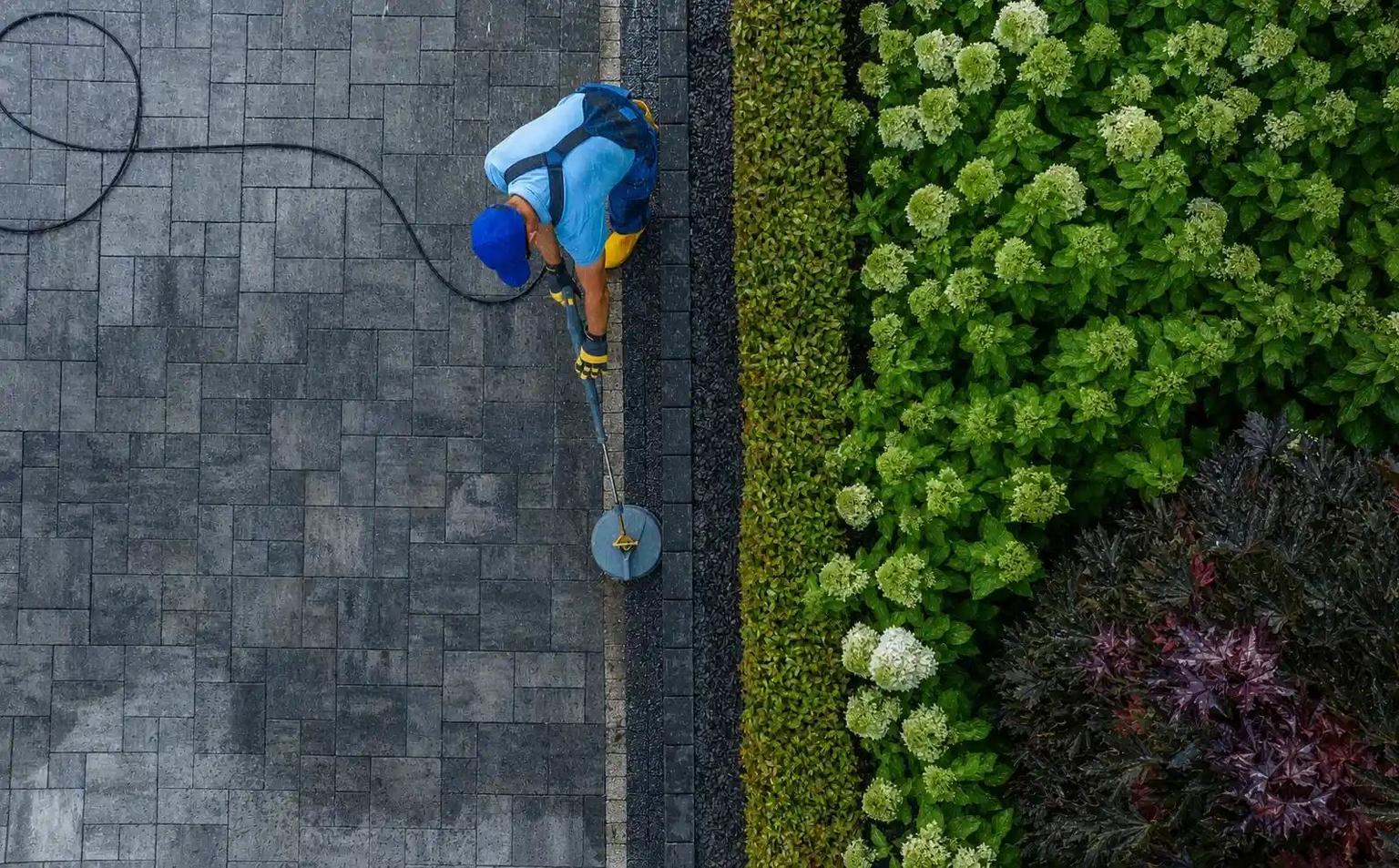
Concrete driveways, walkways, pavers, and stone pathways are porous, which allows mold and algae to take root deep within the surface. While pressure washing only removes stains from the surface, soft washing eliminates the organisms embedded in the material, which helps prevent regrowth.
The biocidal cleaning solution used in soft washing penetrates the pores of concrete and stone, killing mold and algae at their source. For heavily soiled areas, a hybrid method that combines soft washing with light pressure can be highly effective - the chemicals handle the biological growth, while a gentle rinse clears away loosened debris.
This approach keeps hardscapes mold-free for 4 to 6 times longer than pressure washing alone, with professional results that can last anywhere from 1 to 3 years.
Soft Washing vs Pressure Washing for Algae, Mold, and Mildew
The methods for tackling algae, mold, and mildew differ significantly in their approach. Pressure washing uses high-pressure water, typically between 2,500 and 4,000 PSI, to physically blast away dirt and grime. In contrast, soft washing relies on low-pressure water (under 500 PSI) paired with specialized cleaning solutions that chemically target and neutralize the root systems of these organisms. This difference in technique makes soft washing a longer-lasting solution.
Pressure washing only removes surface-level contaminants, leaving the roots intact. This means regrowth usually occurs within 60 to 90 days. Soft washing, however, kills the organisms at their source, extending the time before regrowth to 12 to 18 months - three to five times longer than pressure washing.
"The chemistry does the work, not the pressure." - Mold Munchers
While soft washing costs 10% to 30% more per square foot upfront, it can be more cost-effective over time. Instead of needing three pressure washing treatments annually to manage regrowth, a single soft wash application can keep surfaces clean for over a year.
Comparison Table: Key Differences
| Feature | Pressure Washing | Soft Washing |
|---|---|---|
| Pressure Level | 2,500–4,000 PSI | Under 500 PSI |
| Cleaning Method | Mechanical force (water) | Chemical solutions |
| Root Removal | Surface level only | Kills growth at the root |
| Regrowth Timeline | 60–90 days | 12–18 months |
| Surface Damage Risk | High (can crack, dent, strip) | Very low |
| Best For | Concrete, brick, stone | Roofs, siding, wood, stucco |
| Cost Per Visit | Lower | 10–30% higher |
The choice between these methods often depends on the type of surface being cleaned. Pressure washing is ideal for tough materials like concrete driveways and stone pathways. However, it’s unsuitable for more delicate surfaces such as asphalt shingles, vinyl siding, or painted wood, where the high pressure can cause permanent damage. For these sensitive materials, soft washing is the safer and more effective option. These distinctions make it clear why soft washing is often the better choice for preserving delicate surfaces.
Long-Term Benefits of Soft Washing
Prevention of Regrowth
Soft washing doesn’t just clean surfaces; it tackles the root cause of algae, mold, and mildew growth. By using a deep-penetrating solution, it eliminates these organisms at their source - deep within porous materials - rather than just clearing surface stains. This method ensures that regrowth is far less likely.
The biocidal solution also leaves behind a protective layer that discourages new spores from settling. By thoroughly sanitizing the area and removing organic debris that these organisms rely on, soft washing creates an environment where recolonization is much slower. Plus, the low-pressure application avoids the surface damage - like cracks and pits - that high-pressure washing can cause.
"High-pressure water removes visible biological matter from the surface but does not kill organisms or address subsurface colonization. Gloeocapsa magma and penetrating mold return within 3–6 months post-pressure washing because the biological root is undisturbed." - National Softwash Authority
This approach not only protects the structural integrity of your surfaces but also means less frequent maintenance is needed.
Cost Savings Over Time
While soft washing may have a slightly higher upfront cost, the long-term savings quickly add up. The results typically last 1 to 3 years, compared to the 3 to 6 months you’d get with pressure washing.
"Soft washing keeps their property mold-free for 4-6 times longer than pressure washing alone, with results typically lasting 1-3 years depending on environmental factors." - Johnson's Xtreme Softwash
This extended cleaning interval means professional treatments are needed far less often - perhaps every 18 to 36 months, as opposed to multiple times a year. Beyond saving on cleaning costs, soft washing also prevents damage caused by high-pressure methods, such as dislodged roof granules, stripped paint, or water intrusion behind siding. In fact, the Asphalt Roofing Manufacturers Association advises low-pressure chemical cleaning to avoid voiding warranties.
Soft washing also helps extend the life of your roofing, siding, and decks by removing biological organisms that cause rot and deterioration. For instance, eliminating dark algae streaks on your roof allows shingles to reflect heat properly rather than absorbing it, which can improve energy efficiency and lower cooling costs.
Conclusion
Soft washing is a highly effective way to eliminate algae, mold, and mildew - and it does so far more thoroughly than traditional pressure washing. By applying specialized biocidal solutions at low pressure (ranging from 40 to 500 PSI), this method tackles these organisms at their source, eradicating them completely rather than just removing surface stains. The result? A deeper, longer-lasting clean that also prevents the wear and tear that high-pressure washing can inflict on your home’s exterior.
This technique doesn’t just clean better; it also reduces the long-term hassle of frequent maintenance. Soft washing delivers results that can last anywhere from 12 to 48 months, depending on your local climate, compared to the much shorter 3 to 6 months typical of pressure washing. This means fewer service appointments, lower upkeep costs, and better overall protection for your roof, siding, and other surfaces.
By using advanced biocidal solutions, soft washing targets contaminants at their root, offering a lasting defense against future growth. Homeowners aiming to preserve their property in a safe, effective way will find soft washing to be a reliable option. Scheduling a professional treatment every one to three years, along with simple proactive measures like trimming overhanging branches and improving drainage, can help extend these results even further.
When it’s time to protect your home from stubborn biological growth, ViewCrew Services is here to provide a safe, long-lasting clean you can trust.
FAQs
Is soft washing safe for my plants and pets?
Soft washing is a safe option for both plants and pets. It relies on low-pressure water combined with specially crafted cleaning solutions. These solutions are effective at removing algae, mold, and mildew while being gentle on surfaces, vegetation, and animals. This approach prioritizes safety and minimizes environmental impact, making it a great choice for maintaining your home's surroundings.
How long should I wait before rinsing after a soft wash?
It's a good idea to wait 5 to 10 minutes before rinsing after applying a soft wash. This pause gives the cleaning solution time to work its way into the surface, targeting algae, mold, and mildew at their roots. Allowing it to sit ensures a deeper clean and helps maintain the results for a longer period.
Will soft washing lighten or damage paint or shingles?
Soft washing is a cleaning method that uses low-pressure water combined with biocidal solutions to gently clean surfaces. It’s ideal for materials like paint and shingles, as it removes dirt and grime effectively without risking damage or discoloration.