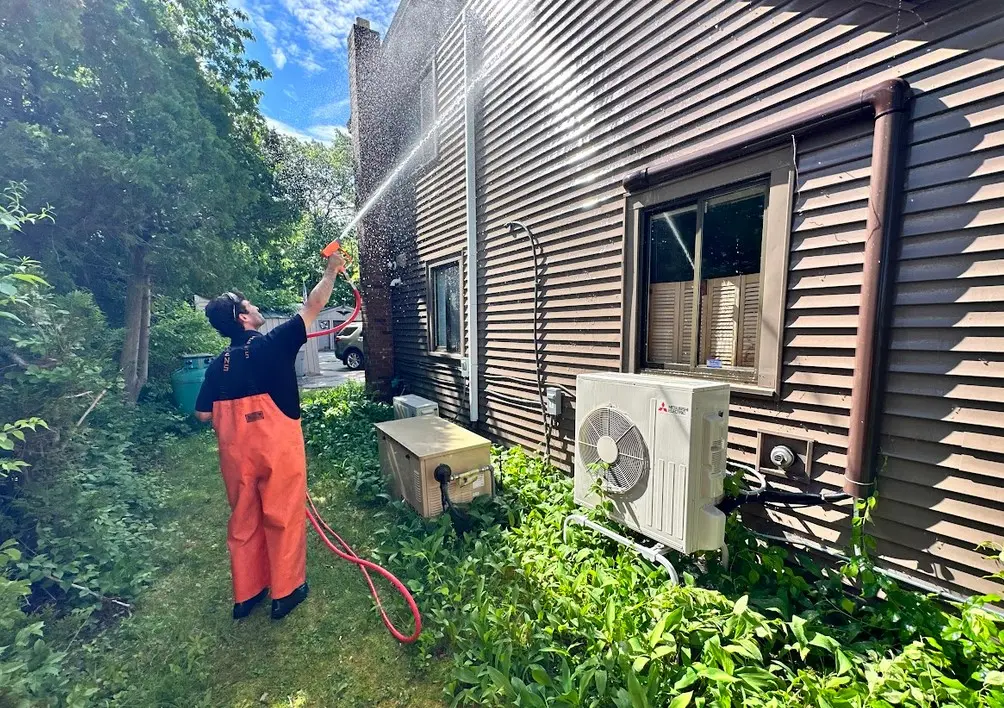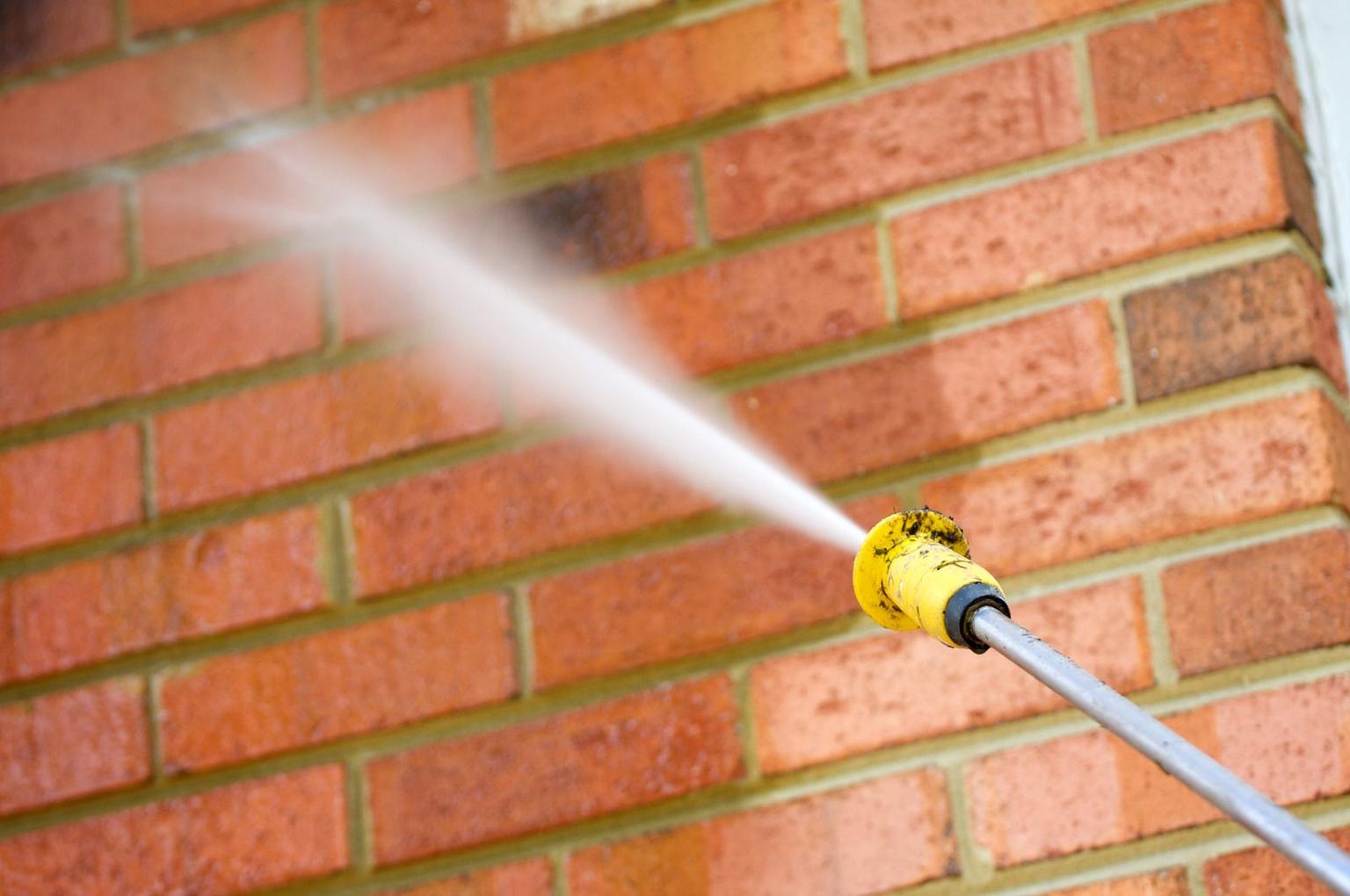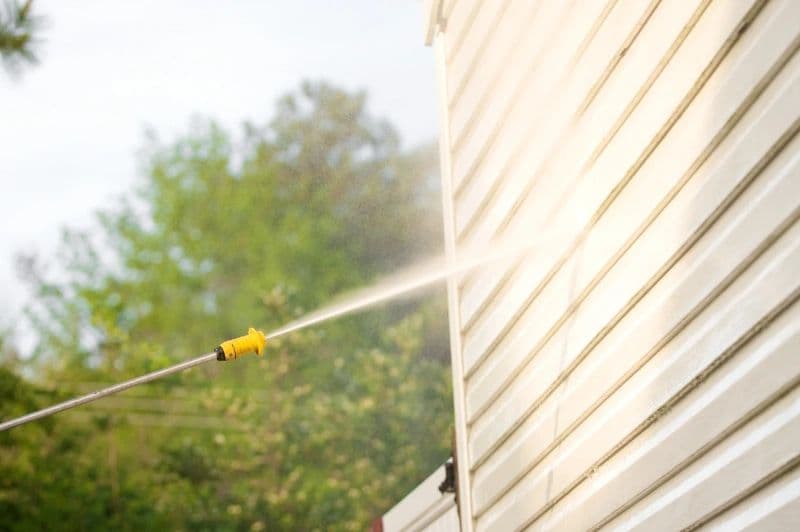
Soft washing is a low-pressure cleaning method designed to safely clean various siding materials without causing damage. Unlike high-pressure washing, which can harm surfaces, soft washing uses a chemical solution to break down grime, algae, and mold at the root. However, the technique, pressure, and cleaning solution must be tailored to the specific siding type to avoid issues like water intrusion, paint damage, or warranty voids.
Key Takeaways:
- Vinyl Siding: Use a low-pressure sodium hypochlorite solution (0.5%–1%) with a surfactant. Avoid spraying downward to prevent water seepage behind panels.
- Cedar Shake & Painted Wood: Limit pressure to under 500 PSI. Use a gentler solution to protect natural oils and paint finishes.
- Fiber Cement (e.g., James Hardie): Stick to under 500 PSI and sodium hypochlorite ≤ 1% to preserve factory-applied finishes.
- Brick & Stucco: Mortar and stucco require extra care. Use soft washing to clean without eroding mortar or creating cracks.
Each siding material has unique cleaning requirements. Proper soft washing not only keeps your home looking great but also prevents costly damage. For long-lasting results, always match the cleaning method to the siding type.
Softwashing Cedar Siding
sbb-itb-238bf3c
Vinyl Siding and Soft Washing
Vinyl siding is well-suited for soft washing because its non-porous surface resists damage from cleaning solutions. However, its lap-joint design can trap water behind the overlapping panels, potentially leading to insulation issues and mold growth. Let’s take a closer look at the common challenges with vinyl siding and why the right cleaning techniques are essential.
Common Problems with Vinyl Siding
Vinyl siding often faces infestations of green algae, Gloeocapsa magma, and mildew. These aren’t just surface-level concerns - they trap moisture, which speeds up oxidation and deterioration of the siding over time.
Using abrasive scrubbing methods can make things worse by creating tiny scratches that attract dirt and organic debris, leaving the siding looking dirty again in no time. High-pressure washing is another risky approach. Anything above 1,200 PSI can force water behind the panel laps, potentially causing damage to the wall cavity.
"Pressure washing these organisms off your siding is like mowing weeds - the root system remains intact, and regrowth begins almost immediately." - Belovora Exterior Cleaning
This highlights why a gentler, more controlled cleaning method is the smarter choice.
How to Soft Wash Vinyl Siding Correctly
The key to effective soft washing lies in a chemistry-first approach. Start with a low-concentration sodium hypochlorite solution (0.5%–1%) combined with a surfactant. Apply it at low pressure - typically between 30 and 500 PSI. The surfactant helps break down surface tension, allowing the solution to penetrate biofilm and work at a deeper level. This approach avoids the risk of forcing water behind the panels. After letting the solution sit for 5–15 minutes, rinse thoroughly at low pressure to remove any dead organic material.
A critical tip: always rinse from the bottom up when cleaning vinyl siding. Spraying downward can push water under the lap joints, leading to potential water damage. When done properly, soft washing eliminates growth at the cellular level, offering results that last 2 to 5 years - a huge improvement over the 6 to 12 months typically achieved with pressure washing. For more details on why this method is effective, check out why soft washing is safe for home exteriors.
Cedar Shake and Painted Wood: What You Need to Know
Cedar shake and painted wood are siding materials that quickly reveal cleaning missteps. Unlike vinyl, which is durable and non-porous, wood is more sensitive. It reacts to water, pressure, and cleaning agents in ways that can cause hidden damage. Knowing these risks is essential for anyone offering professional house washing services.
What High-Pressure Washing Does to Wood
High-pressure washing can harm wood siding, even if the damage doesn’t show immediately. Using pressure above 1,200 PSI can strip away cedar’s surface fibers, raise the grain, and remove its natural oils. These oils are key to cedar’s durability, and without them, the wood becomes more porous. This increases moisture absorption and speeds up deterioration.
"High pressure strips the surface fibers of cedar, raising the grain, opening the wood to moisture intrusion, and removing the natural oils that give cedar its durability." - All State Mobile Wash
Painted wood is just as vulnerable. High-pressure streams can lift paint edges and force water behind clapboards. In areas like New England, where freeze-thaw cycles are common, trapped moisture can lead to significant structural damage. To make matters worse, many siding and paint warranties specifically call for low-pressure cleaning. Using high-pressure methods could void those warranties.
These risks underscore why soft washing is the safer choice for wood siding.
The Right Way to Soft Wash Wood Siding
Soft washing, when done correctly, protects wood siding and prevents issues like moisture damage and premature aging. Cedar shake and painted wood need much lower pressure and a gentler cleaning solution compared to vinyl. The pressure at the nozzle should stay under 500 PSI - ideally between 60 and 150 PSI, which is about the same as a garden hose. For painted surfaces, the sodium hypochlorite concentration should not exceed 1%, as higher levels can bleach or dull the finish.
Keep the dwell time short to effectively neutralize mold without overexposing the wood to cleaning agents. This is especially important in regions with high humidity or salt air, where lichen and moss are more persistent.
Before starting, it’s crucial to inspect the property. Look for peeling paint, small cracks, or damaged wood fibers. Address these issues before applying any cleaning solution.
"Hand-detail any peeling area before chemistry hits it." - First Coast Property Experts
Skipping this step is a common DIY mistake that can lead to further damage. Proper soft washing not only cleans but also helps extend the life of your wood siding, keeping it protected for years to come.
Fiber Cement Siding: Built for Soft Washing
Fiber cement siding, often recognized through James Hardie products in areas like Massachusetts, New Hampshire, and Connecticut, is a durable yet delicate material when it comes to cleaning. While the boards themselves are tough, their factory-applied finish demands a gentler touch. This combination of strength and sensitivity means house washing services must carefully balance effective cleaning with preserving the material's integrity.
Why Abrasive Cleaning Methods Cause Problems
The ColorPlus finish on James Hardie siding is engineered for longevity but is not made to endure abrasive tools or high-pressure washing. Using pressure higher than 1,200 PSI can push water behind the siding laps and leave unsightly wand marks that are permanent. Similarly, abrasive brushes can damage the finish, creating areas where dirt and growth can take hold.
"Fiber cement: Protective coatings get stripped away, and textured surfaces suffer surface degradation [under high pressure]." - Rob Kurian, Founder, Kurian Outdoor Solutions
To avoid these risks, manufacturers emphasize the importance of a specific cleaning approach tailored to the material's needs.
What Manufacturers Recommend for Cleaning
James Hardie’s maintenance guidelines advocate for low-pressure cleaning paired with the right cleaning solutions - a method aligned with professional soft washing techniques. The recommended pressure is under 500 PSI, with some professionals using as little as 40 PSI. Additionally, a cleaning solution containing sodium hypochlorite at or below 1% is ideal for protecting the finish. This mixture, combined with a surfactant, works to penetrate the surface texture and eliminate mold and algae at their roots without causing damage.
Soft washing offers longer-lasting results on fiber cement siding, often keeping surfaces clean for 12–18 months in humid climates. In comparison, pressure washing only removes surface debris and typically lasts just 4–8 weeks.
"Hardie plank reads similar to vinyl from the curb but tolerates very different chemistry... The difference between a good wash and a $5,000 mistake is rarely effort. It is chemistry." - First Coast Property Experts
Another critical factor is dwell time. On painted fiber cement, the cleaning solution should not remain in contact for more than 90 seconds. Prolonged exposure to sodium hypochlorite can weaken the paint binders, potentially leading to damage. Professional crews are trained to manage these variables, a detail often overlooked in DIY cleaning efforts.
This careful attention to the unique properties of fiber cement siding underscores why professional house washing services are essential to avoid expensive mistakes while ensuring a thorough, lasting clean.
Brick and Stucco: Soft Washing Masonry
Brick and stucco are popular exterior materials, especially on older New England homes, like the colonial-style houses found throughout MetroWest Massachusetts, Essex County, and Fairfield County, Connecticut. While they might seem tough, these materials are surprisingly susceptible to damage from improper cleaning methods. That’s why soft washing, tailored to the specific needs of each material, is essential. Just like with vinyl, wood, and fiber cement, masonry surfaces require a specialized approach to avoid costly repairs.
Soft Washing Brick Without Damaging Mortar
Brick is known for its durability, but the mortar that holds it together is not as tough. Mortar joints, which make up about 15%–20% of a brick wall, are softer and more porous than the bricks themselves. Using high-pressure washing on these joints can cause them to erode over time.
Soft washing offers a safer alternative. Instead of relying on force, it uses chemical action to remove algae, mold, and other biological growth from both the brick face and the mortar joints.
"Soft washing protects mortar integrity while still neutralizing biological growth on both the face of the brick and within the joint profile." - National Softwash Authority
However, soft washing doesn’t tackle every issue. For instance, efflorescence - the white, chalky deposits sometimes seen on brick - isn’t caused by biological growth. This requires a separate treatment, typically a mild acid wash, which professionals will assess during the pre-walk inspection.
Next, let’s look at how soft washing is uniquely suited to protect stucco, another common exterior material in New England.
Why Stucco Requires Soft Washing Only
If brick requires care, stucco demands an even gentler touch. Whether it’s traditional Portland cement stucco or synthetic EIFS (Exterior Insulation and Finish Systems), neither material can handle high-pressure washing. In fact, applying pressure above 800 PSI can create hairline cracks in the finish. These cracks allow water to seep into the substrate, which can lead to mold, rot, or even system failure in the case of EIFS.
The cleaning solution used on stucco also needs to be carefully adjusted. Because stucco is naturally alkaline, sodium hypochlorite concentrations should stay between 0.25% and 0.5% to avoid damaging the binder.
"Stucco is alkaline. Overly concentrated solutions attack the binder and damage the finish. We have seen pitting after a single high-concentration wash." - First Coast Property Experts
If cracks are visible during the pre-inspection, they should be cleaned with a soft brush instead of any pressurized spray. This prevents moisture from being forced into the wall, which could worsen the damage. As with any material, understanding stucco’s specific needs is key to achieving a safe and effective clean while avoiding unnecessary repairs.
Siding Types at a Glance: Cleaning Methods and Risks
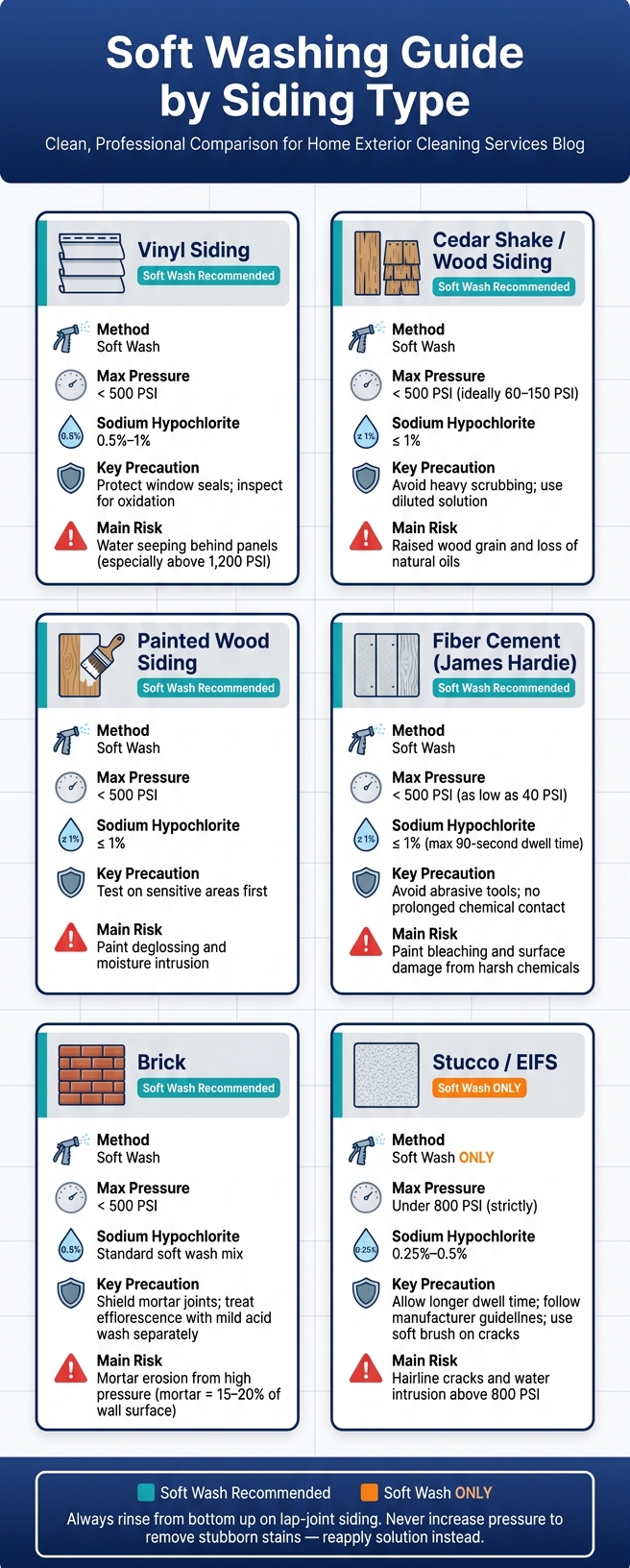
Soft Washing Guide by Siding Type: Pressure, Chemistry & Risks
Here's a quick guide to the best cleaning methods, precautions, and risks for different siding materials.
| Siding Type | Recommended Method | Key Precautions | Main Risk to Avoid |
|---|---|---|---|
| Vinyl | Soft wash (< 500 PSI) | Protect window seals; inspect for oxidation | Water seeping behind panels (especially > 1,200 PSI) |
| Cedar Shake / Wood | Soft wash (< 500 PSI) | Use diluted sodium hypochlorite; avoid heavy scrubbing | Raised wood grain and loss of natural oils |
| Painted Wood | Soft wash (< 500 PSI) | Keep sodium hypochlorite ≤ 1%; test on sensitive areas | Paint deglossing and potential moisture issues (if concentration is too high) |
| Fiber Cement (James Hardie) | Soft wash (< 500 PSI) | Limit sodium hypochlorite to ≤ 1%; avoid abrasive tools | Paint bleaching and surface damage from harsh chemicals |
| Brick | Soft wash (< 500 PSI) | Shield mortar joints; handle efflorescence with mild acid wash | Mortar erosion caused by high pressure |
| Stucco / EIFS | Soft wash ONLY | Allow longer dwell time; follow manufacturer guidelines | Hairline cracks and water intrusion (if pressure > 800 PSI) |
This table highlights the importance of tailoring soft washing techniques to the specific material. While soft washing works well across all siding types, factors like chemical concentration, dwell time, and preparation steps - like sealing windows - are crucial for success. For persistent stains or growth, reapply the cleaning solution rather than increasing the pressure, ensuring both effectiveness and safety.
Conclusion: Why Material Knowledge Makes the Difference
Every type of siding - whether it’s vinyl, cedar shake, fiber cement, brick, stucco, or painted wood - demands a cleaning method tailored to its specific characteristics. Using the wrong pressure, chemical mix, or dwell time can lead to serious issues like voided warranties, moisture infiltration, or irreversible damage to the finish.
Understanding the material is key. As highlighted in this guide, each surface requires a precise balance of pressure (staying under 500 PSI), sodium hypochlorite concentration, and dwell time. What works perfectly on one material can cause significant harm to another.
"Soft washing is a strategic investment in your property's longevity. It prevents the need for premature siding replacement by avoiding common pressure washing mishaps..."
- Josh Pressure Washing & Roof Cleaning
Experience plays a vital role here. ViewCrew is familiar with a variety of siding types, especially those found on New England homes - from cedar shakes to stucco. They are better equipped to avoid costly mistakes. Properties across the North Shore, MetroWest, and Fairfield County often feature a mix of siding materials, making it even more important to apply the right techniques for each surface.
FAQs
How do I know what siding type I have?
Identifying your home's siding is crucial when choosing the right exterior cleaning service. Here are some tips to help you figure it out:
- Vinyl siding: Smooth and interlocking panels.
- Fiber cement (e.g., Hardie board): Dense material, often designed to mimic wood grain.
- Wood siding: Displays natural grain, such as cedar shakes or planks.
- Stucco: Has a porous, textured surface.
- Brick: Features modular units with visible mortar joints.
If you're unsure, professionals can help confirm your siding type before starting the cleaning process.
Will soft washing damage my paint color?
Soft washing can sometimes impact specific paint colors, particularly those with organic pigments like reds, blues, and oranges, if the cleaning solution is overly concentrated. To avoid issues like bleaching or deglossing, professionals stick to solutions containing 1% or less sodium hypochlorite. Testing a small, hidden area first helps confirm the solution's compatibility with the paint. When performed correctly, soft washing remains the safest option for painted surfaces, as it avoids the peeling and damage often caused by high-pressure cleaning methods.
When should I hire a professional instead of DIY?
When your home’s siding needs care that matches its specific material, it's best to bring in a professional house washing service. Tackling this as a DIY project can lead to unintended damage, such as water seeping into your home, gouges in wood, or erosion of stucco. Professionals use cleaning methods designed for each surface, ensuring that dirt, mold, and mildew are safely removed without compromising the integrity of your home or voiding warranties. For a deep clean that avoids costly errors, professional soft washing is the safer choice compared to DIY attempts.