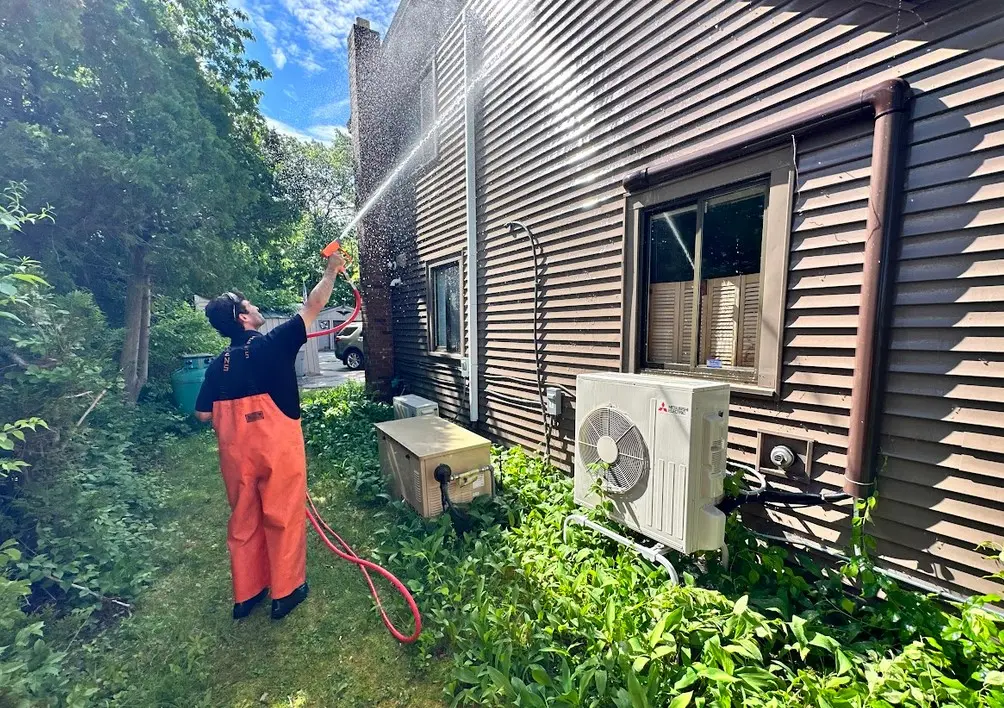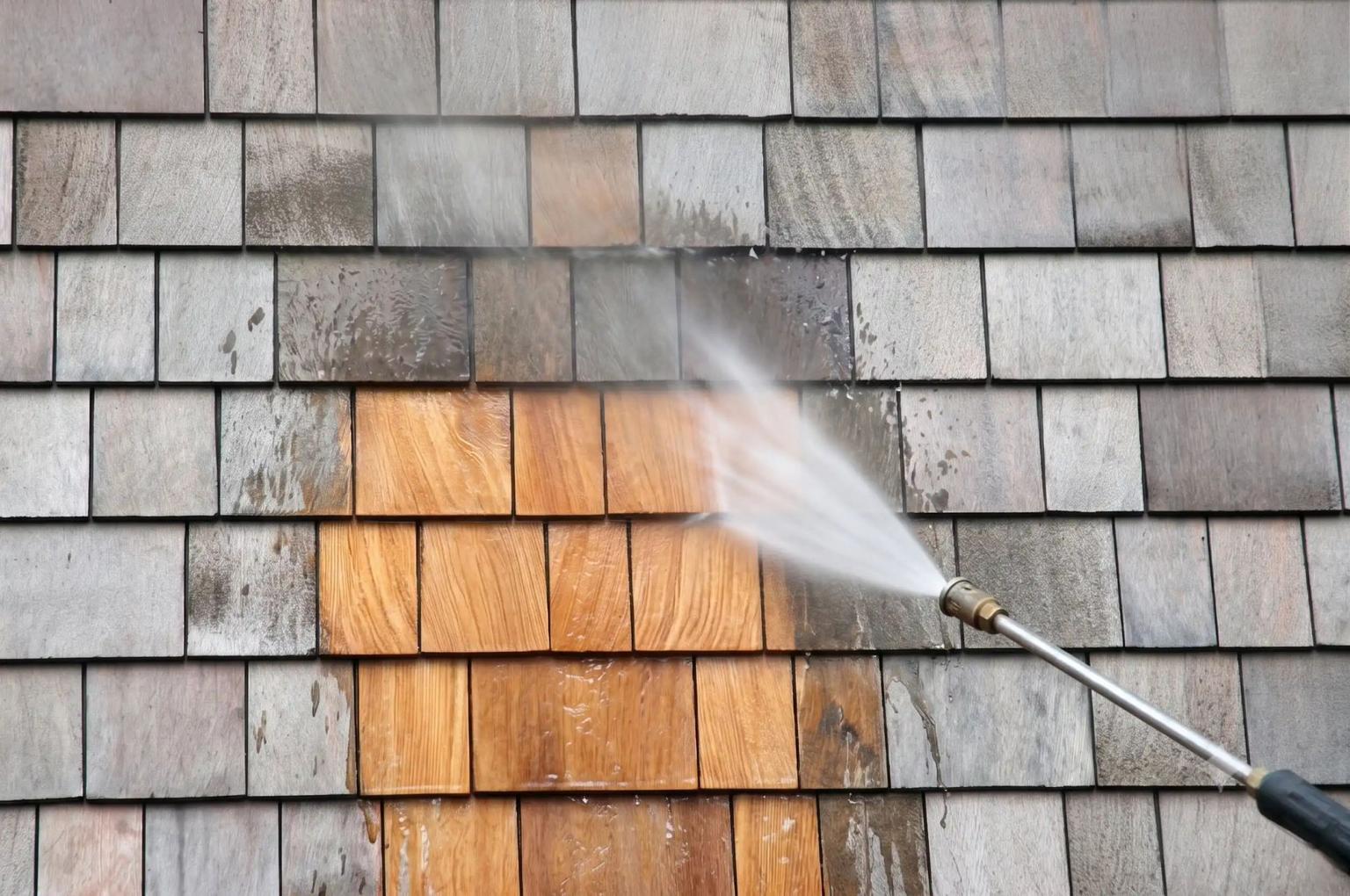
Yes - soft washing is usually safe for cedar shake siding if the pressure stays low, the cleaner is safe for wood, and the siding is still in good shape.
Cedar can handle a gentle wash, but it can be damaged fast by the wrong setup. In most cases, soft washing uses about 50–300 PSI, while pressure washing can hit 1,500–4,000 PSI. That gap matters because cedar is a soft wood with open grain, so too much force can leave it rough, fuzzy, split, or soaked behind the shakes.
Before cleaning, you should know three things:
- Low pressure matters: cedar should not be blasted
- Cleaner choice matters: some chemicals can bleach, strip, or discolor the wood
- Condition matters: rotten, loose, curled, or split shakes should not be washed until fixed
You should also expect soft washing to help with:
- Algae
- Mold
- Mildew
- Moss
- Lichen
- Dirt and pollen
But it will not fix:
- Rot
- Failed stain
- Broken shakes
- Deep wood damage
Quick takeaway: if your cedar siding has light-to-moderate organic growth and the wood is still sound, soft washing can be a safe cleaning option. If you see rot, heavy buildup, or old damage, professional help is the safer move.
How To Clean Cedar Shingles Without Wrecking Them
sbb-itb-238bf3c
Quick Comparison
| Point | Soft Washing Cedar | Pressure Washing Cedar |
|---|---|---|
| Pressure | 50–300 PSI | 1,500–4,000 PSI |
| Main cleaning action | Cleaner does the work | Force does the work |
| Risk to wood fibers | Low | High |
| Risk of water getting behind shakes | Lower | Higher |
| Best for | Algae, mold, mildew, dirt | Hard surfaces like concrete or brick |
| Main concern | Wrong cleaner or poor technique | Surface damage and trapped moisture |
That’s the short answer. The rest of the article breaks down when soft washing is safe, what can go wrong, and when you should stop and call a pro.
What Soft Washing Means for Cedar Shake Siding
On cedar, soft washing means using a wood-safe cleaning solution plus a very low-pressure rinse to remove organic growth without scarring the surface. That matters because cedar can be harmed by pressure, not just by water.
Low Pressure, Not High Force
Soft washing uses 50–300 PSI, which is far below pressure washing at 1,500 to 4,000 PSI. On cedar, that much force can rip away soft wood fibers and leave the surface rough and fuzzy. A low-pressure rinse washes away loosened growth and cleaning solution without disturbing the wood or forcing water behind the shakes.
And that’s the key point: pressure is only one part of the job. The cleaner itself, and how long it sits on the surface, matter just as much.
What Soft Washing Removes on Cedar Shake Siding
Soft washing removes organic buildup without scraping the wood. It kills algae and its spores, reaches into porous wood to get rid of mold and mildew, breaks down lichen and moss at the root, and lifts dirt and pollen with surfactants, all without mechanical scrubbing.
Soft washing handles growth and grime. It does not fix rot or bring back failing stain. After that, the focus shifts to using the right solution and applying it without soaking the wood too much.
When Soft Washing Helps and When It Can Damage Cedar
Soft washing helps cedar only when the shakes are in good shape and the cleaner is safe for wood. Before you clean anything, check the cedar itself.
Conditions Where Soft Washing Cedar Shakes Is Safe
Soft washing is a good fit when the shakes are structurally sound and the main issue is organic growth, like algae, mold, mildew, or surface staining.
Start with a close inspection. Press on any dark or discolored spots. If the wood feels soft or spongy, that points to rot. Washing over rotted wood can push moisture deeper into it and speed up decay.
It also helps to look for:
- Split shakes
- Cupped shakes
- Loose shakes
- Failing caulk around windows, doors, and trim
If the caulk is failing, replace it before cleaning. That step helps keep water from slipping behind the siding during the rinse phase.
If you spot any of those warning signs, stop before rinsing.
Damage Caused by High Pressure or Strong Chemicals
Two things tend to damage cedar during cleaning: too much pressure and the wrong chemicals.
Pressure above 500 to 600 PSI can rough up the surface by causing raised fibers, also called furring. It can also split the grain, gouge the wood, and force water behind the shakes, where moisture can get trapped and lead to rot. In many cases, that damage doesn't go away.
Chemicals can cause just as much trouble. Chlorine bleach is too harsh for cedar at common siding-cleaning strengths. It breaks down lignin in the wood fibers and strips out the natural tannins. The result is often an uneven, gray-white look that's hard to re-stain.
Soft Washing vs. High-Pressure Washing on Cedar: A Side-by-Side Look
Here’s the plain-English difference on cedar: with soft washing, the cleaner does the job. With pressure washing, the force does the job - and that's where problems start.
| Feature | Soft Washing | High-Pressure Washing |
|---|---|---|
| Pressure Level | Low (50–300 PSI) | High (1,500–4,000 PSI) |
| Cleaning Method | Cleaner breaks down growth at the source | High-pressure spraying |
| Risk to Wood Fibers | Minimal; preserves natural texture | High; can cause raised fibers, splitting, and gouging |
| Risk of Water Intrusion | Low; garden-hose strength | High; can force water behind siding and into joints |
| Best Use Case | Fragile surfaces like cedar, stucco, and old wood | Hard surfaces like concrete, stone, and brick |
On cedar, pressure is the main problem. The cleaner should do the work.
The Right Cleaning Solutions and Technique for Cedar Shake Siding
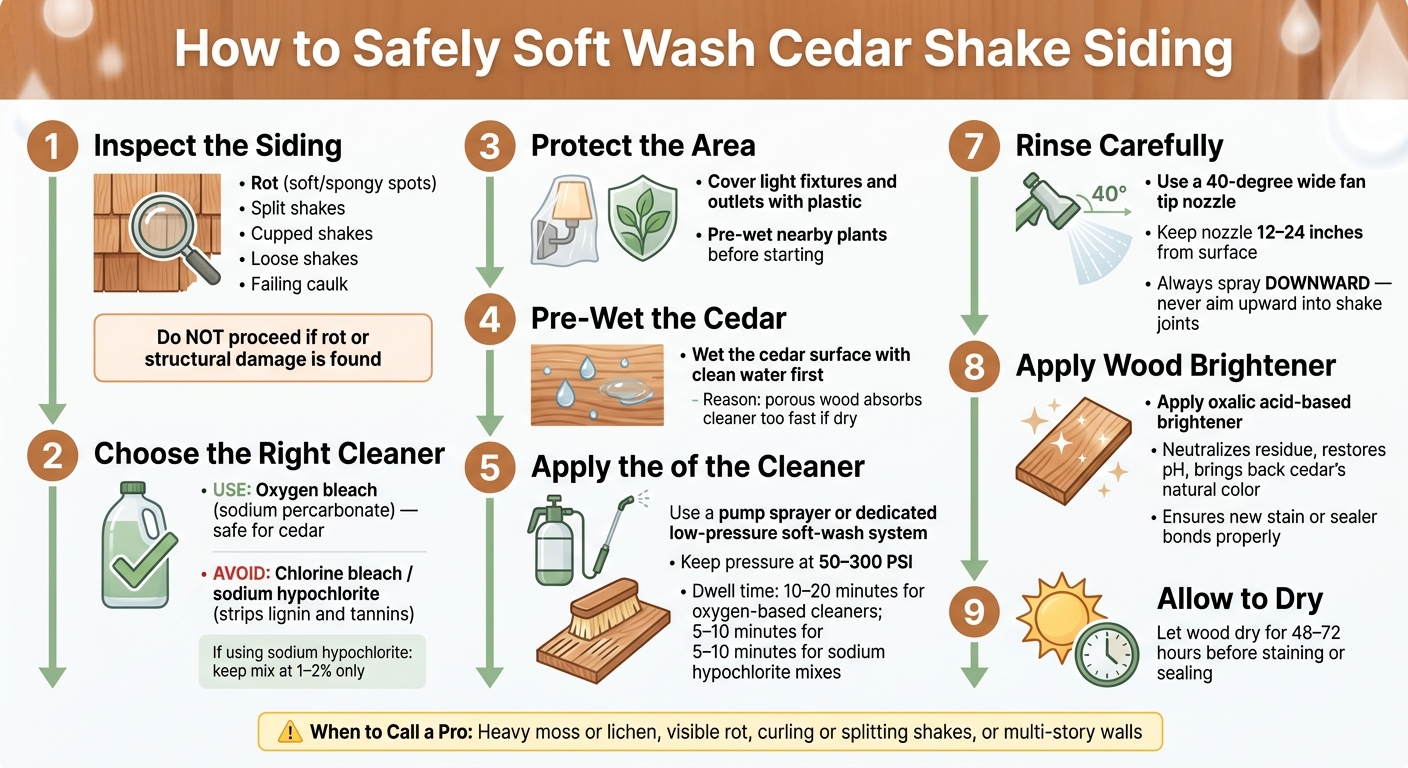
How to Safely Soft Wash Cedar Shake Siding: Step-by-Step Guide
Low pressure alone won't protect cedar. The cleaner you use - and how you apply it - matters just as much. Once pressure is dialed down, the next big factor is making sure the cleaning mix and method don't damage the wood.
Choosing Wood-Safe Cleaners and Testing Before You Start
For cedar, oxygen bleach (sodium percarbonate) is a solid first pick. It helps remove mold, mildew, and algae without stripping away the wood's natural oils.
Avoid sodium hypochlorite on cedar. If you do use it, keep the mix at 1–2% and rinse it off well. After that, use a wood brightener (oxalic acid) to neutralize residue, restore pH, and bring back cedar's color. Skip that step, and new stain or sealer may not bond as well.
Chlorine bleach is also a bad fit for cedar. It can strip the wood and make refinishing more difficult.
Before you wash the whole wall, test your mix on a hidden area first. Look for uneven lightening or grain that starts to lift. If you see either one, stop and adjust before moving forward.
A Step-by-Step Low-Pressure Cleaning Process
Once you've picked a wood-safe cleaner, follow a controlled process. Cover light fixtures and outlets with plastic. Then wet nearby plants before you begin.
Start by pre-wetting the cedar with clean water. Cedar is porous, so dry wood can soak up cleaner too fast.
Apply the cleaner with a pump sprayer or a dedicated low-pressure soft-wash system. Keep the surface wet until it's time to rinse. Let oxygen-based cleaners dwell for 10 to 20 minutes, or 5 to 10 minutes for sodium hypochlorite mixes.
If some growth is still hanging on, use a soft-bristle brush and scrub with the grain. Going across the grain can lift fibers and leave marks that stand out.
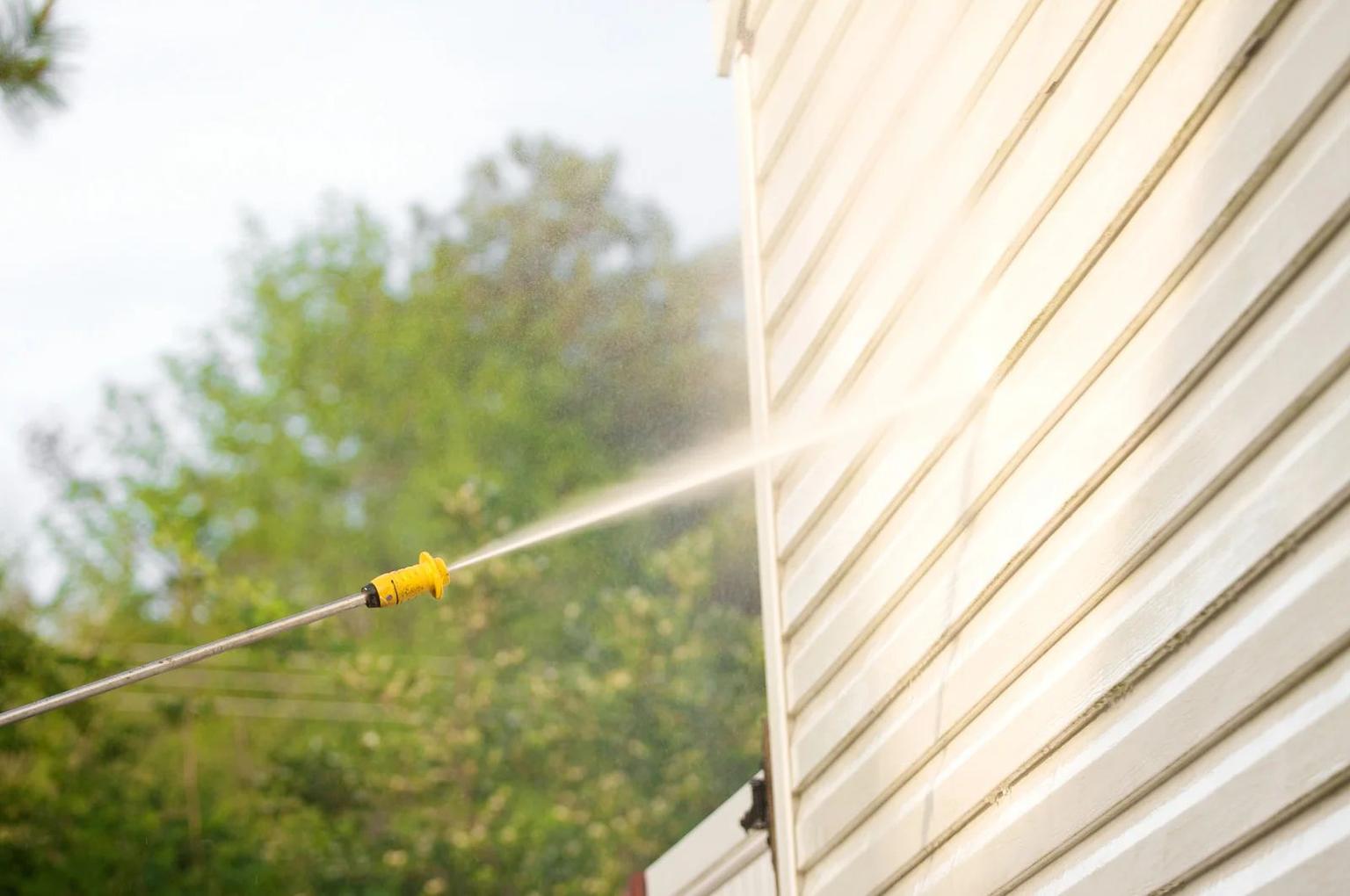
When it's time to rinse, use a 40-degree wide fan tip and keep the nozzle 12 to 24 inches from the surface. Spray downward at all times. Never aim upward into the joints or laps between the shakes, because that can trap moisture and lead to rot.
After rinsing, apply the brightener. Then let the wood dry for 48 to 72 hours before staining or sealing. That helps protect the grain and gives the finish a better surface to bond to.
DIY or Professional Cleaning: How to Decide
Once you know how cedar shake siding should be cleaned, the next step is simpler: decide whether you should handle it yourself.
That choice matters. Cedar shake siding is expensive to replace, so a bad cleaning job can cost a lot.
When DIY Cleaning May Be Reasonable
DIY soft washing can make sense in a narrow set of cases: light staining, a single-story wall you can reach safely, and equipment that uses true low pressure. If you’re uneasy about handling cleaning chemicals, it’s smarter to bring in a professional.
When to Call a Professional Exterior Cleaning Service
Some cedar problems are past the point of safe DIY work.
Call a professional if you see heavy moss, crusty lichen, or thick biological growth. These growths root into the wood, and trying to scrub or blast them off can gouge the surface. Pros use chemical treatments that kill the growth at the root, so it lets go over time instead of being torn off by force.
You should also bring in a professional if the siding shows visible rot, curling, splitting, or other structural damage. Soft washing may help clean and restore cedar, but it won't repair wood that's already compromised. ViewCrew Services runs its soft washing systems at pressures as low as 50 PSI, close to a standard garden hose, which is the kind of control cedar like this calls for.
Match the schedule to your home's exposure, not just the calendar. If you notice mold, algae, slippery walkways, or heavy dirt buildup, that's your signal to clean. A fixed once-a-year rule doesn't always fit. Some homes need attention sooner. Others can go longer without trouble.
Safe cedar cleaning depends on low pressure, wood-safe cleaner, and sound siding.
For cedar shakes, the call comes down to three checks: pressure, cleaner, and wood condition.
Soft washing is safe for cedar shake siding only when the pressure stays low, the cleaner is wood-safe, and the wood is still sound. If you spot rot, curling, or visible furring, stop there and move to repair or professional help.
FAQs
How often should cedar shake siding be soft washed?
Cedar shake siding usually needs soft washing every 1 to 3 years. The exact schedule depends on a few simple things: your local climate, how much shade the siding gets, nearby trees, and the direction your home faces.
If you live in a humid or rainy area, you’ll often need to clean it every 1 to 2 years. That’s because moisture tends to stick around longer, which gives grime and organic growth more time to build up.
A quick visual check can tell you a lot. Look for:
- Dark streaks
- Moss
- Mold
- Mildew
- General dirt buildup
Can soft washing remove black stains from cedar shakes?
Yes. Soft washing can remove black stains from cedar shakes. Those stains are often caused by mold, mildew, or algae feeding on the wood’s tannins.
The process uses a wood-safe cleaning solution, such as oxygen bleach or an algaecide. After that, the surface is rinsed with low pressure to wash away the growth and stains while helping protect the cedar fibers.
What should I do before soft washing cedar siding?
Before soft washing cedar siding, inspect it for cracks, soft spots, rot, or loose boards that need repair or replacement. Also check for gaps in the caulking around windows, doors, and trim, and mark those areas so you can fix them later. While you're at it, clear the gutters so water drains the way it should.
Next, gently brush off loose debris with the grain. Then pre-wet the wood before you apply the cleaning solution. These small steps help limit water intrusion, reduce over-absorption, and avoid damage over time.