The best way to stop algae and mold on siding is to keep the wall dry, trim back plants, fix water runoff, and wash the surface 1 to 2 times a year.
If siding stays damp for 24 to 48 hours or more after rain, growth is more likely to show up. The first trouble spots are often north-facing walls, shaded corners, lower siding near the foundation, and areas below gutters. A simple routine helps: keep plants 2 to 3 feet away from the wall, extend downspouts 4 to 6 feet from the house, and use soft washing instead of high pressure on most siding.
Here’s the short answer:
- Reduce moisture: fix gutters, adjust sprinklers, and improve drainage
- Improve airflow: trim shrubs, vines, and low branches
- Remove grime: wash off pollen, dirt, and debris before growth starts
- Clean safely: use low pressure, the right cleaner, and rinse the right way
- Watch shaded areas: check them in spring and fall
- Call a pro: if stains keep coming back or the wall is tall or delicate
A few facts stand out:
- Homes in wet, shady areas often need washing twice a year
- Bleach mixes used on vinyl or brick are often diluted at 1:4
- If pressure washing is used, it should stay under 1,500 PSI
- A nozzle should stay about 12 to 18 inches from the siding
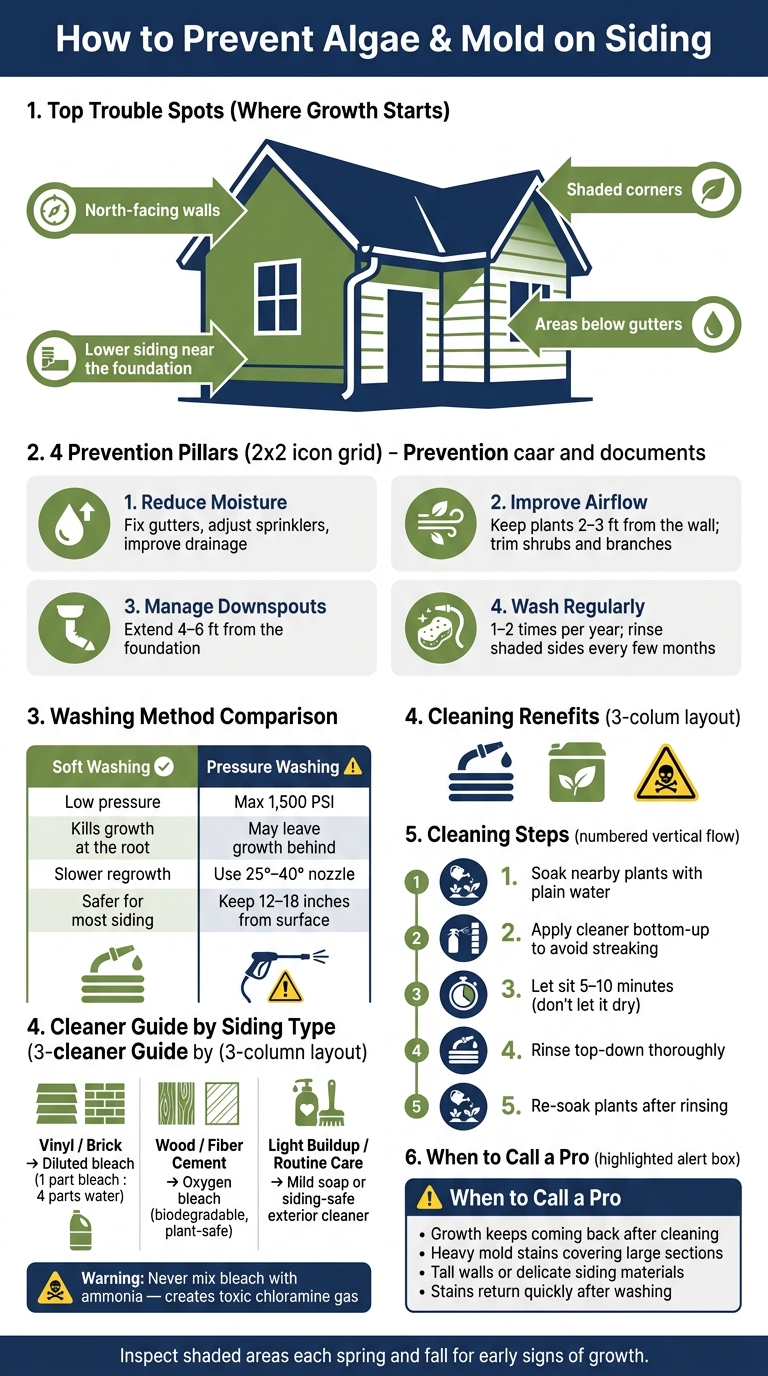
How to Prevent Algae & Mold on Siding: A Step-by-Step Routine
Preventing Mold & Mildew On Siding
sbb-itb-238bf3c
What causes algae and mold to grow on siding
Algae, mold, and mildew tend to show up when siding stays damp, gets little sunlight, and builds up an organic film. The first places to check are the areas that stay wet the longest.
How moisture, shade, and debris set the stage for growth
Moisture is the main thing behind growth. It can come from rain, high humidity, leaking gutters, and sprinkler heads that spray too close to the house. The issue isn’t just that water hits the siding. It’s that the moisture sticks around. When water doesn’t dry out fast, algae and mold have time to settle in.
Shade adds to the problem. North-facing walls and sections blocked by trees or fences get less direct sun, so they dry more slowly. Mold tends to grow when moisture, shade, and a food source all meet in the same spot.
That food source is often a thin organic film. Dirt, pollen, tree sap, and pollution can leave behind a layer that algae and mold feed on. Overgrown landscaping also traps humidity against the wall and slows drying.
Where to look for early signs of growth around the house
Growth usually starts in the spots that stay damp the longest.
Common trouble areas include:
- Lower courses near the foundation
- Areas hidden behind dense shrubs
- Sections of wall below leaking or overflowing gutters
- Walls that face north
- Crevices around trim
- Textured siding grooves
These are all frequent starting points for algae, mold, and mildew.
Watch for a faint green tint, dark runoff streaks, or a gray film on shaded siding. Try wiping the area. If it smears or feels slimy, that points to growth. If the residue feels gritty, it’s usually dirt. Check the house after a heavy rain, when these problem spots are easiest to see. Those areas can double as your inspection checklist before each routine wash.
Build a maintenance routine that keeps siding dry and clean
Once you know where growth starts, the next move is simple: keep those areas dry and clear of grime. A basic routine does a lot of the heavy lifting. When siding stays dry and clean, algae and mold have a much harder time taking hold.
Wash siding once or twice a year to remove buildup
Cleaning gets rid of the thin film that shade and moisture leave behind. And that film matters more than most people think. Even when siding looks clean, pollen, dust, and airborne debris can still collect on the surface over time.
That layer gives algae and mold something to feed on. Regular washing removes it before it turns into a bigger issue.
Most homes do fine with a full wash once a year. If your home has a lot of shade or sits near trees, twice a year is often a better fit. On shaded sides, it also helps to rinse the siding with a garden hose every few months during summer to wash away pollen and dust.
Cut back plants and keep air moving along the wall
Shrubs, branches, and vines can hold moisture against the house and block sunlight. That’s a bad combo for siding. Leave 2 to 3 feet of space between plants and the wall so air can move along the surface and help it dry out.
Manage water at gutters, downspouts, grading, and sprinklers
If water keeps hitting the wall, cleaning won’t fix the root problem. In many cases, water near siding comes from a few common trouble spots:
- clogged gutters
- short downspouts
- poor grading
- sprinkler heads aimed at the house
Clean gutters twice a year, once in spring and once in fall. Extend downspouts 4 to 6 feet from the foundation. Make sure the soil slopes away from the house so water drains away from the siding. And check sprinkler heads to make sure they’re not spraying the walls.
How to wash siding safely using the right methods and cleaners
Once the wall stays drier, the next step is washing it the right way. The goal isn’t just to make the siding look better. It’s to remove what moisture left behind without pushing more water where it shouldn’t go.
Why soft washing works better than high-pressure washing for most siding
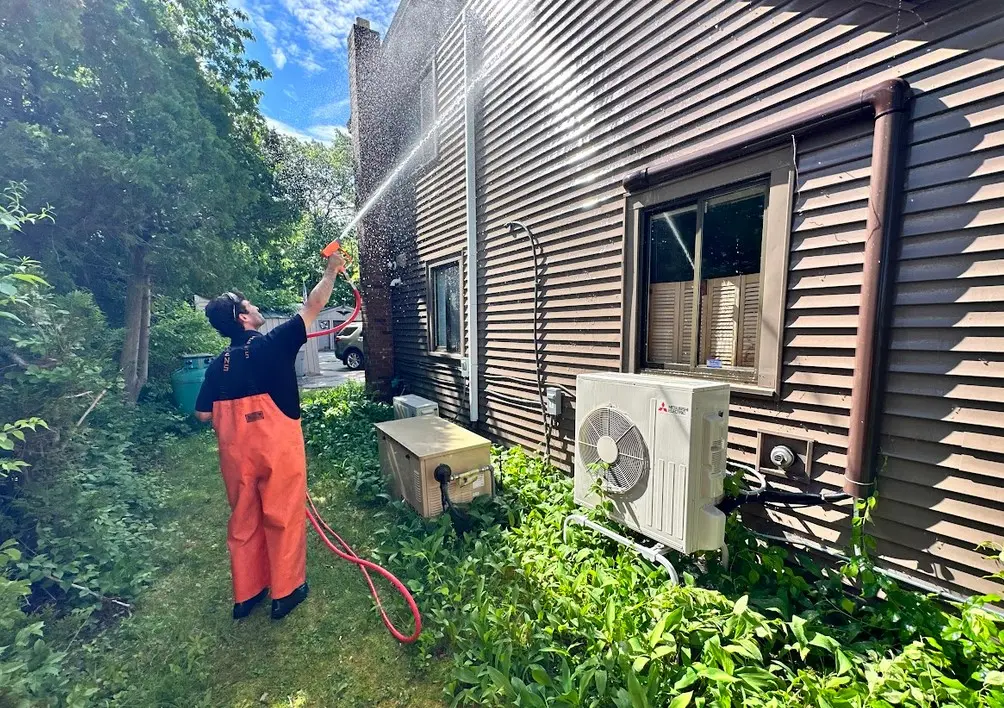
For most siding, soft washing is the safer pick. It uses low pressure along with a siding-safe cleaner, which helps remove growth without driving water behind the panels. That matters a lot, because trapped water can lead to bigger problems later.
Soft washing also does more than rinse the surface. It kills the growth, which helps slow regrowth. Pressure washing by itself often strips off the visible layer but leaves part of the problem behind, so it can come back sooner.
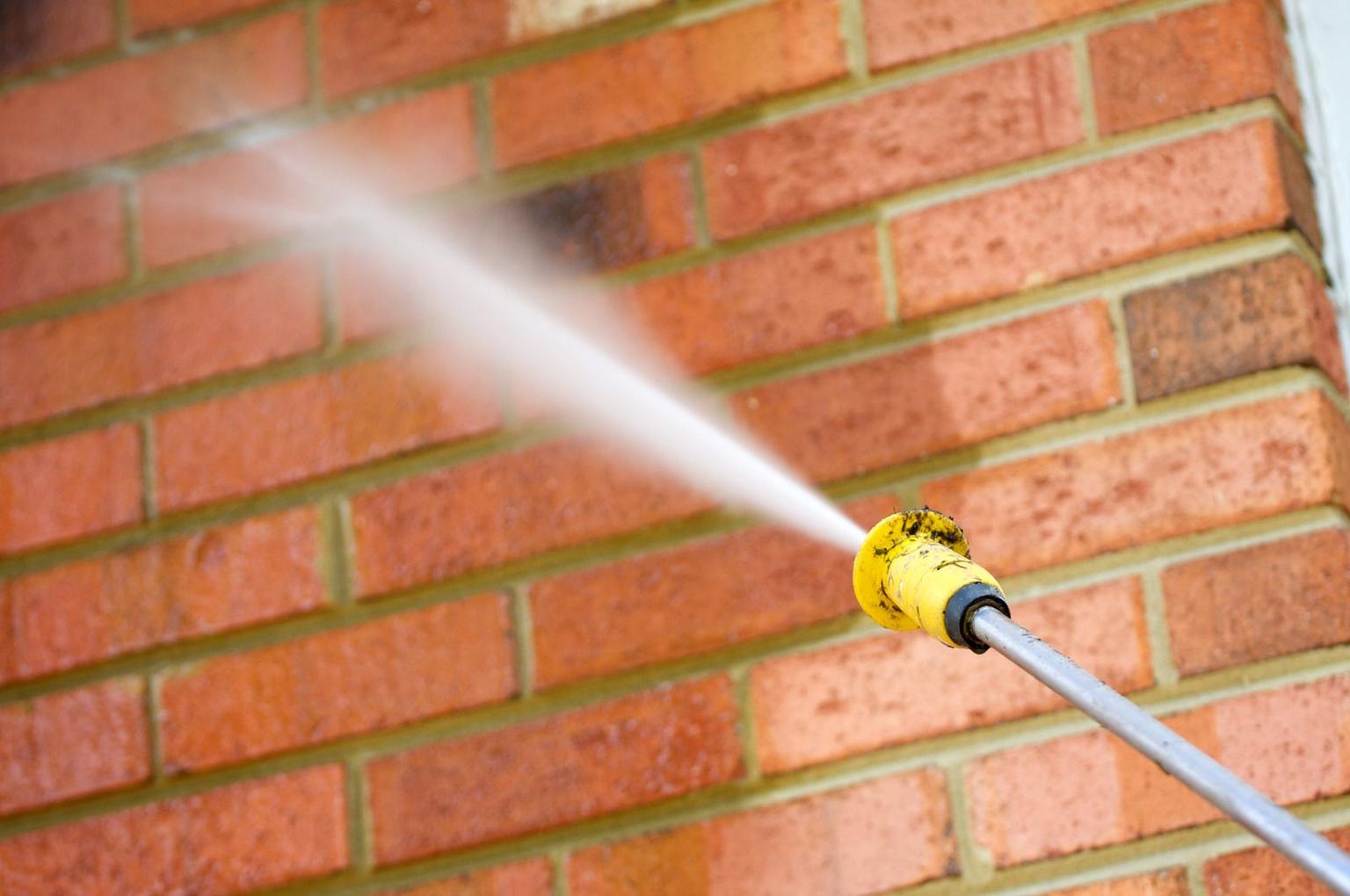
If pressure washing can’t be avoided, keep it below 1,500 PSI and use a wide-angle fan tip, like a 25-degree or 40-degree nozzle. Don’t spray upward under siding laps, and keep the nozzle at least 12 to 18 inches from the surface.
Match your cleaner to the siding material
The cleaner should fit both the siding type and how bad the buildup is. There’s no one-size-fits-all fix here.
For heavy mold on vinyl or brick, a diluted bleach mix of 1 part bleach to 4 parts water can work well. But it can damage wood fibers and hurt nearby plants if you’re careless. For wood or fiber cement, oxygen bleach is a safer option. It’s biodegradable and gentler on the siding and the landscaping around it.
If the buildup is light, or you’re just doing routine care, a mild soap mix or a siding-safe exterior cleaner labeled for outdoor use is often enough.
A few rules apply no matter what cleaner you use:
- Test it first on a small, hidden area
- Apply the solution from the bottom up to help avoid streaking
- Rinse from the top down
- Let the cleaner sit for 5 to 10 minutes before rinsing
- Don’t let it dry on the surface
- Soak nearby plants with plain water before and after to thin out runoff
And one warning matters more than the rest: never mix bleach with ammonia-based cleaners. That mix creates toxic chloramine gas.
When to call a professional for exterior siding cleaning
Sometimes the siding is telling you this isn’t a simple wash-and-done job. If the buildup is heavy, keeps coming back, or shows up on tall walls or delicate siding, it’s smart to bring in a pro.
That also goes for heavy mold stains or growth that returns fast after cleaning. At that point, the issue usually runs deeper than surface dirt.
Conclusion: Keep siding clean with moisture control, airflow, and regular washing
Algae and mold don’t show up all at once. They build over time when siding stays damp, shaded, and dirty.
Stick with a simple routine: wash the siding on a regular basis, clear out gutters, trim plants back, and fix outside moisture issues as they come up. When it’s time to clean, use low pressure and products made for siding.
Soft washing often lasts longer because it removes growth more fully than high-pressure washing.
Pay extra attention to north-facing walls. They get the least sunlight and tend to stay damp the longest. It also helps to check shaded areas in spring and fall for cracks, warping, or early signs of growth.
If the growth keeps coming back or covers a large section, call a professional like ViewCrew.
FAQs
How can I tell if siding stains are mold or just dirt?
It can be tough to tell the difference at first glance because dirt and organic growth often show up together. Dirt and pollen usually look like a dull, even film spread across the surface.
Algae, mold, and mildew usually look a bit different. They tend to show up in clearer patterns instead of one even layer.
- Algae often appears as green or brown streaks
- Mold usually shows up as black, gray, or brown patches
- Mildew often looks like gray or white powdery spots
Here’s a simple way to check: if mild detergent and scrubbing don’t remove the stain without much effort, you’re probably dealing with biological growth.
What type of siding needs the gentlest cleaning method?
Engineered wood siding, such as LP SmartSide, and natural wood siding need the gentlest cleaning.
Skip pressure washing here. It can damage the finish, strip paint, or push water behind the panels.
A safer option is simple:
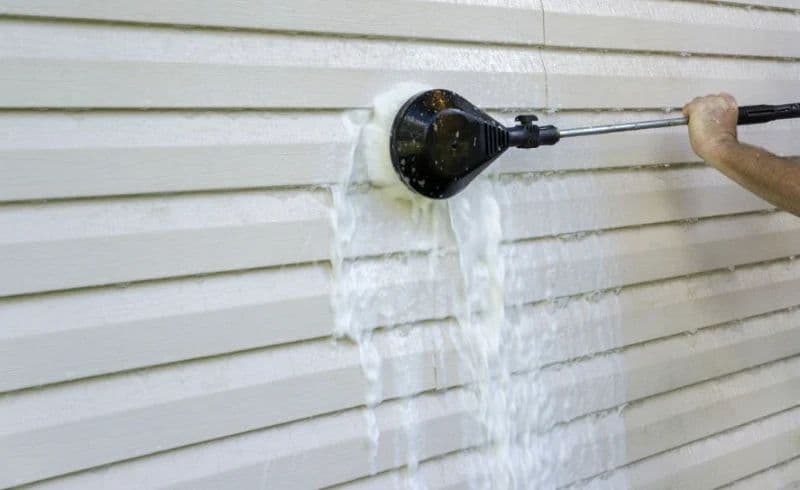
- Use a soft-bristle brush, sponge, or cloth
- Clean with mild detergent and water
- Rinse with a low-pressure garden hose
If you’re not sure which method to use, go with the gentlest one. In most cases, that means soft washing.
When should I call a pro for mold on siding?
Consider hiring a professional if mold or algae covers a large area, keeps coming back after DIY cleaning, or is in spots that feel unsafe to reach with a ladder.
It also makes sense to call an expert if you’re not sure which cleaners are safe for your siding, want a spotless finish before selling, or think there may be a moisture issue behind the growth. Pros can use soft-washing methods to remove it safely.