Roof lichen needs gentle treatment - not scraping or pressure washing. Check your roof from the ground, and have damaged shingles inspected before scheduling roof-safe soft washing. Treated lichen may take 30–90 days of rainfall to loosen and wash away.
For roofs in Massachusetts, southern New Hampshire, and Connecticut, keep these points in mind:
- Identify the growth: Lichen forms crusty patches, moss forms soft mats, and algae often leaves flat black streaks.
- Avoid force: Lichen grips shingle granules, so pulling it off can damage your roof.
- Choose suitable weather: Late April through May is a spring treatment window; outside it, look for mild, dry, stable conditions.
- Protect nearby surfaces: Treatment should include runoff controls for landscaping, gutters, siding, and windows.
- Track the results: Take photos at 30, 60, and 90 days. Contact your provider if patches spread or show little change.
<u>Cleaning does not repair damaged shingles.</u> The goal is to treat the growth safely, then give the residue time to weather away - not leave the roof spotless the same day.
Lichen and Moss Roof Soft Washing
sbb-itb-238bf3c
How to Identify Lichen, Moss, and Black Algae
Check your roof from the ground in daylight using binoculars or your phone’s zoom. Compare the growth’s pattern, color, and texture, and take photos from a few angles. A single view can make a raised patch look like a flat stain. Getting the ID right matters: lichen needs roof-safe soft washing, not force.
| Growth | Appearance | Texture | Common locations | How it attaches |
|---|---|---|---|---|
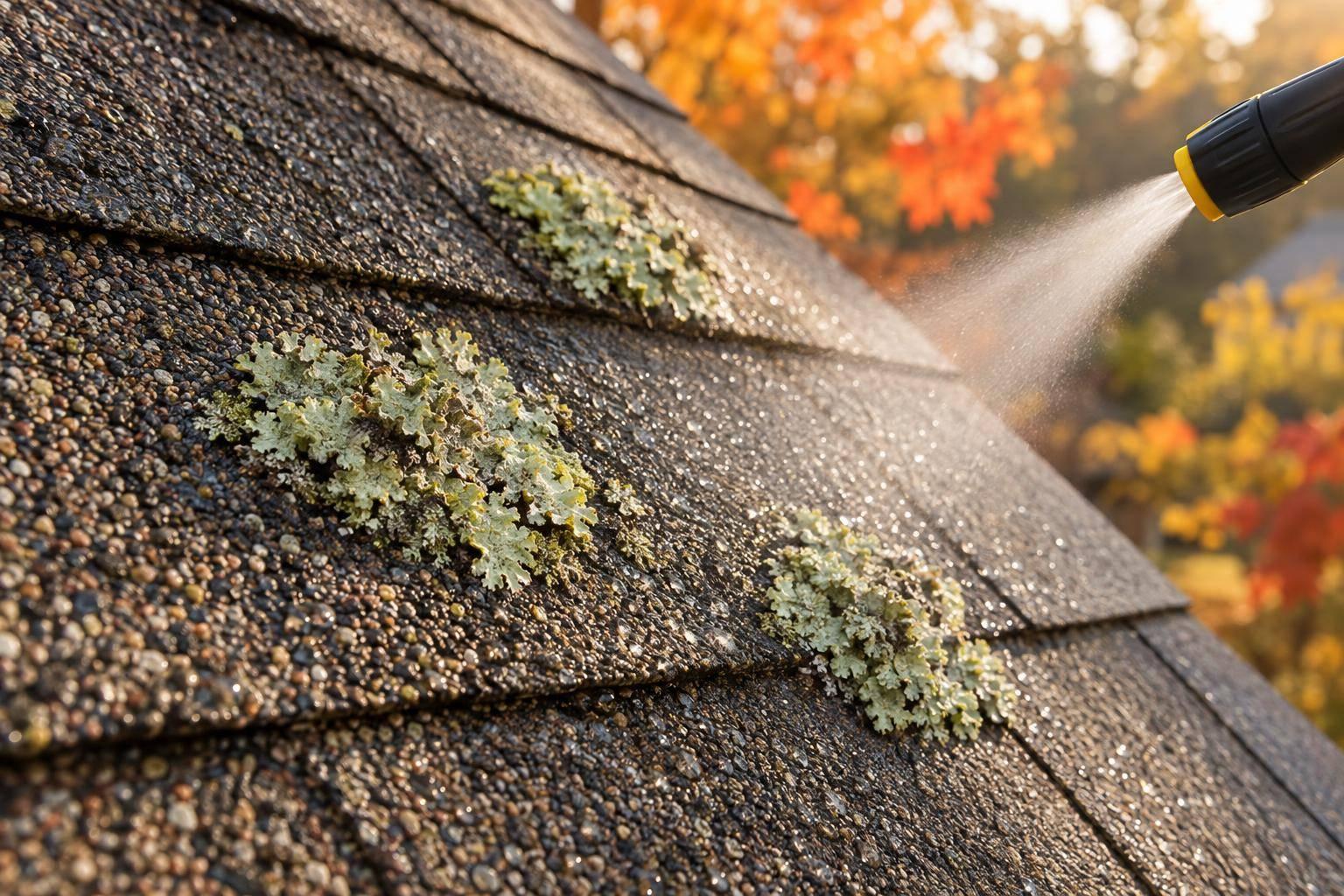
| Lichen | Irregular gray-green, pale green, white, or yellowish patches | Crusty, scaly, or leaf-like; sometimes raised | Shaded, damp sections, often north-facing or under tree cover | Fungal filaments bind tightly to shingle granules. |
| Moss | Green tufts, cushions, or mats | Thick, fuzzy, and raised | Damp, shaded sections near roof edges, valleys, or overhanging trees | Rhizoids anchor it to the surface and can creep around shingle edges. |
| Black algae | Dark brown or black streaks running downslope | Flat and stain-like | Shaded or north-facing slopes and lower areas that stay damp | A surface colony of the cyanobacterium Gloeocapsa magma; it stains shingles rather than forming a thick mat. |
“Black algae” is a common roofing term. The cyanobacterium Gloeocapsa magma is commonly linked to these black roof streaks. But not every dark streak is algae - dirt can look similar. Black streaks around crusty patches may point to mixed growth rather than algae alone.
Why Lichen Sticks to Shingle Granules
Lichen’s fungal filaments, called hyphae, follow the roof’s surface closely and grip around mineral granules. This grip makes lichen harder to remove than dirt. Pulling it off can strip away protective granules, which is why roof-safe soft washing is the correct treatment.
Lichen vs. Moss on Roofs
Lichen forms a tightly bonded crust, while moss forms a soft, raised mat. That difference matters because moss and lichen present different risks.
If the roof already looks worn, stop at the visual check. Request an inspection before treatment if growth hides shingle edges or your photos show curled, cracked, or missing shingles.
Once you’ve identified lichen, the next step is deciding when and how to treat it safely.
Roof Lichen Removal: Treatment and Timing
Once you’ve confirmed the growth is lichen, plan for roof-safe soft washing during mild spring weather.
Soft Washing vs. Power Washing
Lichen grips shingle granules tightly. Soft washing treats the growth with a cleaning solution instead of trying to pry it loose with water pressure. Power washing, by contrast, can strip away protective granules.
| Factor | Soft washing | Power washing |
|---|---|---|
| Cleaning mechanism | Cleaning solution treats organic growth | Forceful water dislodges growth |
| Effect on lichen | Helps kill or weaken lichen so residue releases gradually | May remove surface growth while leaving attached growth and causing damage |
| Shingle risk | Lower when the solution, application, and runoff controls are appropriate | Can strip granules and damage shingles |
| Roof application | Professional treatment for compatible roofing materials | Should not be used on asphalt shingles |
Roof Inspection, Treatment, and Runoff Protection
Before treatment, a professional should identify the growth and roofing material, document existing damage, and check roof access. Gutters, downspouts, landscaping, siding, windows, and outdoor furnishings need protection from runoff throughout the job.
The technician should apply a roof-safe solution and let it sit for the time recommended on the label, with adjustments for roof conditions. Gentle rinsing is needed only when required. The roof-cleaning page covers algae, lichen, and stains and notes compatibility with asphalt shingle, tile, and metal roofs.
Plan Spring Cleaning for Late April Through May
Late April through May is the main spring-cleaning window in New England, provided temperatures are mild enough and roof access is safe. Rain arriving before the solution has had time to work may mean rescheduling. So can frost or cold, wet, or unstable weather.
If you’re scheduling outside that window, wait for dry, mild, stable conditions rather than rushing treatment.
What to Expect After Treatment
Roof Lichen After Treatment: The 30–90 Day Timeline
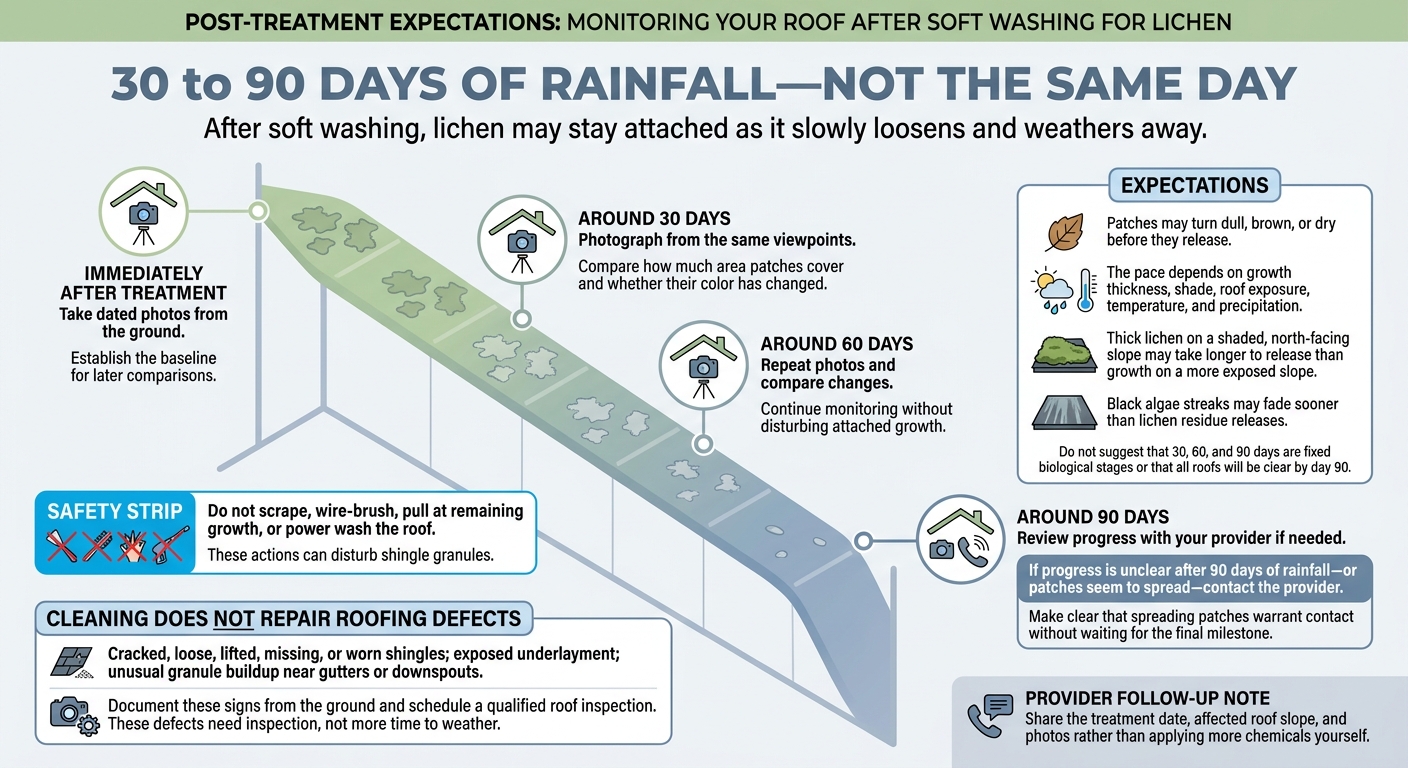
After soft washing, lichen may stay attached as it slowly loosens and weathers away over 30 to 90 days of rainfall - not the same day. Patches may turn dull, brown, or dry before they release.
The pace depends on growth thickness, shade, roof exposure, temperature, and precipitation. Thick lichen on a shaded, north-facing slope may take longer to release than growth on a more exposed slope.
Track Changes Without Scraping
Track progress from the ground while the roof weathers. Take dated photos right after treatment and around 30, 60, and 90 days, using the same viewpoints each time. Compare how much area the patches cover and whether their color has changed. Do not scrape, wire-brush, pull at remaining growth, or power wash the roof. These actions can disturb shingle granules.
Black algae streaks may fade sooner than lichen residue releases. If progress is unclear after 90 days of rainfall - or patches seem to spread - contact the provider. Share the treatment date, affected roof slope, and photos rather than applying more chemicals yourself.
Get Damaged Shingles Inspected
Cleaning does not repair roofing defects. Watch for cracked, loose, lifted, missing, or worn shingles, exposed underlayment, or unusual granule buildup near gutters or downspouts. Document these signs from the ground and schedule a qualified roof inspection. These defects need inspection, not more time to weather.
Conclusion: Treat Lichen and Give It Time
Once you’ve confirmed lichen, treat it rather than force it off. Lichen forms crusty gray-green or pale patches that bond tightly to roof shingles. This fungus-alga partnership can be difficult to remove without damaging the shingles.
Scraping, wire brushing, and power washing can strip away shingle granules. Soft washing uses roof-safe chemistry and gentle application instead. Treatment starts the process, and weather does the rest: residue may fade over 30 to 90 days of rainfall.
For New England roofs, late April through May is the best spring assessment window. If your roof is due for spring maintenance, schedule an assessment before that window closes. Request a roof-cleaning assessment to match the treatment to the growth and roof material.
FAQs
How can I keep lichen from returning?
After soft washing, trim overhanging branches to reduce shade and keep gutters and downspouts clear to prevent lingering dampness. Plan for professional soft washing every 3 to 5 years, or sooner if lichen returns.
If you also see black streaks, zinc or copper strips along the roof ridge can help limit algae regrowth. Any remaining residue usually washes away with rainfall over 30 to 90 days, so don’t expect it to disappear right away.
Will roof lichen treatment affect my shingle warranty?
Soft washing won’t void your shingle warranty when done correctly. Major shingle manufacturers support the low-pressure chemical cleaning methods endorsed by the Asphalt Roofing Manufacturers Association (ARMA).
High-pressure washing and abrasive tools, such as wire brushes, can strip away protective granules and cause shingles to fail early. That puts your warranty at risk. Soft washing uses cleaning solutions, not high pressure, to treat lichen.
How much does roof lichen removal cost?
Professional soft wash roof cleaning typically costs 10% to 30% more per square foot than pressure washing, with one estimate at around $400. Your price depends on what your roof needs.
Soft washing treats lichen and slows regrowth without the risk of costly shingle damage from high-pressure cleaning. ViewCrew Services offers free, no-obligation estimates for your roof.