Roof ice melt tablets can open a temporary drainage path, but they do not remove the whole ice dam or stop it from returning. For a small dam, use only roof-labeled products you can place safely from the ground. If water is leaking inside or pooling behind the ice, call a professional for ice dam removal instead of adding more tablets.
For homes in Massachusetts, Southern New Hampshire, and Connecticut, your options are:
- Tablets and calcium chloride socks: Melt ice where they make contact, but drainage paths can refreeze.
- Professional low-pressure steam: Removes the ice mass without hammering or chemical runoff, but does not fix attic heat loss.
- Rock salt, impact tools, pressure washers, and open flames: Keep them off your roof.
Never climb onto an icy roof. Once the ice is gone, address air leaks, insulation, and ventilation to help prevent another dam, and see ice dam prevention for New England roofs for the order of repairs.
Roof Ice Melt Tablets vs. Steam: Know the Limits
What To Do If You Have An Ice Dam - Ace Hardware
sbb-itb-238bf3c
Do Roof Ice Melt Tablets Work on Ice Dams?
Yes, but only to create a temporary drainage path. Roof ice melt tablets melt ice where the chemical makes contact, leaving most of the dam in place. What matters is whether that path lets enough water drain to keep it from backing up under shingles. Results depend on temperature, ice thickness, and roof drainage - so product choice and roof safety matter.
Those channels can refreeze when temperatures drop, snowmelt dilutes the brine, or gutters and downspouts remain blocked.
Roof Ice Melt Tablets vs. Calcium Chloride Socks
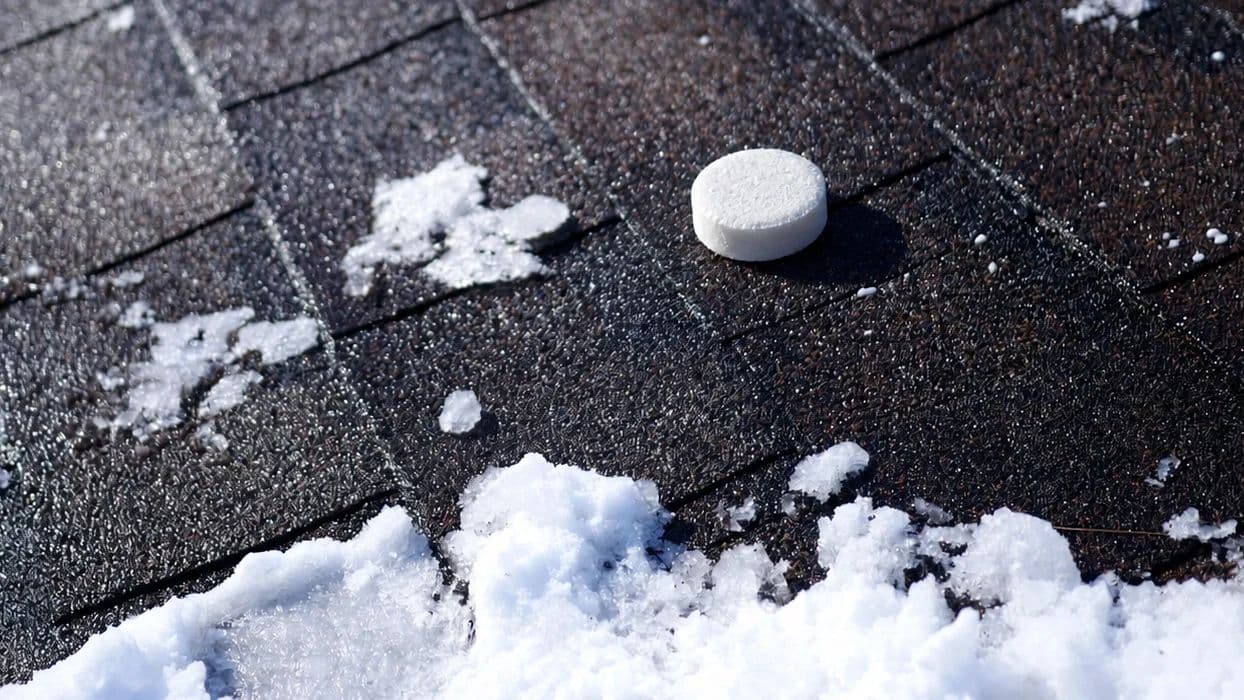
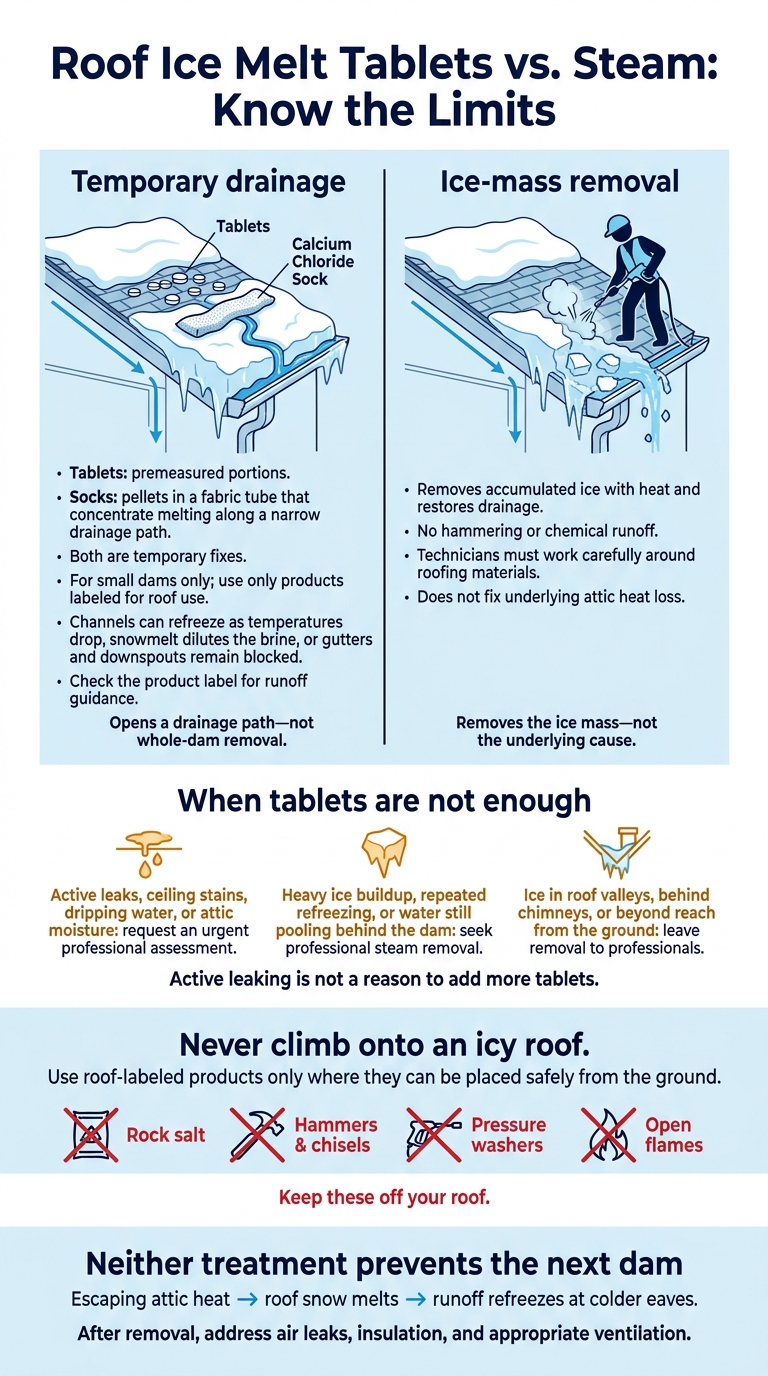
Manufactured tablets come in premeasured portions. Calcium chloride socks hold pellets in a fabric tube, directing the melting along a narrow drainage path. Both are temporary fixes. Check the product label for roof use and runoff guidance.
For DIY limits and methods to avoid, see the ice dam removal methods guide. Stay on the ground. Never climb an icy roof.
Compare Roof Ice Melt Products and Steam Removal
Here’s what each option can - and can’t - do.
| Product type | What it does | Limits | Risk to roof | Gutters and plants |
|---|---|---|---|---|
| Calcium chloride tablets | Opens a narrow drainage channel. | Temporary; does not remove the whole dam. | Use only if the label allows roof use. | Check the label for runoff guidance. |
| Calcium chloride socks | Concentrates melting along a drainage path. | For small dams only; leaves most ice in place. | Use only if the label allows roof use. | Check the label for runoff guidance. |
| Rock salt | Lowers water’s freezing point. | Do not use on the roof. | - | - |
| Professional steam removal | Removes accumulated ice with heat. | Does not fix the underlying cause of the ice dam. | Very low; no mechanical force. | No chemical runoff to manage. |
The difference: tablets and socks open a drainage path; steam removes the ice mass.
When melt channels keep failing, the next issue is what not to put on the roof.
What Not to Use on an Ice-Dammed Roof
Do not use rock salt, hammers, chisels, pressure washers, or open flames on an ice-dammed roof. For the full list of methods to avoid, see how ice dam removal works in New England.
For DIY treatment, use only roof-labeled tablets or calcium chloride socks on small dams. Place them from the ground or a stable ladder - never climb onto the roof. If water still won’t drain, tablets have reached their limit.
When Roof Ice Melt Is Not Enough
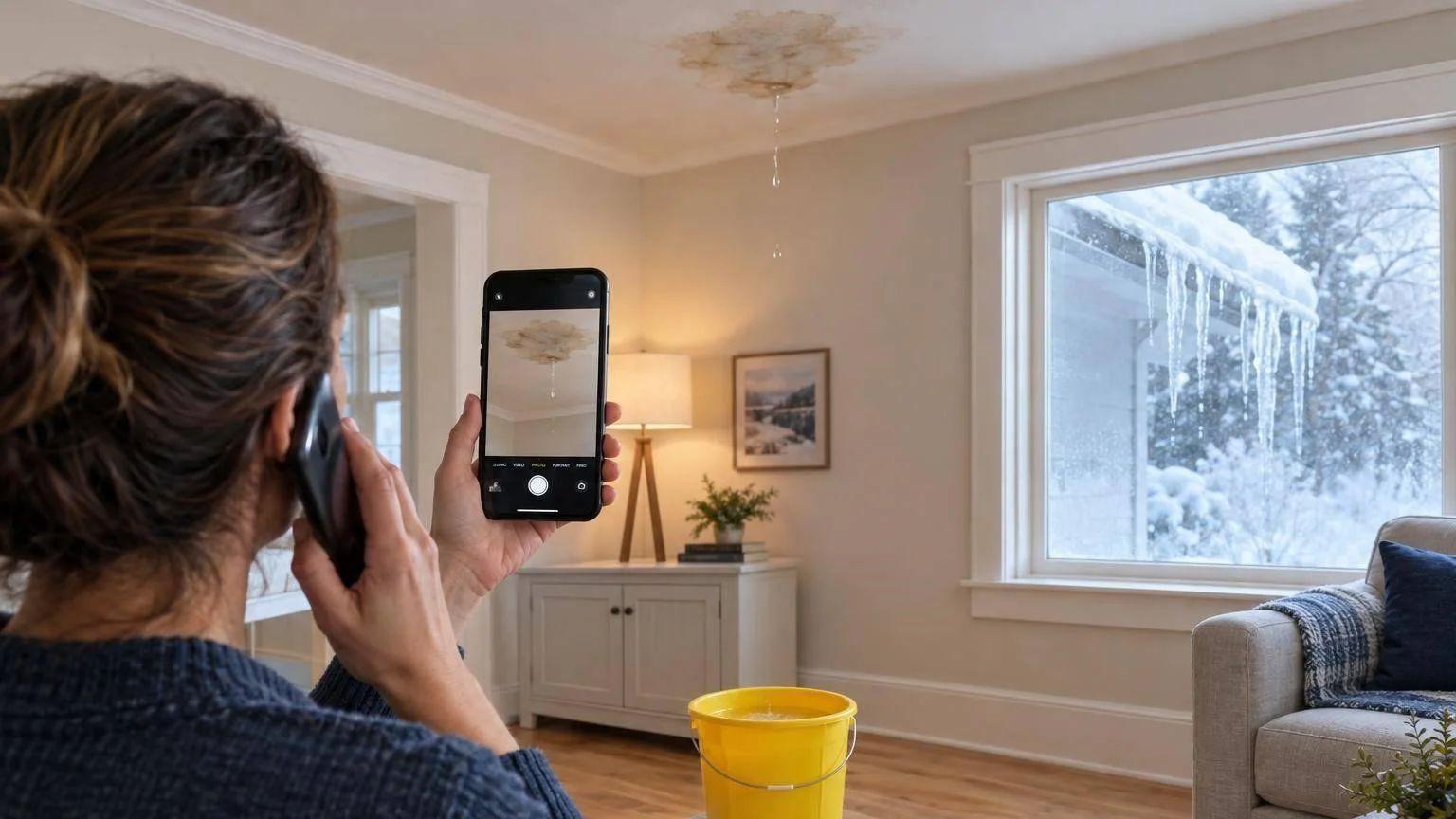
Active leaks or heavy ice buildup at the eaves call for professional steam removal - not more tablets. Ceiling stains, dripping water, or attic moisture can point to water entering your home. If water is coming in, skip DIY methods and request an urgent assessment and professional steam removal. The goal is now to remove the ice mass, not just open a small drainage path.
Roof ice melt products have limits. If a channel keeps refreezing or water still pools behind the dam, the tablets are no longer doing the job. Ice in a roof valley, behind a chimney, or beyond reach from the ground also calls for professional steam removal.
What Professional Steam Removal Does
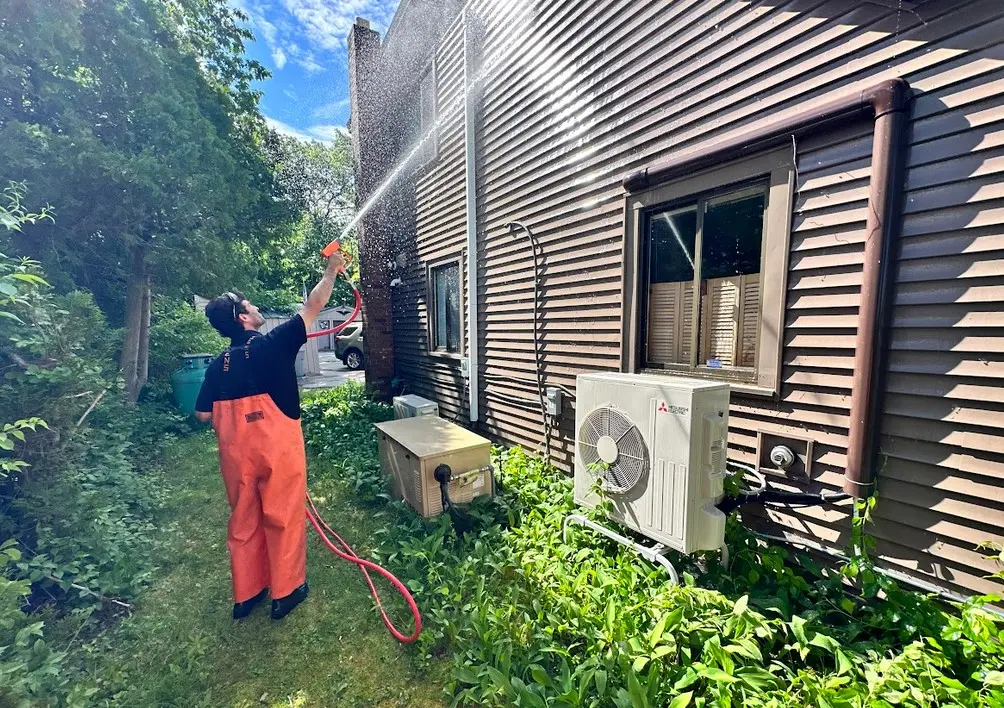
Trained technicians use low-pressure steam to melt through the ice mass and restore drainage. Steam avoids impact force, but technicians still need to work carefully around roofing materials.
When requesting an assessment, explain where the ice has formed and whether water is entering your home. After removal, the next step is to address what caused the dam.
Why Ice Dams Return
Neither tablets nor steam fixes the attic heat loss that caused the dam. Escaping heat can melt roof snow, and that runoff refreezes at the colder eaves. Address this cycle with ice dam prevention for New England roofs, including air sealing, insulation, and appropriate ventilation.
Conclusion: Choose Ice Dam Removal When Tablets Are Not Enough
Roof ice melt tablets and calcium chloride socks are temporary drainage aids for small dams, and they do not fix what caused the dam. Do not use rock salt on your roof. Before trying any treatment, see how ice dam removal works in New England for the methods to avoid.
If the dam keeps coming back, address attic heat loss as well as the ice. If water backs up under shingles, ice covers a large area, or you cannot reach the roof safely, leave the job to a professional.
When tablets reach their limit, ViewCrew Services uses low-pressure steam for ice dam removal, clearing the ice mass without hammering or chemical runoff.
FAQs
How quickly do roof ice melt tablets work?
Roof ice melt tablets and calcium chloride socks usually need several hours to create a drainage channel through the ice. They slowly release heat as they dissolve. How long they take depends on the tablet formula, the ice dam’s thickness, and the outdoor temperature.
They offer short-term relief in a small area - they don’t remove the entire ice dam.
Is roof ice melt safe for every roofing material?
No. Roof ice melt isn’t safe for every roofing material, and repeated use may void manufacturer warranties. Use it sparingly - and only as a temporary emergency measure, not a routine fix. Always avoid rock salt.
How much does professional ice dam removal cost?
Professional steam removal typically costs $300 to $600 per hour. Most jobs take 2 to 4 hours, putting the estimated total at $600 to $2,400 per project.
If tablets and raking aren't enough, professional ice dam removal is the recommended next step.