

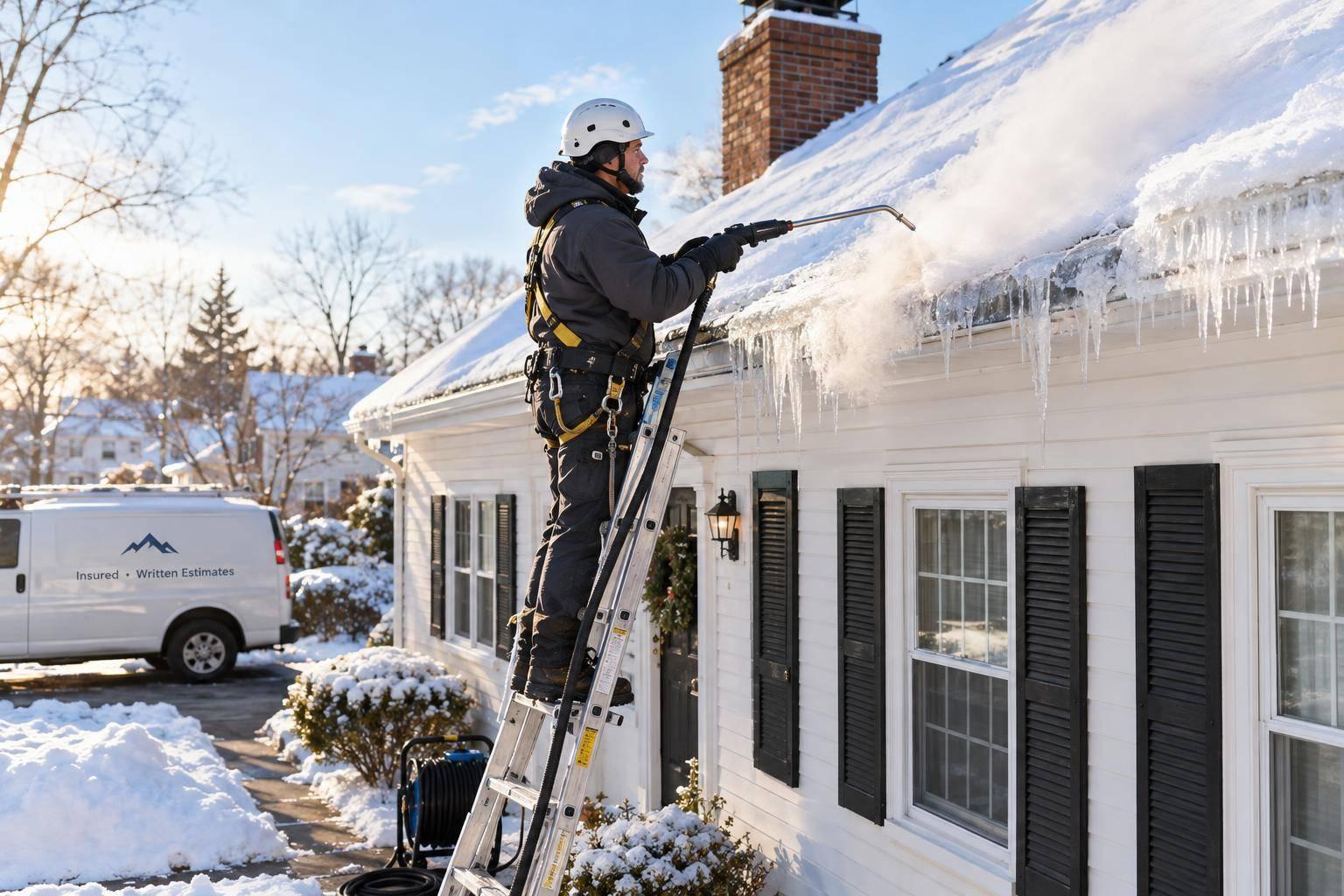
Ice dam removal averages about $1,200 nationally - not a confirmed Massachusetts price. Use Angi’s national range of $150–$700 per hour as a starting point, then get a written estimate for your roof.
Your price depends on roof height and slope, access, snow clearing, time needed, and emergency fees. Before you book, compare these three methods:
- Low-pressure steam: Melts ice with less force against shingles.
- Mechanical chipping and prying: Can damage shingles or lift their edges.
- Pressure washing: Can strip granules and push water under shingles; avoid it for ice dams.
<u>Ask what the quote includes</u>: setup, snow clearing, treated roof sections, cleanup, and documentation. Confirm the crew’s insurance and ask your insurer about removal and damage coverage separately - reimbursement is not guaranteed.
Removal restores drainage, but it doesn’t fix the heat loss or roof problems that can cause another ice dam.
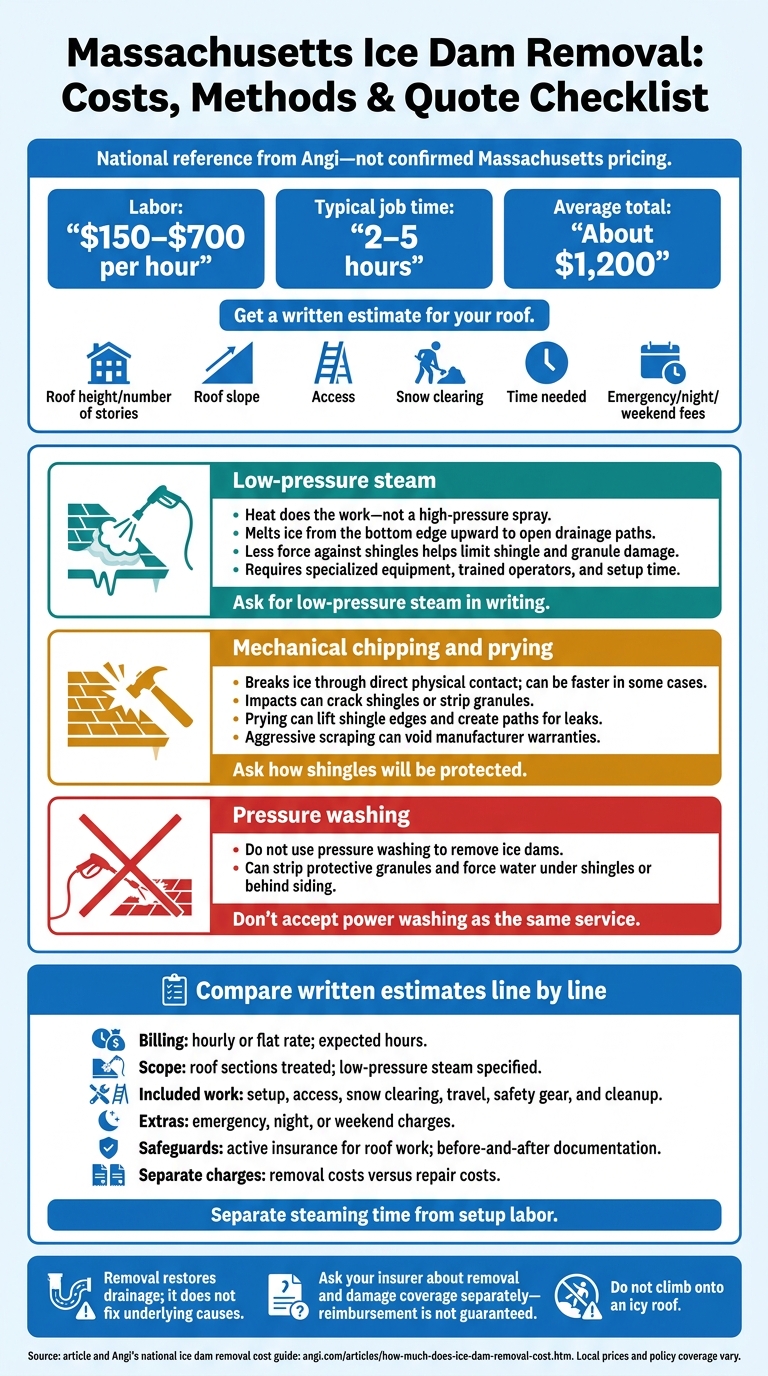
Massachusetts Ice Dam Removal: Costs, Methods & Quote Checklist
1. Low-Pressure Steam Removal
Controlled, low-pressure steam melts ice from the bottom edge upward, opening a drainage path. Heat does the work - not a high-pressure spray. This lower-force method usually takes more time and control than blasting the ice.
Less force against the roof helps limit shingle and granule damage. But steam removal requires specialized equipment, trained operators, and setup time. Crews also need fall protection and must handle the roof carefully. Ask whether they use equipment designed for low-pressure steam removal and carry valid insurance for roof work.
The estimate should separate steaming time from setup labor, including snow clearing and work needed to reach difficult areas before treatment begins. The next method removes ice through more direct physical contact.
sbb-itb-238bf3c
2. Mechanical Chipping and Prying
Mechanical removal can be faster in some cases, but it also puts your roof at greater risk of damage. Chipping and prying can break exposed ice. When ice bonds to shingles, though, there’s little room to apply force safely. Impacts can crack shingles or strip granules, while prying can lift shingle edges and create paths for leaks.
Granule loss speeds up shingle aging. Aggressive scraping can also void manufacturer warranties. Ask the crew how they’ll avoid striking or lifting shingles during removal.
A lower quote can lead to a higher total ice dam removal cost if the work damages shingles or causes leaks.
After the work, inspect the roof from the ground and report any damage promptly.
The next method uses water instead of impact, but the pressure level matters.
3. Pressure Washing
Do not use pressure washing to remove ice dams. It can strip protective granules and force water under shingles or behind siding.
Low-pressure steam is the safer method for roofs. A lower quote can end up costing more if the removal method damages your shingles.
When comparing ice dam removal estimates, ask for low-pressure steam in writing. Don’t accept power washing as the same service. The estimate should name low-pressure steam and specify the roof area it will treat.
What a Professional Ice Dam Removal Visit Includes
Once you choose low-pressure steam, make sure you know what the visit covers.
A professional ice dam removal visit includes a roof and access check, snow clearing where needed, and low-pressure steam to open drainage paths. The final check covers visible roof-edge conditions - not a structural inspection.
Get the scope in writing. Setup, access, and snow clearing all affect the cost.
| Scope or safeguard | What to confirm |
|---|---|
| Site assessment | The crew checks roof access before starting, and the estimate accounts for setup needs. |
| Snow clearing | The crew removes obstructing snow only as needed to reach the dam. Confirm whether this work is included. |
| Removal method | The written scope specifies low-pressure steam, not pressure washing. |
| Documentation | ViewCrew provides before-and-after video of every job. |
| Insurance | ViewCrew uses insured crews. Confirm that coverage is active. |
| Availability | ViewCrew handles storm calls on nights and weekends across the Merrimack Valley and MetroWest. Confirm timing and any after-hours charges. |
Storm demand can delay scheduling, so confirm timing when you book.
Removing the ice dam doesn’t fix its underlying causes. Heat loss, poor insulation, ventilation problems, roof defects, and drainage issues can lead to repeat costs. Use the seasonal exterior inspection checklist to flag concerns that need follow-up.
Does Homeowners Insurance Cover Ice Dams?
Ice dam removal costs and insurance coverage are separate issues. Coverage may lower what you pay out of pocket, but it doesn’t change the work your roof needs.
In Massachusetts, your policy may cover ice-dam damage. But exclusions, neglect and wear-and-tear provisions, deductibles, and coverage limits determine how your claim is handled. Check the details with your insurer or agent.
| Expense | What to confirm with your insurer |
|---|---|
| Ice dam removal | Whether emergency removal is covered, must follow a covered loss, or needs advance approval. |
| Interior water damage | Whether repairs to ceilings, walls, insulation, and flooring qualify. |
| Roof or personal-property damage | Whether roof repairs, damaged gutters, furniture, or electronics qualify, and which depreciation rules apply. |
| Preventive work | Whether insulation, ventilation, roof repairs, gutter work, or heat cables qualify - or count as maintenance. |
Ask about each expense separately. Before you count on reimbursement, compare the estimated covered damage with your deductible.
For your ice dam insurance claim, record when you found the damage, recent weather, affected rooms, visible leaks or stains, and damaged belongings. Photograph the roof and gutters only from a safe location.
Keep estimates, receipts, invoices, and the contractor’s job record to support reimbursement. Include dated details about affected roof areas, removal work, and any emergency or after-hours service.
Report the loss promptly. Ask about claim deadlines, adjuster inspections, and approval for emergency work to limit further damage. Move belongings and contain leaks only when it’s safe. Do not climb onto an icy roof. Wait for your insurer’s instructions before making nonurgent permanent repairs.
Once you’ve checked coverage, compare written estimates by the work included, removal method, and assumptions about roof access - not price alone.
Compare Written Estimates, Not Just Price
Whether you’re paying out of pocket or filing a claim, compare written estimates line by line. Ice dam removal costs in Massachusetts depend on time spent on the roof, access, roof slope, number of stories, snow clearing, and after-hours service.
Ask whether the company bills hourly or at a flat rate, how many hours it expects the job to take, and which roof sections the price covers. The estimate should also spell out snow clearing, setup, travel, safety gear, and cleanup, along with any emergency, night, or weekend charges.
Specify low-pressure steam, which melts ice without the force that can damage shingles. Confirm that the price includes before-and-after video documentation, and keep repair costs separate from removal charges.
For a national price reference, Angi’s ice dam removal cost guide lists labor at $150 to $700 per hour. Most jobs take 2 to 5 hours, with an average total cost of about $1,200.
If you’re also budgeting for roof cleaning, see the roof cleaning cost guide for MA and CT.
Get the scope in writing so you can compare what each company includes. Request a free written ice dam removal estimate.
FAQs
Can removing only part of an ice dam lower my cost?
Not necessarily. Professional ice dam removal uses low-pressure steam to melt channels through the ice. These channels restore drainage and help keep water from backing up under your shingles.
The goal is to give water a path to flow - not to remove every piece of ice. So, removing only part of the dam doesn’t automatically mean a lower cost.
When does an ice dam need emergency removal?
Contact a professional immediately if an ice dam pushes water back toward your home. Watch for water dripping from ceiling fixtures, running down interior walls, or forming icicles through soffit vents.
You'll also need professional removal if ice at the roof edge exceeds 2 to 4 inches thick, gutters visibly sag or pull away from the fascia, or standing water collects behind the ice ridge.
Should I file an ice dam insurance claim before removal?
Whether to file a claim before ice dam removal depends on your policy. Contact your insurer before approving professional work to confirm coverage and required documentation. Ice dam coverage isn’t guaranteed.
If you see dripping from ceiling fixtures, water running down walls, or sagging gutters, arrange immediate professional removal to help prevent further structural damage.


