

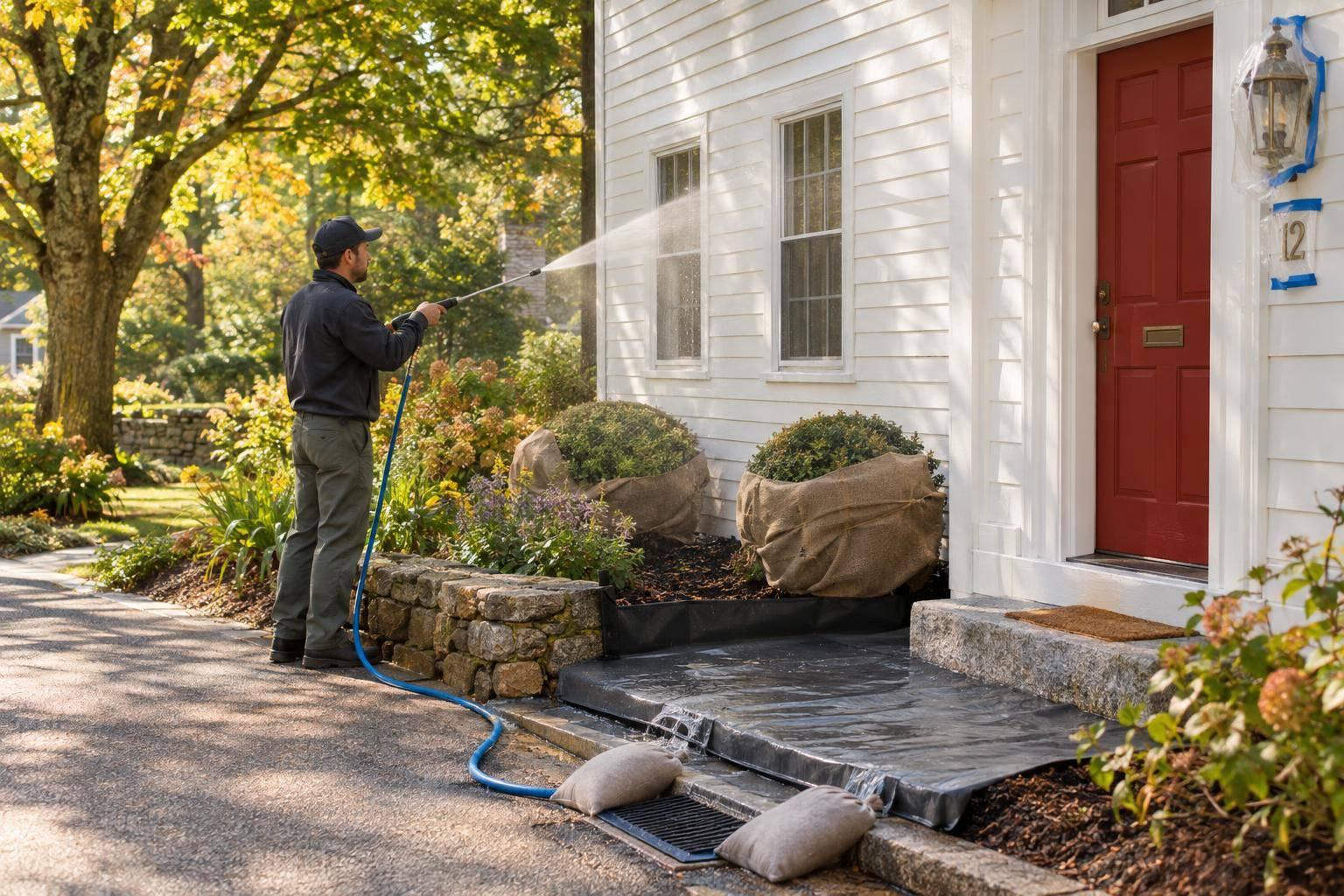
For pressure washing in Lincoln, MA, match the cleaning method to your home’s surfaces - not just the dirt. Use low pressure on siding, roofs, and wood; never use high pressure on asphalt shingles. Sound concrete may handle 2,500–3,500 PSI, but its condition matters.
Before booking, cover these points:
- Property protection: Check for damage and plan protection for plants, fixtures, and older materials.
- Timing: Account for shade and damp areas, and avoid freezing temperatures or poor drying weather.
- Runoff: <u>Keep dirty wash water out of storm drains and waterways.</u> Confirm containment and disposal before work starts.
- Historic features: Check with Lincoln’s Historic District Commission before work on protected features.
- Your quote: Ask ViewCrew Services for a written scope, cleaning methods, exclusions, guarantee terms, and aftercare. Have optional paver sealing priced separately.
Use these checks to plan surface-safe cleaning and know what your service includes.
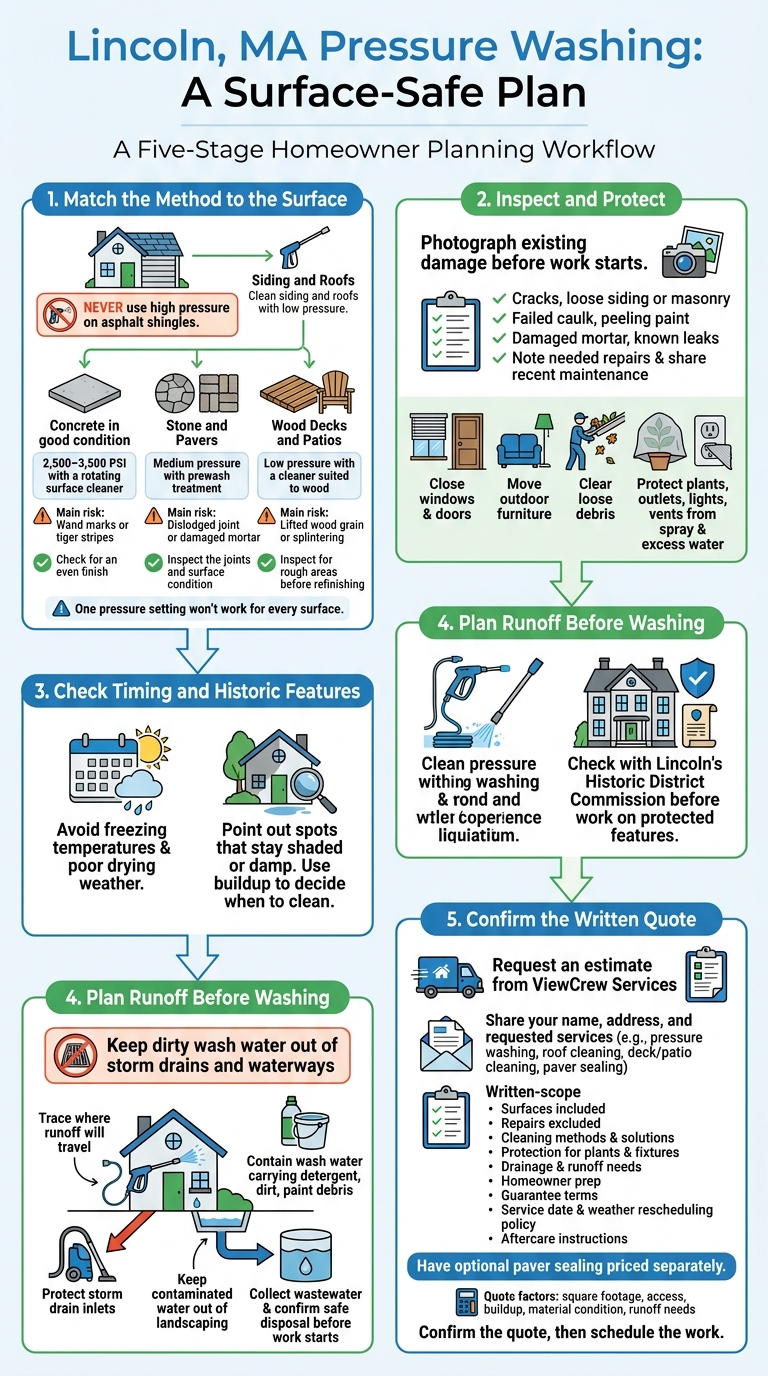
Lincoln, MA Pressure Washing: A Surface-Safe Plan
How to Pressure Wash Your Home Without Causing Damage
sbb-itb-238bf3c
Match the Cleaning Method to the Surface
Lincoln homes often have a mix of siding, roofing, stone, and wood. One pressure setting won’t work for every surface. Match the pressure and prewash treatment to each material.
Use Low Pressure on Siding and Roofs
Clean siding and roofs with low pressure. Never use high pressure on asphalt shingles. Take extra care with older siding, trim, and roofs: high pressure can damage siding, strip shingle granules, and push water behind trim and seals.
Clean Driveways, Walkways, Decks, and Patios Safely
Use this table to discuss the right cleaning method for each exterior surface.
| Surface | Method to discuss | Main risk | Follow-up care |
|---|---|---|---|
| Concrete in good condition | 2,500–3,500 PSI with a rotating surface cleaner | Wand marks or tiger stripes | Check for an even finish |
| Stone and pavers | Medium pressure with prewash treatment | Dislodged joint sand or damaged mortar | Inspect the joints and surface condition |
| Wood decks and patios | Low pressure with a cleaner suited to wood | Lifted wood grain or splintering | Inspect for rough areas before refinishing |
Before washing begins, protect the property and plan how to manage runoff.
Prepare Your Lincoln Property and Manage Runoff
Once you’ve matched the washing method to the surface, prepare the property and plan where the runoff will go.
Inspect and Protect Your Property Before Washing
Photograph existing damage before work starts. Check for cracks, loose siding or masonry, failed caulk, peeling paint, damaged mortar, and known leaks. Note any needed repairs and share recent maintenance details so the washing plan fits your home’s condition.
Close windows and doors, move outdoor furniture, and clear loose debris. Protect plants, electrical outlets, exterior lights, and vents from spray and excess water.
Account for Shade, Weather, and Historic Features
Lincoln’s shaded lots and slow-drying areas may need different washing methods or timing. Point out spots that stay shaded or damp, and schedule washing when freezing temperatures and poor drying weather aren’t expected.
For properties with historic details, choose a method that protects the original materials and appearance.
Keep Wash Water Out of Storm Drains
Before washing, trace where runoff will travel. Contain wash water that carries detergent, dirt, or paint debris, and keep it out of storm drains, wetlands, and local waterways. Plan runoff controls before work starts - not after water begins flowing.
| Area | Runoff risk | Controls to discuss | Disposal needs |
|---|---|---|---|
| Driveways and other paved areas | Water can carry dirt and cleaning solution off the surface | Contain runoff to keep it from reaching drains or other sensitive areas | Collect wastewater and dispose of it safely |
| Landscaped areas | Runoff can spread beyond the work area | Control discharge and keep it away from planted areas | Keep contaminated water out of landscaping |
| Areas near storm drains or wetlands | Runoff can affect sensitive areas | Protect storm drain inlets and contain water at the work area | Confirm a safe disposal plan |
If detergent is needed, ask how the runoff will be contained and how the wastewater will be disposed of.
Arrange Service With ViewCrew Services
Once your cleaning plan is set, request an estimate through the ViewCrew Services website or by phone. Share your name, address, and the services you need: pressure washing, roof cleaning, deck/patio cleaning, or paver sealing. These details help ensure the estimate matches the job.
Confirm Cleaning Methods and Property Protection
Review the estimate to check how each surface will be cleaned and protected. Ask about the cleaning methods and solutions, especially for fragile materials.
Confirm that the estimate includes protection for plants, fixtures, and drainage. Also, ask what prep work you'll need to complete before the crew arrives.
Before booking, check what the guarantee covers for your project.
Get a Written Scope and Custom Quote
Your quote depends on square footage, access, buildup, material condition, and runoff needs. Before approving it, get the scope in writing, including:
- Which surfaces are included and which repairs are excluded
- Whether optional paver sealing is priced separately
- The service date and weather rescheduling policy
- Aftercare instructions
Confirm the quote, then schedule the work.
Conclusion: Plan Cleaning Around Your Home’s Needs
Choose a cleaning method that suits the material.
In Lincoln’s shaded areas, use buildup to decide when to clean. Check after winter or long wet spells, and avoid freezing weather or conditions that slow drying.
For older Lincoln homes in historic districts, check with Lincoln’s Historic District Commission before working on protected features. Keep wash water out of streets, storm drains, and waterways.
Request a custom quote from ViewCrew Services that includes a written scope and protection plan.
FAQs
How often should I wash my Lincoln home?
In New England, cleaning schedules depend on the surface. Driveways and brick should get a professional cleaning once a year, ideally in April or May, to wash away winter salt and grime.
Roofs typically need cleaning every 1 to 5 years. The timing depends on the roofing material and factors such as tree cover.
Reseal pavers every 2 to 5 years, or every 2 to 3 years in high-traffic areas such as driveways.
How long should my deck dry before staining?
After cleaning, let your deck dry for 24 to 48 hours before staining. Weather can affect drying time, so wait until the wood is completely dry to get the best results and avoid moisture-related problems. Check your local forecast to make sure no rain is expected during the drying period.
Does pressure washing require historic district approval?
The available information doesn’t confirm whether pressure washing requires historic district approval. Contact Lincoln’s municipal building department or historic commission to check whether local preservation ordinances apply to your property or whether you need a permit for exterior maintenance.


