Here’s the short answer: power washing uses hot water, while pressure washing uses cold water. That one change affects cleaning strength, surface risk, safety, and cost.
If I had to sum up the whole topic fast, I’d say this:
- Power washing is better for oil, grease, salt, and stuck-on grime
- Pressure washing is usually the safer pick for routine home cleaning
- Hard surfaces like concrete, brick, and stone can often handle more force
- Softer surfaces like vinyl, wood, and painted areas can be damaged fast
- The wrong setup can lead to etched concrete, stripped paint, splintered wood, or water behind siding
-
Typical pressure ranges in the article include:
- 2,500–3,000 PSI for many concrete jobs
- Under 1,500 PSI for vinyl and fiber-cement siding
- 500–1,200 PSI for wood decks and fences
- Power washers often run between 150°F and 200°F, and that heat can also cause burns and harm nearby plants
If you’re deciding what to use at home, I’d keep it simple: use cold-water pressure washing for basic dirt and mildew, and save hot-water power washing for heavy stains on tough surfaces.
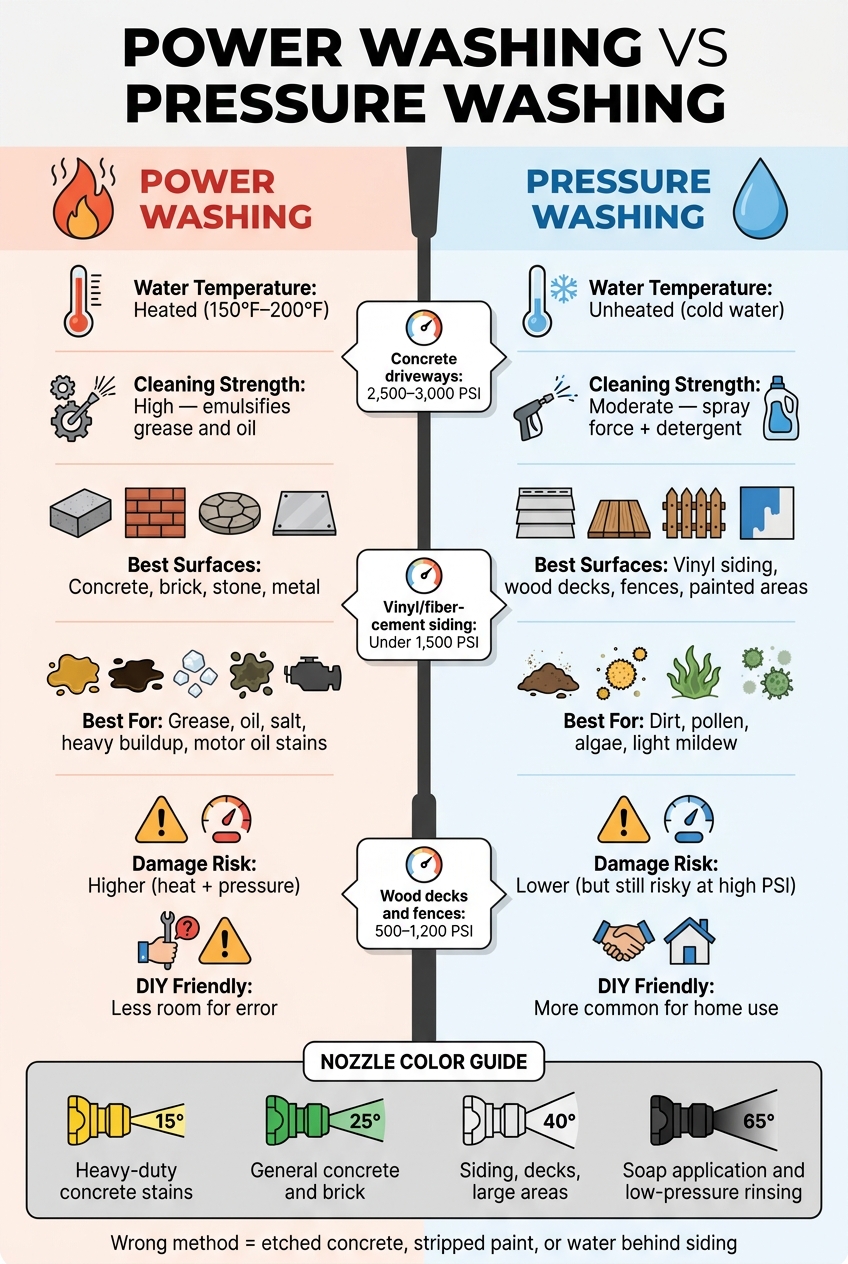
Power Washing vs Pressure Washing: Key Differences at a Glance
The Ultimate Showdown: Power Washing vs Pressure Washing
sbb-itb-238bf3c
Quick Comparison
| Point | Power Washing | Pressure Washing |
|---|---|---|
| Water | Heated | Unheated |
| Best for | Grease, oil, salt, heavy buildup | Dirt, pollen, algae, light mildew |
| Good surface fit | Concrete, brick, stone, metal | Siding, decks, fences, wood |
| Damage risk | Higher because of heat + pressure | Lower, but still risky at high PSI |
| DIY use | Less room for error | More common for home use |
Bottom line: if you clean the right surface with the right method, you can avoid a repair bill that may run into hundreds or even thousands of dollars. This article explains how I’d compare the two methods, where each one works best, and where DIY should stop.
How Each Method Works
Both methods use a pump, hose, and spray gun. In many cases, the equipment even looks the same. The main difference comes down to water temperature before the spray leaves the nozzle.
Power Washing: High Pressure Plus Heat
Power washing uses a heating element to warm the water before it exits the nozzle. Power washers typically heat water to between 150°F and 200°F.
That added heat helps cut through grease, oil, and stubborn grime faster. Because of that, power washing is a strong fit for motor oil on garage floors, grease on concrete pads, salt residue, and heavy mildew. It works best on hard surfaces with oily or stuck-on buildup.
There’s a downside, though. Heat can be too harsh for some materials. Power washing can damage delicate surfaces like vinyl siding, paint, or certain roofing, so it’s better suited to hard, stained surfaces than delicate ones.
Pressure Washing: High Pressure Without Heat
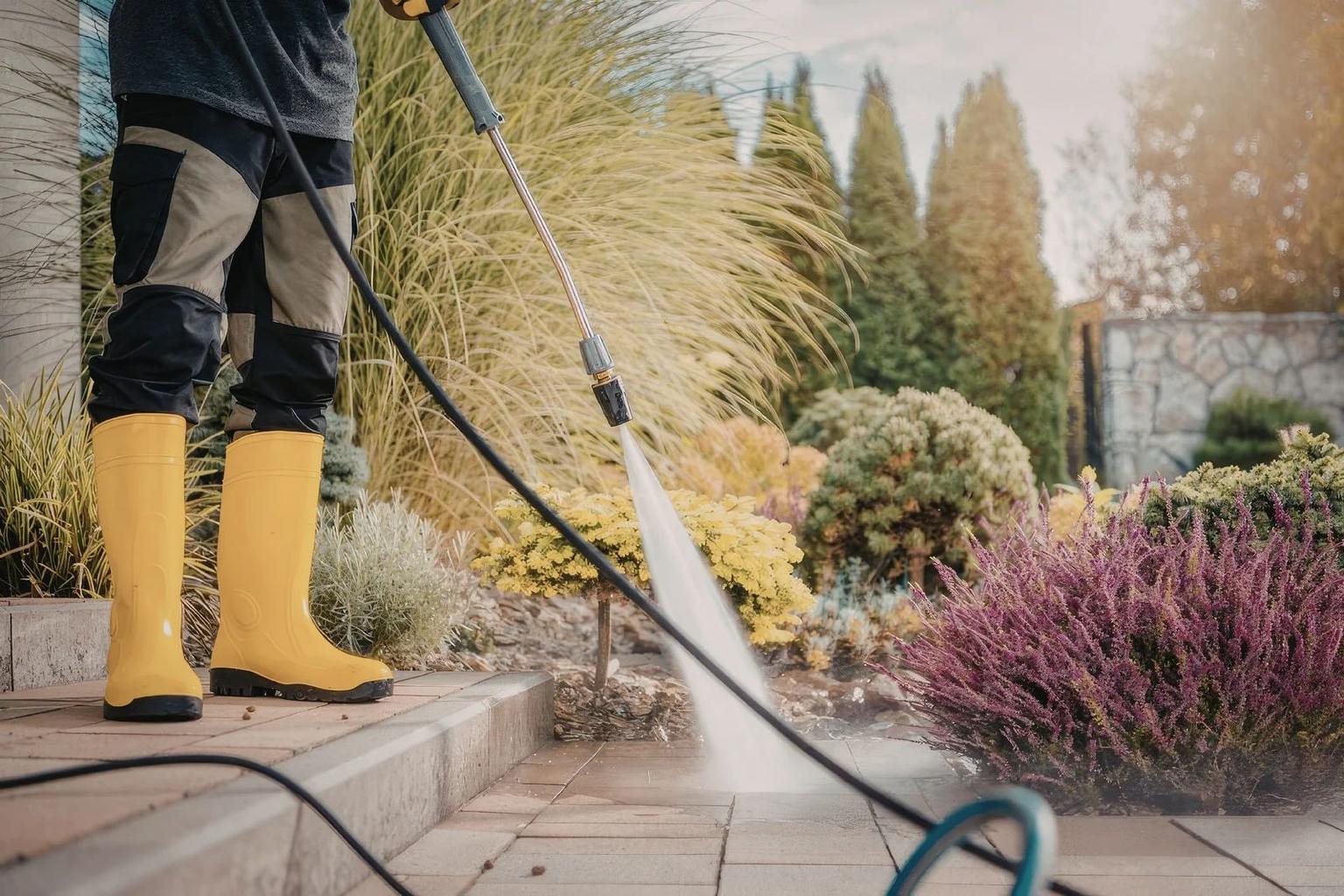
Pressure washing skips the heating element. It relies on spray force and detergent instead. For most routine home cleaning, that’s enough to remove dirt, pollen, algae, mildew, and loose debris.
For everyday residential jobs, cold-water pressure washing is usually the safer default. Those mechanics are what determine which surfaces fit each method.
Power Washing vs Pressure Washing: Key Differences
The machines may look almost the same, but heat changes everything. It affects how each one cleans and what it can clean without causing damage.
| Feature | Power Washing | Pressure Washing |
|---|---|---|
| Water Temperature | Heated water | Unheated water |
| Cleaning Strength | High - emulsifies grease and oil | Moderate - spray force |
| Best-Fit Surfaces | Concrete, brick, stone, metal | Vinyl siding, wood, decks, fences |
| Typical Tasks | Breaking down grease, oil, and heavy grime | Dirt, dust, pollen, surface mildew |
| Risk of Damage | High - heat can warp or strip finishes | Moderate - pressure can etch or gouge |
For homeowners, the main question isn't which machine hits harder. It's which one can clean the surface safely.
Water Temperature, Cleaning Strength, and Surface Fit
Hot water cuts through grease and thick buildup faster. Cold-water pressure washing depends more on spray force and detergent to clean routine dirt, pollen, and surface mildew.
What matters most here isn't just how dirty something looks. The material itself matters more. Hard, dense surfaces like concrete and brick can take heat well. Softer surfaces like vinyl siding and wood usually can't.
That's where the split becomes clear:
- Power washing works better for concrete, brick, stone, and metal
- Pressure washing fits siding, decks, fences, and other softer exterior surfaces
That difference shows up fast when you're cleaning concrete, siding, decks, or fences.
Why Power Washing Leaves Less Room for Error
Once you add heat to high-pressure water, the room for mistakes gets smaller. On wood, heat can soften the fibers and lead to warping or splintering. On painted surfaces, it can strip finishes that were supposed to stay put. On vinyl siding, it can loosen panels or push water behind them.
Pressure washing can also damage a surface if it's used the wrong way. Too much PSI can etch or gouge. But heated water tends to make bad results harder to fix than cold water.
In plain terms, heat adds another layer of risk. It can warp surfaces, strip coatings, or drive water into weak spots. That makes matching the method to each surface the next step.
Matching the Right Method to Common Home Surfaces
Once you understand what heat does during cleaning, the next step is simple: match the method to the surface. The right choice depends on the material, its condition, and the kind of buildup you're dealing with. That's what tells you whether pressure washing or power washing makes more sense.
Driveways, Sidewalks, Patios, and Pavers
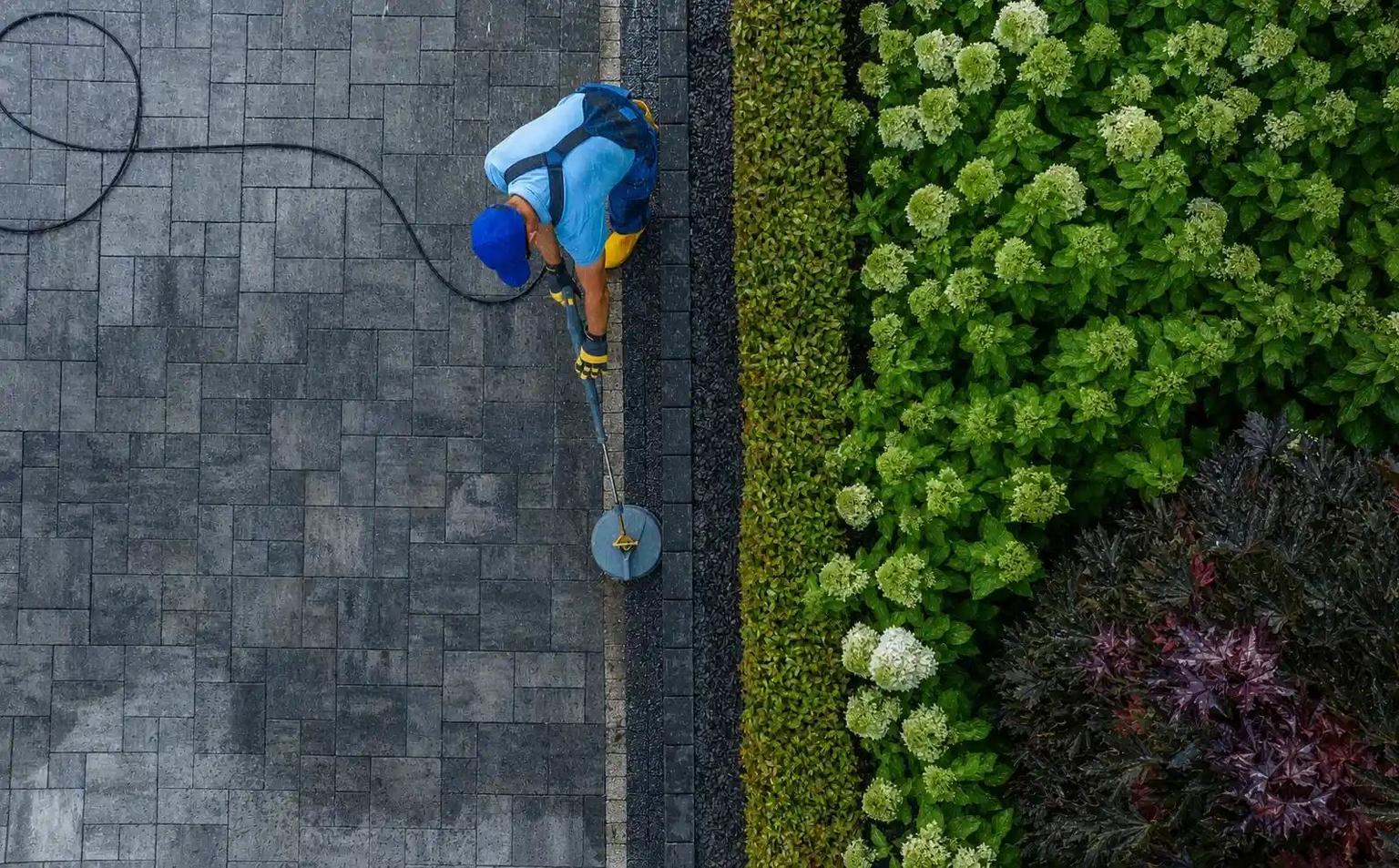
Concrete driveways and sidewalks can usually take more force than softer surfaces. For routine dirt, algae, and light mildew, pressure washing at around 2,500–3,000 PSI is common. If you're dealing with oil stains, tire marks, or thick salt and grease buildup, power washing is often the better fit.
Patios and pavers need a lighter touch. Low to moderate pressure works best because high pressure can wash out polymeric sand and strip away sealers.
Siding, Brick, Decks, and Fences
Vinyl siding, fiber-cement siding, wood decks, and fences should usually be cleaned with soft washing or very low pressure.
Vinyl and fiber-cement siding should stay under 1,500 PSI. Go higher, and you risk forcing water behind the panels or cracking the surface. Wood decks and fences need even less force, around 500–1,200 PSI, and the spray should always move with the grain. Too much pressure can lift the wood grain, leave the surface rough and splintered, and cause stain or sealant to soak in unevenly.
High pressure can also crack siding, strip paint, force water behind vinyl, damage shingles, and splinter wood.
Brick can take more pressure, but older brick with lime mortar is a different story. Too much pressure or heat can wear away the mortar.
How Professionals Set Pressure, Nozzles, and Distance
The line between a clean surface and a damaged one often comes down to three things: spray tip, PSI, and wand distance. Pros use color-coded nozzles to control how aggressive the spray is.
| Nozzle Color | Spray Angle | Best Use |
|---|---|---|
| Yellow | 15° | Heavy-duty concrete stains |
| Green | 25° | General concrete and brick |
| White | 40° | Siding, decks, and large areas |
| Black | 65° | Soap application and low-pressure rinsing |
On mixed-material areas, professionals change the pressure, nozzle, and distance based on each surface. They also hold the wand farther back on siding, wood, and older brick, then move closer only when cleaning durable concrete.
After you match the surface to the method and settings, the next step is knowing where the safety limits are.
Safety, Limits, and When to Call a Professional
Once you've matched the surface to the right method, one last filter matters: is this safe to handle on your own?
Risks Common to Both Methods - and Extra Risks With Heated Water
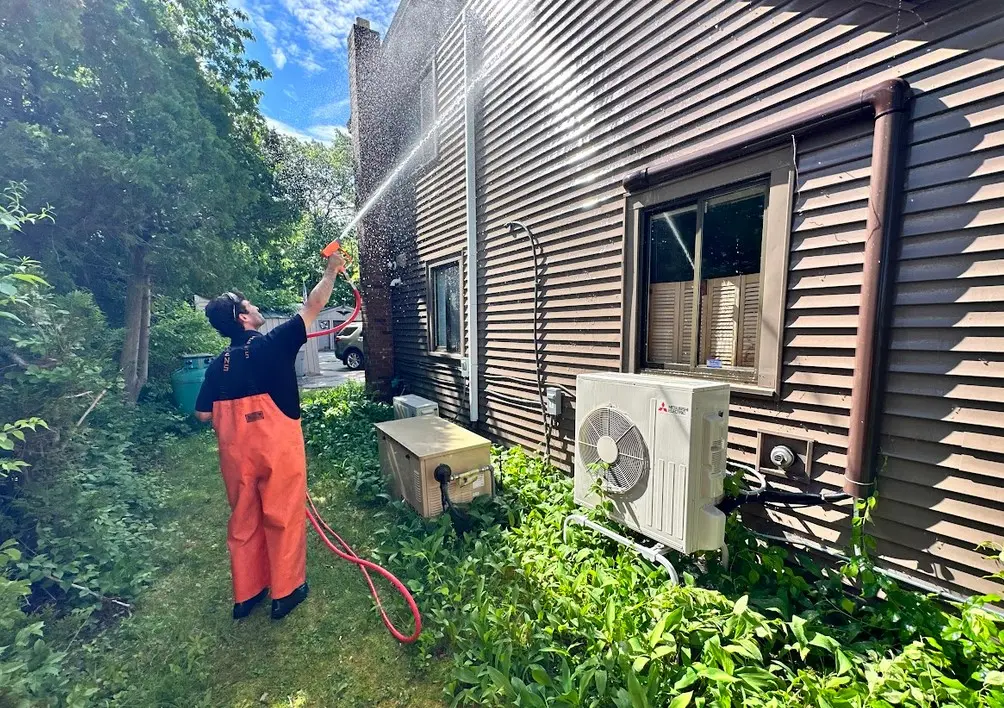
Both methods can hurt skin, injure eyes, and force water behind siding, trim, or into wall cavities. Wear eye and skin protection, and never spray people, meters, glass, or AC units.
Power washing adds more risk because of the heat. Water heated between 150°F and 212°F can cause instant burns and can also burn plants and roots. That kind of heat can scald skin, stress plants, warp vinyl, and weaken mortar on older brick.
More pressure brings its own problems too. It can strip paint, etch concrete, and push water where it shouldn't go.
The red 0-degree nozzle is the most dangerous tip in any kit and should stay out of DIY use.
When DIY Is Reasonable and When to Use ViewCrew Services

So where's the line between a weekend project and a job better left to a crew?
For small, tough surfaces like a concrete driveway, sidewalk, or patio, a homeowner machine can do the job if you use the right nozzle and keep a safe distance. But once the surface gets large, fragile, or badly stained, the risk goes up fast.
Some messes need more than a basic home unit can deliver. Oil, grease, gum, and heavy biological buildup often call for heated water and stronger detergent. Most homeowner machines just don't have that setup.
The same goes for:
- Multi-story homes
- Large surface areas
- Stucco
- Painted wood
These jobs carry a much higher chance of damage without the right equipment and hands-on know-how.
Homeowners in Massachusetts, Southern New Hampshire, and Connecticut deal with another layer of buildup. Road salt through the winter and heavy organic growth during wet seasons can make surfaces much harder to clean. In those cases, professional-grade detergents and adjustable hot-water equipment can make a big difference.
ViewCrew Services works across all three states with insured technicians who match the pressure, detergent, and heat to each surface.
FAQs
Can I use detergent with both methods?
Yes. You can use detergents with both pressure washing and power washing to break down embedded dirt, algae, and mold.
With power washing, the added heat can cut down the need for harsher chemicals or help detergents work better. In both cases, it’s best to use a cleaning solution that matches the surface so you get safe, effective results.
What’s the safest option for painted surfaces?
For painted surfaces, cold-water pressure washing or soft washing are usually the safest picks. Heat can strip paint, warp the surface, or cause cracking, so power washing is best avoided in most cases.
Soft washing is often the better fit for delicate painted areas because it uses low pressure along with specialized cleaning agents. Start with lower pressure and keep a safe distance so you don't damage the surface.
How do I know when to hire a pro?
Hire a professional when you need specialized expertise to protect your home's exterior surfaces. A pro knows the difference between pressure washing and power washing, and can pick the right method and pressure to help prevent etching, warping, or discoloration.
They also use commercial-grade equipment, carry insurance, and follow local rules for water runoff and cleaning solutions.