When hiring a power washing professional, your priority should be ensuring they are qualified, insured, and experienced to avoid costly mistakes. Here's a quick checklist:
- Verify Licensing and Insurance: Confirm the contractor has a valid trade license and liability insurance. This protects you from potential damages or injuries during the job.
- Check Certifications: Look for certifications from organizations like the Power Washers of North America (PWNA) or United Association of Mobile Contract Cleaners (UAMCC). These indicate expertise and commitment to quality.
- Read Reviews: Use platforms like Angi to find recent, detailed customer feedback. Look for reviews that highlight professionalism, timeliness, and job quality.
- Ask About Equipment and Methods: Ensure they use proper tools and techniques, such as soft washing for delicate surfaces and surface cleaners for concrete.
- Get a Written Estimate: Request a detailed quote breaking down costs, methods, and guarantees. Avoid vague pricing or unclear terms.
Hiring a professional with at least five years of experience and proper insurance can save you from damage, legal issues, and subpar results. Always compare multiple quotes and choose a provider who prioritizes safety, quality, and customer satisfaction.
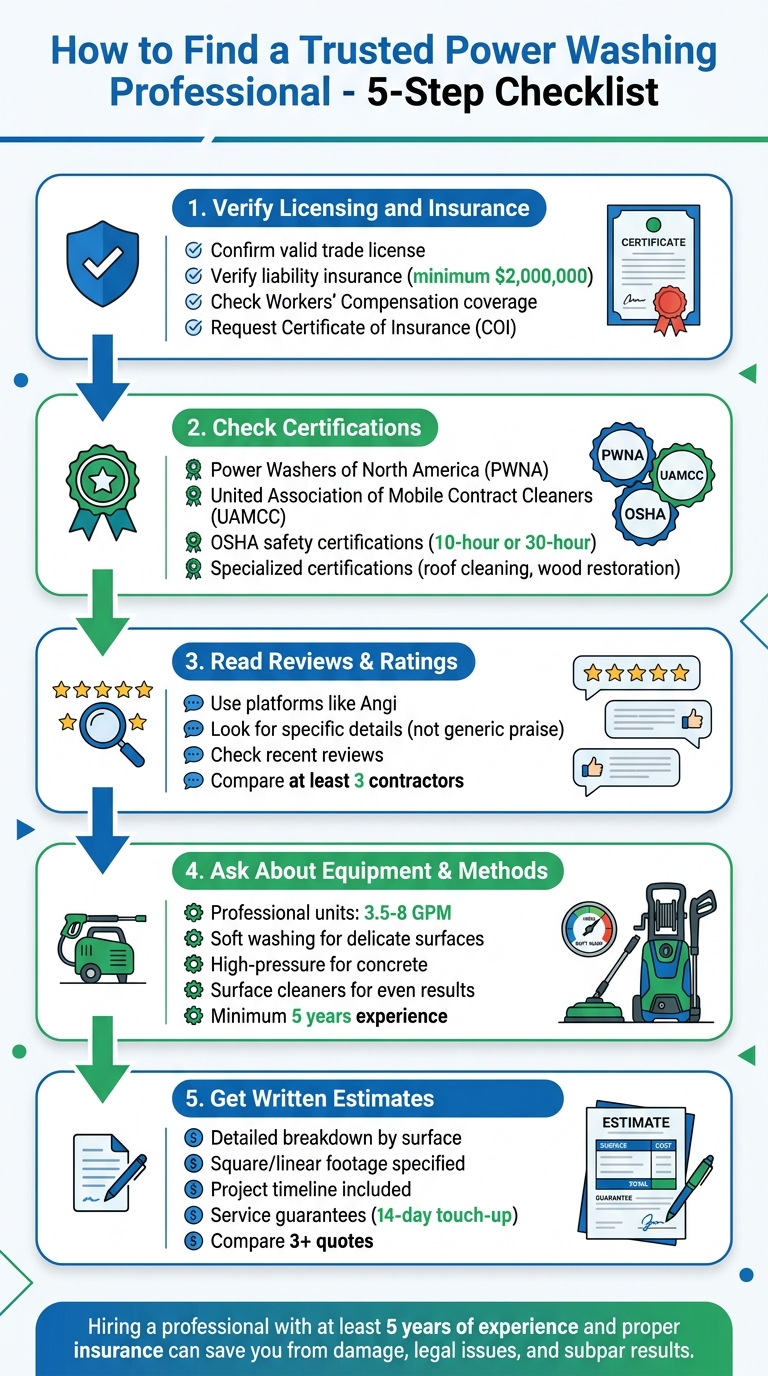
5-Step Checklist for Hiring a Trusted Power Washing Professional
Check Licensing and Professional Credentials
When hiring a power washing professional, verifying their legal qualifications is crucial. This not only shields you from potential liability but also ensures the job is handled by someone competent and experienced.
Research State Licensing Requirements
Licensing requirements can vary significantly depending on where you live. Some states mandate contractor licenses, while others may only require a general business license or registration. For instance, in California, unlicensed workers are legally limited to jobs costing less than $500. If your project exceeds that amount, you’ll need someone with the proper credentials.
Start by requesting their trade license number, proof of insurance, and bonding documentation upfront. Once you have this information, verify it through your state’s official online portal. Here are a few examples:
- Washington: Use the Department of Labor & Industries "Verify a Contractor" tool.
- Colorado: Check through the Division of Professions and Occupations Online Services.
- Texas: Visit the Texas Department of Licensing and Regulation website.
- Tennessee: Use the Department of Commerce & Insurance "Verify" search.
Make sure the license name matches the service provider. If you’re hiring a company, confirm that the person performing the work is an employee of the licensed business. Seth Silbaugh, Owner of Switched Electric, emphasizes:
Ask if the electrician is licensed and has liability insurance. If you're considering a company with employees, make sure they have workers' compensation insurance and that the individual electrician is licensed, not just the company.
This same diligence applies to power washing professionals. Confirming these details upfront can save you from headaches later.
Look for Certifications and Professional Memberships
Licensing is just the baseline. Certifications demonstrate a professional’s dedication to maintaining high standards. For power washing, the Power Washers of North America (PWNA) is a leading organization that certifies contractors and provides insurance backing. Another reputable group is the United Association of Mobile Contract Cleaners (UAMCC), which also offers industry-specific certifications.
To verify a contractor’s certification, contact these organizations directly or check their online member directories. The cost of certification courses - often around $200 - reflects a commitment to professionalism and quality.
Additionally, look for OSHA safety certifications, such as the 10-hour or 30-hour training programs. These certifications indicate that the professional has undergone extensive safety training beyond basic equipment use. For specialized jobs, check for niche certifications in areas like roof cleaning, wood restoration, or wastewater management. These qualifications are particularly important for projects involving delicate materials or environmental concerns.
sbb-itb-238bf3c
Read Customer Reviews and Ratings
After confirming licenses and credentials, the next step is to dive into customer feedback. Reviews offer a glimpse into how professionals handle real-world tasks - covering everything from communication and timeliness to the quality of their work.
Where to Find Reliable Reviews
Angi is a great starting point for verified reviews and detailed service information. While browsing, pay attention to mentions of workmanship warranties and customer satisfaction guarantees. To make an informed decision, compare at least three contractors or companies, weighing both service quality and pricing. It's also essential to learn how to spot genuine reviews to ensure you're basing your decision on trustworthy feedback.
How to Spot Genuine Reviews
Spotting fake reviews can save you from making the wrong choice. Be wary of reviews with nonsensical language or repetitive phrases, often referred to as "word salad", which might signal automated or fake feedback.
Authentic reviews tend to provide specific details about the job. For instance, they might mention the surfaces cleaned - like driveways, siding, or decks - and discuss the effectiveness of tools such as PSI and GPM ratings, rather than offering generic praise. Look for mentions of final walk-throughs or specialized equipment like surface cleaners or soft washing techniques, which highlight a professional approach and attention to detail. Here's an example of detailed feedback from a satisfied customer:
"He noticed a couple of drip areas he went back and cleaned... Jason walked the perimeter with me."
Recent reviews are particularly valuable, as they reflect whether the professional continues to meet high standards. On the flip side, repeated complaints about issues like property damage or excessive noise should raise concerns.
Verify Insurance and Bonding
Once you've reviewed customer feedback, the next step is to ensure your provider has the right insurance and bonding in place. This is essential for protecting yourself from potential risks like property damage or worker injuries. Insurance typically covers accidental property damage and bodily injuries, while bonding shields you from dishonest actions by the contractor's employees, such as theft or fraud. Taking this step helps safeguard both your property and finances.
Ask for a Certificate of Insurance (COI) before any work begins. This document verifies the contractor's current insurance coverage and is usually presented on an ACORD 25 form. Double-check that the "Insured" name matches the company you're hiring, ensure the policy dates are valid, and review the coverage limits carefully.
Confirm General Liability Insurance
General liability insurance is crucial because it covers property damage and injuries. However, it's important to confirm that the policy specifically includes coverage for cleaning-related surface damage to avoid any gaps. This type of insurance can help with medical bills, legal expenses, and repair costs for incidents like a broken window or damage caused by moving equipment.
Be aware, though, that many standard policies include a "Care, Custody, and Control" exclusion. This clause often excludes coverage for damage to the very surface being cleaned, such as siding, decks, or roofs. Insurance expert Joseph D. Walters explains:
"If you (the contractor) damage the customer's property, your General Liability policy will decline to provide coverage, citing the Care, Custody and Control exclusion".
Make sure to confirm with the contractor that their policy addresses cleaning-related surface damage.
Check for Workers' Compensation Coverage
Workers' compensation insurance is another critical layer of protection. It ensures you won't be held liable if a worker is injured on your property. When reviewing the COI, verify that workers' compensation is listed alongside general liability coverage. Additionally, the document should include the contact details of the insurance producer so you can confirm the policy's authenticity if needed. Also, take note of any Employee Dishonesty Bond details, which provide extra protection against theft or fraud by the contractor's employees.
Ask About Equipment, Methods, and Experience
Once you've verified your professional's credentials and insurance, it's time to dig into their cleaning process. The tools and techniques they use can mean the difference between a thorough cleaning and costly surface damage. Different surfaces demand different approaches, so understanding their methods is essential.
Questions About Equipment and Cleaning Methods
Start by asking about the equipment they use and how they adapt it for various materials. Professional-grade units typically operate at 3.5–8 GPM, which allows for effective cleaning at safer, lower pressures.
Find out how they adjust pressure - whether through the unloader valve, wand settings, or changing nozzles. It's important to confirm that they tailor nozzle types and distances based on the surface they're working on. As Lewis Barker points out:
"If a contractor jumps straight to gallons per minute without asking about the surface and the soil, they are leading with horsepower instead of understanding".
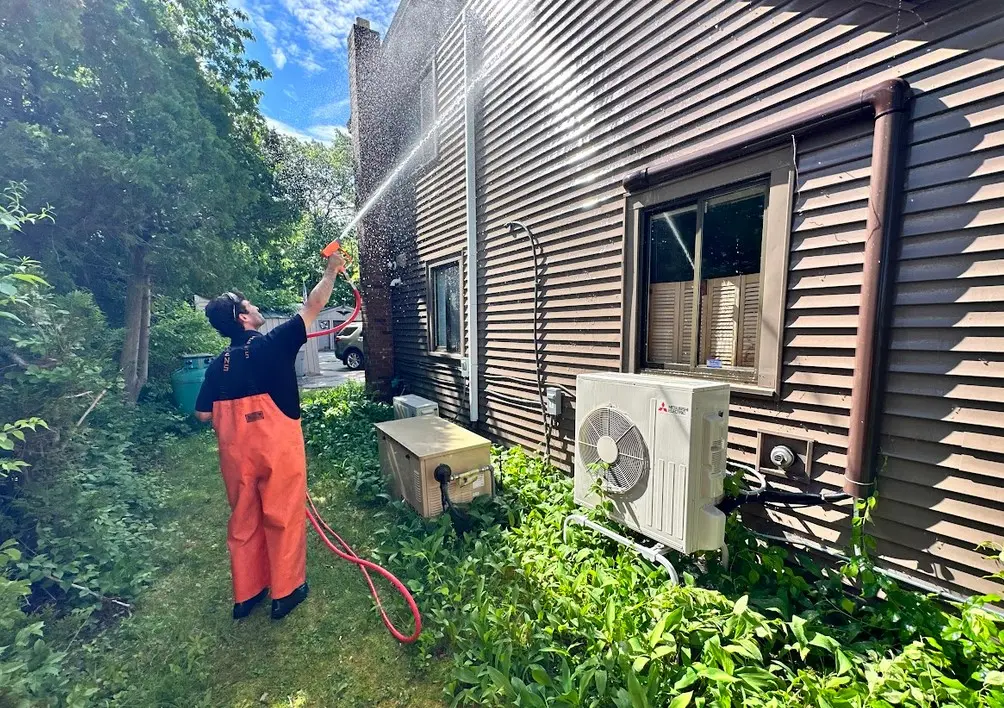
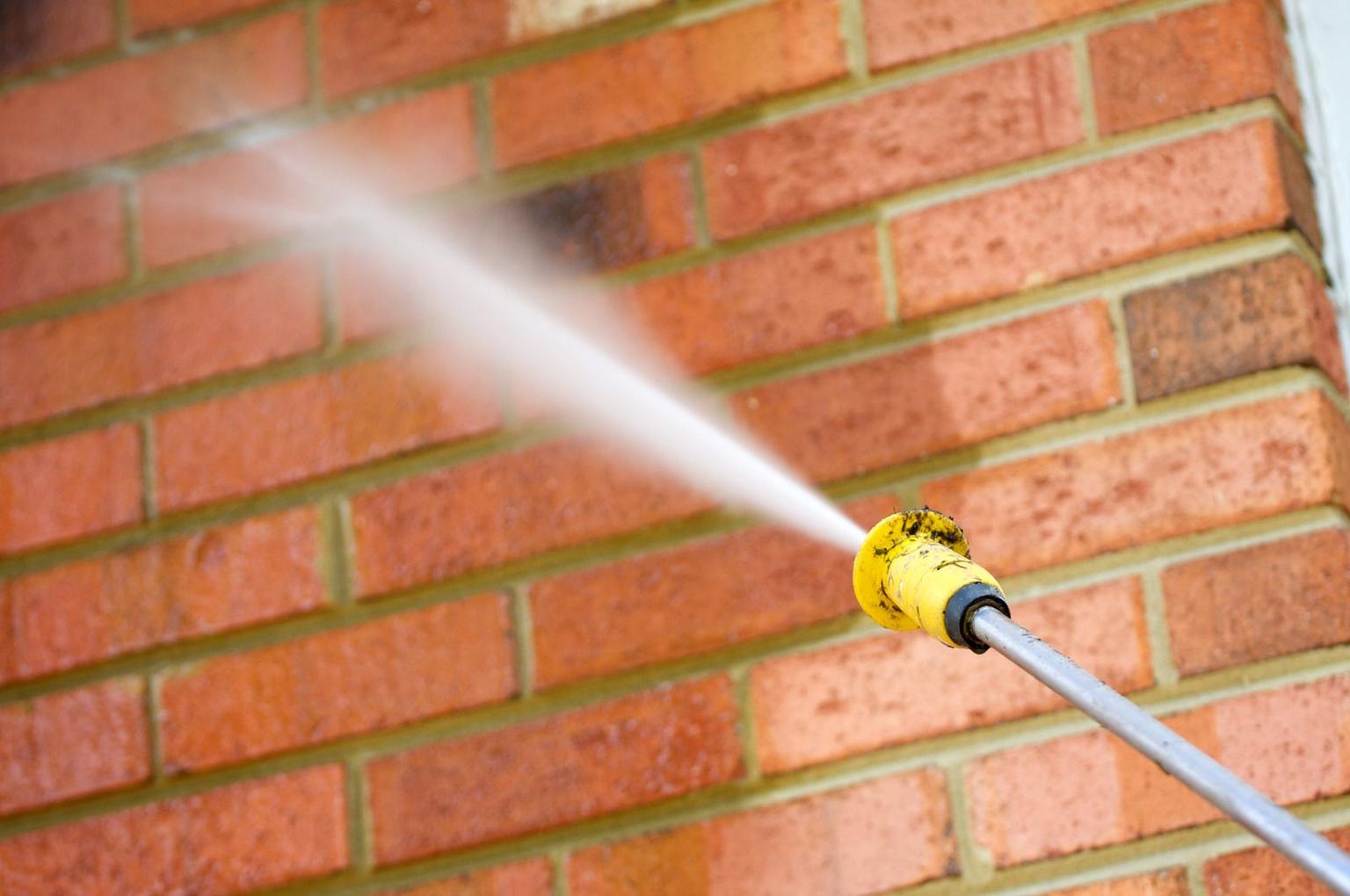
Ask whether they use soft washing for delicate materials or high-pressure washing for tougher surfaces. Soft washing employs specialized detergents and low pressure, making it ideal for materials like vinyl siding, cedar shakes, and asphalt shingles. In contrast, traditional pressure washing uses mechanical force for tougher surfaces like cured concrete and stone. Be wary of anyone who claims to "never use chemicals." This often means they're relying on excessive pressure, which can force water behind siding or damage wood. As Barker explains:
"If the answer is just '4,000 PSI,' that is not a plan. If they mention downstream injectors, proportioners, or metering pumps for soft wash mixes, you are hearing a system rather than guesswork".
Also, confirm they use surface cleaners for even results on concrete. If your property has unique requirements, such as lead-based paint in homes built before 1978, mention this upfront to ensure they can adjust their approach accordingly.
Evaluate Years of Experience
Experience is key, especially when it comes to handling different surfaces. Ask how long they've been in business and request references from similar projects. A seasoned contractor will know how to adjust nozzle types and water flow to protect delicate areas.
Check if they have any specialized training or certifications, such as credentials specific to the industry or manufacturer training for their equipment. You can also ask about their safety record - how many years they've worked without incidents and what protective gear they use on-site. This practical experience is critical for safeguarding your home's surfaces.
For more delicate materials, ask about their experience with low-pressure chemical applications versus high-pressure systems. A knowledgeable professional will proactively share what they avoid cleaning with high pressure, such as older stucco, soft wood, or asphalt shingles. This shows they understand the limits of different materials and prioritize care over speed.
Get Written Quotes and Compare Guarantees
Once you've checked credentials and cleaning methods, the next step is to request a detailed written estimate. Putting everything in writing not only protects your investment but also ensures clear, upfront pricing. As QW Magazine aptly states:
"If a pressure washing quote isn't specific, it's not a quote. It's a guess with a price tag."
Request Detailed Written Estimates
A good quote should break down costs by surface and cleaning method. For instance, it should specify charges for your driveway, siding, deck, or gutters, along with the square or linear footage for each. This level of detail makes it easier to compare bids and identify any inconsistencies.
Make sure the estimate includes:
- A breakdown of surfaces and cleaning methods
- Any exclusions, such as extra fees for removing oil stains or rust
- A list of cleaning products (detergents, degreasers, surfactants) and how they’ll protect your landscaping
- Project timeline, including start and finish times
- Homeowner responsibilities, such as clearing the area before work begins
Additionally, a professional contractor will document preexisting conditions, like oxidized vinyl, cracked mortar, or peeling paint. This protects both you and the contractor from disputes about whether any damage was preexisting or caused during the job.
With this detailed estimate, you’ll also want to confirm that the service guarantees align with the costs outlined.
Review Service Guarantees and Policies
A service guarantee is just as critical as the estimate itself. Avoid vague promises like "satisfaction guaranteed." Instead, look for specific terms, such as a 14-day free touch-up period.
Ask directly: "If the results don't meet expectations, what happens next, and will there be additional costs?" The contractor should provide a clear, written response. Some professionals offer warranties on their workmanship, while others guarantee specific results. Be sure you understand the type of guarantee offered and what it covers.
Also, check for a weather delay policy in the quote. This ensures you're aware of how rain or other conditions might affect the schedule. Finally, confirm whether the contractor includes neutralization steps after using strong cleaning chemicals to protect your property. These small but crucial details separate reliable professionals from those who might disappear once payment is made.
Conclusion
Make sure the provider you choose carries at least $2,000,000 in General Liability insurance and full Workers' Compensation coverage. This protects you from risks like property damage and on-site injuries. Opt for companies with at least five years of experience to ensure they have the knowledge to handle specialized equipment and cleaning chemicals safely.
Pay attention to the cleaning methods they use. Professionals should apply soft washing techniques (low-pressure chemical cleaning) for delicate surfaces like roofs and siding, while reserving high-pressure washing for tougher materials like concrete driveways. Check customer reviews, focusing on high ratings and testimonials that highlight professionalism and quality of work.
It’s also wise to get detailed written estimates and pricing from at least three contractors to compare services and guarantees. Many reputable companies offer warranties, such as a 3-to-5-year spot-free guarantee for roof cleaning. As Angi explains:
"Choosing a professional to pressure wash your home can make all the difference between a job well done and a job not so well done."
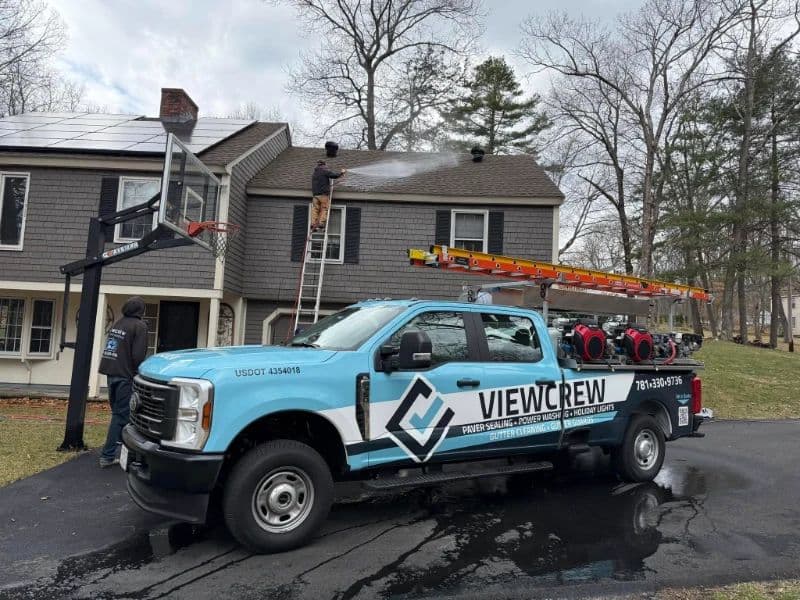
When you're ready to hire, consider experienced providers like ViewCrew Services, serving Massachusetts, Southern New Hampshire, and Connecticut. With insured technicians, a 100% satisfaction guarantee, and tailored exterior cleaning solutions, they bring expertise you can count on.
FAQs
What insurance proof should I ask for before work starts?
Before beginning the job, ask for proof of professional liability insurance, like a certificate of liability insurance (COI). This document ensures the power washing professional is insured to cover any damages or accidents that might occur during the project.
How do I know if soft washing is needed for my home?
Soft washing works perfectly for delicate surfaces such as siding, stucco, and wood - places where high-pressure cleaning might cause harm. This method relies on low pressure combined with biodegradable solutions to gently eliminate algae, mildew, and stains. If parts of your home are shaded and prone to organic buildup, soft washing is probably the safest choice. A professional can evaluate your surfaces and suggest the most appropriate and effective cleaning approach.
What details should a written power washing estimate include?
When preparing a written power washing estimate, make sure it clearly breaks down the pricing for each specific surface or service. This is often calculated per square foot or linear foot - for example, house washing might range from $0.15 to $0.30 per square foot. The estimate should also detail the scope of work, including the surfaces to be cleaned, the total area involved, and any factors that could influence costs, such as the level of dirt or how easy the area is to access. Providing these details ensures clarity and helps prevent any confusion or disputes down the line.