If ice is blocking roof drainage, the safe fix is low-pressure steam removal - not chipping, rock salt, or pressure washing.
In New England, ice dams form when roof heat melts snow and that water refreezes at the cold eaves. The danger is the water behind the ice, because it can slip under shingles, soak insulation, stain ceilings, and drive repair costs into the hundreds or even thousands of dollars. If ice at the roof edge is 2 to 4 inches thick, water is dripping indoors, or gutters are sagging, it's time to call a professional for ice dam removal.
Here’s the short answer:
- An ice dam is a ridge of ice at the roof edge that traps melting snow
- The main risk is backed-up water entering the roof and attic
- The safe pro method is low-pressure steam that opens drainage paths
- Safe DIY steps are limited to a roof rake and calcium chloride socks
- Avoid hammers, chisels, rock salt, and pressure washers
STOP Destroying Your Roof! The ONLY Safe Way to Remove Ice Dams
sbb-itb-238bf3c
Quick Comparison
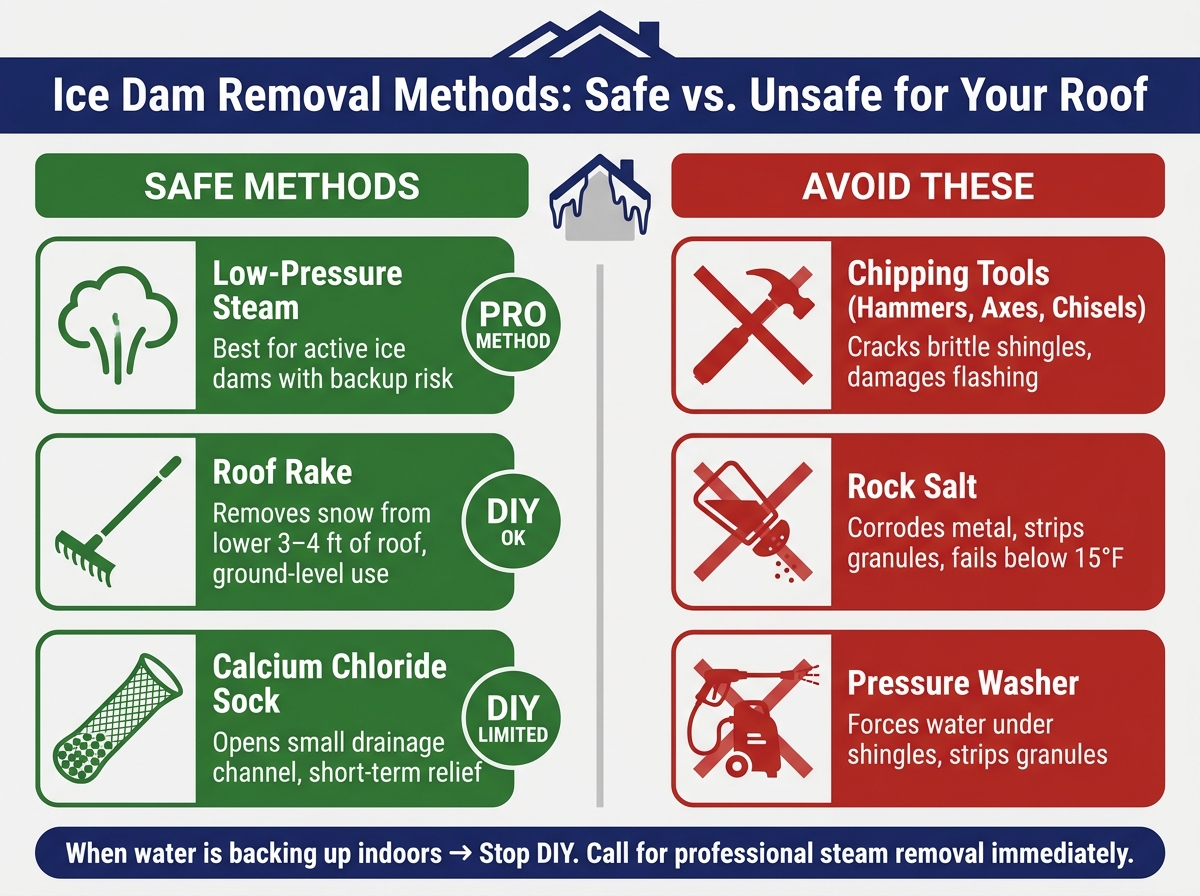
Ice Dam Removal Methods: Safe vs. Unsafe for Your Roof
| Method | What it does | Safe for roof? | Best use |
|---|---|---|---|
| Low-pressure steam | Melts channels through bonded ice | Yes | Active ice dam with backup risk |
| Roof rake | Removes lower roof snow from the ground | Usually | Early buildup before ice bonds |
| Calcium chloride sock | Opens a small drainage path | Limited use | Small dam, short-term relief |
| Chipping tools | Breaks ice by force | No | Avoid |
| Rock salt | Melts ice but harms roofing parts | No | Avoid |
| Pressure washer | Blasts ice with force and water | No | Avoid |
If you want the plain takeaway, it’s this: clear the snow early, use calcium chloride only for small trouble spots, and use steam removal once water starts backing up.
How professional ice dam removal works: low-pressure steam
The goal is simple: get water moving again without tearing up the roof. Low-pressure steam opens drainage channels through the ice while avoiding harm to shingles, flashing, and gutters.
What steam removal looks like, step by step
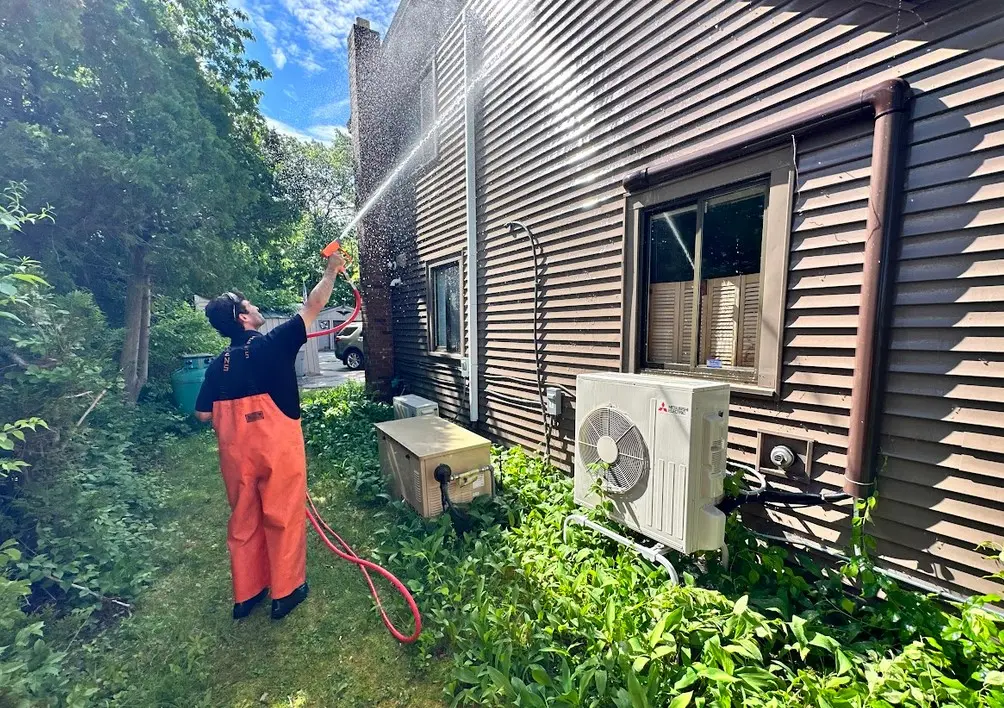
The process is pretty direct. A technician starts by checking the roof edge to find spots where water is backing up or where leaks have started. Then they use a specialized steam machine that delivers high heat at low pressure to melt narrow channels through the dam and loosen sections so they can be removed.
This focused method works better than trying to melt the whole mass at once. It takes pressure off the roof surface, clears a path for runoff, and lets water drain off the eaves once those channels are open.
Why steam is safer than chipping or spraying
The main difference comes down to heat versus force. Chipping with a hard tool hits shingles that are already cold and brittle, which can crack or break them. Pressure washing brings enough force to strip granules and push water under the roofing materials - the exact issue you're trying to prevent.
When to call for professional removal right away
Call a professional as soon as ice starts pushing water back toward the house. Move fast if you notice any of these signs:
- Water is dripping from ceiling fixtures or running down interior walls
- Ice at the roof edge is more than 2–4 inches thick
- Gutters are visibly sagging, pulling away from the fascia, or packed with ice
- A visible pool of water is sitting behind the ice ridge at the roof edge
- Icicles are forming through soffit vents - a sign water has already entered the attic
Before a dam turns into an emergency, homeowners can still slow buildup with simple prevention.
What homeowners can safely do before it becomes an emergency
DIY steps can slow a small buildup, but once ice bonds to the roof, they stop helping. If the dam is still small, these steps may slow things down before water gets inside.
Use a roof rake from the ground to clear the lower roof edge
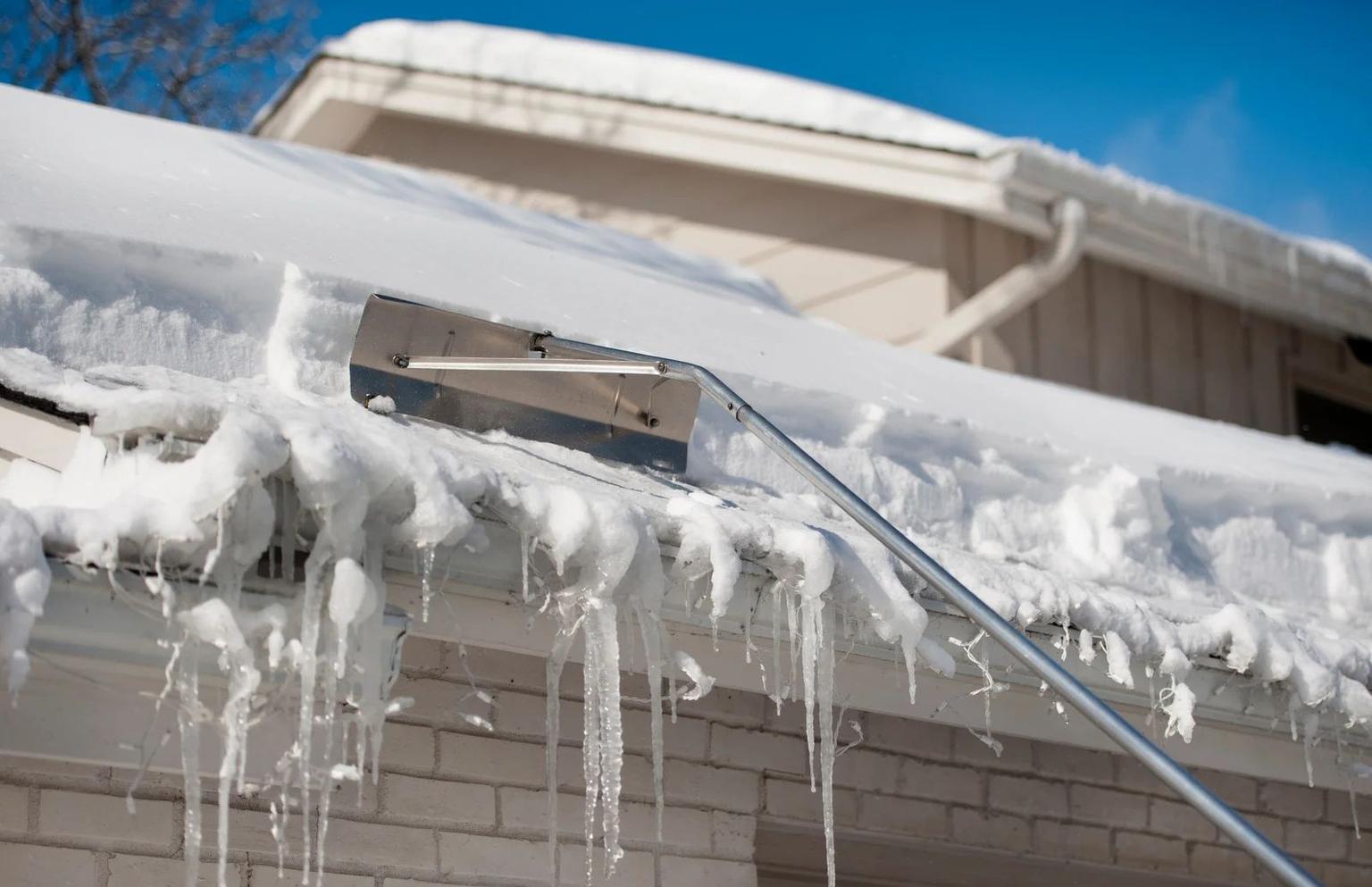
A telescoping roof rake lets you remove snow from the lower 3 to 4 feet of the roof while keeping both feet on the ground. That lower edge is where ice dams usually start, so clearing it early cuts off the snow that keeps feeding the problem.
Pull the snow down in narrow vertical strips instead of broad horizontal passes. Leave about 1 to 2 inches of snow behind. If you scrape the rake right against the shingles, you can strip off the protective granules.
Skip the ladder. Between icy ground and the force of pulling, it can get dangerous fast.
If the snow has already packed into ice, switch to calcium chloride socks.
Use calcium chloride socks to open small drainage channels
Fill a nylon stocking or fabric tube with calcium chloride pellets. Then place it perpendicular to the roof edge so it crosses the dam and hangs over the gutter. As it melts, the calcium chloride opens a narrow channel through the ice. That gives trapped water a path off the roof instead of letting it back up under the shingles.
Do not substitute rock salt. It stops working below 15°F and is highly corrosive to shingles, metal gutters, and nails. After the thaw, rinse nearby plants with fresh water to dilute any calcium chloride runoff.
If water is already backing up, stop the DIY work and call for steam removal.
Know the limits of DIY prevention
Roof raking and calcium chloride socks buy you time. They do not fix the roof or remove a bonded ice dam. Once water is backing up, only professional steam removal can clear the dam safely.
Methods to avoid because they damage your roof
The wrong tool can turn a small ice dam into a roof leak. If the dam is minor, stick with safe DIY steps. Do not chip it, salt it, or spray it off. Those moves often cause the very leak you're trying to prevent.
Do not use hammers, axes, chisels, or pry tools
It’s common to reach for whatever tool is nearby. That’s where things go sideways. Impact tools can crack brittle shingles, punch through the roof deck, and damage metal flashing around chimneys, valleys, and gutters. In many cases, you won’t notice the damage until the thaw.
Do not use rock salt on the roof
Never put rock salt on your roof. It can corrode metal parts and grind away shingle granules, which shortens the life of the roof.
Do not use a pressure washer for ice dam removal
Never use a pressure washer. It can force water under shingles, strip off granules, and refreeze fast in New England cold. If a technician is blasting the roof with a high-pressure stream, that’s a pressure washer - and it does not belong on your roof.
Conclusion: Fix the current problem and reduce the next one
Ice dams are part of life for many New England homeowners. The climate makes them common, but the damage they cause doesn't have to be.
Once a dam starts to form, prevention is no longer the main job. At that point, the focus shifts to safe removal.
Low-pressure steam is the safe professional fix. It melts ice without cracking shingles or pushing water under them. By contrast, hammers, axes, rock salt, and pressure washers can wreck a roof. Professionals such as ViewCrew Services use this steam method for ice dam removal precisely because it clears the blockage without risking the roof itself.
Between storms, a few simple steps can help lower the odds of the next dam:
- Use a roof rake from the ground to clear the lower 3 to 4 feet of snow
- Place a calcium chloride sock across the dam to open a small drainage channel
Fix the current dam, then stop the next one before it starts. Act before water stains show up.
FAQs
How fast can an ice dam cause leaks?
An ice dam can lead to leaks fast once water gets trapped and starts backing up under the roof covering. How fast? That depends on the roof’s condition, the weather, and how much water is piling up.
If you notice signs of an ice dam, act before a small leak turns into a bigger mess.
Will steam removal damage my shingles or gutters?
Usually not. When done the right way, steam removal is a safe, professional method that shouldn’t damage shingles or gutters.
It relies on low-impact heat instead of too much pressure. That helps prevent protective coatings from being stripped away or water from being pushed into seams. By contrast, methods like pressure washing are more likely to cause damage.
How can I stop ice dams from coming back?
To stop ice dams from coming back, fix the root problem: heat leaking into the attic. When warm air escapes, it melts the snow on your roof. That water runs down to the colder eaves and freezes again. That's how ice dams start.
The goal is simple: keep the roof surface close to the outdoor temperature. Good insulation and proper ventilation help do that.
Roof rakes and calcium chloride socks can help for the moment. But they don't solve the main issue.
And whatever you do, don't attack the ice with the wrong tools. Hammers, axes, rock salt, and pressure washers can damage shingles, gutters, and other roof parts fast. What feels like a quick fix can turn into an expensive repair bill.