Yes - but only when the air, the surface, and the runoff stay above 32°F, and 40°F+ is the safer floor for most jobs. If temperatures sit in the 32°F to 40°F range, water dries slower, slip risk goes up, and hoses, pumps, and nozzles can freeze or crack.
You should treat cold-weather washing like a narrow weather window, not a normal cleaning day. The safest setup is full sun, fast drainage, low wind, and at least a few hours above freezing after the job. If the overnight low drops below 32°F, leftover water in cracks, joints, and low spots can turn into ice.
Here’s the short version:
- Above 40°F: usually the best time to wash
- 32°F to 40°F: use care; many surfaces become risky
- Below 32°F: do not power wash
- Vinyl or metal siding: often okay with soft wash only
- Concrete: may be okay if runoff drains fast
- Pavers, wood decks, and painted wood: often better to wait
- Best time of day: about 11:00 AM to 3:00 PM
- Hot-water machines: clean road salt and winter grime better than cold-water units
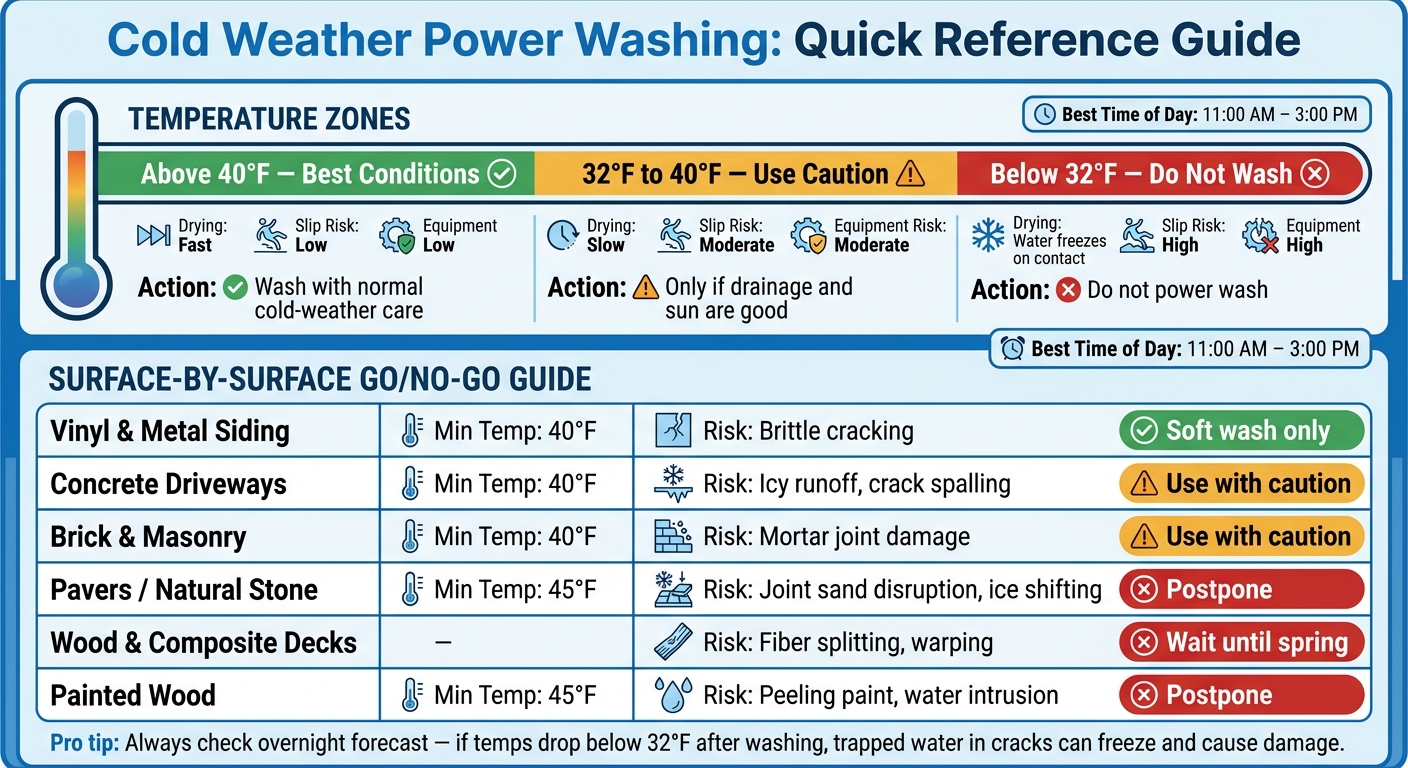
Cold Weather Power Washing: Temperature & Surface Guide
How to Power Wash in the Winter | Tips and Tricks for Pressure Washing in the Cold
sbb-itb-238bf3c
Quick Comparison
| Situation | What happens | Best move |
|---|---|---|
| Above 40°F | Faster drying, lower ice risk | Wash with normal cold-weather care |
| 32°F to 40°F | Slower drying, runoff may refreeze | Wait, or wash only if drainage and sun are good |
| Below 32°F | Water can freeze on contact | Do not wash |
| Sunny concrete with slope | Water drains and dries better | Sometimes okay |
| Shaded walkway or north-facing wall | Surface may stay near freezing | Use care or postpone |
| Vinyl siding | Less standing water, but can crack in cold | Soft wash only |
| Wood deck or painted wood | Moisture can soak in and freeze | Wait for warmer weather |
The rest of the article explains how temperature, surface type, sun, shade, wind, and runoff change the answer for your property.
Temperature Ranges and Cold-Weather Risks
Treat 40°F as the practical floor for most exterior washing. That number gives you a simple way to judge drying time, slip danger, and freeze risk.
What Happens at 40°F, 32°F to 40°F, and Below 32°F
Use these ranges:
| Temperature Range | Drying | Slip Risk | Equipment Risk | Recommendation |
|---|---|---|---|---|
| Above 40°F | Best drying conditions. | Low; minimal ice risk. | Low; standard maintenance. | Best range |
| 32°F to 40°F | Slower drying. | Moderate; water can freeze on contact, especially in shade or wind. | Moderate; hoses can stiffen and water can freeze in equipment. | Use caution and watch shaded areas and wind |
| Below 32°F | Water freezes fast. | High; immediate slip hazards. | High; pumps, hoses, and nozzles can crack. | Do not wash |
The 32°F to 40°F window is where people get into trouble. It may look okay at first, but this is the range where water can turn slick fast.
Shaded and north-facing surfaces usually ice over first and dry last. Flat spots like driveways and patios also hold water in low areas and joints, which makes freezing more likely. On top of that, cold weather is hard on your gear. Hoses get stiffer, and any water left inside a pump, fitting, or nozzle can freeze, expand, and damage internal parts.
If you need to stop in the middle of a job, keep water moving so it doesn’t freeze inside the lines.
How Sun, Shade, Wind, and Time of Day Affect Cold-Weather Washing
Air temperature only tells part of the story. A shaded walkway or north-facing wall can stay near freezing even when the rest of the property feels fine. Sun helps surfaces dry faster. Shade does the opposite, and those spots can freeze much sooner.
Wind adds another problem. Even if the thermometer says conditions are okay, wind can spread runoff and make freezing happen faster.
The safest time to wash is usually the warmest part of the day, about 11:00 AM to 3:00 PM. It also helps to check the full-day forecast before you start. A wash at 45°F can still turn risky if temperatures drop below freezing that night, since water left in cracks or low spots can freeze solid.
After weather conditions, the next question is whether the surface itself can handle the wash.
Which Surfaces Can Be Washed in Cold Weather and Which Should Wait
Surface type matters more than the forecast. The material, its condition, and the slope of the area all shape freeze risk. That’s why two spots on the same property can have very different go/no-go answers.
Driveways, Walkways, Patios, and Pavers
Concrete driveways and walkways can usually be washed in cold weather if water drains well and the forecast stays above freezing for several hours after the job. The biggest issue is cracks. When water sits in cracks and joints, then freezes, it expands and pushes the material apart from the inside.
Pavers need more care. Water slips into the joints fast, and if it freezes there, it can shift the stones or push out the polymeric sand that holds them in place. If the joints are already loose, or the surface is older, it’s smarter to wait.
Siding, Decks, and Other Exterior Surfaces
Vertical surfaces act differently from flat areas. Vinyl siding sheds water fast instead of letting it sit, which lowers freeze risk. But cold weather also makes vinyl more brittle, so high pressure can crack or chip it. Use soft wash and low pressure only.
Wood, composite, and painted wood surfaces should usually wait until spring. Wood fibers soak up water, and if that moisture freezes, it can lead to splitting, warping, or splintering. Never wash wood that’s already frozen. Composite boards come with the same problem when trapped moisture freezes. Cold weather also makes old paint more likely to peel, and water pushed under the finish can lead to damage.
Surface-by-Surface Cold-Weather Washing Comparison
Use this table as a quick go/no-go guide before you start.
| Surface Type | Min. Practical Temp | Main Cold-Weather Risk | Advisability |
|---|---|---|---|
| Vinyl/Metal Siding | 40°F | Brittle cracking; water behind panels | Generally advisable (Soft wash only) |
| Concrete Driveways | 40°F | Icy runoff; freeze-thaw spalling in cracks | Use with caution |
| Brick & Masonry | 40°F | Mortar joint damage; moisture trapping | Use with caution |
| Pavers/Natural Stone | 45°F | Joint sand disruption; ice expansion shifting stones | Postpone |
| Wood/Composite Decks | Wait for warmer weather | Fiber splitting; warping; slow drying | Postpone until spring |
| Painted Wood | 45°F | Peeling paint; water intrusion behind finish | Postpone or Soft wash only |
Those surface differences shape the runoff and drying steps covered next.
How to Reduce Risk When Washing in Cold Weather
In the 32°F to 40°F range, risk only drops if you plan the job well, manage runoff, and protect your equipment. That said, these steps do not make washing safe at or below freezing.
Scheduling, Runoff Control, and Cold-Weather Setup
Use the warmest part of the day for the wash itself, ideally between 11:00 AM and 3:00 PM. That’s usually when surfaces have had time to warm up a bit and water can dry faster.
Start with the sunniest sections first. Shaded areas stay colder for longer and can refreeze much faster after you stop washing. While you work, push runoff away from steps, walkways, and low-lying spots. If water starts pooling nearby, put down sand or ice melt right away.
Keep the machine warm before use, then fully drain the hoses, pump, and nozzle when you're done. If you store the unit in a cold space, use an insulation wrap or a pressure-washer antifreeze kit.
After setup and runoff control, the next step is simple: make sure your tools and cleaners can handle cold conditions.
Tools, Detergents, and Protective Gear
Hot-water pressure washers do a better job on winter grime. They cut through grease, oil, and road salt faster than cold-water units.
Use biodegradable detergents rated for cold conditions, and let them sit a little longer before rinsing.
For personal safety in cold-weather conditions:
| Protective Gear | Why It Matters |
|---|---|
| Insulated, waterproof gloves | Protects hands and grip |
| Slip-resistant, insulated boots | Improves traction on wet, icy ground |
| Waterproof outer layers | Helps prevent heat loss |
| Eye protection | Protects against spray and debris |
If the surface is still near freezing, wait for warmer weather.
Even with the right gear, the last call is whether the surface should be washed at all.
Should You DIY, Wait, or Hire ViewCrew Services?

A Simple Decision Guide for Homeowners
Once you know the temperature and surface limits, the next call is pretty simple: do it yourself, wait, or bring in help.
Use the temperature ranges above as your cutoff. Then look at the surface itself and how well it drains. DIY washing makes the most sense on simple areas that dry fast and don’t leave standing water behind.
| Condition | Best Move |
|---|---|
| Above 40°F, full sun, overnight low above freezing | DIY on simple, fast-draining surfaces |
| 32°F to 40°F, or freezing overnight | Wait or hire ViewCrew Services |
| Below 32°F, high wind, or deep shade | Do not attempt |
If a job feels risky for DIY, that same risk is usually a sign that professional help is the safer route.
When to Call ViewCrew Services
Some jobs just stop being a good DIY bet once winter conditions show up.
Large flat surfaces with low spots, like driveways and patios, can hold runoff and refreeze. North-facing or heavily shaded areas may not dry before dark. Older brittle siding can also be easier to damage in cold weather. In these cases, refreezing runoff, slow drying, and surface damage become much more serious concerns.
There’s also an equipment gap. Consumer-grade pressure washers don’t use heated water, while commercial hot-water units do a better job removing salt and winter grime.
ViewCrew Services works across Massachusetts, Southern New Hampshire, and Connecticut. The company handles exterior cleaning jobs where cold weather, drainage issues, or sensitive surfaces make DIY a bad gamble. Their crews use professional-grade equipment and cold-weather procedures, including proper runoff management and dry-down steps.
The Bottom Line on Cold-Weather Power Washing
If it’s above 40°F, the sun is out, and the overnight forecast stays above freezing, limited washing with the right precautions can work. Between 32°F and 40°F, the risk to surfaces, equipment, and personal safety climbs fast. Below 32°F, water freezes fast, and the chance of cracked surfaces, damaged equipment, and icy walkways outweighs the cleaning benefit.
When conditions are marginal, or the job has drainage, shade, or surface issues, it makes more sense to wait or hire ViewCrew Services.
FAQs
How can I tell if a surface is too cold to wash?
A surface may be too cold to wash if the air temperature is below 40°F. At that point, water is more likely to freeze before it dries. That can create slip hazards and may damage materials like concrete and vinyl.
Check the full-day forecast too. If temperatures could drop to 32°F or lower for several hours after washing, it’s best to hold off. The same goes for surfaces that are already icy or stuck in the shade.
Will power washing in winter damage concrete or pavers?
Yes. Power washing can damage concrete and pavers in winter, especially at or below 32°F.
Here’s why: water can seep into small pores, cracks, and joints. If that water freezes, it expands. And that can lead to spalling, cracking, and other surface damage.
With pavers, there’s another issue. Power washing can wash out the joint sand that helps keep the system in place.
To lower the risk, avoid washing when temperatures are below 40°F. At that point, water may refreeze before it has time to drain away. For larger flatwork, it’s often safer to wait for warmer weather.
What should I do if water starts freezing during the job?
Stop cleaning right away. Freezing water can create dangerous slip hazards and can damage surfaces like wood, concrete, and brick.
Shut down the machine, drain the hoses, pumps, and nozzles, and move the equipment to a heated area. If water has pooled or turned to ice, clear the area or apply salt or sand to help prevent accidents.