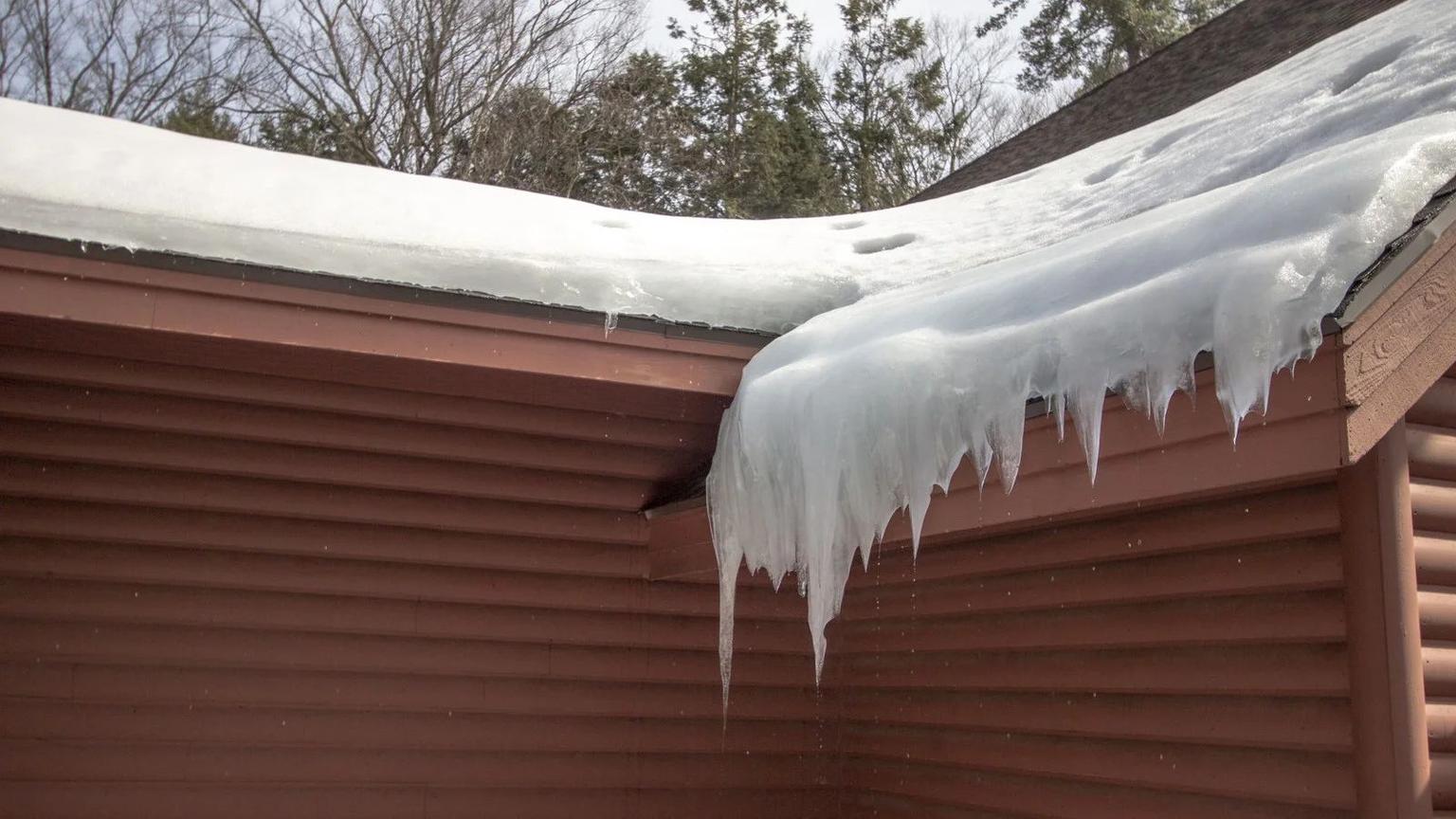
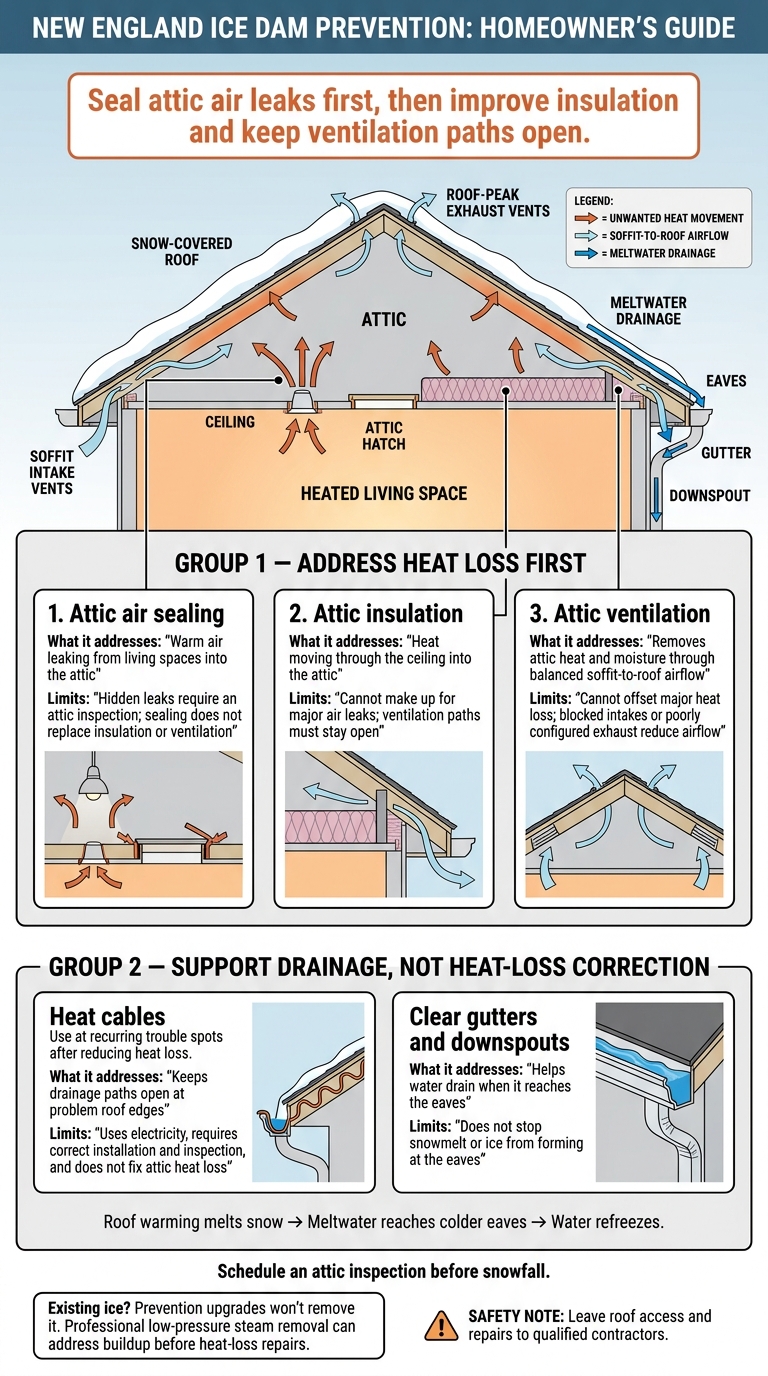
To prevent ice dams, seal attic air leaks first, then improve insulation and keep ventilation paths open. These steps reduce the roof warming that melts snow and sends water toward colder eaves.
Your prevention plan comes down to five measures:
- Air sealing: Stop warm indoor air from leaking into the attic.
- Insulation: Slow heat flow through the ceiling.
- Ventilation: Keep soffit-to-roof airflow open to help remove attic heat.
- Heat cables: Keep drainage paths open at recurring trouble spots. Cables do not fix heat loss.
- Gutter cleaning: Clear leaves and debris so meltwater can drain. To weigh it against guards, see gutter guards vs professional gutter cleaning.
Schedule an attic inspection before snowfall, and leave roof access and repairs to qualified contractors. If ice has already built up, prevention will not remove it. Professional ice dam removal with low-pressure steam clears existing ice before you start heat-loss repairs.
Ice Dam Prevention: Fix Heat Loss First
Ice Dams: How to prevent them from damaging your home
sbb-itb-238bf3c
1. Seal Attic Air Leaks
Start by stopping warm indoor air from reaching the roof deck. It’s the most effective first step.
Heat-loss correction
Seal attic leaks. Check the attic hatch, plumbing and wiring penetrations, recessed lights, ducts, and chimney bypasses. Weather stripping and caulk help keep warm indoor air out of the roof space, addressing the source of ice dams.
Installation requirements
Hire a qualified professional for leaks near fixtures, ducts, and chimneys. Fire-clearance requirements, electrical safety, and combustion safety determine what can be sealed.
Long-term limitations
Air sealing and insulation do different jobs. Air sealing blocks leaks, while insulation slows heat transfer. Neither replaces the other.
After sealing leaks, the next step is to reduce heat loss and manage roof temperature.
2. Improve Attic Insulation and Ventilation
Once you’ve sealed air leaks, insulation and ventilation help reduce the roof heat that causes ice dams.
Heat-loss correction
Insulation slows heat transfer from heated rooms into the attic. That means less heat reaches the roof to start ice dams. Check insulation coverage before winter.
Installation requirements
Balanced ventilation brings air in through soffit vents and lets it out through roof peak vents. This helps keep the roof deck closer to the outdoor temperature.
The two serve different roles: insulation slows heat flow, while ventilation removes heat that still reaches the attic.
Install baffles at the eaves to keep insulation from blocking soffit vents.
Long-term limitations
Neither insulation nor ventilation works well if the attic has air leaks. Warm air can slip past insulation and bring in more heat than ventilation can remove.
3. Add Heat Cables Where Needed
If you’ve already reduced heat loss but one area still freezes, heat cables can help address that spot.
Drainage support
Heat cables create drainage paths at roof edges so meltwater can escape instead of refreezing. Reserve them for areas that freeze repeatedly. Even there, they work best when water can drain freely from the roof edge.
Installation requirements
Plan heat cable placement around the exact roof edge that needs protection, and keep the drainage path open.
Long-term limitations
Heat cables manage drainage, not attic heat loss. They use electricity, cover only limited areas, and need periodic checks.
4. Keep Gutters and Downspouts Clear
Clean gutters help meltwater drain off the roof, but they don’t stop heat-driven ice dams.
Drainage support
Remove leaves, twigs, and dirt so water can flow through gutters and downspouts. Blockages can trap water, add weight, and damage the roof edge.
Check gutters and downspout exits in the fall, before freezing weather arrives. Look for overflow or icicles along the gutter line, and make these checks part of your fall maintenance routine.
Long-term limitations
Gutters don’t cause heat-driven ice dams, and clean gutters don’t prevent them. Keeping them clear supports drainage, but it won’t fix attic heat loss. Gutter cleaning isn’t a substitute for air sealing or insulation.
Prevention Measures Compared: Benefits and Limits
Attic air sealing, insulation, and ventilation are the strongest long-term fixes for the heat loss that starts ice dams. Each serves a different purpose - and has limits.
| Measure | What it addresses | Limits |
|---|---|---|
| Attic air sealing | Warm air leaking from living spaces into the attic | Hidden leaks require an attic inspection; sealing does not replace insulation or ventilation |
| Attic insulation | Heat moving through the ceiling into the attic | Cannot make up for major air leaks; ventilation paths must stay open |
| Attic ventilation | Removes attic heat and moisture through balanced soffit-to-roof airflow | Cannot offset major heat loss; blocked intakes or poorly configured exhaust reduce airflow |
| Heat cables | Keeps drainage paths open at problem roof edges | Uses electricity, requires correct installation and inspection, and does not fix attic heat loss |
| Clear gutters and downspouts | Helps water drain when it reaches the eaves | Does not stop snowmelt or ice from forming at the eaves |
Seal air leaks before adding insulation, and keep ventilation paths open. Heat cables and clear gutters help water drain, but only attic improvements address the root cause.
Before the next storm, tackle attic checks and repairs first, then check exterior drainage.
Prepare Before New England Snowstorms
Schedule a fall attic inspection to find attic bypasses and insulation gaps before the first snowfall. Use the findings to rank repairs by urgency, putting fixes that reduce warm-air leakage first. Keep a separate winter work list for repairs that still need attention.
Next, divide DIY checks from contractor work. Handle only checks you can reach safely. Leave attic or roof access, insulation work, HVAC inspections, roof shingle repairs, and tree trimming to qualified contractors. Before work starts, ask which openings need sealing.
Check gutters and downspouts for leaves and debris, too. Track fall repairs with the Massachusetts winter property maintenance guide and the seasonal exterior inspection checklist.
Roof raking can temporarily reduce snow load, but it won’t fix attic heat loss. Use a roof rake only from the ground and only when it’s safe. See the ice dam removal guide for removal methods.
Final Verdict: Fix Heat Loss First
Start with attic air sealing, then add insulation and balanced ventilation. Air sealing blocks warm indoor air, insulation slows heat transfer, and ventilation removes the heat that still reaches the attic, so each step covers a gap the others leave.
Heat cables can help at problem edges, and clear gutters and downspouts let meltwater drain. Neither stops ice dams, because only attic improvements address the root cause.
Before the first snowfall, schedule a fall attic inspection to find bypasses and insulation gaps, then rank repairs by urgency. Leave attic and roof access to qualified contractors, and use the seasonal exterior inspection checklist to track fall repairs.
Prevention upgrades will not remove ice that has already built up. If water is backing up indoors, make professional removal the priority, then repair heat-loss problems to reduce future risk. ViewCrew Services offers ice dam removal using low-pressure steam.
FAQs
How can I tell if my attic is losing heat?
During the day, check for light coming through the roof boards. It may point to gaps that let air escape. Look for damp or matted insulation, water stains, or black streaks on the wood.
Frost beneath the roof decking can signal poor ventilation and heat loss. A large difference between attic and outdoor temperatures may also point to insulation or ventilation problems.
Why do ice dams return after attic upgrades?
Ice dams can come back if attic upgrades don’t stop enough heat from reaching the roof deck. That heat melts snow on the roof. The meltwater then refreezes at the cold eaves.
Even with better insulation and air sealing, attic ventilation still matters. If it doesn’t keep the attic close to the outdoor temperature, enough warmth can remain to keep the melt-and-refreeze cycle going.
Which ice dam prevention upgrades should I prioritize on a budget?
Seal attic air leaks first to stop warm air from escaping. Then check that you have enough insulation to reduce heat loss and keep the roof deck cold. Together, these fixes address the root cause and provide the best long-term prevention.
While you save for upgrades, use a roof rake after storms to clear snow from the lower 3–4 feet of the roof. If water is backing up indoors, make professional low-pressure steam removal the priority.