

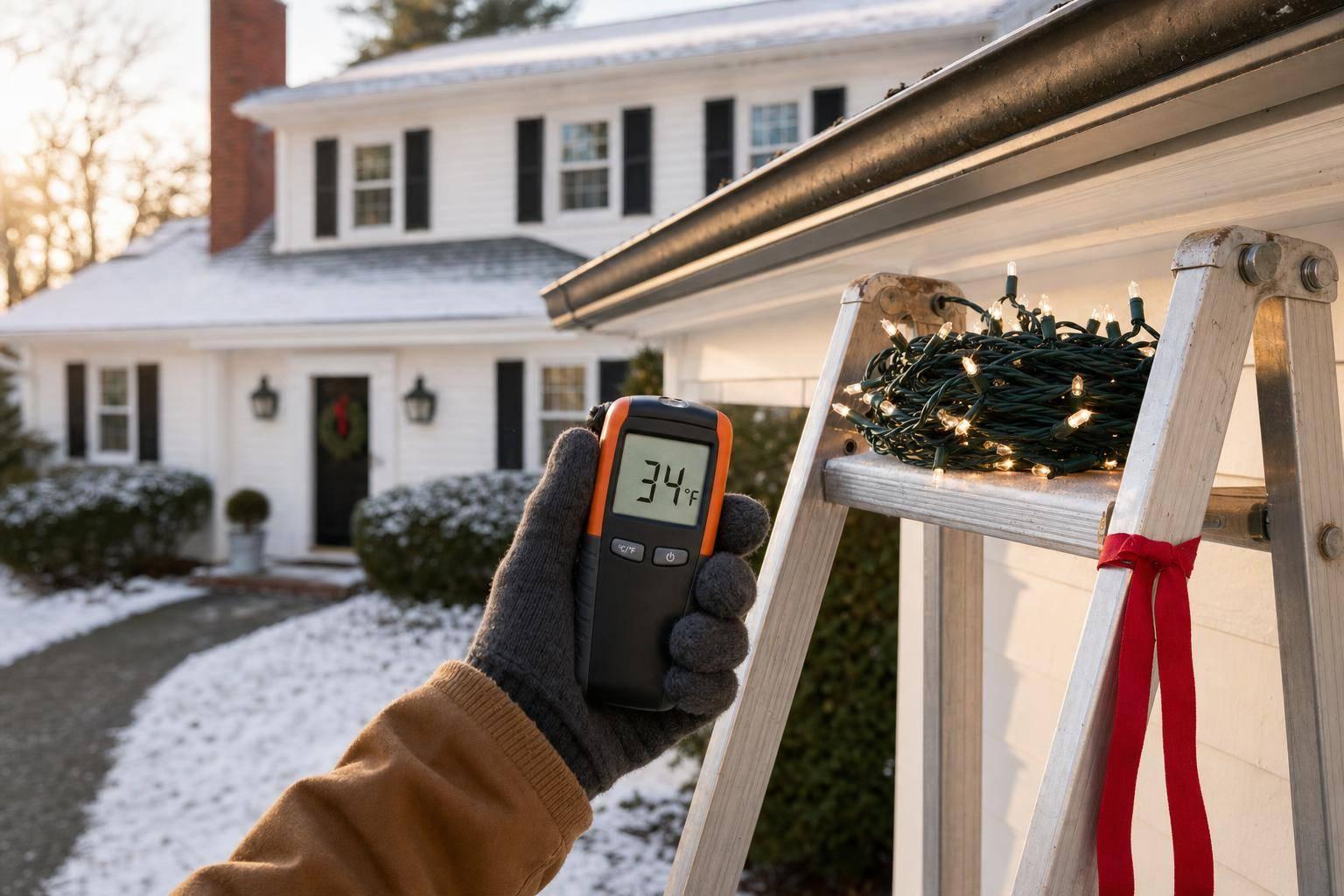
Yes - but only while surfaces stay dry, stable, and above 32°F. In Massachusetts, Southern New Hampshire, and Connecticut, Christmas light installation often stops once snow, ice, freezing rain, or strong wind show up.
If you wait until late fall or early winter, you may run into a few clear problems:
- Snow or ice on roofs, ladders, or walkways makes falls more likely
- Winds around 20 to 25 mph can stop roof and ladder work
- Temps in the mid-20s°F or lower can make clips brittle and reduce hand control
- Adhesive hooks need dry surfaces and usually work best in milder weather
- Shorter daylight leaves less safe time for roofline work
That’s why September and October are usually the best times to schedule professional Christmas light installation in New England. You get drier surfaces, milder temperatures, and more daylight before winter weather starts causing delays.
| Factor | Safer for Installation | Risky or Stop Condition |
|---|---|---|
| Temperature | Above 32°F | 32°F or below on slick surfaces; mid-20s°F can affect grip |
| Roof and ground | Dry and clear | Snow, frost, ice, or freezing rain |
| Wind | Light wind | Sustained 20–25 mph |
| Hardware | Clips in milder weather; dry surfaces for adhesives | Brittle plastic, weak adhesive bond in cold or damp conditions |
| Timing | September–October | November–December often bring delays |
In short, you can install lights in cold weather, but you should not push through unsafe roof, ladder, or surface conditions.
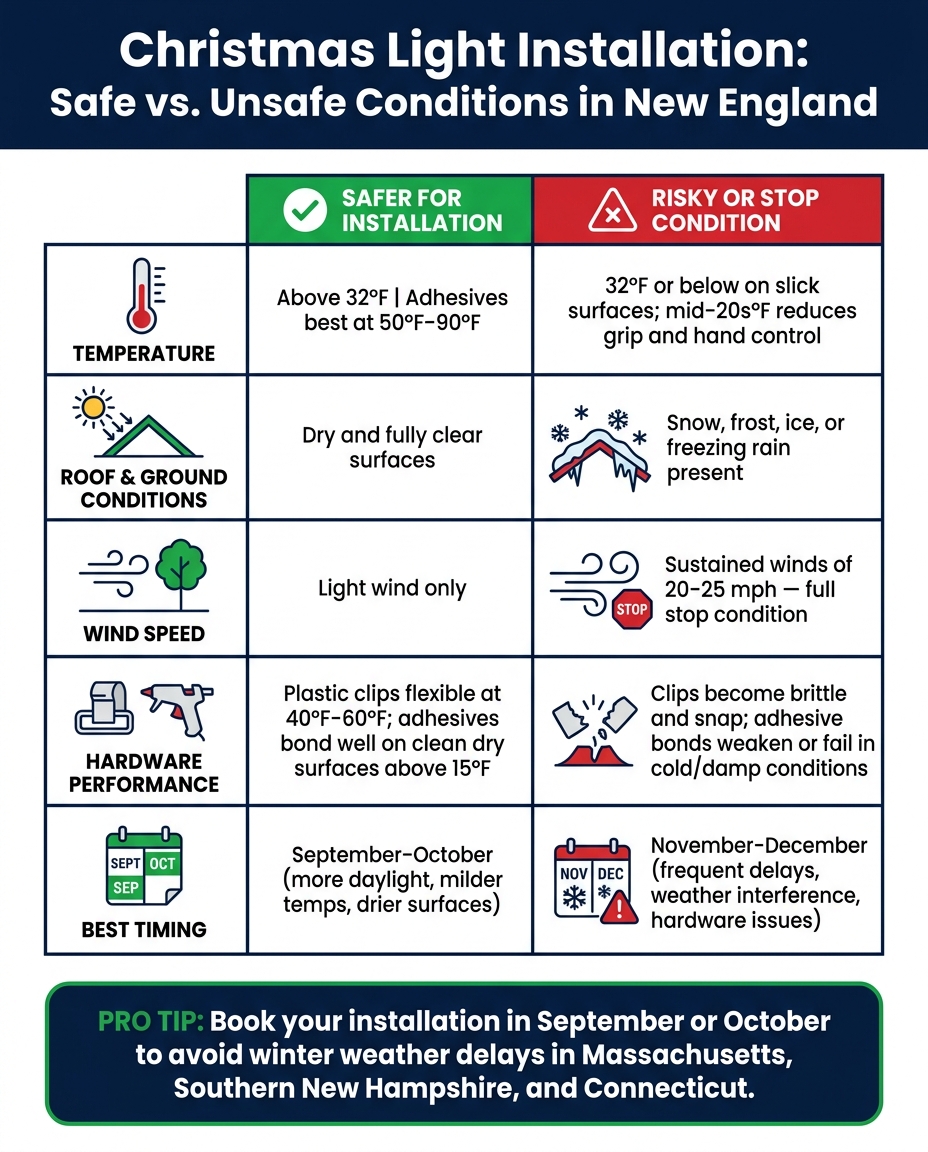
Christmas Light Installation: Safe vs. Unsafe Conditions in New England
Fast & Easy Christmas Light Installation Tutorial (Pro Tips for Perfect Rooflines!)
sbb-itb-238bf3c
When installation becomes unsafe
Cold by itself usually doesn’t stop an installation. The bigger problems are snow, ice, wind, and bad footing.
Ladder and roof cutoffs: ice, snow, and poor footing
If there’s snow or ice on the ground or on the roof, work stops. It’s that simple. Ladder footing has to stay firm and stable, or the risk goes up fast.
Wind, cold, and daylight limits that raise fall risk
Ice and snow aren’t the only red flags. Three other conditions can push a job past the safe line.
- Sustained winds of 20 to 25 mph are a stop condition for ladder and roofline work.
- Temperatures in the mid-20s °F or below can reduce grip and hand control.
- Crews also keep roof and ladder work to daylight hours so they can see clearly.
And even when the weather still looks workable, cold can weaken clips and adhesives.
Why clips and adhesives fail in freezing weather
Even if the roof is safe to reach, winter can still wreck the hardware.
Plastic clips can crack or lose grip in the cold
Most roofline and gutter clips are plastic. In milder weather - about 40°F to 60°F - that plastic stays flexible enough to grip a gutter lip or shingle edge the way it's supposed to. Drop below freezing, and that flex starts to go away. The plastic gets stiff, turns brittle, and can snap under normal weight.
Ice and snow make the problem worse. If a gutter has a layer of ice on it, or the roofline has a dusting of snow, the clip may not catch a firm edge at all. Instead, it sits on top of a slick layer. That can let it rotate or slide when wind or snow pulls on the light wire. And when temperatures swing above and below freezing, those freeze-thaw cycles can crack hooks or slowly weaken their hold.
Adhesive hooks need mild, dry surfaces to bond properly
Adhesive-backed hooks are often used on trim, columns, vinyl siding, and masonry. Once they cure, they can stay attached across a broad temperature range. But here's the catch: that doesn't mean you can install them in just any weather.
Cold air weakens the bond at the moment of installation. The adhesive needs to press into the surface texture of the material so it can stick well. In low temperatures, the adhesive gets too stiff to do that. Outdoor products should go onto a clean, smooth, dry surface when the temperature is above 15°F, and results are usually better when you're closer to 50°F to 90°F.
A hook stuck onto damp or frosty siding might seem fine at first. But that first impression can fool you. The bond is weaker than it should be, and a hard freeze or heavy storm can pull it loose. In some cases, it can even take paint or part of the surface coating with it.
Why September and October are the best months to install
The easiest way to avoid those problems is to schedule the job before winter weather shows up. In plain English: timing is the safest fix.
Dry surfaces, warmer temps, and longer daylight hours
September and October usually bring milder, drier conditions. That makes installation safer and more dependable. Crews also get more daylight to work with, which helps them finish the job safely without rushing.
How early booking helps ViewCrew Services plan safely
Booking in September or early October gives ViewCrew Services more room to schedule the work before freezing temperatures and storm delays start shrinking the calendar.
Conclusion: Install before winter weather arrives
The cutoffs point to one simple takeaway: Christmas lights can go up in cold weather, but only if the roof, gutters, walkways, and ladder stay dry, steady, and above freezing. Once snow, ice, or temperatures below 32°F show up, the risk climbs fast.
Visible ice, snow, freezing rain, strong winds, and temperatures under 32°F are all solid reasons to wait. That’s why timing matters more than trying to push through a winter install.
For homeowners in Massachusetts, Southern New Hampshire, and Connecticut, September and October help you avoid most of these issues. In plain terms, you skip the bad weather window before it starts.
Waiting until November or December can lead to more rescheduling and a higher chance of hardware problems. ViewCrew Services schedules early-season installs to help homeowners avoid those trade-offs.
Book in September or October, before winter weather makes the schedule for you.
FAQs
What if the weather changes on installation day?
If the weather shifts on installation day, don't push through it. Skip the job if overnight temperatures fall below 40°F. And only handle adhesive work when surface temperatures stay above 50°F and rain isn't in the forecast.
If conditions turn mid-job, stop and reschedule instead of risking weak adhesion or freeze-thaw damage. ViewCrew Services checks for a dry, workable weather window before crews begin.
Can lights be installed on siding instead of the roof?
Yes. Holiday lights can be installed on siding instead of the roof.
It’s a practical option that helps you avoid roof work, which matters a lot during New England’s cold, icy season. In many cases, siding installs can be done more safely from the ground. And if you book in September or October, there’s a better chance your lights will be up before harsh winter weather sets in.
How early should I book holiday light installation?
Book your holiday light installation in September or October. That gives you a better shot at getting your display up before New England’s harsh winter weather rolls in.
It also gives crews room to work in safer temperatures. Once it starts freezing, ladder work gets riskier, and cold weather can affect clips and adhesives.


