Take your Christmas lights down by January 6 if you can, and treat January 31 as the latest point for temporary lights. If snow, ice, or wind gets in the way, wait for a dry, calm day above 32°F instead of forcing the job.
Your timing comes down to three things: the calendar, the weather, and the condition of the lights. Lights left up too long face more moisture, freeze-thaw wear, dirt build-up, and a higher chance of cord, clip, or trim damage. If you see frayed wires, sagging strands, loose clips, or moisture around windows and trim, move removal up to the next safe weather window.
Here's the short version:
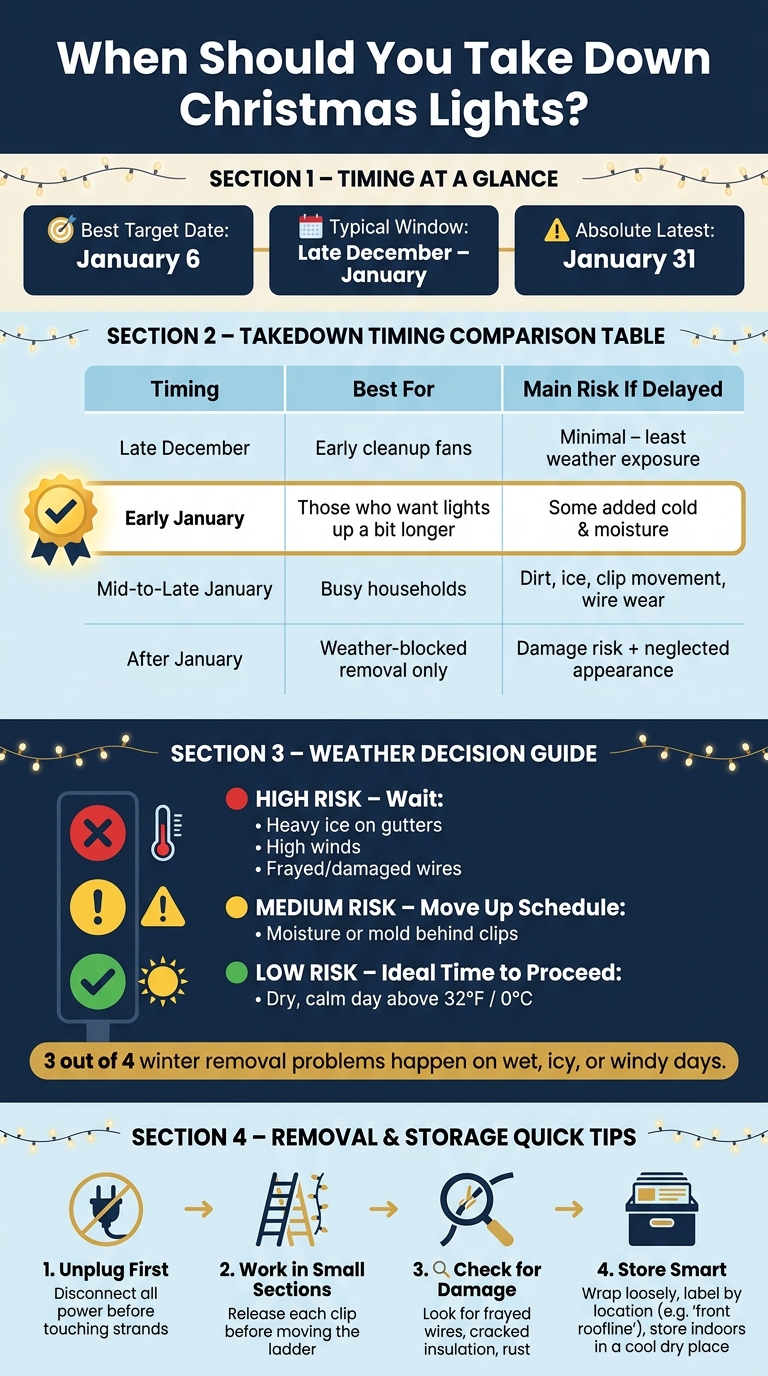
- Best target date: January 6
- Usual removal window: late December through January
- Latest practical window: by January 31
- Best weather: dry, calm, above-freezing
- Remove sooner if you spot damage: frayed cords, pulling clips, mold, or trapped moisture
- Safe removal tip: unplug first and take lights down in small sections
- Storage tip: wrap loosely, label by area, and store indoors in a dry spot
Companies that offer professional Christmas lights installation, like ViewCrew Services, typically build removal into that same seasonal timeline.
Christmas Light Takedown Timing: When to Remove, Wait, or Act Fast
How to Take Down Christmas Lights from Your Roof (Safe & Easy Guide)
sbb-itb-238bf3c
Quick Comparison
| Timing | What it means | Best for | Main risk if delayed |
|---|---|---|---|
| Late December | Right after Christmas | Early cleanup | Less weather exposure |
| Early January | After New Year’s Day | People who want lights up a bit longer | Some added cold and moisture exposure |
| Mid-to-late January | Final window for most homes | Busy households | More dirt, ice, clip movement, and wire wear |
| After January | Too late for temporary lights in most cases | Only if weather blocks removal | Higher risk of damage and a neglected look |
About 3 out of 4 winter removal problems come back to the same issue: trying to work on wet, icy, or windy days rather than waiting for a safer one. The rest of the article breaks down when to act, when to wait, and how to take lights down without damaging the strands or your home.
When Most Homeowners Take Down Christmas Lights
Most homeowners take their lights down shortly after Christmas, right after New Year's, or at some point in January. The exact day usually comes down to schedule. And, of course, weather can push that timing forward or delay it.
Common Takedown Windows from Late December Through January
For most households, the usual takedown windows fall into three simple buckets:
- Late December
- Early January
- January
The Outer Limit for Temporary Holiday Lights
For temporary holiday lights, January is the practical outer window. If they stay up much longer, the display can start to look neglected, and dirt has more time to build up.
Takedown Timing Options at a Glance
| Takedown Timing Option | Typical Window | Notes | Best For |
|---|---|---|---|
| Shortly After Christmas | Late December | Gets the lights down quickly after the holiday | Homeowners who want an early cleanup |
| After New Year's Day | Early January | Lets the display stay up a little longer | Homeowners who prefer to wait |
| Through January | January | Offers the most flexibility | Busy households |
Once you know your timing window, the next step is picking a safe day to work outside.
How Weather and Home Conditions Affect the Best Removal Day
The day you choose matters just as much, especially in winter weather. Even if the forecast looks decent, take a close look at the lights and the area around them before you get on a ladder.
Choose a Dry, Calm Day Above Freezing
Pick a dry, calm day when temperatures are above freezing. Dry surfaces help ladder feet stay steady, and slightly warmer weather can cut down the chance of slipping on icy walkways, driveways, and roof edges. Wind is a big problem too. Long light strands can whip around, pull against you, and make ladder work much harder than it looks.
If the air is gusty or the house is still damp from snow, ice, or rain, hold off and wait for a better window.
Signs You Should Take Lights Down Sooner
Sometimes the lights are the warning sign. If you notice any of the issues below, bump the job up on your calendar:
- Frayed or damaged wires - a fire and shock risk that needs immediate removal
- Strands sagging or pulling on soffits and siding - this can lead to physical damage on your home’s exterior
- Loose clips that have shifted after repeated freeze-thaw cycles
- Moisture around clips or windows - a sign that water may be getting in and causing rot or mold
If you spot damage, plan to take the lights down on the next dry day.
Weather and Condition Decision Guide
| Condition or Weather Situation | Risk Level | Recommended Action | Suggested Timing Adjustment |
|---|---|---|---|
| Heavy ice on gutters or eaves | High | Wait for a full thaw; avoid pulling frozen clips or wires | Delay until consistently above freezing |
| High winds | High | Skip ladder work; long strands are hard to control | Postpone until calm |
| Visible wire damage or fraying | High | Remove as soon as conditions are safely dry | Move up immediately |
| Moisture or mold build-up behind clips | Medium | Remove lights to let the surface dry and prevent rot | Move up schedule |
| Dry thaw | Low | Take advantage of the clear window for safer work | Ideal time to proceed |
Once you’ve picked the safest day, take the lights down in small sections. As you go, check each strand before you store it away. That extra minute now can save you a headache next season.
How to Remove and Store Christmas Lights Without Damage
Pick the first dry, calm day and take the lights down in order. That simple move helps protect the wiring and gives your lights a better shot at lasting another season.
Remove Lights in Small Sections Without Pulling on Wires
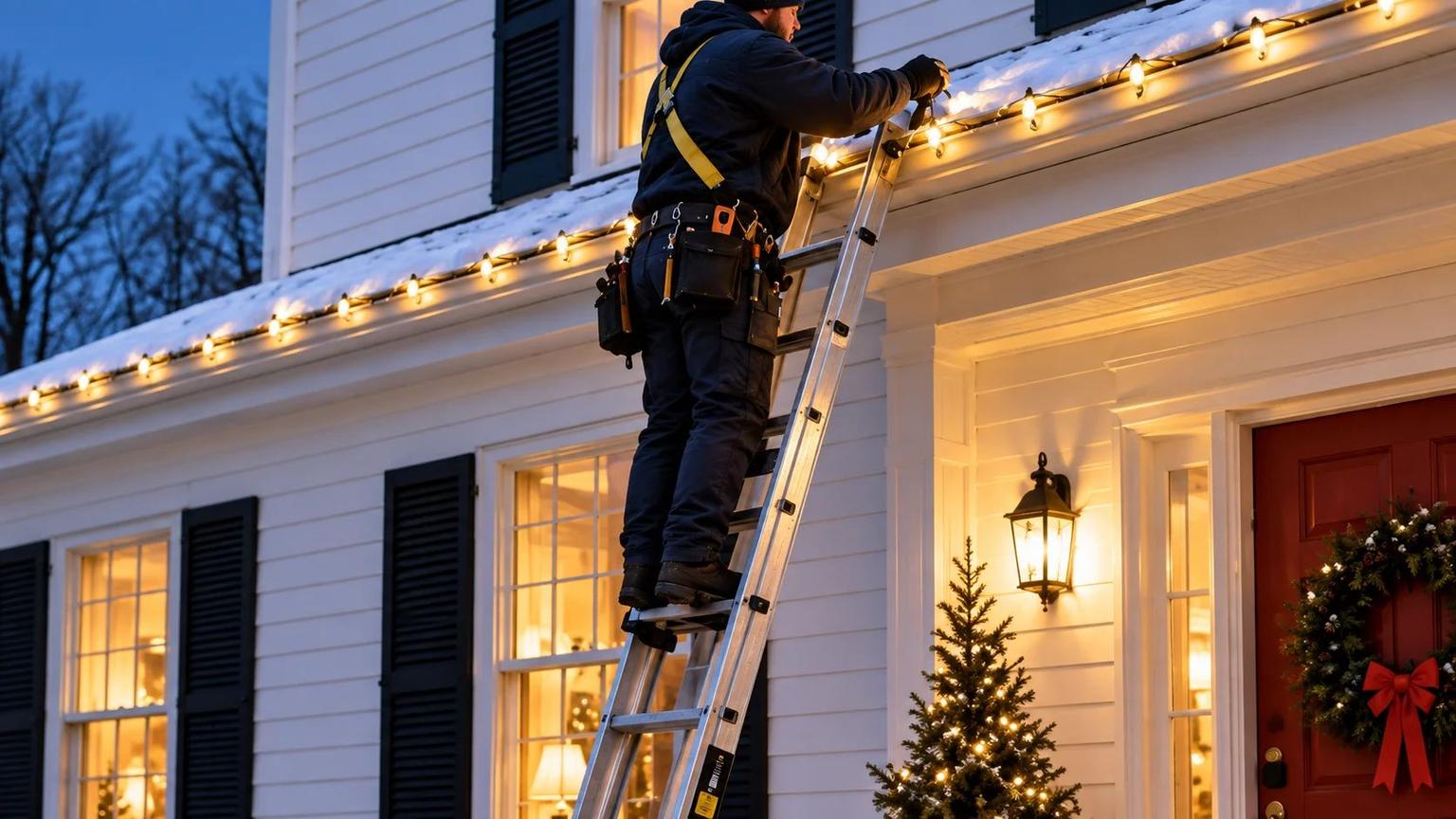
Start by unplugging everything. Turn off the power, disconnect all connections, and then work through one section at a time. On a dry day, take down one run, move your ladder when needed, and release each clip before going to the next spot.
Tugging on the wire to free a stuck clip can crack the insulation or loosen a connection.
It’s a lot like taking earbuds out of a pocket: if you yank, something usually pays the price. Set each section aside before moving on, and check the mounting points as you go for loose clips or any residue left behind.
Check for Damage Before Packing Anything Away
Before you wrap anything, sort out any strands with damage. Look for cracked insulation, broken bulbs, rusted or corroded plugs, and damaged clips. It also helps to check places where the wire bends hard near plugs or connectors. That’s often where wear shows up first.
If a strand has visible damage, set it aside instead of tossing it back into the storage bin. Mixing bad sets with good ones makes it much easier to miss a problem next season.
Store Lights in a Cool, Dry, Labeled Setup
Wrap each strand loosely so the wire doesn’t stay under stress for months. Label each bundle by location, like "front roofline" or "porch railing," so putting them back up next season takes less guesswork.
Store the lights indoors in a cool, dry place.
Conclusion: A Simple Rule for Taking Down Christmas Lights
A simple rule of thumb: take Christmas lights down by January 6, and treat the rest of January as the outer limit.
If bad weather gets in the way, don't force it. Wait for a dry, calm day so you can take them down safely. Professional installers such as ViewCrew Services follow this same principle with their Christmas lights installations, scheduling around safe weather windows rather than a fixed date.
FAQs
What if bad weather lasts past January?
If bad weather drags on past January, put safety first and wait for a dry, mild day to take down your holiday lights.
Trying to remove them in freezing temps, snow, or ice can lead to falls or damage to your home. Check your local forecast. If rough weather sticks around, it's safer to leave the lights up a bit longer until conditions get better.
Can leaving lights up too long damage my home?
Yes. Leaving Christmas lights up for too long can wear down parts of your home, especially on the outside.
Rain, snow, wind, and sun can all take a toll. And the clips, hooks, or nails used to hold lights in place can trap moisture or put stress on surfaces over time. That can lead to worn sealant, moisture issues, and damage around siding or window frames.
Taking the lights down on time helps cut down on that wear.
How should I store Christmas lights after removal?
Professional services may include removal and storage as part of a full installation package. That means one less thing to deal with after the season ends. It also helps make sure your lights come down safely and stay organized for next year.
If you handle storage on your own, keep the lights clean, dry, and neatly coiled. A little care here goes a long way and can help prevent tangles, broken bulbs, and worn wires. For storage details tied to your setup, check with your service provider.