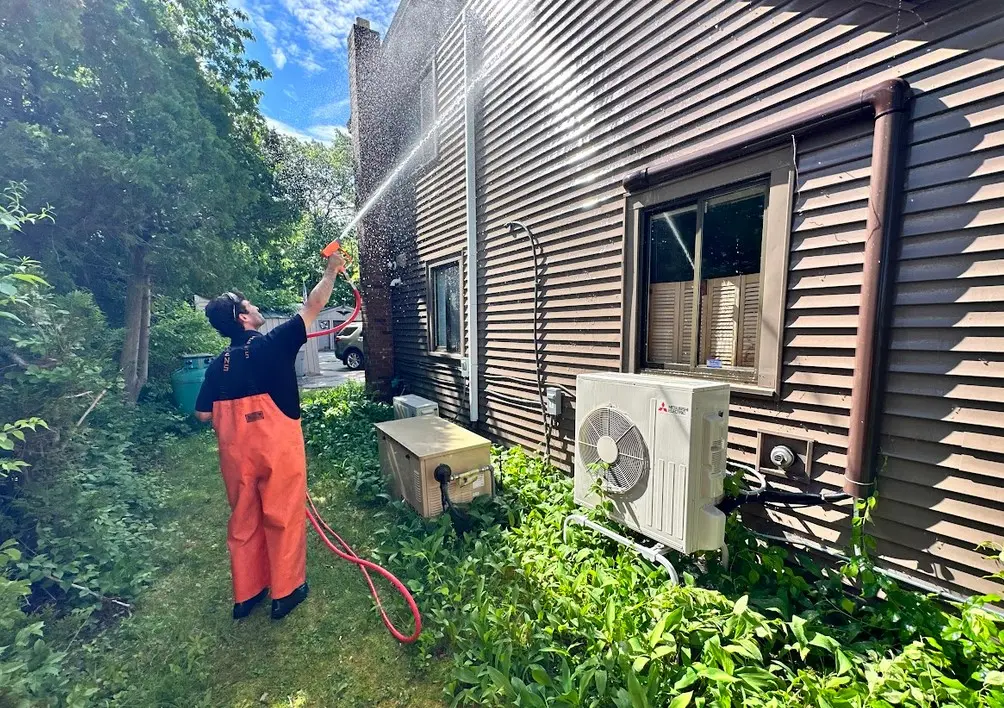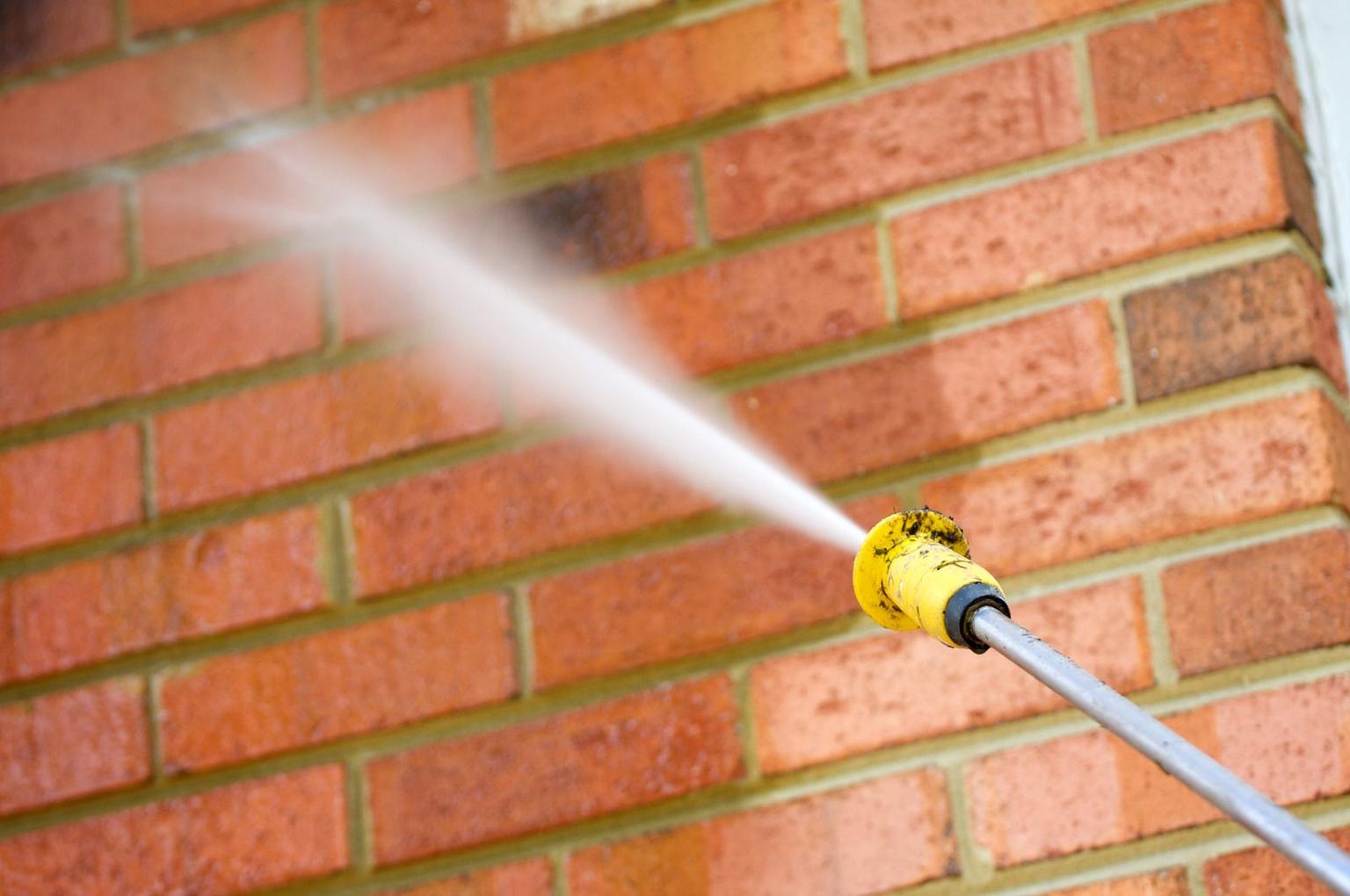
Most houses should be washed about once a year, but some need it every 6–12 months and others can wait 2–3 years.
Your schedule depends on four main things: siding type, shade, moisture, and visible dirt or algae. Homes in humid, shady, or coastal spots usually need washing sooner. Homes with more sun and less tree cover can often go longer.
Here's the short answer:
- Start with once a year
- Wash every 6–12 months if your home stays damp or shaded
- Wash every 12–18 months for many homes in places like New England
- Wash every 2–3 years if your home gets lots of sun and stays fairly clean
- If you see mold, moss, algae, streaks, or dull siding, it's time to clean it
- Spring and fall are usually the best times
- Try to wash before winter, since freeze-thaw cycles, salt, and trapped grime can make stains worse
About 1 in 3 U.S. homes has moisture or mold issues in some part of the property, according to housing and health data. That helps explain why shaded siding can get dirty fast. The right plan is simple: check your exterior at least twice a year and adjust based on what you see, or bring in a professional house washing service such as ViewCrew Services to assess siding type, shade, and moisture exposure directly.
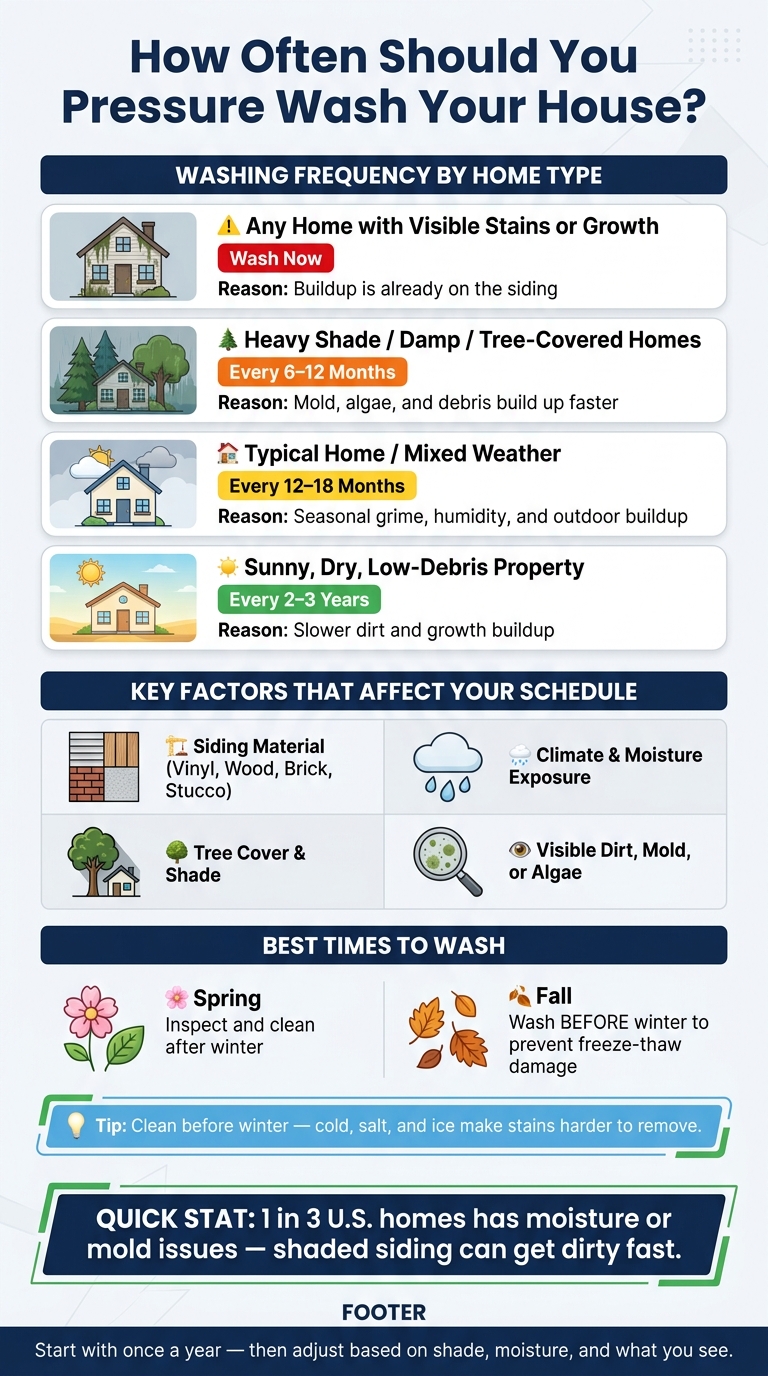
How Often Should You Pressure Wash Your House? A Quick Guide
How Often Should You Power Wash Your Home Exterior
sbb-itb-238bf3c
Quick Comparison
| Home condition | How often to wash | Main reason |
|---|---|---|
| Heavy shade, lots of trees, damp areas | Every 6–12 months | Mold, algae, and debris build up faster |
| Typical home in mixed weather | Every 12–18 months | Seasonal grime, humidity, and outdoor buildup |
| Sunny, dry, low-debris property | Every 2–3 years | Slower dirt and growth buildup |
| Any home with visible stains or growth | Wash now | Buildup is already on the siding |
The main point: don’t guess. Use annual washing as the baseline, then shorten or stretch the timing based on your home’s exposure.
What Affects the Right Washing Schedule for Your Home
A once-a-year plan is a good starting point. But your home doesn’t wear evenly. Some surfaces get hit harder by shade, damp air, tree debris, and plain old grime. That’s why the right washing schedule often changes from one house to the next.
Siding Material: Vinyl, Wood, Fiber Cement, Brick, and Stucco
Siding material plays a big role in both how often you should wash and how gentle you need to be.
Vinyl siding should be cleaned with low pressure to remove mold, moss, and algae safely. Wood siding usually needs closer attention because moisture can lead to rot, mold, and mildew. Keeping seals and caulking in good shape also matters. In most cases, both vinyl and wood should be washed every 6–12 months.
Fiber cement, brick, and stucco don’t always follow the same schedule. With these materials, it often makes more sense to wash when you start to see dirt, algae, mildew, or staining show up.
Climate, Tree Cover, Shade, and Moisture Exposure
Shade and moisture can speed things up fast. Homes with more shade, nearby trees, or frequent moisture tend to develop mold and moss sooner. Tree cover can also leave behind pollen, sap, and damp debris that sticks around longer than you’d expect.
When those conditions are present, visible staining often shows up earlier. So if one side of your home stays damp or rarely gets sun, it may need washing well before the rest of the house.
Visible Buildup Means It Is Time to Wash
Sometimes the clearest schedule is right in front of you. Mold, moss, algae, and a dull film of dirt all mean washing is overdue, no matter when you last cleaned.
Pay extra attention to spots that are easy to miss, like:
- Shaded walls
- The underside of overhangs
- Areas behind shrubs or near downspouts
If growth comes back within a few months of your last wash, that usually means your home needs a shorter cleaning cycle.
How Often to Wash Your House Based on Home Type
Use these ranges to line up your cleaning schedule with how much your home deals with dirt, shade, moisture, and debris. Those conditions make a big difference in how fast grime starts to show up.
Every 6–12 Months for High-Exposure Homes
If your home sits under mature trees or has walls that rarely get direct sun, plan to wash it every 6 to 12 months. Damp, shaded areas tend to hold moisture, which gives mold, moss, and algae more room to build up fast. Washing on this schedule helps stop that buildup before it settles in.
Every 12–18 Months for Many New England Homes
For many homes in New England, every 12 to 18 months is a solid baseline. Humid summers, fallen leaves, and freeze-thaw cycles can make siding look dirty sooner. It also helps to clean before winter, since that can help protect exterior surfaces from salt damage and cold-weather wear.
Every 2–3 Years for Lower-Exposure Properties
Homes with good sun exposure, little tree cover, and not much visible buildup may be fine going 2 to 3 years between washes. Even then, it’s smart to check the outside once or twice a year, especially around window sills, overhangs, and downspouts. For most homes, spring and fall are the best times to wash, especially before winter grime starts to set in.
When to Schedule Exterior House Washing
Once you know how often to wash your home, the next step is timing. For most homes, spring or fall makes the most sense - ideally before winter weather, salt, and ice give dirt more time to stick around and get worse.
Spring and Fall Are Usually the Best Times
Spring is a smart time to inspect your exterior, and fall is usually the best time to wash before winter weather arrives. That schedule does more than clean things up. It also gives you a chance to catch small exterior problems before freezing temperatures turn them into bigger repairs.
Do Not Wait for Winter to Make Staining Worse
It’s best to clean before winter hits. Cold weather, salt, and ice can make grime harder to remove, and moisture trapped in siding can lead to rot, mold, and mildew.
Book your exterior wash before winter weather sets in so dirt and buildup don’t sit on your siding through the harshest months of the year.
Conclusion: Pick a Schedule Based on Exposure, Not Guesswork
There's no one-size-fits-all schedule for every home. A good place to start is once a year, then adjust based on how much exposure your siding gets.
In humid, shaded, or tree-covered areas, professional house washing services such as ViewCrew Services are often needed every 6–12 months. In sunnier, drier spots, every 2–3 years is often enough. The main things that shape that timing are shade, moisture, and how exposed the siding is.
The clearest sign is what you can see. If the siding looks dull, streaked, or discolored, it's time to wash it. And before winter matters most, since cold, salt, and freeze-thaw cycles can make buildup tougher to remove.
If you're not sure, schedule an exterior evaluation before winter.
FAQs
How do I know if my house needs washing sooner than once a year?
If you spot mold, mildew, algae, dirt buildup, or stains, your house may need a wash sooner than the usual once-a-year schedule. Shaded spots tend to hold moisture, so they often collect organic growth faster and may need more frequent attention.
Cleaning those areas right away can help protect your siding and other exterior surfaces from long-term wear. That matters even more before cold weather sets in, when ice and salt can make existing grime harder on your home.
Does my siding type affect how often I should pressure wash?
Yes. The type of siding on your home plays a big part in how it should be cleaned.
Delicate surfaces like vinyl, stucco, and wood usually do best with soft washing. This method uses low pressure and biodegradable cleaning solutions to remove organic buildup without causing damage.
Tougher exterior materials may be able to handle other cleaning methods. Since each siding type has its own weak points, a professional evaluation can help you choose the right approach and avoid harming the surface.
What time of year is best to wash my house?
Spring is usually the best time to wash your house. It clears away grime, salt, and debris that piled up over the winter and gets your home set for warmer weather.
It also makes sense to clean the exterior before cold weather comes back around, since winter weather, ice, and salt can be tough on outside surfaces.