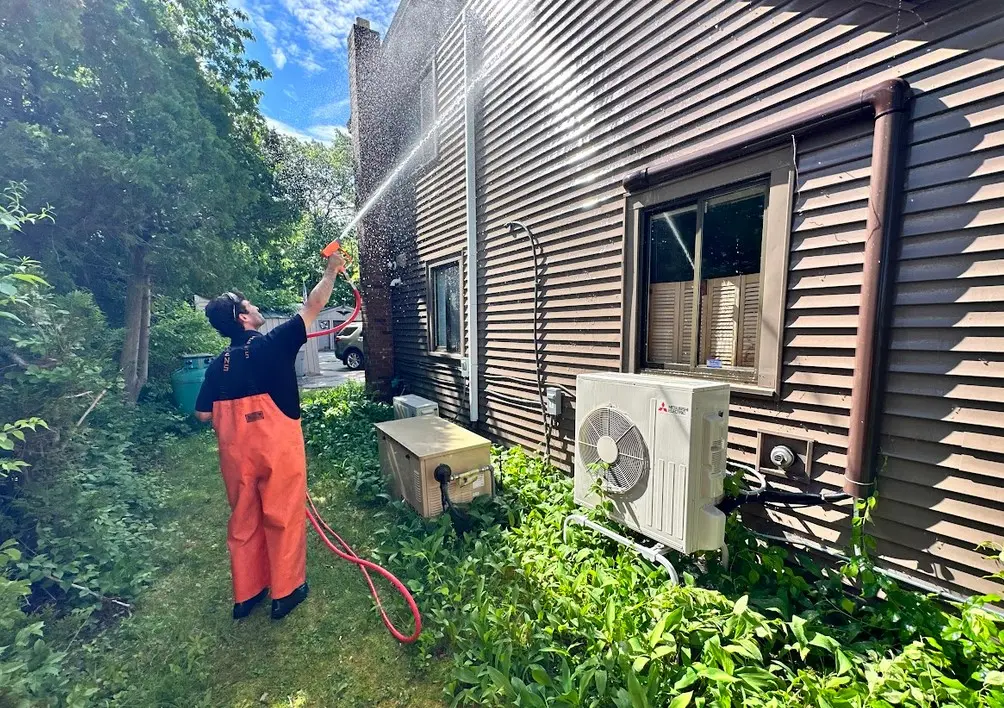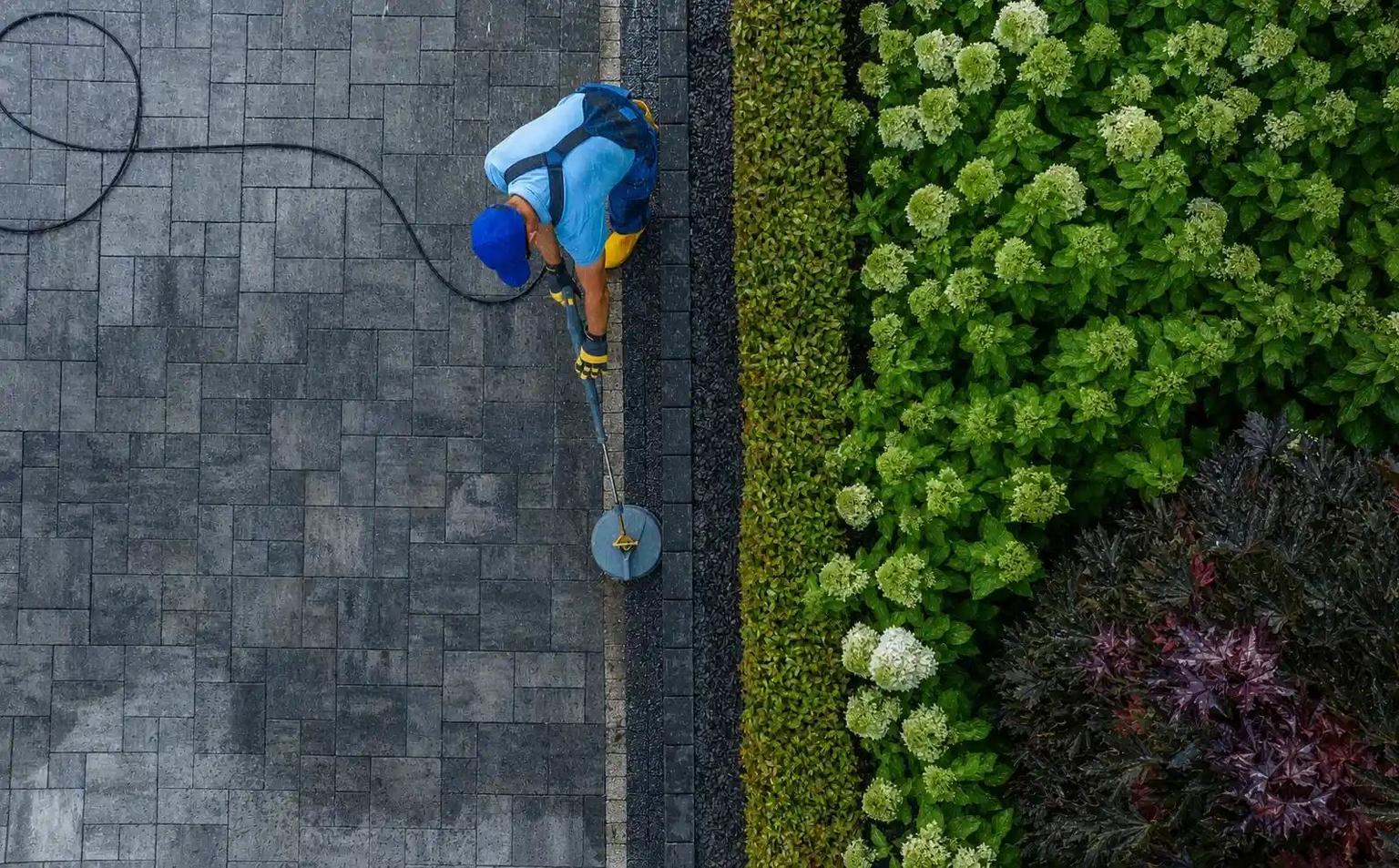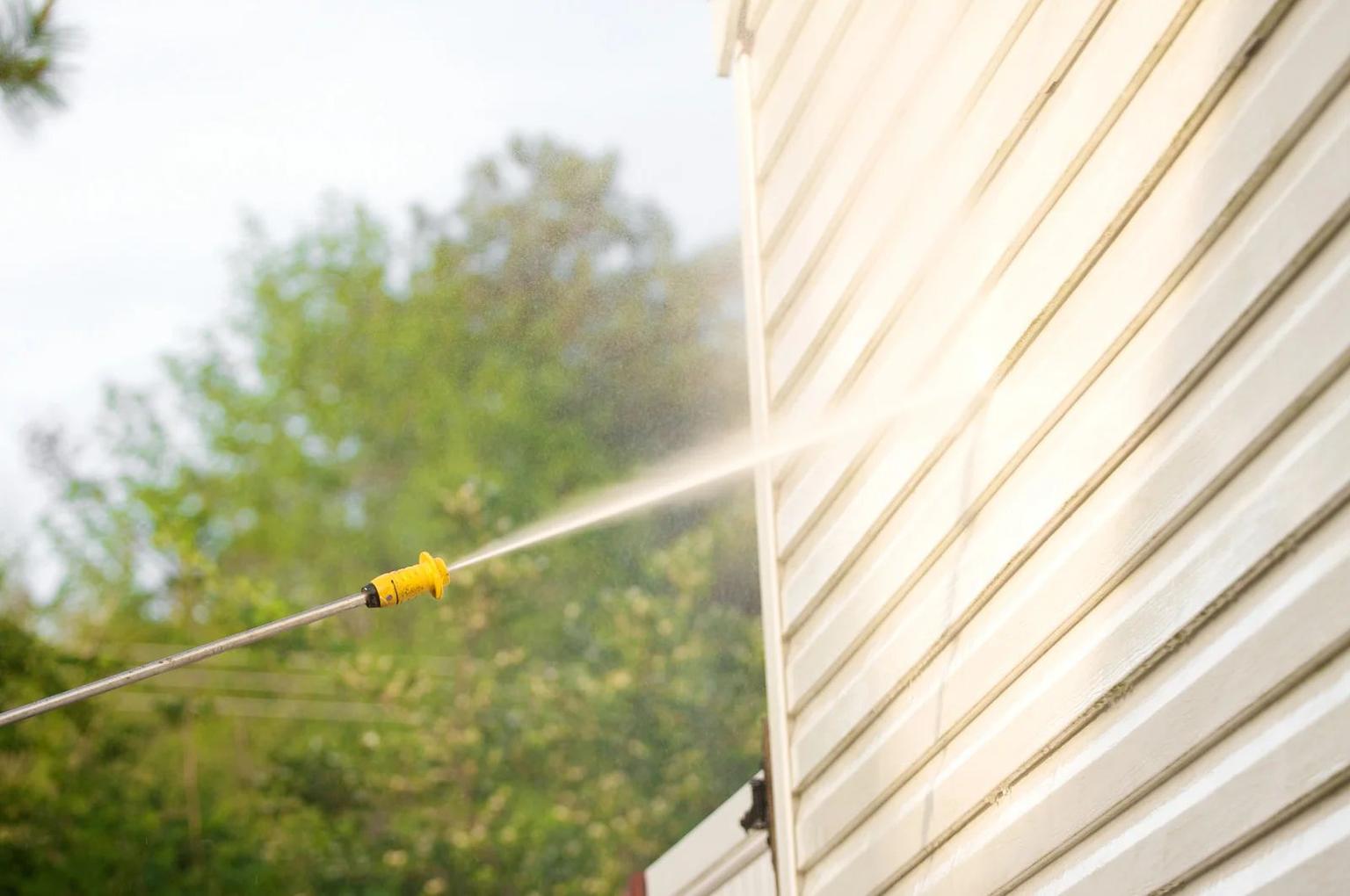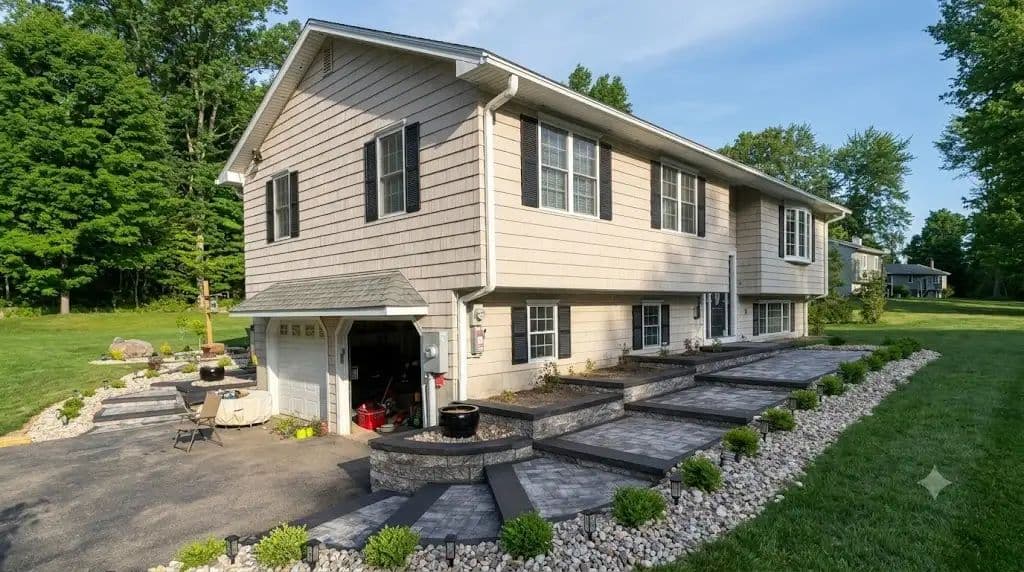
Most houses should be washed every 12 to 24 months, but damp, shady, or salty conditions can cut that to 6 to 12 months.
Your best house cleaning schedule depends on siding type, shade and moisture, and how fast grime shows up. Vinyl and metal often need cleaning about every year, wood and stucco need a gentle wash every 1 to 2 years, and brick or stone can often wait 2 to 3 years if buildup stays light. If you spot green algae, black streaks, chalky film, or slippery walkways, your house is due sooner.
Here’s the short answer:
- Most homes: every 12 to 24 months
- Humid, shaded, tree-covered homes: every 6 to 12 months
- Dry, sunny, open lots: every 18 to 24 months
- Coastal homes or houses near busy roads: about once a year
- Brick and stone: often every 2 to 3 years
- Wood, stucco, and fiber cement: use soft washing, not high pressure
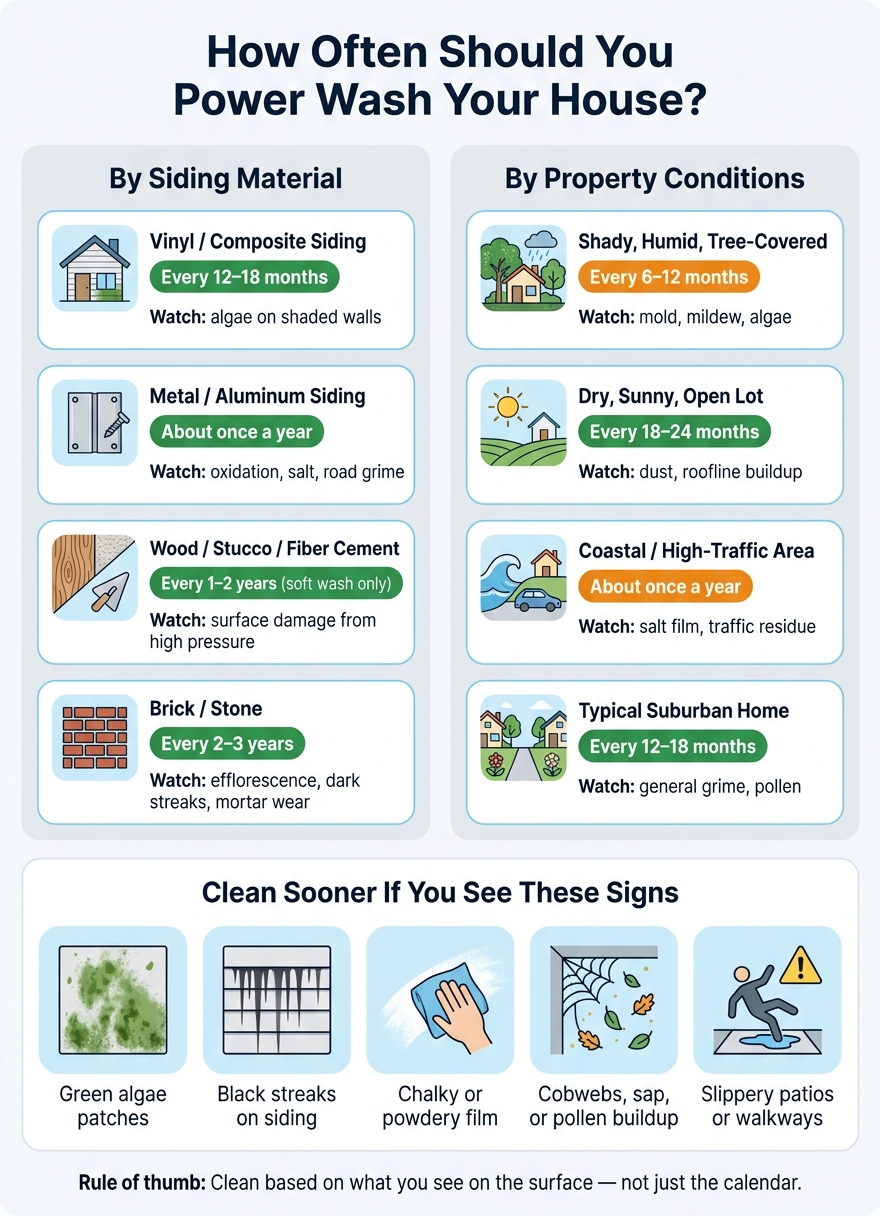
How Often Should You Power Wash Your House? A Quick Reference Guide
How Often Should You Power Wash Your Home Exterior
sbb-itb-238bf3c
Quick Comparison
| Home condition or material | Usual wash timing | Main thing to watch |
|---|---|---|
| Vinyl or composite siding | Every 12–18 months | Dirt, algae on shaded walls |
| Metal or aluminum siding | About once a year | Oxidation, salt, road grime |
| Wood, stucco, fiber cement | Every 1–2 years | Surface damage from high pressure |
| Brick or stone | Every 2–3 years | Efflorescence, dark streaks, mortar wear |
| Shady, damp, humid property | Every 6–12 months | Mold, mildew, algae |
| Dry, sunny, open property | Every 18–24 months | Dust, roofline buildup |
| Coastal or high-traffic area | About once a year | Salt film, traffic residue |
The main rule is simple: clean based on what shows up on the surface, not just what the calendar says.
How often to wash based on siding material
Siding material gives you the starting schedule. From there, adjust based on shade, moisture, and how much grime builds up.
Vinyl, metal, and composite siding
Wash vinyl and composite siding every 12 to 18 months. Wash metal and aluminum siding once a year to clear off oxidation, dust, and grime.
Stick with soft washing: low pressure plus detergent. Start by checking shaded walls, since they usually get dirty first. Metal siding may also need cleaning sooner if it’s exposed to coastal salt air, road dust, or oxidation.
Wood, stucco, and fiber cement: gentle washing every 1–2 years
Use soft washing every 1 to 2 years. High pressure can damage wood, stucco, and fiber cement.
A plain rinse usually isn’t enough. Use a cleaning solution that kills algae and mildew instead of just washing the surface. In humid states like Georgia or North Carolina, porous materials such as stucco and wood may need annual cleaning to help stop permanent staining from organic growth.
Brick and stone: every 2–3 years unless buildup appears sooner
Clean brick and stone every 2 to 3 years. Move that up if you spot efflorescence, algae, black streaks, or slippery surfaces.
Keep pressure below 1,000 PSI to protect mortar joints.
Material sets the baseline, but climate and site exposure often push the timing earlier.
How climate, shade, and moisture affect your cleaning schedule
Your siding material gives you a starting point. After that, the local conditions around your home can push the timing up or down. A house that stays damp, shaded, or exposed to salt and grime will usually need washing sooner than one that gets lots of sun and airflow.
Humid, shaded, and tree-covered homes: wash every 6–12 months
Shaded walls stay wet longer after rain. And that extra moisture gives mold, algae, and mildew the conditions they need to spread. Add sprinklers that hit the siding, gutters that overflow, or a slope that keeps the area damp, and the problem gets worse fast.
Trees can add to it too. Overhanging branches drop sap, pollen, and leaf residue, which cling to siding and speed up staining. In many cases, buildup shows up on shaded walls months before it appears on the rest of the house. If your home fits this pattern, plan to wash it every 6 to 12 months.
Dry, sunny, and open properties: washing every 1–2 years may be enough
Homes in full sun with open exposure often stay cleaner for longer. In many cases, you can wait 18 to 24 months between washes. In these spots, dust and sun-related wear tend to be a bigger issue than algae or mildew.
Still, it’s smart to check the siding once a year, especially after a dry summer. Look closely at low-airflow corners and the area near the roofline. Those spots can start showing buildup before the rest of the house does. If you see streaks or residue, don’t wait for the planned date - wash sooner.
Coastal air, road salt, and traffic grime: when to clean more often
Coastal air, winter road salt, and grime from heavy traffic can leave a stubborn film on siding. That usually means annual washing is the safer schedule. Some homes in high-exposure areas may need cleaning even sooner.
The main rule is simple: if buildup shows up before your next planned wash, go by what you see on the surface - not just the calendar.
Signs your house needs washing sooner
Your schedule is a guide. What you see on the house matters more. If the calendar says “wait,” but the siding looks dirty or stained, trust the surface. A quick walk around your home every three months helps you spot buildup before it gets worse, especially in trouble spots.
Mold, mildew, algae, and dark streaks on siding
Green patches and black streaks are the biggest red flags. Algae often shows up first on shaded or north-facing walls, where moisture sticks around longer. Mold and mildew may look like dark specks or long streaks that slowly spread. If you see green or black growth on the siding, wash it now instead of waiting for the next planned cleaning.
Dirt, pollen, cobwebs, sap, or chalky residue
Sometimes the signs are less dramatic, but still clear. Siding that looks dull, gray trim, cobwebs, tree sap, or a chalky film all point to buildup.
Here’s a simple test: run your finger across the siding. If it leaves a clean line, you’re likely looking at dust or pollen. If you see a white powdery mark, that usually means oxidation is starting to show.
Slippery patios, steps, and walkways
This doesn’t stop at the house itself. Driveways, patios, steps, and walkways need attention too, since algae and moss can make them slick when it rains. In shady spots, moss can also push up paver joints and lead to surface damage if it sits too long. Algae and mold can produce acidic byproducts that etch concrete and wear down grout lines over time.
How to avoid overwashing and pick the right schedule
Once you know your house needs cleaning, the next step is simple: pick the lightest schedule that still gets the job done.
When washing too often causes damage
More washing isn't always better.
Power washing too often can wear down siding, paint, and masonry over time. If the pressure is used too often, water can get pushed behind vinyl panels and into wall cavities. On wood, it can rough up the surface and force water into seams. On brick and stucco, it can open tiny cracks that let water move into the structure. On driveways and patios, repeated washing can wear down the surface texture, which makes it easier for grime and other contaminants to stick later.
How to decide between annual and every 2–3 years
The best schedule depends on two things: your siding type and how much exposure your home gets. In plain English, use the shortest interval that stops buildup before it gets out of hand.
| Condition | Recommended Frequency |
|---|---|
| Humid, shaded, or coastal property | Every 6–12 months |
| Typical suburban home, moderate sun | Every 12–18 months |
| Dry climate, open lot, minimal vegetation | Every 2–3 years |
If algae or dark streaks come back before 12 months, shorten the interval instead of turning up the pressure.
Conclusion: Match your cleaning schedule to your house, not a fixed rule
Match the schedule to your home's exposure, not just the calendar.
If you notice mold, algae, slippery walkways, or heavy dirt buildup, that's your signal to clean. A fixed once-a-year rule doesn't always fit. Some homes need attention sooner. Others can go longer without trouble. ViewCrew Services bases its house washing recommendations on these same exposure signals rather than a flat annual schedule.
FAQs
What’s the difference between power washing and soft washing?
Power washing uses high-pressure water to blast away dirt and grime. That makes it a better fit for tough surfaces like concrete driveways and stone patios.
Soft washing uses low pressure - usually under 500 PSI - along with cleaning solutions to get rid of mold, algae, and mildew. It’s the safer option for more delicate surfaces, including painted wood, stucco, vinyl siding, and roofs.
Can I wash my house too often?
Yes. Washing too often, especially with too much pressure or the wrong approach, can crack vinyl, dent aluminum, strip paint, and push water behind siding.
To avoid extra wear, use the lowest pressure that gets the job done or a gentle soft-wash method. And instead of sticking to a fixed schedule, clean based on your home’s condition and any visible dirt or buildup.
Should I wash before repainting or sealing?
Yes - you should always wash your home exterior before repainting or sealing.
Cleaning first helps new paint or sealant stick the way it should. Dirt, grime, and organic growth can get in the way and stop the coating from bonding to the surface. When that happens, the finish may peel, crack, or fail sooner than expected.
Even if you clean your exterior on a regular basis, a deep wash is still a needed prep step before you paint or seal.