No - your solar panels should not be pressure washed. A pressure washer can damage glass, strip panel coatings, force water into seals, and create roof and electrical safety risks. On top of that, many units spray at 1,500 to 3,000+ psi, while some panel guidance stays far below that range, with one cited limit near 50 psi for coating safety and another cap around 100 psi at the glass surface.
If your panels look dirty, the safer path is simple: use a garden hose, cool water, and soft tools only when needed. For bird droppings, sap, salt film, or winter grime, the cleaning method should match the buildup. And if the roof is steep, slick, high, icy, or hard to reach, homeowners should stop DIY cleaning and hire a trained cleaner instead.
Here’s the short version:
- Do not use a pressure washer on solar panels
- Do use low-pressure water for light dust and pollen
- Use mild soap and soft cloths or brushes for stuck-on residue
- Never scrape dry debris off the glass
- Call a pro for steep roofs, heavy buildup, moss, or mold
- Damage can cost hundreds of dollars per panel and may not be covered
How To Clean Solar Panels | Like a Pro!
sbb-itb-238bf3c
Quick Comparison
| Cleaning method | Safe for most homeowners? | Main risk | Best use |
|---|---|---|---|
| Pressure washer | No | Cracked glass, worn coatings, seal and moisture damage, fall risk | None for routine panel cleaning |
| Garden hose | Yes | Low when used with care | Dust, pollen, light film |
| Mild soap + soft cloth/brush | Yes | Low if non-abrasive tools are used | Bird droppings, sap, small stuck-on spots |
| Pro soft washing / pole system | Yes | Lower roof-access risk | High roofs, stubborn residue, moss, mold |
The rest of the article breaks down the risks, the safer cleaning steps, and when professional help makes more sense.
Why Pressure Washing Solar Panels Is Unsafe
Solar panels are built to sit through rain, wind, and heat. That does not mean they’re made for a tight, high-pressure stream of water.
The problem isn’t cleaning the panels. The problem is using force on a sealed surface that contains glass, coatings, wiring, and electrical parts. Several major manufacturers warn against high-pressure cleaning, and some even leave it out of warranty coverage. And the risk isn’t only the kind of damage you can spot right away. In many cases, the wear shows up later as lower power output.
How High Pressure Damages Glass, Coatings, and Seals
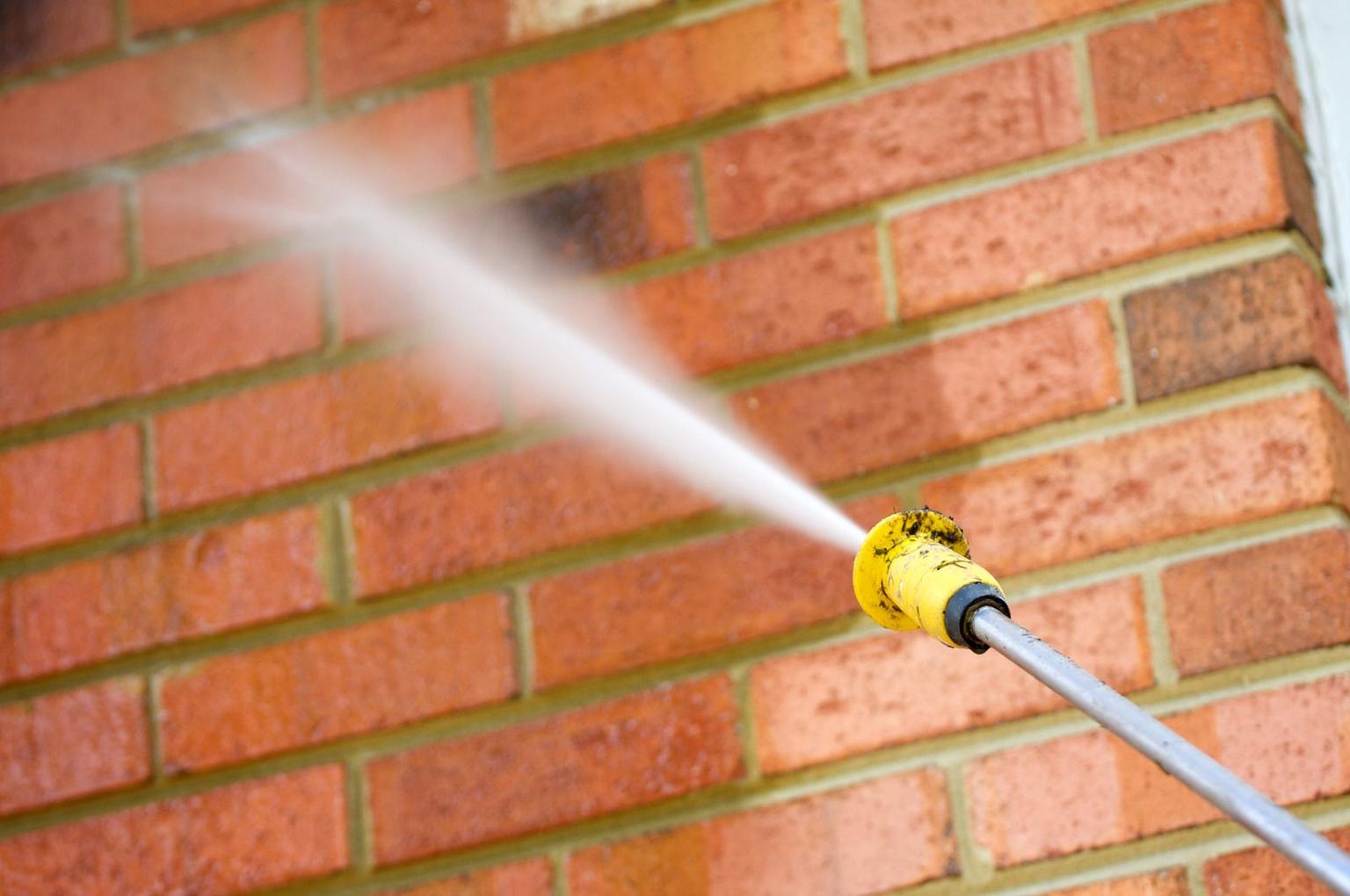
Solar panel glass is tough enough to deal with hail. But a pressure washer is a different kind of stress. At close range, a strong water jet can flex the panel and strain the cells below the glass. That can lead to microcracks, which may cut output over time.
The same goes for anti-reflective coatings. These thin layers help panels take in more sunlight instead of bouncing it away. If the coating gets damaged, the panel can reflect more light and make less electricity. One technical note says pressure above 3.5 bar, or about 50 psi, can harm anti-reflective coatings on mono-silicon panels. That matters because many consumer pressure washers run between 1,500 and 3,000+ psi - way above that level.
This kind of damage can be sneaky. Microcracks and worn coatings may chip away at performance long before anything looks wrong from the ground. High-pressure spray can also push water past frame edges and seals. Once that happens, moisture may reach the junction box or wiring connections, which can lead to corrosion and long-term reliability problems. That’s why the cleaning method matters just as much as the dirt.
Safety Risks for Homeowners on Roofs and Near Electrical Equipment
There’s also the human side of this.
Most home solar panels are mounted on the roof, so cleaning them usually means working at height. Once the roof gets wet, it can turn slick fast. Add a pressure washer hose, kickback, and a forceful spray, and the odds of slipping or falling climb.
Rooftop cleaning raises fall risk, and live DC parts can be damaged by repeated spray.
Why Very Low Pressure Is Still Not a Safe Option
Some manufacturers do give upper limits. For instance, Risen Energy sets a cap of 700 kPa, or about 100 psi, at the glass surface. On paper, that may sound doable. In practice, it’s hard for most homeowners to control pressure that tightly, especially across different nozzles, spray angles, and distances.
So even when rinsing is allowed, the margin for error is small. That’s why a gentler approach makes more sense for DIY cleaning. Low-pressure rinsing and soft tools are the safer option.
Safe Ways to Clean Solar Panels at Home
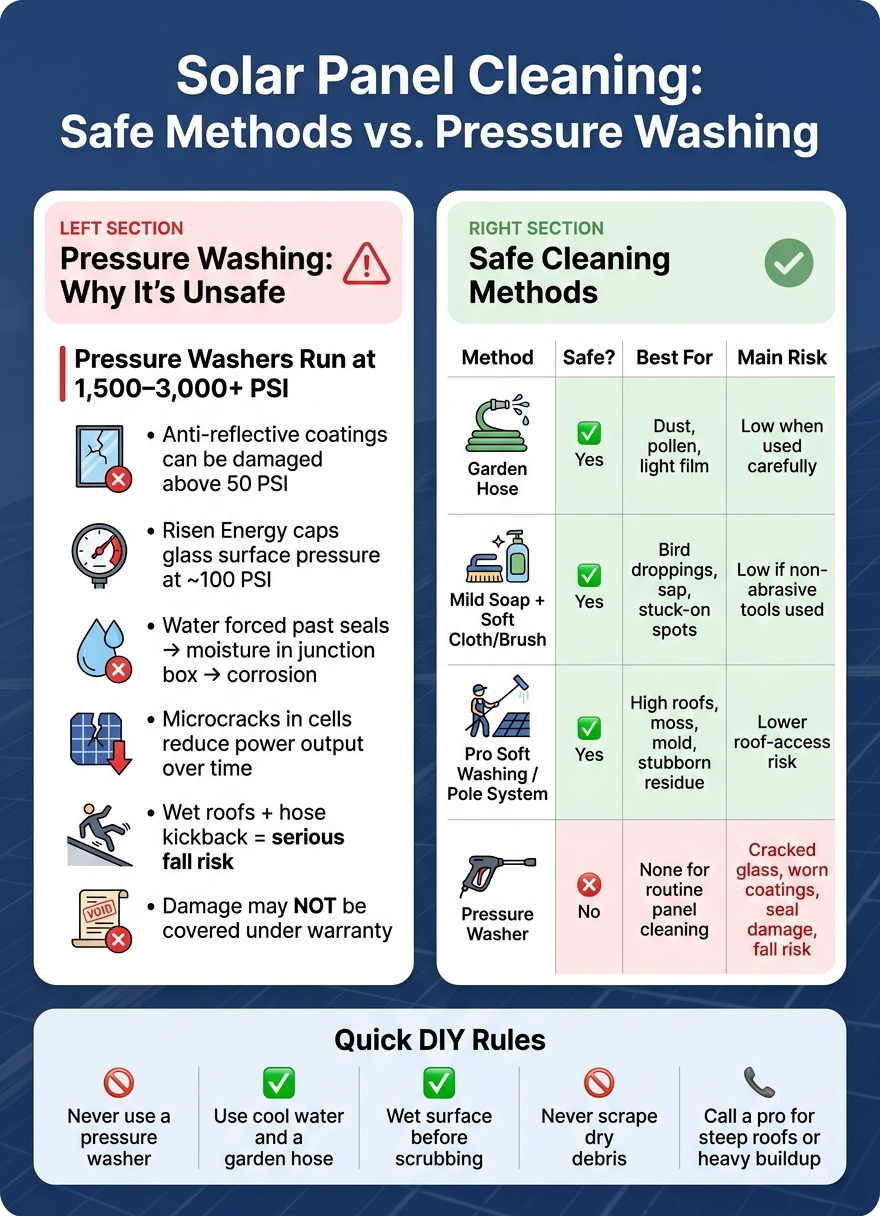
Solar Panel Cleaning Methods: Safe vs. Unsafe at a Glance
For routine buildup, low-pressure water and soft tools are usually all you need.
Most home solar systems need cleaning once or twice a year. If you live near the coast, deal with heavy pollen, or have lots of birds around, you may need to clean them more often. Dust and pollen usually come off with a simple rinse. Stuck-on messes take a little more hands-on cleaning.
Use a Garden Hose, Cool Water, and Mild Soap
For dust and light film, rinse the panels with a garden hose using cool water. If water alone doesn’t do the job, mix in a small amount of mild dish soap.
If a few spots still won’t come off, that’s when soft tools make sense.
Remove Stuck-On Debris With Soft Brushes and Non-Abrasive Tools
For bird droppings, use a soft-bristle brush, sponge, soft cloth, or a soft toothbrush for corners and seams. Wet the surface with your soap solution before you scrub.
Never scrape dry glass. Always wet the surface first.
If you use a squeegee, pull it in one direction and lift it between strokes. Go easy near frame edges and gaskets. Skip abrasive scrub pads and rough-textured tools, since they can damage panel coatings.
When to Stop DIY Cleaning
DIY cleaning stops making sense on steep, high, or hard-to-reach roofs, or during icy or windy weather. Heavy buildup like moss or mold is a job for professional soft washing.
The best cleaning method depends on what’s sitting on the panel.
Match the Cleaning Method to the Type of Buildup
Not all buildup should be cleaned the same way. Use the wrong method, and you can damage the panel.
Dust, Pollen, and Light Surface Film
Light buildup like dust and pollen is usually the easiest to deal with. In many cases, a simple rinse with a garden hose and cool water does the job. During peak pollen season, it helps to check your panels more often and rinse them when buildup starts to show.
Bird Droppings, Sap, and Heavier Residue
Messes like bird droppings and tree sap are more of a problem. They block sunlight in small, concentrated areas and can create hot spots that put stress on the panel over time. Start by pre-soaking the area with soapy water. Then wipe it gently with a soft sponge or microfiber cloth.
Never scrape dry residue. That’s an easy way to scratch the glass coating.
If you live in a coastal area, rinse salt off on a regular basis with fresh water before it dries.
Use the right method below so you don’t scratch the glass or smear residue across the panel.
Buildup Type, Safe DIY Method, and When to Call a Professional
| Buildup Type | Likely Impact on Performance | Safest DIY Method | When to Call a Professional |
|---|---|---|---|
| Dust & Pollen | Low to moderate efficiency loss | Gentle garden hose rinse with cool water | High or steep roof, or if buildup persists after rinsing |
| Bird Droppings & Sap | High; can cause hot spots and surface damage | Pre-soak with soapy water; soft sponge or microfiber cloth | Baked-on residue or a large portion of the array is affected |
| Mineral/Salt Residue | Moderate; can lead to permanent etching | Fresh water rinse and soft microfiber cloth | Visible etching or stubborn salt film that needs deep cleaning |
| Mud or winter residue | Moderate to high | Low-pressure rinse once temperatures are above freezing | Moss or mold growth present; professional soft washing may be needed |
If buildup is spread across many panels, baked on, or tough to reach safely, stop there and call a professional.
When to Hire a Professional Instead
If low-pressure rinsing and soft brushing don't fix the problem, stop there. Pushing harder can do more harm than good.
What a Professional Does Differently
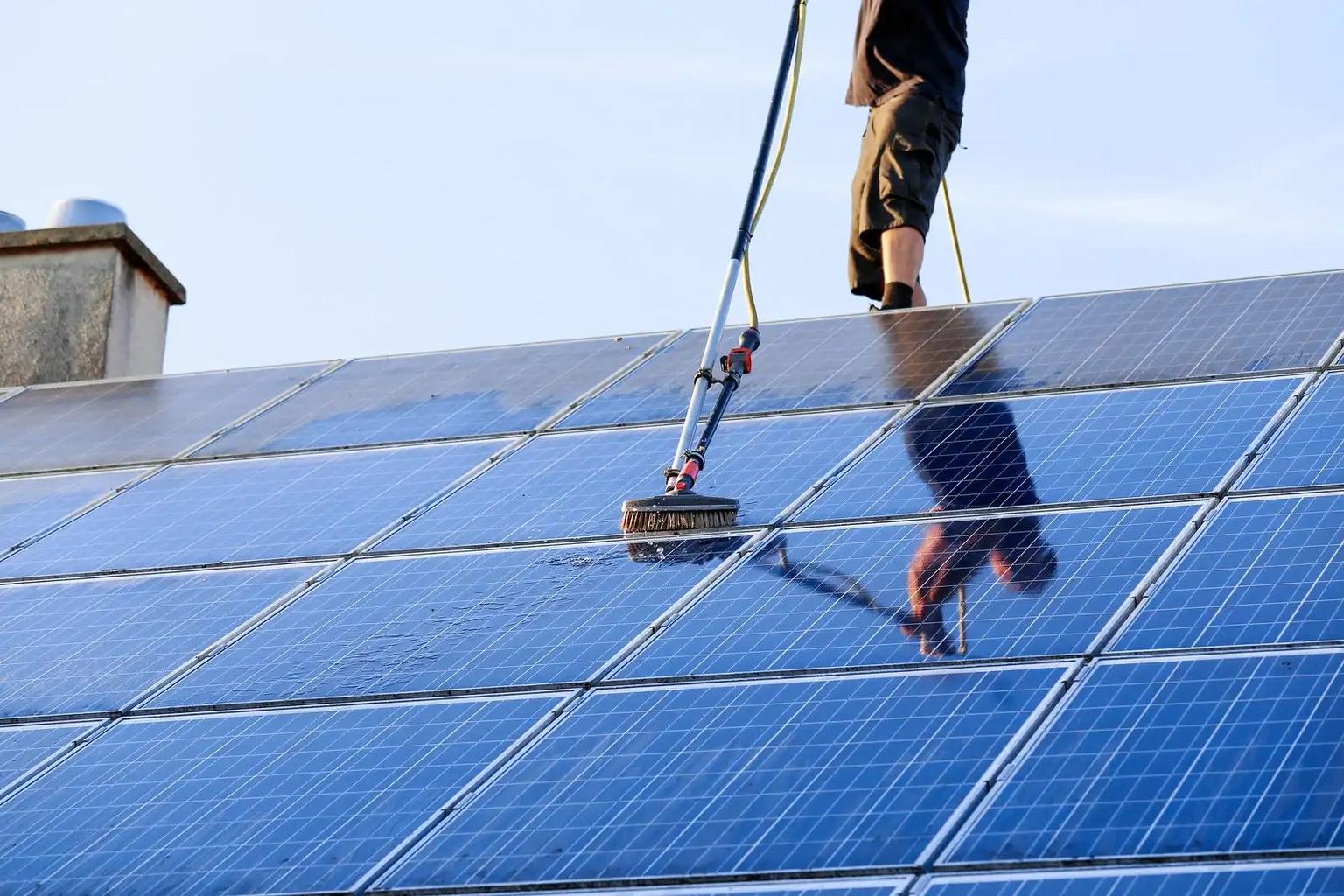
The main difference comes down to access and control. Professionals often clean from the ground or from a secure platform with water-fed poles, filtered water, and soft, non-abrasive brushes. That setup helps lower the risk of seal damage, electrical exposure, and roof falls.
This matters most when panels are hard to reach or when buildup won't come off safely by hand. Before and after cleaning, a trained technician will also do a visual check for cracked glass, lifted seals, loose mounting hardware, and signs of prior damage, so issues can be spotted early.
Steep roofs, slick surfaces, and seasonal residue can turn a simple cleaning job into a risky one fast. In those cases, it's smarter to bring in a pro.
How ViewCrew Services Helps Homeowners Avoid Costly Cleaning Mistakes

ViewCrew Services works across Massachusetts, Southern New Hampshire, and Connecticut. The company offers exterior cleaning services that include pressure washing, roof cleaning, paver sealing, and patio and deck cleaning. For solar-equipped homes, the work stays low-impact around panels and uses soft methods where pressure could be risky.
They can also look at roof pitch, panel placement, and access conditions before work starts. That gives homeowners a clearer sense of whether DIY cleaning is actually safe. If a roof is steep, hard to reach, or covered with stubborn seasonal buildup, that extra planning can help prevent costly mistakes.
For stubborn buildup or difficult roof access, professional cleaning is the safer choice.
FAQs
How often should I clean my solar panels?
Clean your solar panels on a regular basis to help maintain efficiency, extend their lifespan, and protect your investment.
There’s no fixed schedule here. The right time to clean them is when dirt, dust, bird droppings, or other debris starts to build up and block sunlight.
What kind of soap is safe for solar panels?
A simple mix of dish soap and water is usually a safe bet. Some pros also use eco-friendly, streak-free glass cleaners or special biodegradable cleaning solutions.
Whatever you use, make sure it won't harm the panel materials. If you're not sure, start with the gentlest option, like pH-neutral soap and water.
Will dirty panels lower my energy output?
Yes. Dirt, dust, pollen, bird droppings, and other debris can block direct sunlight. And when less sunlight hits your panels, they produce less electricity.
That’s why it helps to keep your solar panels clean and in good shape. A little upkeep can help you get more power from your system, protect what you paid for, and lower energy costs over time.