Yes - power washing can help before staining, but only if you use low pressure, the right tip, and give the deck enough time to dry. If you use too much force, stain can turn blotchy, peel early, or sink into damaged wood the wrong way.
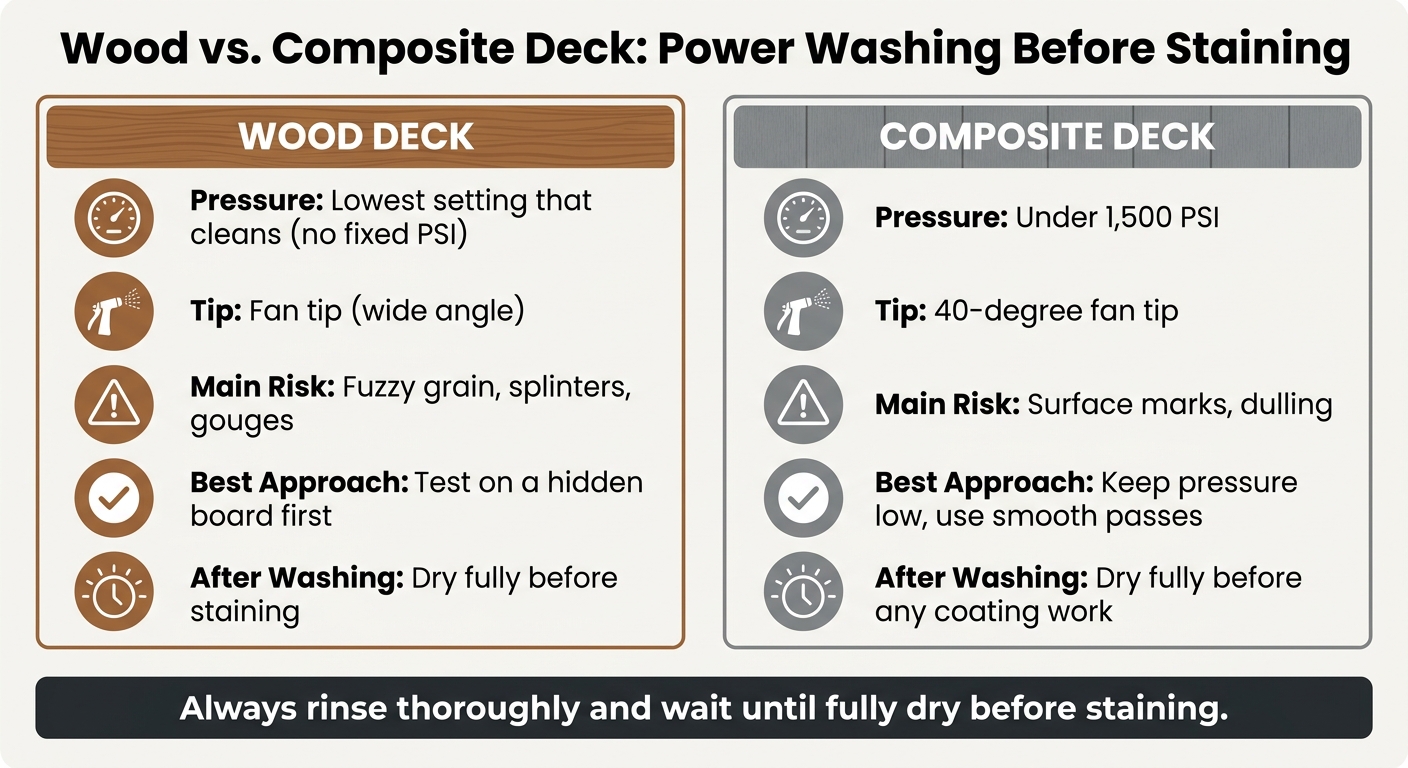
Before you stain, your goal is simple: remove dirt, mildew, algae, and loose old finish without scarring the surface. For composite decking, pressure should stay under 1,500 PSI with a 40-degree tip. For wood, use the lowest setting that cleans the boards and test a hidden spot first. After washing, wait until the deck is fully dry before staining.
Here’s the short version:
- Dirty boards block stain
- Too much pressure can rough up wood
- Composite needs lighter washing
- A fan tip is safer than a tight spray
- Rental cost runs about $70–$100 per day
- Pro washing often costs about $100–$250 total
- Miss the final rinse or stain damp wood, and the finish may fail sooner
If you want a stain job that looks even and lasts longer, the key is not hard washing. It’s careful cleaning, full drying, and good timing.
The Ultimate Deck Prep Guide for DIY Staining

sbb-itb-238bf3c
Quick Comparison
| Area | Wood Deck | Composite Deck |
|---|---|---|
| Pressure | Lowest setting that cleans | Under 1,500 PSI |
| Tip | Fan tip | 40-degree fan tip |
| Main risk | Fuzzy grain, splinters, gouges | Surface marks, dulling |
| Best approach | Test first on a hidden board | Keep pressure low and passes smooth |
| After washing | Dry fully before staining | Dry fully before any coating work |
The rest of the article breaks down which cleaning method fits your deck, what setup helps avoid damage, how to tell when the boards are dry, and when paying a pro may save time and repair cost.
Choose the right cleaning method for your deck material
Wood vs. Composite Deck: Power Washing & Staining Guide
Your deck material - and the shape the finish is in - tells you how much pressure is safe to use. The aim is simple: clean the surface without roughing it up or stripping it bare. That matters because stain needs a sound, even surface to bond well later.
If the finish is peeling, mildew is heavy, or the boards look worn, go easier than you would with a standard pressure wash.
Wood decks: use the lowest effective pressure and test first
With wood, start low and be cautious. Use the lowest effective pressure, test a hidden board first, and stop if the grain lifts or the surface fuzzes.
Composite decks need low pressure
Composite decking calls for a gentler touch. Use low pressure and a wide fan tip. Keep pressure under 1,500 PSI and use a 40-degree tip. It also helps to clean the railings and the underside, since mold and moss often build up there.
Once you know the deck can handle washing, the next step is choosing the right nozzle, pressure, and wash pattern.
Set up the washer correctly and clean with the grain
Once you've picked the safest cleaning method, the next step is setup. This is where a lot of deck damage happens. In most cases, the nozzle, wand angle, and how you move the spray matter more than raw pressure.
Use the right tools, tips, and setup for deck washing
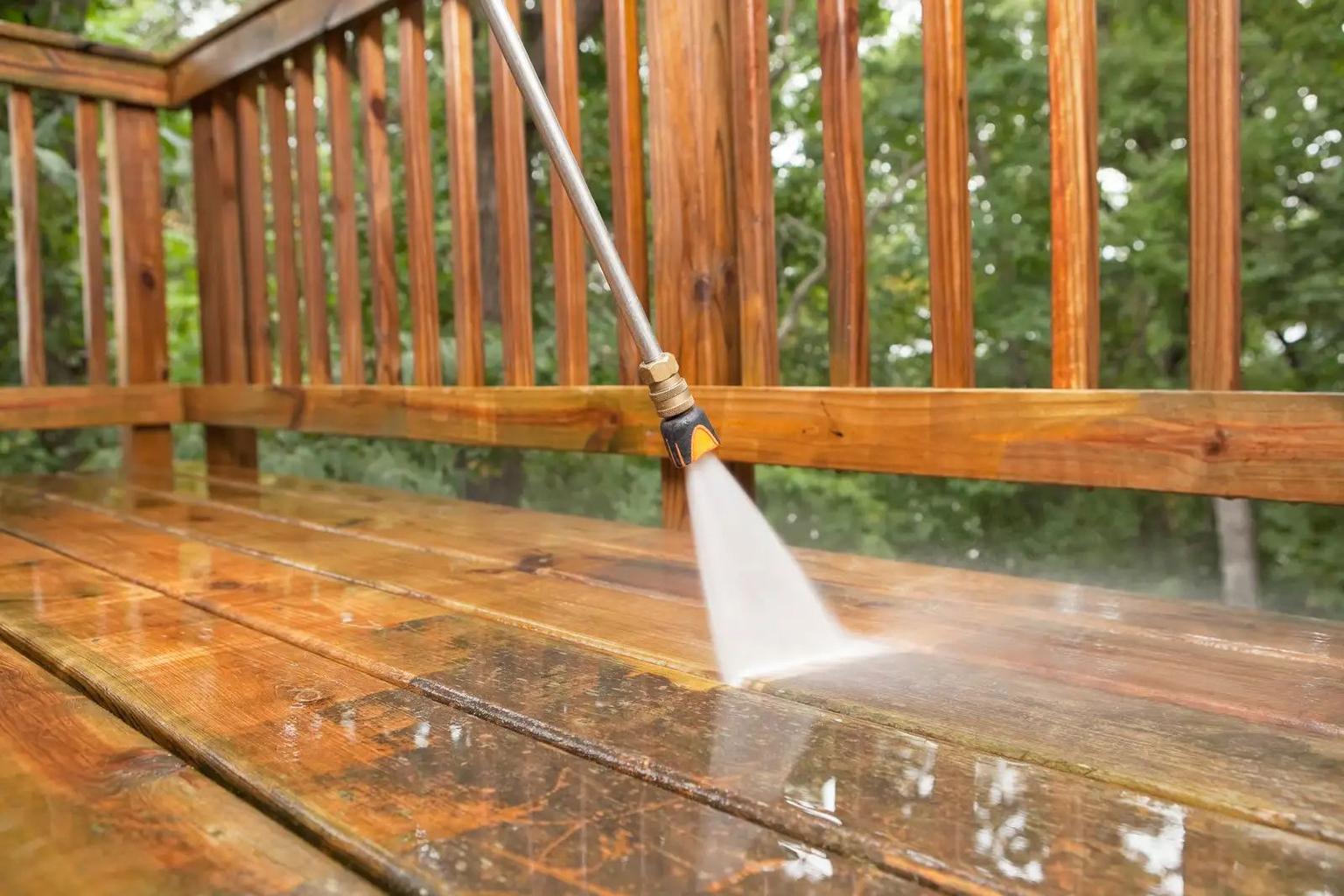
Use a fan tip and the lowest pressure that removes dirt without lifting the grain or dulling composite boards.
Follow a wash sequence that avoids streaks and gouges
After the washer is set, your wash pattern matters just as much. Work in smooth passes that follow each board, not across them. Keep the wand moving, and lift it between passes so you don't leave gouges. That steady pattern also helps stain soak in more evenly later.
Nozzle types, PSI ranges, and best uses: comparison table
Use the table below to match nozzle angle and pressure to the deck material.
Avoid damage and know when the deck is dry enough to stain
After washing, two things can still trip you up: surface damage and trapped moisture. Even if the deck looks clean, the wash can still hurt stain adhesion if it roughs up the wood, leaves cleaner behind, or locks moisture inside. And here’s the annoying part: some problems don’t show up until after the stain dries.
Washing mistakes that damage the surface before staining
Too much pressure can rough up the wood fast. It may raise the grain, leave a fuzzy surface, or even splinter the boards. When that happens, stain soaks in unevenly and the finish tends to fail sooner.
A tight spray pattern or spraying from too close can gouge the boards and leave lines across the surface. Once stain goes on, those marks often stand out even more. Hitting board edges or fastener heads head-on can also lift or split wood fibers, which often leads to peeling around the edges first.
Skipping the final rinse causes a different kind of problem. Cleaner residue can stay on the surface and block the stain from bonding well. Use the lowest pressure that still gets the job done, especially on delicate spots and areas with heavy buildup.
And don’t stain until the deck is fully dry. If the wood is still damp, the finish can trap that moisture underneath.
Common washing mistakes and their effect on stain: comparison table
Use this table as a quick check before you stain the deck.
| Mistake | What it does to the wood | How it affects stain performance | How to avoid it |
|---|---|---|---|
| Too much pressure | Raises the grain, fuzzes the surface, or splinters boards | Stain absorbs unevenly; finish fails early | Lower pressure |
| Concentrated spray (too close or narrow pattern) | Gouges wood fiber and leaves visible lines | Stain highlights damage and weak spots | Back up; use a 40-degree fan tip |
| Spraying edges or fastener heads directly | Lifts or splits vulnerable fibers | Edges peel sooner | Aim carefully; avoid direct hits on hardware |
| Skipping the final rinse | Leaves cleaner residue on the surface | Residue blocks stain adhesion | Rinse thoroughly after cleaning |
| Staining before the deck is fully dry | Traps moisture in the wood | Weakens adhesion and shortens finish life | Wait until completely dry |
DIY or hire a professional before staining
Compare cost, time, and risk before going DIY
Once you know the deck material and its condition, the next call is simple: Do the washing yourself or bring in a pro?
DIY power washing can work on a small, straightforward deck, especially if you're comfortable setting PSI and moving with the grain. But the low sticker price can be a bit misleading. By the time you add equipment rental, deck cleaner, and possible sanding if the wood gets furred during washing, the gap can shrink fast. Equipment rental alone runs about $70–$100 per day, and that still doesn't cover cleaner or repair work.
Professional deck washing usually costs $100–$250 total for a standard residential job, or around $0.30–$1.50 per sq. ft. based on the deck's size and condition. If the goal is a smooth surface that’s ready for stain, paying more up front can help you avoid a mess later.
When hiring a professional leads to better staining results
Some decks leave less room for error. Cedar, older softwood, and heavily weathered boards can get damaged fast if the pressure is too high. And if the surface ends up furred or gouged, the stain will not hide it. It will show right through.
That's where a pro can make a big difference. If pressure washing could tear up the wood fibers, professionals like ViewCrew Services can switch to soft washing instead for deck cleaning. Large or multi-level decks can also be a pain to clean evenly. Pros are more likely to cover the railings and undersides too, which are easy to skip when you're doing it yourself.
Weather matters as well. If you're working with a tight staining deadline, a narrow weather window can make scheduling a professional the safer move.
Conclusion: Clean carefully, dry fully, and stain at the right time
This choice matters because the quality of the wash affects how evenly the stain bonds. Clean the deck with care, let it dry all the way, and pick the method that leaves the surface ready for stain.
FAQs
Should I use a cleaner before power washing my deck?
Yes. It’s a good idea to use a cleaner first to remove dirt, grease, oil, and organic buildup like mold or algae.
For wood, pros often use soft washing with low-pressure water and biodegradable cleaning solutions so they don’t damage the surface. Test the cleaner on a small, hidden area first. A thorough cleaning helps the stain stick better and last longer.
How can I tell if my deck is dry enough to stain?
Your deck should be completely dry and free of frost before staining. Some coatings can go on a slightly damp surface, but most need the wood to be fully dry so the stain can stick the way it should.
After professional cleaning, drying usually takes 24 to 48 hours. Before staining, check that the surface has no moisture left. That simple step can help you avoid problems with how the finish looks and wears.
When is soft washing better than power washing?
Soft washing works best on delicate surfaces like wood, siding, stucco, and cedar shakes. High pressure can gouge, crack, or splinter these materials, so a gentler method makes more sense.
Instead of blasting the surface, soft washing uses low-pressure water and biodegradable detergents to clean away algae, mildew, and other organic buildup. It’s a safer option for areas that stay damp or shaded, where growth tends to show up more often.