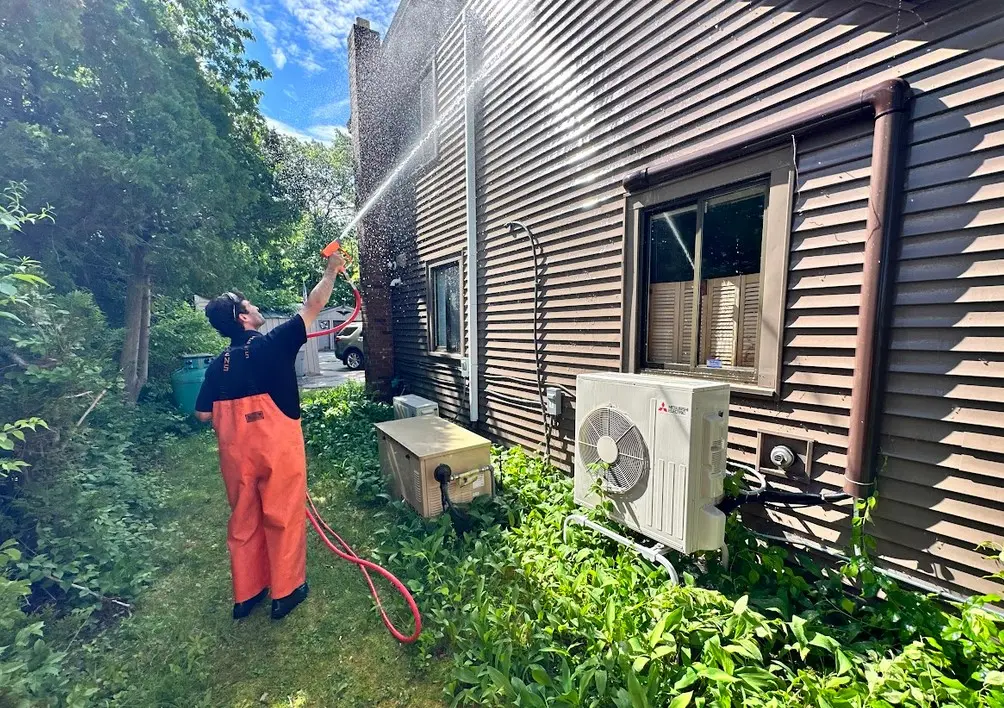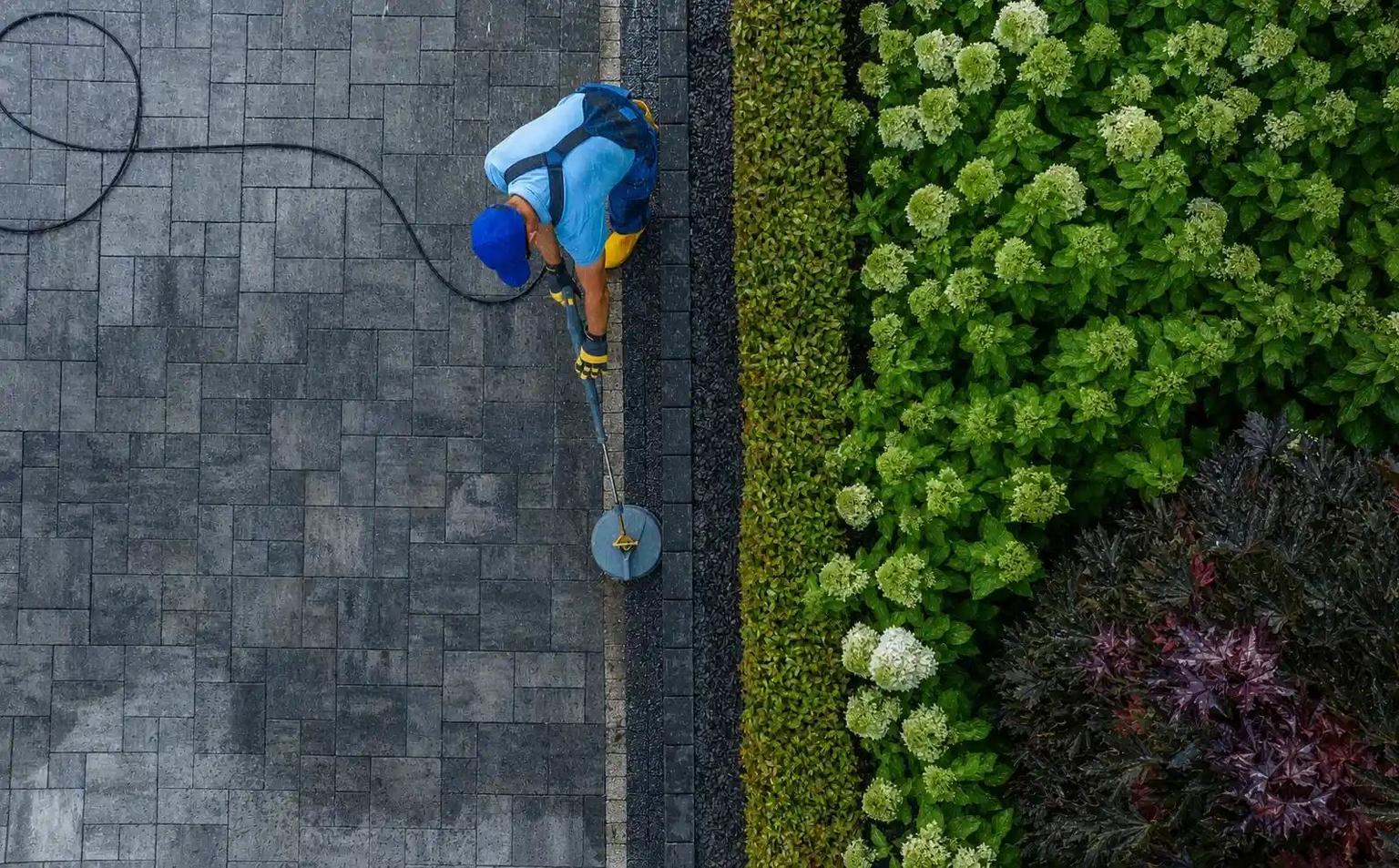
Yes - sometimes. You can pressure wash in light rain if footing is stable, there’s no lightning, and the surface is one that handles wet conditions well.
For most homeowners, the answer comes down to 3 things:
- Safety first: Stop at once if you see lightning, standing water, slick ground, or poor visibility.
- Results can drop: Rain can make dirt harder to see, lead to missed spots, and wash detergent off before it sits long enough.
- Some surfaces do better than others: Concrete driveways and patios usually handle light rain better than vinyl siding, while wood and composite decks are the worst choice in wet weather.
Here’s the short version:
- Okay in light drizzle: driveways, patios, some siding jobs
- Use extra care: vinyl siding in calm, light rain
- Wait for dry weather: wood decks, composite decks, any job with sealer or polymeric sand
- Never continue: during thunder, lightning, pooling water, freezing temps, or slick footing
Should You Pressure Wash in The Rain?
sbb-itb-238bf3c
Quick Comparison
| Surface | Light Rain | Main Problem | Best Call |
|---|---|---|---|
| Driveways & patios | Usually okay | Slippery algae, runoff, washout of fresh sand or sealer | Go ahead only if rain stays light |
| Vinyl siding | Sometimes okay | Harder spray control, streaks, missed areas | Continue only in calm conditions |
| Wood/composite decks | Poor choice | Slips, wet moss, moisture getting into weak spots | Wait |
| Any surface in storms | No | Lightning, standing water, low visibility | Stop |
A few facts shape the decision. Lightning kills about 20 people per year in the U.S. on average, according to NOAA, and wet surfaces lose traction fast. On top of that, many cleaners need several minutes of dwell time to work, and steady rain can cut that short.
So if you’re asking whether to keep washing or stop, the short answer is simple: light rain may be fine for some flat, stable surfaces, but storms, slippery ground, and wood surfaces are a clear no. The rest of the article breaks down when to continue and when to wait.
Rain, Safety, and Equipment Limits
The biggest risks in rainy conditions are lightning, pooling water, and slippery footing. Heavy rain can turn a work area unsafe in a hurry. Ground that felt fine a few minutes ago can become slick, and runoff can start moving through the area fast.
Why Light Rain and Heavy Rain Carry Different Risks
When the weather starts to shift, surfaces often get slippery almost right away. At the same time, runoff can build up around the work area and make footing less stable.
If there's lightning or pooling water, stop right away.
Equipment Limits in Wet Conditions
No matter what type of pressure washer you're using, don't keep working if the ground is slippery or water is collecting around the equipment. Wet ground increases the chance of slips and makes the machine harder to control.
And even if conditions are still safe enough to work, rain can still reduce cleaning results.
How Rain Affects Cleaning Results
Even if your washer is safe to run, rain can still make the job turn out worse. A light drizzle might not seem like a big deal, but it can make it much harder to tell what you've already cleaned and what still needs work.
Lower Visibility Leads to More Missed Spots
When surfaces are wet, dirt, stains, and buildup tend to blend in. That’s a problem on siding, driveways, patios, and decks, where grime is often easier to spot only when the surface is dry. Rain also makes it tougher to follow your path as you clean, so it’s easy to skip sections without noticing.
Those missed areas often don’t show up until everything dries out. At that point, a rushed rain-day wash can turn into a second round of cleaning later.
Detergent Performance Drops in Steady Rain
Rain doesn’t just make surfaces harder to read. It can also get in the way of your cleaner doing its job. In steady rain, detergent may rinse off before it has enough time to loosen grime.
That can make washing less effective on pavers, siding, and wooden decks, where cleaners often need a little dwell time to work. If the rain keeps cutting that time short, you may end up using more soap and getting worse results.
Surface-by-Surface Guide to Pressure Washing in Rain
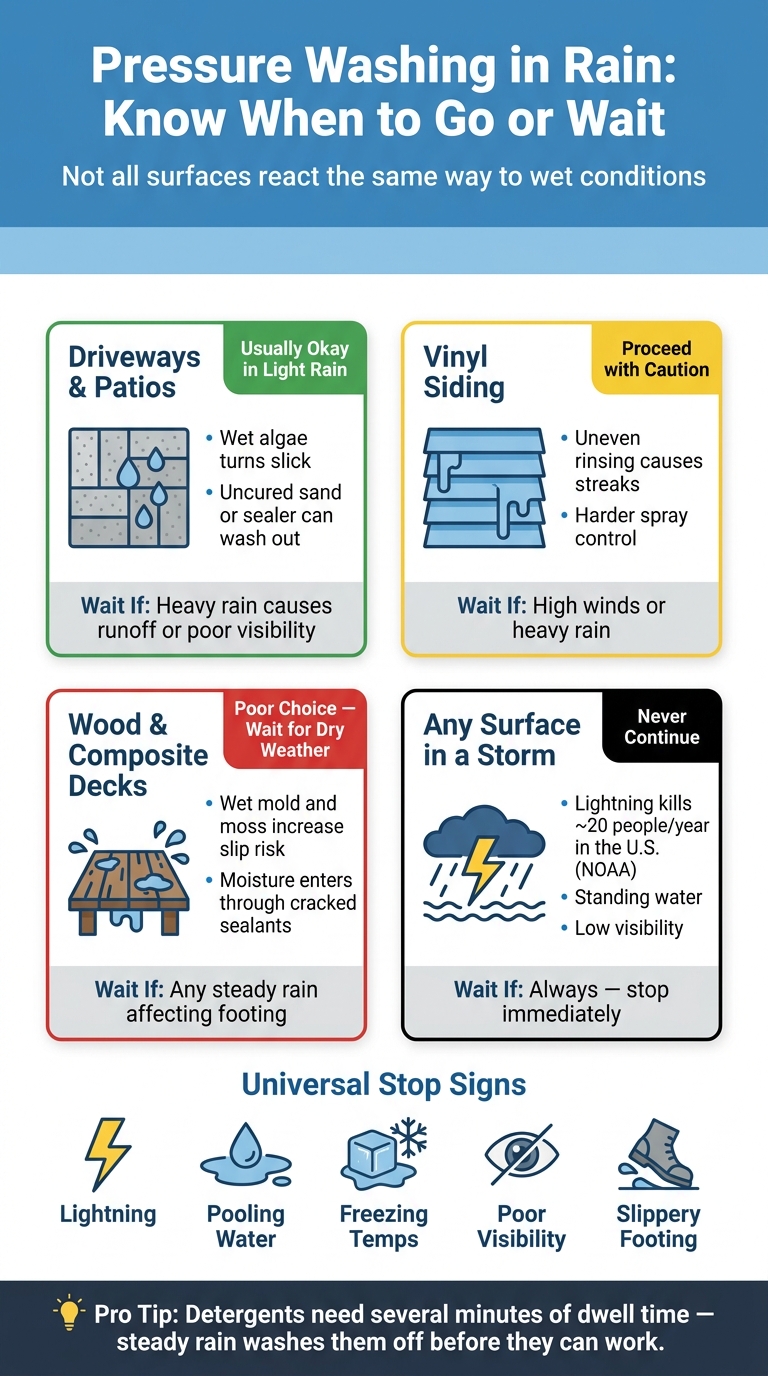
Pressure Washing in Rain: Surface-by-Surface Safety Guide
Rain doesn't affect every surface the same way. So instead of using one rule for the whole job, it helps to look at the material you're cleaning. In light rain, some surfaces are still workable. Others turn into a bad idea fast.
Driveways and Patios Are More Stable Than Wood in Light Rain
Concrete and pavers are usually the safest surfaces to pressure wash when there's light rain. They hold up better than wood, and they don't react to moisture the same way. That said, wet algae and moss can get very slippery, so footing matters a lot.
Heavy rain changes the equation. It can wash out uncured polymeric sand or sealer, which can mess up the finish and leave you with extra repair work later.
Siding and Decks Need More Caution in Rain
Vinyl siding deals with moisture better than wood in wet conditions. But that doesn't mean rain has no effect. It can make spray control harder, reduce visibility, and make it tougher to spot missed sections. Uneven rinsing can also leave streaks or spotting when rinse water and detergent don't clear off evenly.
Wood and composite decks are where things get dicey. These are the hardest surfaces to pressure wash in the rain. Wet mold and moss make slips more likely, and moisture can work its way through cracked sealants and lead to rot. In plain terms, rain makes deck washing less safe and less effective.
Here's the quick comparison.
Comparison Table: Which Surfaces Hold Up Better in Rain
| Surface | Light Rain | Main Risks | Wait If |
|---|---|---|---|
| Driveways & Patios | High | Algae and moss turn slick; uncured sand or sealer can wash out | Heavy rain causes runoff or poor visibility |
| Vinyl Siding | Moderate | Uneven rinsing leaves streaks or spotting | High winds or heavy rain affect spray control |
| Wood/Composite Decks | Low | Wet mold and moss increase slip risk; moisture enters through cracked sealants | Any steady rain that affects footing |
When to Go Ahead and When to Wait
Knowing which surfaces can handle rain is only part of the call. The other part is looking at the weather right in front of you and deciding, in plain terms, whether to keep going or wait for a better window. Use the surface guidance above to decide if the rain is still workable.
Proceed Only in Light, Stable Rain
Light drizzle can work for cleaning-only jobs, like a driveway or siding wash, when there’s no dry follow-up step tied to the job. In that case, you’re just washing, not setting yourself up for trouble later.
If colder weather is on the way, don’t begin a job you can’t wrap up before the temperature drops. That’s where a simple wash can turn into a mess.
Postpone When Storm Risk or Slick Conditions Show Up
Once the weather moves past light drizzle, stop. That means thunder, pooling water, slick footing, poor visibility, or falling temperatures. At that point, the job becomes more risky and less effective.
If temperatures are near freezing, wet surfaces can turn into a slip hazard fast. Moisture that gets into wooden frames can also lead to rot, mold, or mildew if it sits.
If the conditions still feel borderline, play it safe and cut the risk before you start.
Safer Ways to Finish the Job
If you keep working in light rain, a few simple habits can lower the risk and help the work turn out better.
Cut Risk With Better Setup and Footing
If you decide to keep going in light rain, start with your setup. Place the washer on level, stable ground and keep it away from pooling water. Keep cords and connections out of standing water too.
Wear slip-resistant footwear. Wet concrete and wet wood get slick fast, and that changes the job in a hurry. Stick to ground-level work on rainy days. Roofs, upper-story siding, and any other elevated areas should wait.
Pay close attention to the surface as you work. If rain makes coverage hard to see, or your footing starts to feel shaky, stop and finish later. It’s not worth pushing through when the surface under you starts to give you trouble.
Key Takeaways Before You Start
If you're still working, keep these limits in mind.
Light rain can be workable only when conditions stay steady and easy to see. A light drizzle on a stable surface may be okay, but heavier rain raises the risk fast. The surface can get slick, too. Detergent may wash off, visibility drops, and you can miss spots that only show up once the surface dries.
Some materials handle light rain better than others. Concrete driveways and patios usually do better than wood decks or siding. Professionals such as ViewCrew Services schedule deck and patio cleaning around stable, dry conditions rather than a fixed date. If you're unsure, postpone. A clean surface is worth waiting a day or two for, especially before colder weather makes the job tougher.
FAQs
Can I use soap in light rain?
Using soap in light rain is usually a bad idea for exterior cleaning.
Rain can water down the cleaning mix, which makes it less effective and keeps it from breaking down dirt, algae, or mildew the way it should.
It can also make the soap rinse off too fast. That often leads to patchy results and can send runoff into nearby plants or landscaping.
For the best results, clean during dry weather.
How can I tell when rain is too heavy?
Rain becomes too heavy for pressure washing when it starts making the work unsafe or the cleaning less effective.
A little rain can be workable. But once the rain cuts visibility, makes surfaces slick, or rinses off cleaning products before they’ve had time to sit, it’s time to stop.
If you can’t keep solid footing or the weather is getting in the way of safe work, postpone the job. That helps you avoid weak results, safety issues, and possible property damage.
Should I reschedule if temperatures may drop later?
Yes. If temperatures are expected to drop, it’s usually best to reschedule.
A lot of exterior treatments and sealing work need a set temperature range to cure the right way. For example, paver sealing often calls for 50°F to 85°F, while some coatings need 45°F to 95°F. In many cases, temperatures also need to stay in that range for 24 hours or more after the job is done.
For the exact weather delay policy, check your service quote.