Yes - power washing can damage vinyl siding if you use too much pressure or the wrong spray angle. In most cases, the safest path is low-pressure soft washing, not a high-pressure blast.
If I had to boil this down fast, here’s what matters most:
- High pressure can crack vinyl, strip the surface, and loosen seams
- Upward spray can force water behind the siding
- Most vinyl siding should stay at or below about 1,000 to 1,200 PSI, and soft washing is often under 500 PSI
- Older, brittle, cracked, or oxidized siding has a much higher chance of damage
- For homes in Massachusetts, Southern New Hampshire, and Connecticut, trapped water can turn into hidden wall damage after freeze-thaw weather
Here’s the plain-English answer: vinyl siding can be cleaned safely, but only with low pressure, the right nozzle, enough distance, and a downward rinse. If any of those are off, the wash can go from simple cleaning to costly repairs.
A fast side-by-side view makes the point clear:
| Method | Pressure | Main Risk | Best Use |
|---|---|---|---|
| Power washing | 1,500–4,000 PSI | Cracks, gouging, water behind siding | Hard surfaces like concrete |
| Soft washing | Under 500 PSI | Lower when done right | Vinyl siding, algae, mildew, dirt |
So if you’re asking, “Can I wash vinyl siding without damaging it?” the short answer is: yes, but not like concrete.
Should You Pressure Wash Oxidized Vinyl Siding?
sbb-itb-238bf3c
What power washing actually does to vinyl siding
Vinyl siding is built to shed water downward. Its overlapping panels let rain run off the outside. But when pressurized water hits those seams and slips past the interlock, it can get forced behind the siding instead of draining away.
That’s where trouble starts.
Vinyl doesn’t do well with a concentrated stream aimed at the wrong angle, from too close, or with too much force. When that happens, you can end up with cracked panels, etched surfaces, loose seams, and moisture stuck inside the wall. So the cleaning method matters just as much as the pressure number.
Pressure washing vs. soft washing for vinyl siding
These two cleaning methods are not the same, and for vinyl, that difference matters a lot.
Pressure washing relies on force. It usually runs between 1,500 and 4,000 PSI to blast dirt off a surface. That can work on concrete or brick. On vinyl, it’s often too harsh. Most vinyl makers put their recommended cleaning limit at 1,000–1,200 PSI, while many rental pressure washers run between 1,300 and 3,000 PSI. In plain terms, you can start the job already above the safe range.
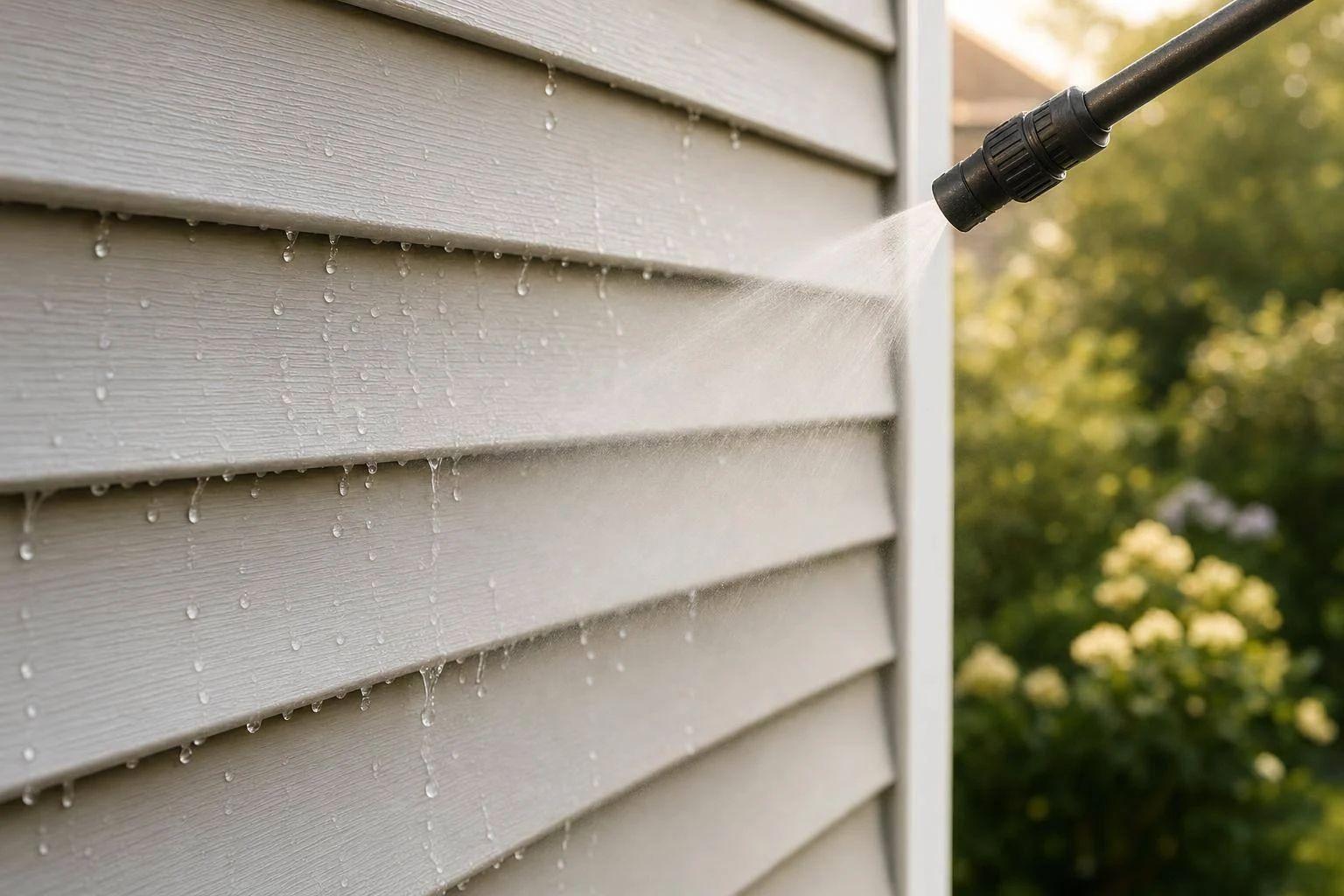
Soft washing takes a different path. It uses low pressure, usually under 500 PSI, along with cleaning solutions like sodium hypochlorite and surfactants. Instead of just knocking mold and algae loose, it treats them at the root. For vinyl siding, this is the safer standard.
"We do not recommend power washing vinyl or polymer siding because of risks tied to moisture intrusion, damage, and discoloration." - CertainTeed
Those settings often make the difference between a safe cleaning job and one that leaves damage behind.
The four factors that affect damage risk
Damage risk doesn’t come down to PSI alone. It comes from how several factors work together. A setup that looks fine on paper can still cause problems if the nozzle, distance, or spray direction is off.
| Factor | Safe Range | What Goes Wrong |
|---|---|---|
| PSI level | 100–500 PSI for soft washing; 1,000–1,200 PSI is the upper manufacturer cap | Above 1,500 PSI can crack panels and drive water behind the siding |
| Nozzle angle | 25° (yellow) or 40° (white) fan nozzle | 0° (red) or turbo/rotary nozzles can permanently gouge the vinyl surface |
| Distance from surface | 12–18 inches | Getting closer than 6 inches concentrates force dangerously at the contact point |
| Spray direction | Downward or perpendicular to the siding | Spraying upward can force water behind the panel laps and into the wall sheathing |
Age makes the risk worse. Older siding tends to crack more easily. Vinyl that has spent 15 or more years in UV exposure can turn brittle, especially when temperatures drop below 50°F.
When power washing damages vinyl siding
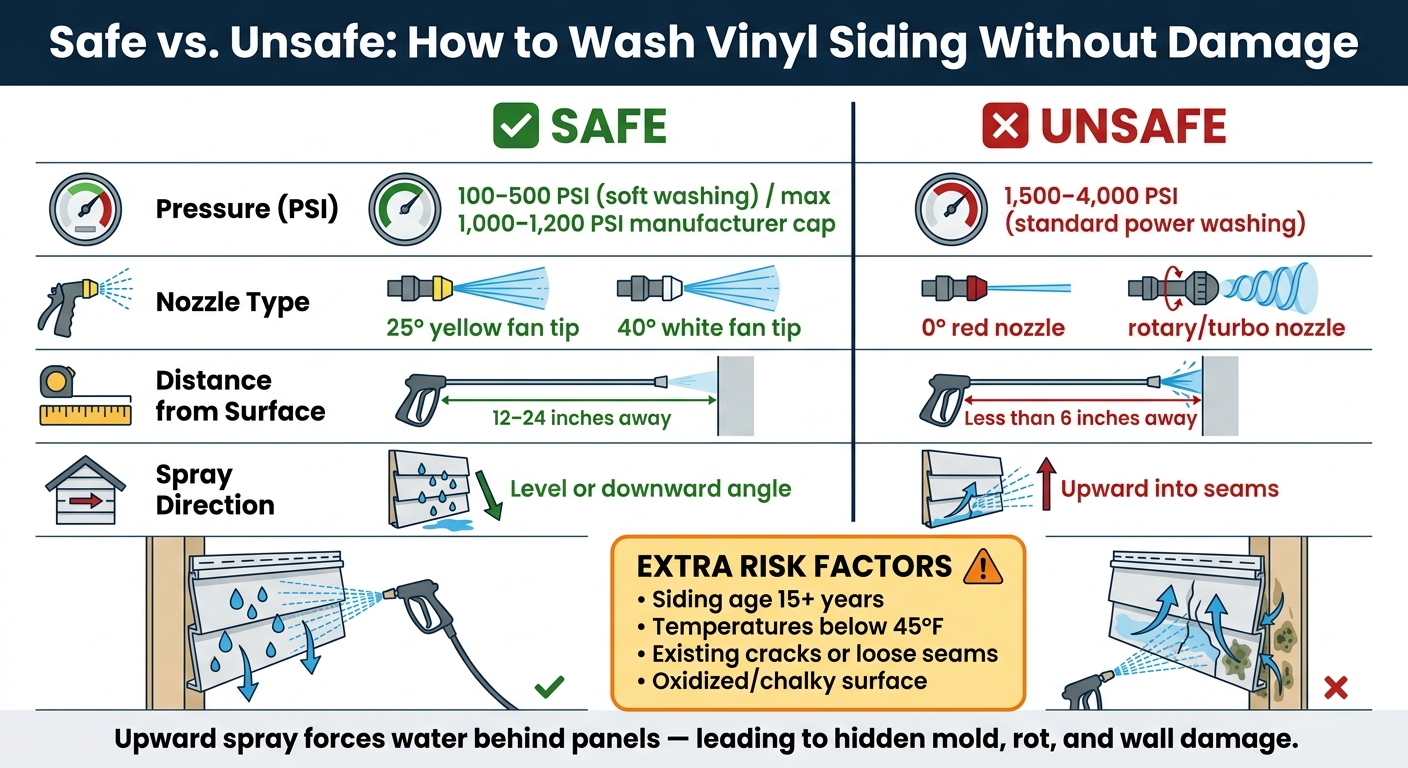
Power Washing vs. Soft Washing Vinyl Siding: Safe Settings Guide
Most vinyl siding damage comes down to too much pressure, the wrong nozzle, or bad spray angle. In plain English, the machine isn’t always the problem. The way it’s used is.
The good news is that these mistakes are preventable. Low pressure, the right nozzle, and a downward spray angle do a lot of the heavy lifting.
Cracked panels, etched surfaces, and loosened seams
The damage people notice first is usually easy to spot: cracked panels, gouged surfaces, and seams that start to pull apart. That usually comes from poor technique, not just poor equipment.
Oxidized siding has its own problem. If high pressure strips the worn outer layer unevenly, the surface can end up streaked or discolored.
Trim pieces and joints can also take a beating. Too much force may pop out J-channel trim, loosen corner posts, or blow out caulk around windows and door frames. Once that seal breaks, rain can start finding its way inside.
Water forced behind the siding
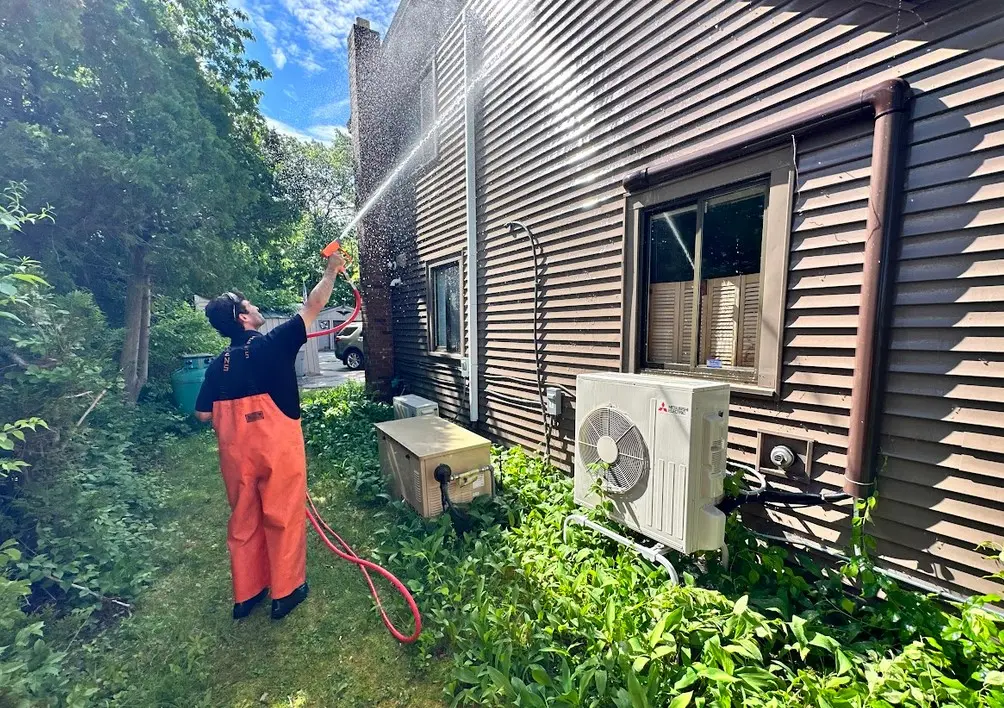
This is the kind of damage that sneaks up on homeowners because you often don’t see it right away. If a pressure washer is pointed upward or sprayed straight into seams, it can push water behind the panel laps and into the wall system.
That trapped water can soak the wall assembly and lead to hidden mold and rot.
The biggest trouble spots are the places where water already has an easy path in:
- Seams
- J-channels around windows and doors
- Utility penetrations, such as outlets and light fixtures
- Corner posts
Inside the house, the warning signs may show up as water stains on drywall, musty smells, soft drywall, or fogging between window panes.
Conditions that raise the risk of damage
Some conditions make siding much easier to damage, even if the person holding the wand is trying to be careful.
Older or brittle siding is more likely to fail under pressure, especially in cold weather. At 45°F, a high-pressure burst can crack a panel on contact.
Existing damage matters too. Loose sections, visible cracks, or failing caulk around windows create easy entry points for water. Washing over those weak spots can turn a small cosmetic issue into a much bigger repair.
Inexperience with equipment is another big factor. A bad wash can take a minor problem and make it expensive in a hurry. Safe cleaning depends on controlled pressure, enough distance from the surface, and the right spray direction.
How to clean vinyl siding without causing damage
Use low pressure, the right nozzle, and a downward spray angle to avoid the damage described above.
Safe pressure, nozzle, distance, and spray direction
Soft washing is the safer option here. In most cases, that means about 100 to 500 PSI. If you're cleaning it yourself, stay under the siding maker's stated limit. Go past that limit and you can crack panels, strip the finish, and even void the warranty.
Use a 25-degree (yellow) or 40-degree (white) fan tip. Do not use a 0-degree (red) nozzle or a rotary/turbo nozzle on vinyl. Those nozzles can gouge the surface fast.
| Factor | Safe | Unsafe |
|---|---|---|
| Pressure (PSI) | 100–500 PSI for soft washing; stay below manufacturer limit | 2,500–3,000+ PSI |
| Nozzle Type | 25° (yellow) or 40° (white) fan tip | 0° (red) or rotary/turbo nozzle |
| Distance | 12–24 inches | Less than 6 inches |
| Spray Angle | Level or downward | Upward into seams |
| Cleaner Application | Bottom to top | Top to bottom |
| Rinse Direction | Top to bottom | Bottom to top |
A little distance goes a long way. Keep the wand about 12 to 24 inches from the siding. Too close, and the water stream can hit like a chisel. Also keep the spray level or pointed downward so you don't force water up into the seams.
Prep steps and a safe wash sequence
Before you start, walk the whole perimeter of the house. Check for cracked panels, loose seams, and failing caulk around windows and doors. If you spot any of that, take photos and skip those areas for now. Water can slip behind the siding and into the wall system. It's also smart to rub a gloved hand across the surface. If you see a chalky white residue, the vinyl is oxidized, and washing may leave streaks or blotchy patches.
Cover electrical outlets, light fixtures, and any air-conditioning units with plastic and painter's tape. Close all windows and doors. Then pre-wet plants and shrubs within 6 feet of the wall before you apply cleaner, and rinse them again after you're done.
Apply cleaner from the bottom up. That helps stop dirty runoff from streaking panels you've already cleaned. Use a vinyl-safe cleaner, usually a 1–2% sodium hypochlorite solution with a surfactant. Let it sit for 10 to 15 minutes, but don't let it dry. Then rinse from the top down with controlled pressure and a downward spray angle until all soap and residue are gone.
Skip direct sun and hot surfaces. Cleaner can dry too fast in those conditions and leave permanent streaks that are tougher to deal with than the dirt you started with.
Stop right away if panels flex, crack, or trap water behind the seams. And if the siding is brittle, oxidized, or already damaged, stop before washing.
When to skip DIY and what to expect from ViewCrew Services

If your siding is already brittle, oxidized, or cracked, the safest move is to stop before a small issue turns into a bigger one.
Warning signs to stop washing immediately
Stop right away if the siding starts to flex or rattle.
You should also stop if you notice any of the following during or after cleaning:
- New cracks, chipped edges, or fresh streaking forming on the surface
- Water shooting upward under the laps, which means moisture is getting behind the panels
- Musty odors indoors, bubbling interior paint, or moisture around electrical outlets and window trim within 24 to 48 hours after washing - these point to water intrusion behind the siding
If any of these show up, don't keep going. Hidden moisture can move into the wall system fast.
At that point, the issue isn't how to wash more efficiently. It's whether the siding should be washed at all.
DIY cleaning vs. professional service by ViewCrew Services
Rental machines often push past what's safe for vinyl siding.
A service like ViewCrew Services starts with a pre-wash assessment. That helps spot brittle panels, loose panels, and failing caulk before any water hits the house. From there, the cleaning uses controlled low pressure to treat mold and algae without putting the siding at risk.
| Feature | DIY Homeowner | ViewCrew Services |
|---|---|---|
| PSI & Nozzle Control | 1,300–3,000+ PSI; often 0° or 15° tips | 100–500 PSI; 25°–40° fan nozzles |
| Damage Risk | High (cracks, water intrusion) | Low when pressure, nozzle, distance, and inspection are controlled |
| Time Required | 1–2 full days | 90 minutes to 3 hours |
| Delicate Areas | Often missed or over-sprayed | Pre-inspected and treated separately |
| Inspection | Typically skipped | Full pre-wash assessment included |
Key facts to remember before cleaning vinyl siding
Keep it simple: sound siding can handle careful low-pressure washing. Damaged siding should not.
Use the safest method only when the siding is in good shape. If it's brittle, oxidized, cracked, or on a two-story home, a professional assessment makes more sense. For homeowners in Massachusetts, Southern New Hampshire, and Connecticut, freeze-thaw cycles can turn even small pressure-washing micro-cracks into more serious siding failures over a single winter.
If you're not sure about the condition of the siding, or you're dealing with a two-story home, damaged panels, or visible oxidation, ViewCrew Services offers a process built around inspection and pressure control to help protect the siding.
FAQs
Can I use a garden hose instead?
Yes. A garden hose is a safe way to clean vinyl siding, especially if you pair it with a soft-bristle brush and a mild cleaning solution.
It’s a simple, low-risk option for washing off dirt and grime without the extra chance of cracked siding, loosened seams, or water slipping behind the panels. One small detail matters a lot here: always spray at a downward angle so water doesn’t get forced into the gaps.
Will power washing void my siding warranty?
It can. Many vinyl siding makers warn against high-pressure washing because it can force water behind the panels, damage the siding itself, and leave behind discoloration.
There’s also a warranty issue. If your siding is cleaned with high pressure, the warranty may be voided. Soft washing is often the safer option and, in many cases, doesn’t affect coverage.
Before you clean anything, check your manufacturer’s cleaning guidelines first.
How often should vinyl siding be cleaned?
Clean vinyl siding at least once a year to help it look good and last longer.
If your home is near wooded areas, standing water, or in a high-humidity area, cleaning it twice a year is often a smarter move. Spring and fall usually work best.
It also helps to spot-clean after major storms or anytime you notice mold, algae, dirt, pollen, or other buildup.