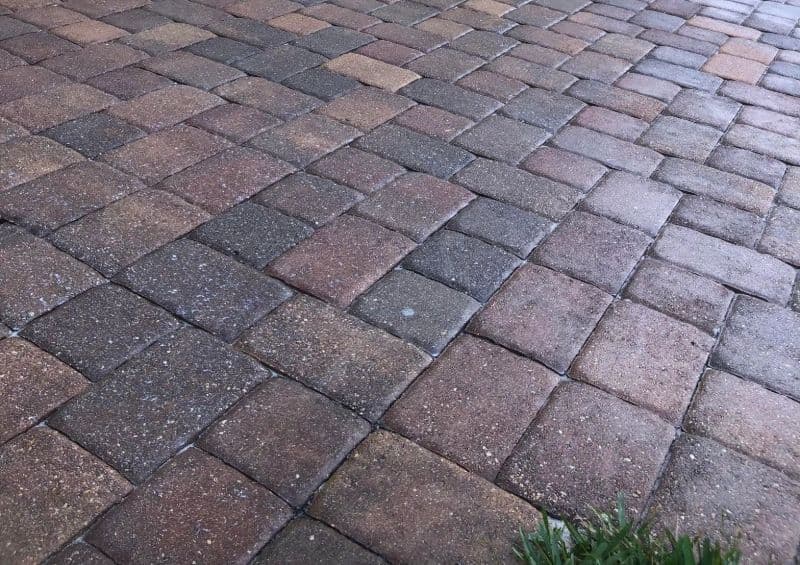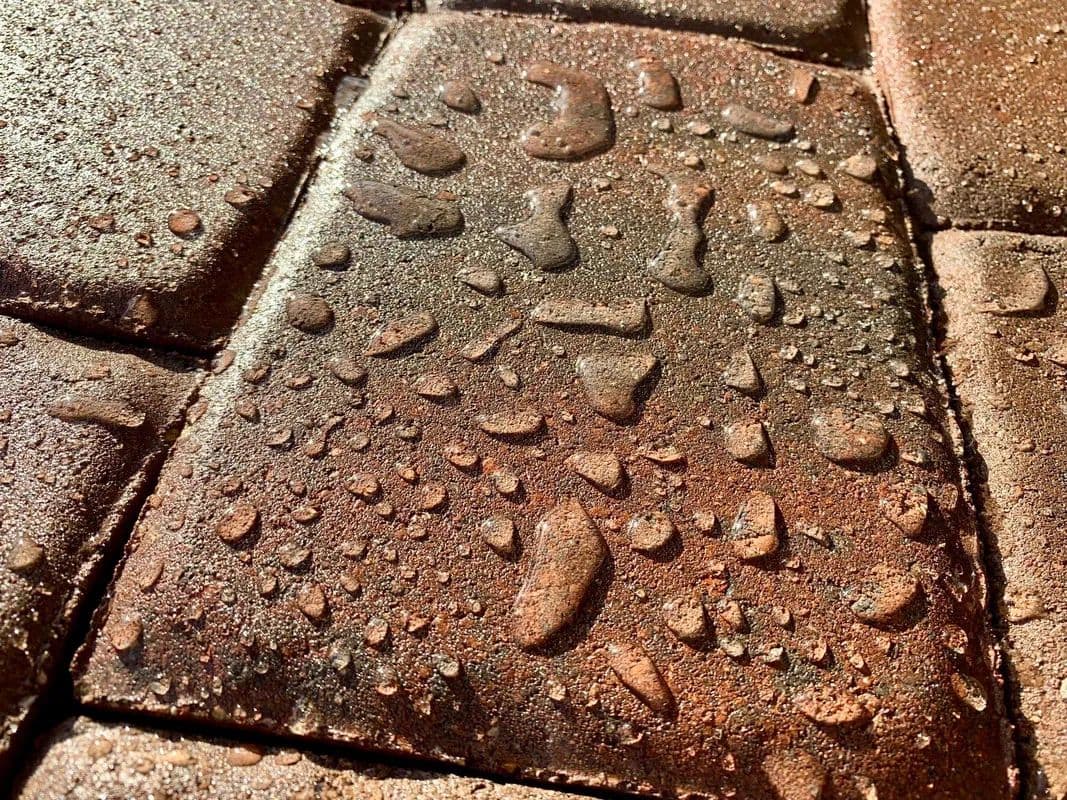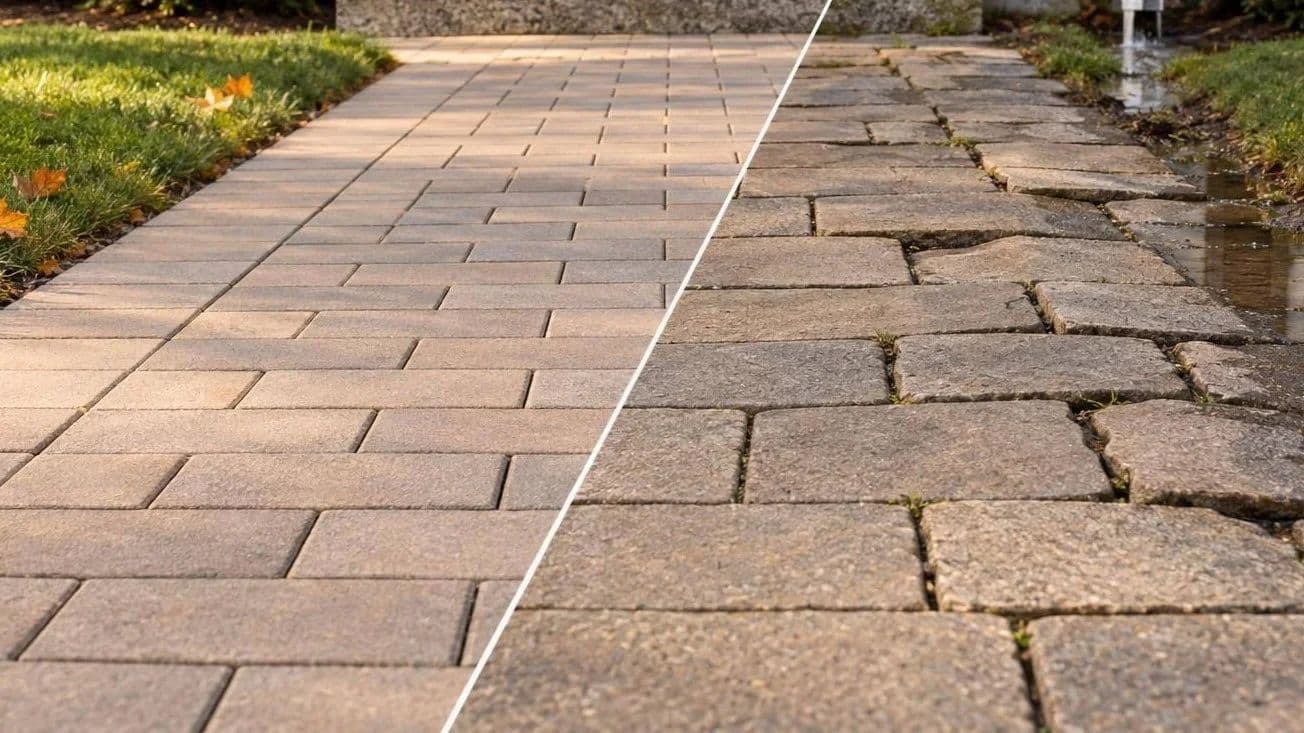
Restore your pavers if they’re intact and stable; repair isolated damage; consider replacement if base or drainage problems affect large areas. After a Massachusetts winter, wait until the ground thaws before judging movement - and check whether uneven spots or pooling water keep returning.
Your options come down to 3 types of work:
- Restoration: Cleaning, re-sanding, and sealing treat surface wear. This costs less than new installation when your pavers and base are sound.
- Repair: Lifting and resetting small sections can fix local dips or rocking pavers after the cause is corrected.
- Replacement: Extensive cracking, repeated heaving, or broad settlement calls for an assessment of the pavers, base, and drainage.
Sealer is a surface treatment - not a structural fix. <u>Correct movement and drainage problems before restoration.</u> Start by checking cracks, uneven spots, joint sand, and runoff after rain.
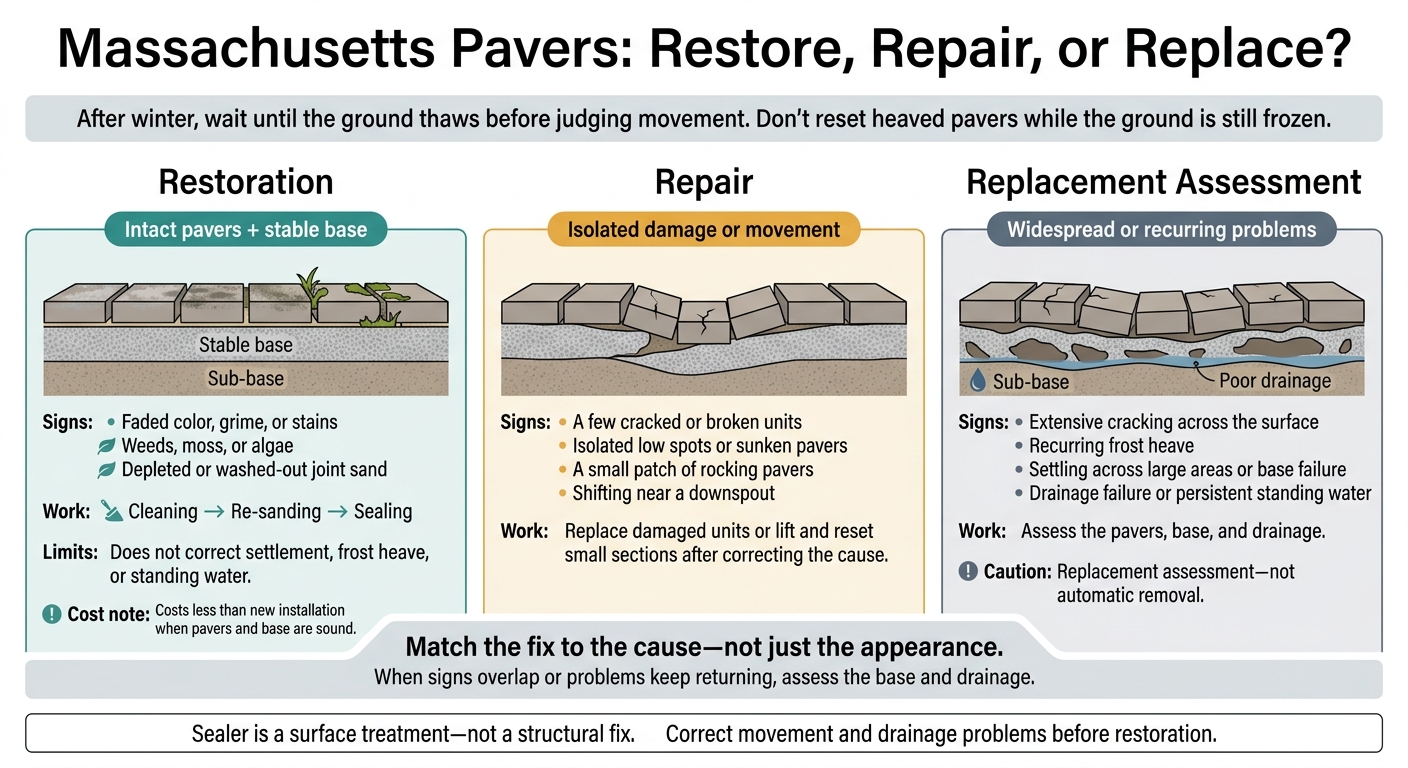
Massachusetts Pavers: Restore, Repair, or Replace?
3 Options to Repair a Paver Project
sbb-itb-238bf3c
Signs Your Pavers Need Restoration, Repair, or Replacement
Use the table to tell surface wear apart from structural problems. “Replace” means a replacement assessment, not automatic removal. After checking the visible damage, look at whether the issue starts at the surface or in the base below.
| Restore | Repair | Replace |
|---|---|---|
| Faded color, grime, or stains | A few cracked or broken units | Extensive cracking across the surface |
| Weeds, moss, or algae | Isolated low spots or sunken pavers | Recurring frost heave |
| Depleted or washed-out joint sand | A small patch of rocking pavers | Settling across large areas or base failure |
| Faded color on otherwise stable pavers | Shifting near a downspout | Drainage failure or persistent standing water |
When signs overlap, the base or drainage may be the source. Pavers that rock beside a low spot, or water that keeps collecting near a downspout, can point to problems beyond the visible damage.
What Each Option Can Fix
Match the fix to the cause - not just the appearance. Restoration treats wear, repair handles isolated damage, and a replacement assessment checks structural failure.
| Factor | Restoration | Repair | Replacement |
|---|---|---|---|
| Visible condition | Cleans intact pavers and improves their appearance | Replaces damaged units; the repaired area may not match perfectly | Addresses damage across large areas of pavers |
| Base movement | Does not correct it | Corrects localized instability | Requires assessment of base failure beyond isolated areas |
| Drainage | Does not correct standing water | May correct isolated low spots | Must address major grading or drainage failures |
| Repeated winter heave | Does not reverse heaving | Corrects localized winter damage | Addresses failure across large areas and its causes |
Sealer cannot fill structural cracks, correct frost heave, or redirect standing water. Fix those problems before cleaning, re-sanding, and sealing.
Paver Restoration Cost vs Replacement Cost
Restoration costs less than installing new pavers when the existing units and base are still serviceable. But it cannot replace needed structural work. For pricing details, see the paver restoration cost guide. If cracking, heaving, or standing water keeps returning, restoration alone won't fix the problem.
What Paver Restoration Includes
Once the base is stable, restoration tackles the surface wear caused by Massachusetts weather.
Paver restoration includes cleaning, re-sanding, and sealing. It renews intact pavers, but it won’t fix a failed base or major drainage problems. Cleaning comes first, followed by joint repair and sealing.
Cleaning and Re-Sanding
Cleaning removes dirt, debris, weeds, and organic growth. It can also reveal cracks or settlement hidden beneath the buildup.
Next, the joints are refilled with polymeric sand to help keep them stable and reduce weed growth and sand erosion. Re-sanding fills joints - it doesn’t correct settlement or leveling problems.
Applying a Sealer With Anti-Fungal Properties
Sealing is the final step. A compatible sealer must be applied under suitable surface and weather conditions. Its anti-fungal properties help resist fungal growth, while the coating adds surface protection. It does not waterproof the pavers or prevent frost heave.
For details, see the guide to sealing expectations in Massachusetts and Southern New Hampshire.
Use the paver sealing maintenance guide to plan re-sealing intervals.
How to Check Pavers After a Massachusetts Winter
Check your pavers in early spring, after the ground thaws, to separate surface wear from winter damage that may need repair or replacement. Don’t reset heaved pavers while the ground is still frozen. Some movement settles as thawing finishes.
- Cracks and deterioration: Look for individual cracked pavers, crumbling across large areas, or deep cracks. A few damaged units may need individual replacement; damage across much of the surface calls for a replacement assessment.
- Rocking and uneven spots: Check for lifted edges and pavers that rock underfoot, especially near downspouts and low spots.
- Joint sand: Look for empty joints, widening gaps, and weeds. If the same area keeps losing sand, it points to a local problem.
- Drainage after rain: Watch for pooling water, runoff flowing toward the house, and sand that repeatedly washes out. These drainage problems can cause damage to return, even after restoration.
An uneven spot doesn’t always mean the base has failed. A single dip may need a lift-and-relay repair. Sinking across larger areas - or movement that returns after repairs - calls for a closer look at the base and drainage to determine whether the problem is cosmetic, local, or structural.
Conclusion: Choose the Right Work for Your Pavers
After a Massachusetts winter, choose based on damage, not looks alone. Intact but worn pavers may need restoration, while isolated defects may call for targeted repairs. Heaving across large areas, a failed base, or multiple cracked or broken pavers warrant a replacement assessment. If the base is stable, restoration can address surface wear.
Restoration includes cleaning, re-sanding, and sealing with an anti-fungal sealer. It costs less than installing new pavers when the surface is structurally sound. But surface treatment won’t fix frost heave, settling, or drainage problems.
To find out whether restoration fits your patio or walkway, contact ViewCrew Services for a restoration assessment. Mention any recurring movement or pooling water after winter. Both can point to base or drainage problems that need a closer look.
FAQs
How long should I wait after thawing to assess uneven pavers?
Wait until the ground has fully thawed and is firm and dry. In Massachusetts, that usually means waiting until the spring frost heave cycle ends. If you level or repair pavers while the ground is saturated or still freezing and thawing, the base can keep shifting - and the repair may fail.
Once the ground settles, check whether sunken sections need to be lifted and reset or if routine maintenance will do.
Can I restore older pavers with an existing sealer?
Yes, but you can’t simply apply new sealer over the existing coating. A professional must first inspect the surface and test it for compatibility with the new sealer.
If the old sealer is failing, it must be chemically stripped. Sealer residue can keep the new coat from bonding properly, leading to a milky appearance or peeling. The inspection determines whether the pavers need stripping or are ready to be resealed.
What affects paver restoration cost?
Paver restoration costs depend on surface area, paver condition, and how complex the job is. Larger areas and heavy stains, moss, or mold take more labor and materials. Detailed layouts, hard-to-reach areas, and steep slopes can also increase the price.
Your choice of materials matters, too. Premium sealers and specialized polymeric sand affect the total, while spot repairs or leveling to fix minor settling add to the cost.