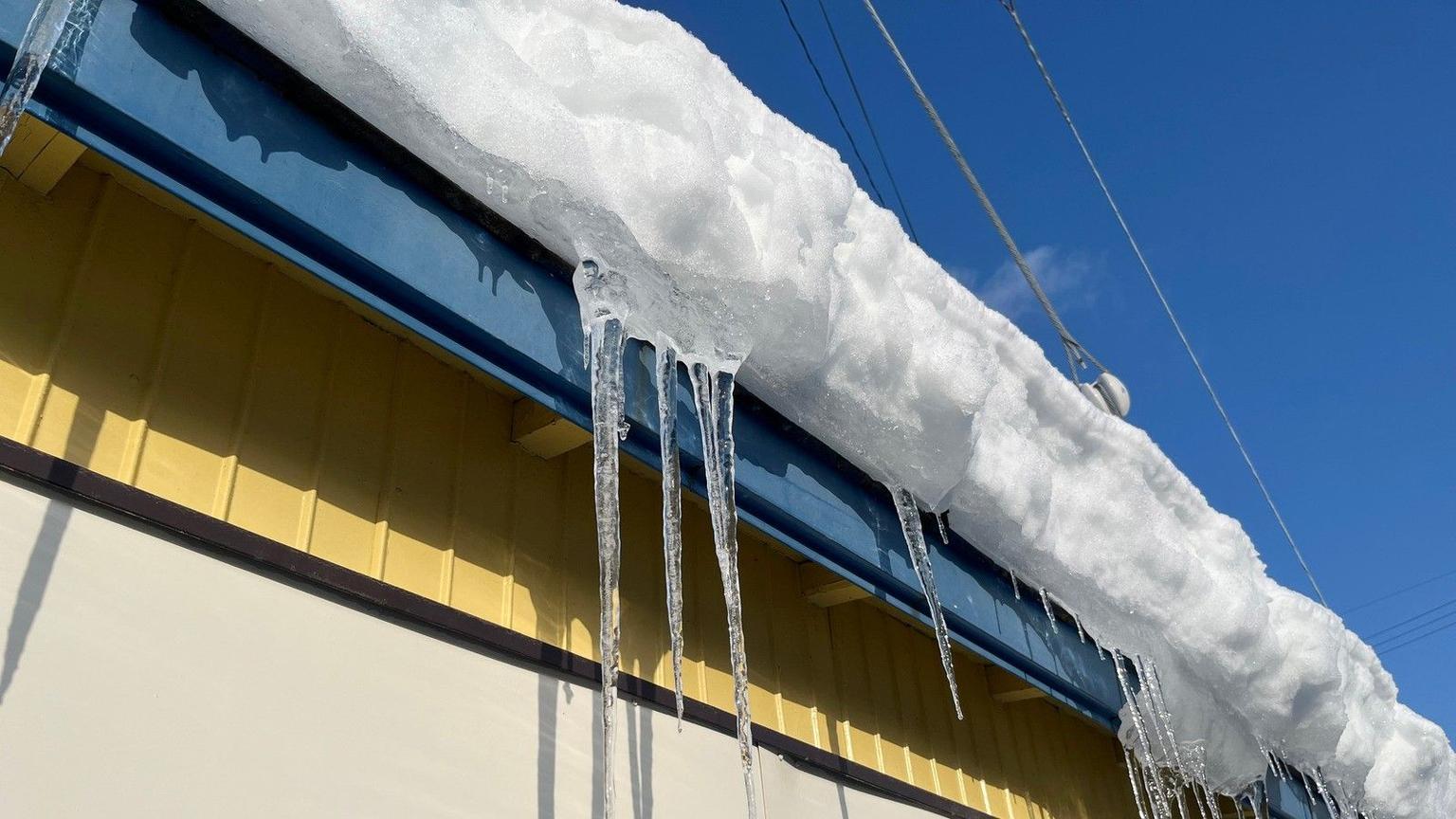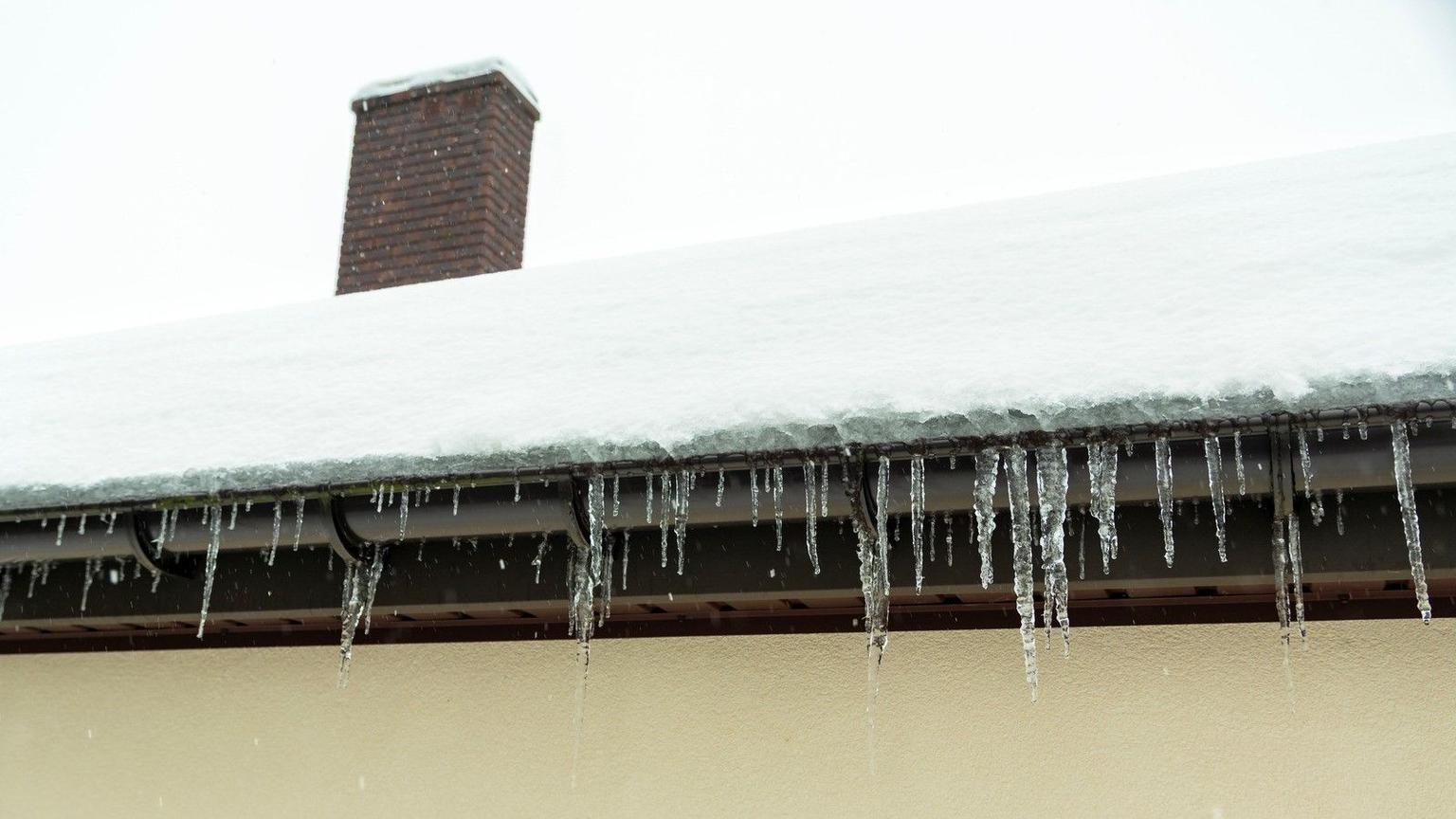
Ice in gutters can block drainage, but it doesn’t automatically mean your roof has an ice dam. In New England, runoff can refreeze as temperatures drop below 32°F, filling gutters and downspouts. A roof-edge ice dam forms when snow melts on warmer roof areas and refreezes at the colder eaves, trapping water behind it.
Check from the ground for sagging gutters, overflow, and ice along the shingles. Stay off icy ladders, don’t chip away ice, and get prompt help for indoor leaks. Frozen downspouts need safe thawing; roof-edge ice dams may need professional ice dam removal with low-pressure steam. Air sealing and proper attic insulation reduce the heat loss behind ice dams. To plan those fixes, see ice dam prevention for New England roofs.
Do Gutters Cause Ice Dams?
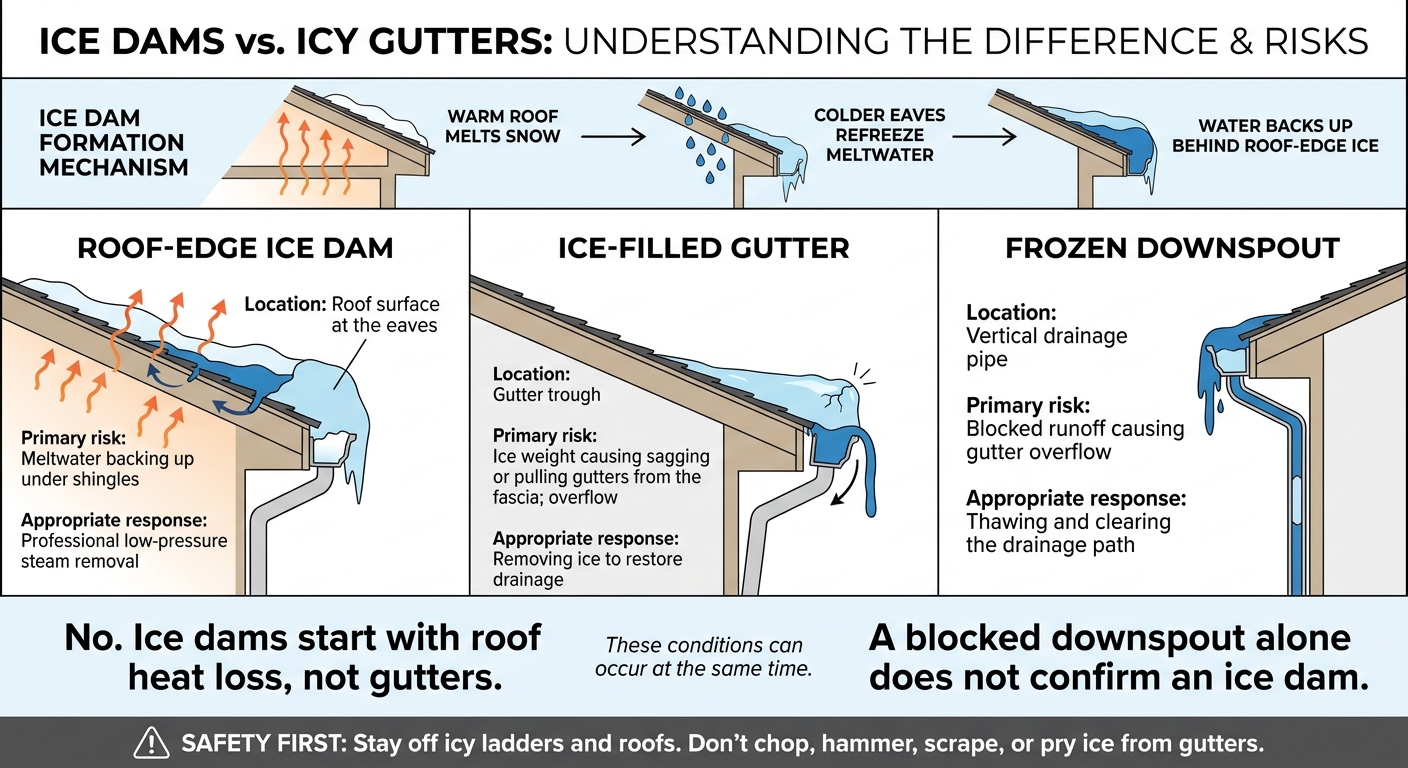
Ice Dam vs. Frozen Gutter vs. Frozen Downspout
No. Ice dams start with roof heat loss, not gutters.
Why Meltwater Freezes at the Eaves
Ice dams form when snow covers a roof, outdoor air stays below freezing, and parts of the roof stay above freezing. The eaves extend beyond the heated living space, so they stay colder. As meltwater reaches that cold edge, it refreezes.
Air leaks around attic hatches and recessed lights, gaps in insulation, and ventilation problems can all cause uneven roof temperatures. Gutters can collect runoff that later freezes, but they don’t cause the heat loss that starts an ice dam.
Where Ice Forms and Why It Matters
The term “Gutter ice dam” can mean either a roof-edge ice dam or a frozen gutter. Both can happen at the same time, but they need different responses.
| Condition | Location | Primary risk | Appropriate response |
|---|---|---|---|
| Roof-edge ice dam | Roof surface at the eaves | Meltwater backing up under shingles | Professional low-pressure steam removal |
| Ice-filled gutter | Gutter trough | Ice weight causing sagging or pulling gutters from the fascia; overflow | Removing ice to restore drainage |
| Frozen downspout | Vertical drainage pipe | Blocked runoff causing gutter overflow | Thawing and clearing the drainage path |
A blocked downspout alone does not confirm an ice dam. When requesting an assessment, explain whether the ice is on the shingles, in the gutter, or in the downspout. That location helps you know which signs of damage to check next.
sbb-itb-238bf3c
Signs of Ice Damage to Gutters and Your Home
When ice blocks drainage, check for damage where water spills over, backs up, or leaks into your home.
Outside: Sagging Gutters, Gaps, and Overflow
Look for sagging gutters, gaps between the gutter and fascia, and separated joints. Ice and trapped water add weight, while freezing water expands against seams. Repeated freezing can loosen joints and fasteners, leaving gutters uneven or pulling them away from the fascia.
A frozen downspout can push runoff over the gutter edge or back against the fascia. If the wood stays wet, it can rot and weaken the surface that holds the gutters in place.
Large icicles paired with overflow, sagging, or a ridge of ice along the roof edge are warning signs. Take photos from the ground to document gaps, overflow, and gutters that tilt or pull away.
Inside: Stains, Dampness, and Leaks
If ice has reached the roof edge, check inside for signs of water entry. Look for new ceiling stains or damp patches. Damp attic insulation, wet roof decking, and wet drywall also need investigation.
When ice along the roof edge traps meltwater, that water can seep beneath shingles and reach the roof decking, insulation, and interior finishes. By the time stains appear, hidden materials may already be wet.
An active leak needs prompt inspection. Note when the dripping starts and photograph the affected areas.
What Not to Do When Gutters Are Frozen
If ice has formed at the roof edge, stop trying to force drainage. Stay off icy ladders and roofs. Don’t chop, hammer, scrape, or pry ice from gutters. These methods can crack shingles, gouge the roof deck, strip granules, and strain fasteners and fascia.
Clearing the gutters alone may leave a roof-edge ice dam in place, allowing meltwater to back up under shingles. An empty gutter doesn’t mean the roof can drain.
Safe Steps While You Wait for an Assessment
Check from the ground with binoculars, and stay clear of hanging ice. Once conditions are safe, have a comprehensive gutter cleaning and inspection for loosened fasteners, split seams, or fascia damage.
How to Melt Ice in Gutters Safely
Controlled, low-pressure steam can melt roof-edge ice without denting gutters or damaging shingles. See how ice dam removal works. Removal restores drainage, but it doesn’t repair existing damage.
If ice is limited to the downspout, you’re dealing with a drainage blockage rather than a roof-edge ice dam.
If Only the Downspout Is Frozen
A frozen downspout can back water up into the gutter and cause overflow. If the blockage persists or you notice damage, get an inspection.
Conclusion: Choose the Response Based on Ice Location
Where the ice forms determines what to do next. On New England homes, heat escaping through the roof creates ice dams, while gutters and downspouts collect ice that adds weight and blocks drainage.
Ice confined to a downspout is a local drainage blockage. Clear the downspout and keep up with regular gutter cleaning so meltwater can drain. Once the ice melts, check the gutters for sagging, loose fasteners, and fascia damage.
Ice at the roof edge calls for a professional response, and the heat loss behind it needs a fix afterward. ViewCrew Services offers ice dam removal across the Merrimack Valley and MetroWest, using low-pressure steam to melt the ice without denting gutters or cracking shingles.
FAQs
Can frozen gutters wait for a thaw?
Not always. If ice is limited to your downspouts, you may be able to wait for warmer weather. But if you have an ice dam at your roof’s edge, contact a professional for ice dam removal immediately.
Act now if your gutters are sagging or pulling away, water is backing up under shingles, or you notice dripping indoors. Waiting can allow trapped water to damage your roof, insulation, and ceilings.
Should gutters be inspected after the ice melts?
Yes. Check your gutters for winter damage once the ice melts. Look for sagging or detached sections, loose fasteners, rust, and gaps where downspouts connect. Water stains on your siding may point to drainage problems.
Tighten loose brackets and seal small cracks with waterproof sealant. For major damage, consult a professional about repairs.
Can roof-edge ice return after removal?
Yes - roof-edge ice can return after steam removal if heat keeps melting snow on the roof and the runoff refreezes at the cold eaves.
Steam removes the existing ice dam, but it doesn’t stop the melt-and-refreeze cycle. Attic insulation, air sealing, and ventilation help keep the attic close to outdoor temperatures. Fixing the underlying heat loss helps reduce repeat ice dams.