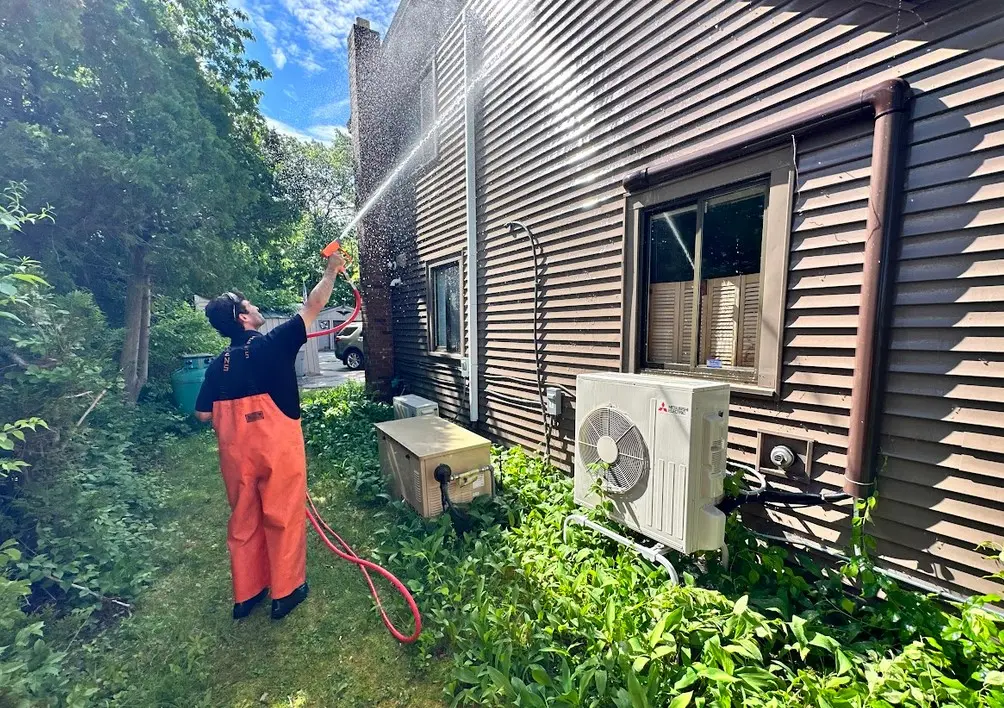
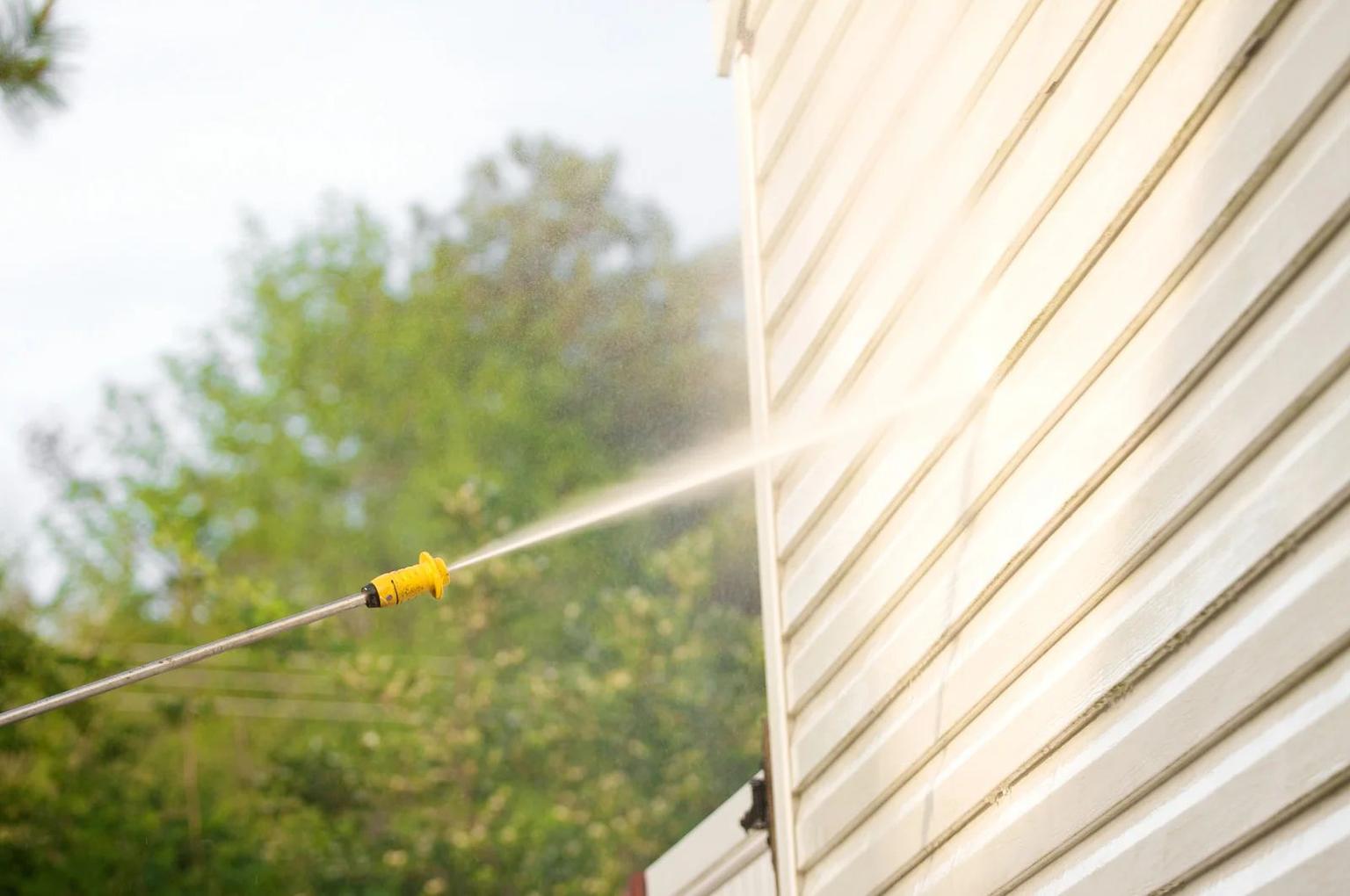
Black streaks on vinyl siding usually come from surface buildup, not ruined siding. In most cases, the cause is dirt, algae, mold, mildew, oxidation, or roof and gutter runoff. The fastest way to sort it out is to check where the streaks show up, how they feel, and whether they wipe off with mild soap and water.
If you see:
- Thin dark lines below windows, vents, or roof edges, that often means dirt, soot, or runoff
- Blotchy black or green patches on shady walls, that often means algae, mold, or mildew
- A chalky, faded film on older panels, that often means oxidation
- Stains that keep coming back in the same spot, that can point to a drainage or moisture issue
A gentle cleaning method is usually the right first step. But if you also notice warped panels, soft spots, seam staining, musty smells, or indoor water marks, the issue may be behind the siding, not on it.
Exterior siding black stains, how to stop siding from staining, mold o siding, black stains siding,
Quick Comparison
| Cause | What it looks like | What it feels like | Where it shows up | What to do first |
|---|---|---|---|---|
| Dirt, soot, pollution | Gray-black lines | Dry or gritty | Below rooflines, windows, vents | Wipe test, then mild soap |
| Algae, mold, mildew | Dark blotches or streaks | Slimy, fuzzy, or film-like | Shady, damp walls | Vinegar, oxygen bleach, or soft wash |
| Oxidation | Faded, chalky film | Powdery | Older, sun-hit siding | Confirm with wipe test; clean with care |
| Roof or gutter runoff | Dark vertical streaks | Wet during runoff, stained when dry | Below gutters, downspouts, roof edges | Fix runoff source, then clean |
| Splash-back from mulch or soil | Lower-wall stains | Dirty or damp film | Near beds, shrubs, sprinklers | Cut splash-back and rinse |
The rest of the article breaks down how to tell surface stains from moisture trouble, how to clean vinyl siding without damage, and how to keep the streaks from coming back.
Common Causes of Black Streaks and What Each One Looks Like
Black Streaks on Vinyl Siding: Causes, Signs & Fixes
The streak’s color, texture, and location can tell you a lot. Once you match how the stain looks with where it shows up, it gets much easier to tell the difference between plain surface buildup and a moisture issue.
Airborne Dirt, Soot, and Pollution Deposits
These stains usually look like thin, gray-black lines that follow the path rainwater takes down the wall. You’ll often spot them below window sills, rooflines, vents, and gutters.
If your home sits near a busy road or a chimney, exhaust and soot can settle on the siding and then wash downward when it rains. This tends to stand out most on light-colored vinyl.
A simple check can help: wipe the area with a damp white cloth. If it picks up gray-brown residue and the vinyl underneath looks clean, the problem is usually just on the surface.
Mold, Mildew, Algae, and Other Organic Growth
This type of staining looks less neat. Instead of straight vertical lines, you’ll usually see irregular dark patches or streaks in black, dark green, gray, brown, or even pinkish tones.
If you run a gloved hand over the surface, it may feel slimy or a little fuzzy. That points to surface growth. These stains tend to cluster on shaded, north-facing, or east-facing walls, where the siding stays damp longer after rain.
When a streak keeps coming back after a basic rinse, organic growth is often the reason.
If the stain feels dry and chalky instead of slimy, oxidation is more likely.
Oxidation and Runoff from Roofing or Landscaping
Older vinyl can become chalky and powdery after years of sun exposure. When that happens, dirt sticks more easily. Oxidized vinyl also gets more porous, which can make streaks tougher to remove.
Runoff stains usually appear as dark streaks below roof edges, gutters, or downspouts. Water can carry algae, tannins from decaying leaves, and asphalt residue straight down the face of the siding. Near the ground, mulch beds and shrubs can also splash dark organic material onto the lower wall.
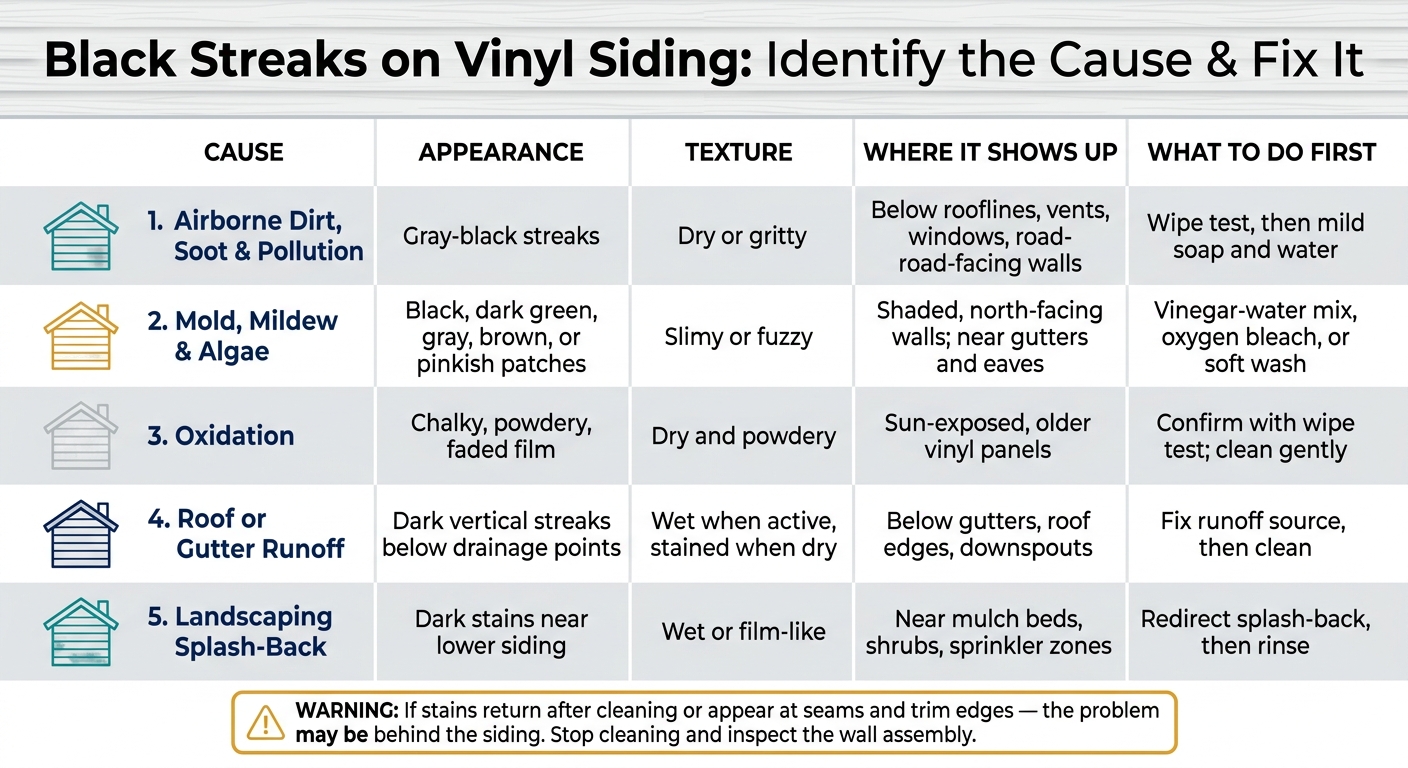
Use the chart below to match the stain before you clean it.
| Cause | Appearance | Texture | Common Location |
|---|---|---|---|
| Airborne dirt, soot, pollution | Gray-black streaks | Dry, gritty | Below rooflines, vents, windows, road-facing walls |
| Mold, mildew, algae | Black, dark green, gray, brown, or pinkish patches | Slimy or fuzzy | Shaded, north-facing walls; near gutters and eaves |
| Oxidation | Chalky, powdery, faded film | Dry and powdery | Sun-exposed, older vinyl panels |
| Roof or gutter runoff | Dark streaks below drainage points | Wet when active, stained when dry | Below gutters, roof edges, downspouts |
| Landscaping splash-back | Dark stains near lower siding | Wet or film-like | Near mulch beds, shrubs, sprinkler zones |
sbb-itb-238bf3c
How to Tell Surface Stains from Moisture or Siding Problems
Not every black streak means trouble below the surface. But sometimes your siding is waving a red flag. Knowing which is which can save you from scrubbing a spot that keeps coming back - or overlooking damage that gets worse with time.
Simple Visual and Wipe Tests Homeowners Can Do
Not every black streak points to deeper damage, but some do signal moisture behind the siding. Before you clean, check where the stain is coming from.
Start with a walk around the house in daylight. Look closely at windows, doors, gutters, downspouts, rooflines, and any area where the siding looks warped or discolored. Surface stains usually follow drip lines or splash patterns and sit on top of the panels, not along seams or trim edges.
For a closer look, mix warm water with a drop of dish soap. Then use a soft microfiber cloth to gently wipe a small, out-of-the-way part of the stained area. If the stain lifts and the cloth picks up dark residue, you’re probably looking at surface buildup. If the cloth comes away with a white or faded powder instead of dark grime, that points to oxidation. In plain English, the vinyl itself is breaking down from UV exposure rather than holding dirt on the surface.
Also pay attention to how the siding feels before and after wiping. Clean vinyl should feel fairly smooth and a little matte or slick. Mold or mildew may feel slimy, fuzzy, or powdery. If the stain hardly changes after a gentle wipe - especially if it’s brown or rust-colored near lap edges - water may be moving from behind the siding.
Signs the Problem Goes Beyond Cleaning
If a stain doesn’t lift with a gentle wipe, look for hidden moisture or siding movement.
A few physical clues can point to more than surface buildup. Wavy, rippling, or buckled panels can mean trapped moisture or heat expansion behind the siding. Lightly pressing on suspicious areas - especially near the bottom of walls or under windows - may reveal soft or spongy spots. That can signal rot or moisture damage in the wall assembly.
Check seams, lap joints, and trim edges with extra care. Stains that begin at seams, trim, or lap joints usually point to a problem behind the siding, not on it. If the same narrow stain keeps coming back after cleaning, especially below a gutter, roof valley, or damaged flashing, that’s another sign water is getting behind the siding instead of just dirtying the outside.
If you also notice musty odors near an exterior wall, or water marks and bubbling paint on the interior wall on that same side of the house, it’s time to call ViewCrew Services, not reach for the scrub brush again.
If you spot those warning signs, stop cleaning and inspect the wall assembly instead.
Safe Ways to Clean Black Streaks on Vinyl Siding
Use the stain type you identified above to pick the mildest cleaner that will do the job. That matters more than it sounds. The wrong cleaner - or too much pressure - can spread the stain and leave the siding worse than it was.
Best Cleaning Methods for Dirt, Mold, Mildew, and Algae
Before you start, take a few basic safety steps: pre-wet nearby plants, keep windows and doors closed, wear gloves and eye protection, and never mix bleach with ammonia-based cleaners.
Match the cleaner to the stain. For everyday dirt, soot, or pollution film, warm water and a mild detergent are often enough. Apply it with a soft-bristle brush or microfiber cloth, and work in small sections, about 8 to 10 feet wide, so the cleaner doesn’t dry before you rinse.
For light mold, mildew, or algae, try a vinegar-and-water mix made with about 1 part distilled white vinegar to 3 parts water. Apply it from the bottom up, keep the surface wet for 5 to 10 minutes, then scrub gently and rinse from the top down.
If that growth is tougher to remove, oxygen bleach (sodium percarbonate) is a gentler option than chlorine bleach. One common homeowner mix uses about 2 tablespoons per gallon of warm water for lighter staining. Let the surface stay wet for 10 to 15 minutes, scrub lightly, and rinse well from top to bottom. When used as directed, it’s easier on siding and nearby plants.
For heavier, spread-out mold, mildew, or algae that doesn’t respond to the steps above, move to a diluted bleach soft wash. A common homeowner mix is 1 part household bleach, about 5% sodium hypochlorite, to 4 parts water, plus a small amount of dish soap so the mix sticks to the surface. Apply from the bottom up, keep it wet for 5 to 10 minutes, then rinse fully from the top down with a low-pressure garden hose.
| Method | Best Use Case | Risk Level | Dwell Time | Skill Required |
|---|---|---|---|---|
| Hand Cleaning | Small, reachable dirt or soot spots | Very Low | Minimal | Low |
| Vinegar & Water | Light mold, mildew, or algae | Low | 5–10 min | Low |
| Oxygen Bleach | Light to moderate mold, mildew, or algae | Low | 10–15 min | Moderate |
| Bleach Soft Wash | Heavy, widespread mold or algae | Low–Moderate | 5–15 min | Moderate |
Why High Pressure Can Damage Vinyl Siding
If gentle cleaning doesn’t remove the stain, don’t jump straight to pressure washing.
A pressure washer can look like the fast answer, but on vinyl siding, it’s also one of the easiest ways to cause damage. Pressure above about 1,500 psi can push water behind the panels. It can also crack older siding, loosen trim, and disturb caulking around windows and doors. On top of that, the wrong spray angle can leave uneven striped marks that are hard to clean off later.
You can lower the risk by keeping the spray angle slightly downward and staying at least 3 feet from the surface. Even so, soft washing is usually the safer choice for vinyl siding. It uses low-pressure water plus a cleaning solution, which helps clean the surface without forcing water behind the panels.
When to Call ViewCrew Services

If the staining is spread across a large area or keeps coming back, it’s time to move past spot cleaning and bring in a pro for soft washing.
Call ViewCrew Services for multi-story homes, widespread staining, or streaks that return after cleaning. If the same stain shows up again in the same spot, the runoff or drainage problem behind it likely hasn’t been fixed yet. ViewCrew Services handles these cases, including whole-house soft washing with landscaping protection built into the process.
How to Stop Black Streaks from Coming Back
Black streaks usually come back for one reason: the wall stays wet, dirty, or gets hit by runoff again and again.
Reduce Moisture, Shade, and Splash-Back Around the Walls
If streaks keep showing up in the same places, start with the conditions around that wall.
Trim shrubs, hedges, and tree branches so they stay 1 to 2 feet away from the siding, especially on shaded sides of the house. That extra space helps air move and lets sunlight dry the wall faster.
Dark streaks near the bottom of the siding often come from splash-back. When rain hits soil or mulch, it can throw dirt and organic matter onto the wall. A 6- to 12-inch strip of gravel or stone along the foundation can cut down that splash. It also helps to check your sprinkler heads. If they're spraying the house, point them away from the walls.
Keep Roof Runoff and Seasonal Debris from Re-Staining the Siding
When streaks begin below the roofline, runoff is usually the first thing to check.
Look at gutters and downspouts twice a year. If gutters clog or overflow, rainwater spills in the same place each time. That can leave the same dark vertical lines right below the roofline. Downspouts should also carry water at least 3 to 6 feet away from the foundation so the soil beside the wall doesn't stay soaked.
If one spot keeps staining, look straight above it. A roof valley, gutter joint, or overhang may be sending extra water to that area.
Key Takeaways for Choosing the Right Next Step
The best fix depends on where the streak shows up.
Handle the moisture problem first. Then clean the siding with the mildest option that fits the stain. Use mild soap for dirt and soot, and a siding-safe cleaner for mold or algae.
If the same marks come back soon after cleaning, the root cause is still there. Stains near gutters, downspouts, or thick plant growth usually point to a drainage or moisture issue that needs more than another wash. If the staining keeps returning or covers a big section, ViewCrew Services can inspect the cause and recommend the next step.
FAQs
Can black streaks damage vinyl siding?
Black streaks usually come from surface buildup like mold, mildew, algae, dirt, and moisture. In most cases, the streaks sit on the outside of the siding.
The problem is what happens if they stay there. That buildup can hold moisture against the siding, which may lead to surface wear, warped panels, and even wood rot underneath over time.
Cleaning mistakes can make things worse. High-pressure washing, in particular, can dent, warp, or crack vinyl.
How do I know if the stain is mold or just dirt?
Check the stain’s location and appearance first. Dirt usually sits on the surface like a layer of grime. Mold, mildew, or algae often show up as dark, greenish, or gray streaks, especially in shaded, damp, or north-facing spots.
If the stain sticks around after routine cleaning, comes back fast in humid weather, or has a musty smell, it’s more likely biological growth than plain dirt.
Why do black streaks keep coming back?
Black streaks often come back for a simple reason: the growth underneath them - like mold, mildew, or algae - wasn't fully killed off.
Pressure washing can clean the surface stain, but it may leave the root system behind. And when that happens, the streaks can show up again in 60 to 90 days.
The same problem sticks around if the roof still deals with shade, humidity, and moisture buildup. Those conditions give these organisms room to keep growing.
Soft washing works differently. It kills the growth at the source and leaves behind a protective layer that helps discourage new spores for 12 to 18 months.