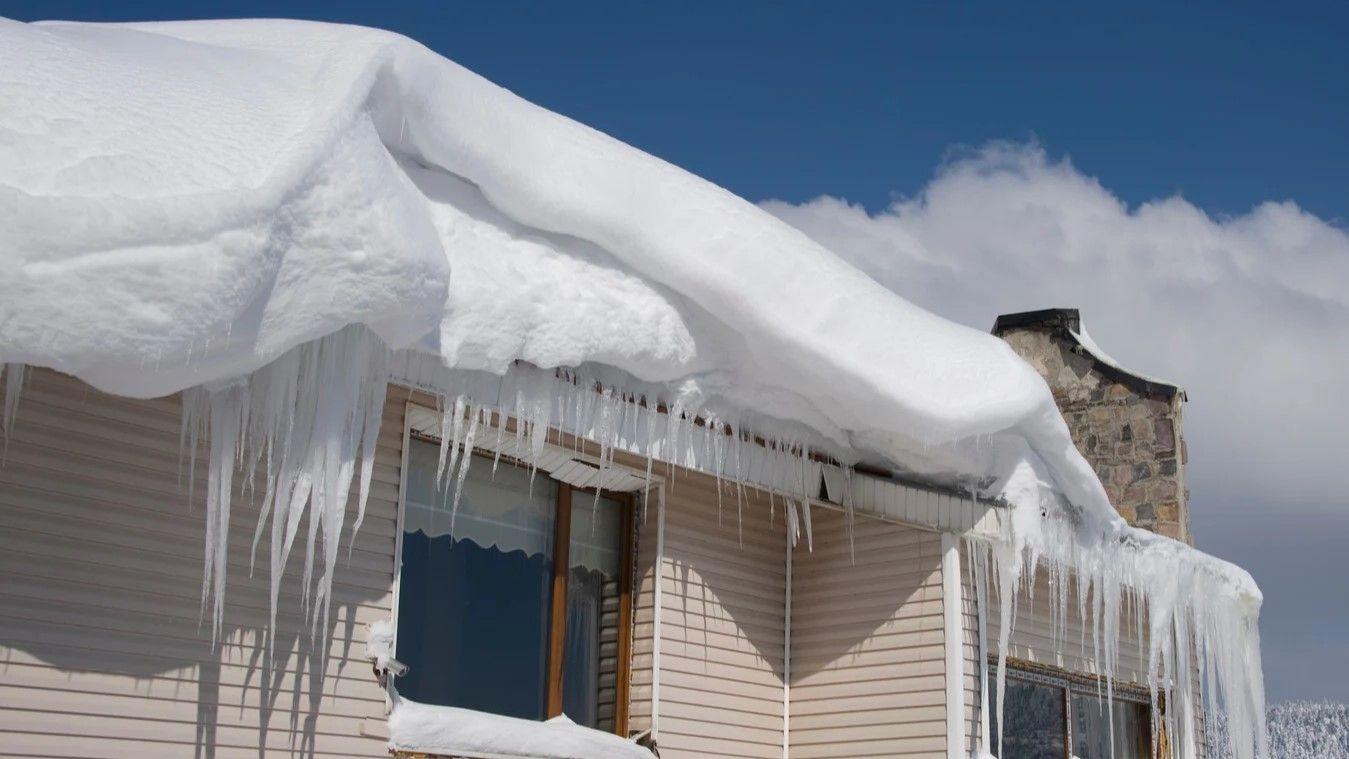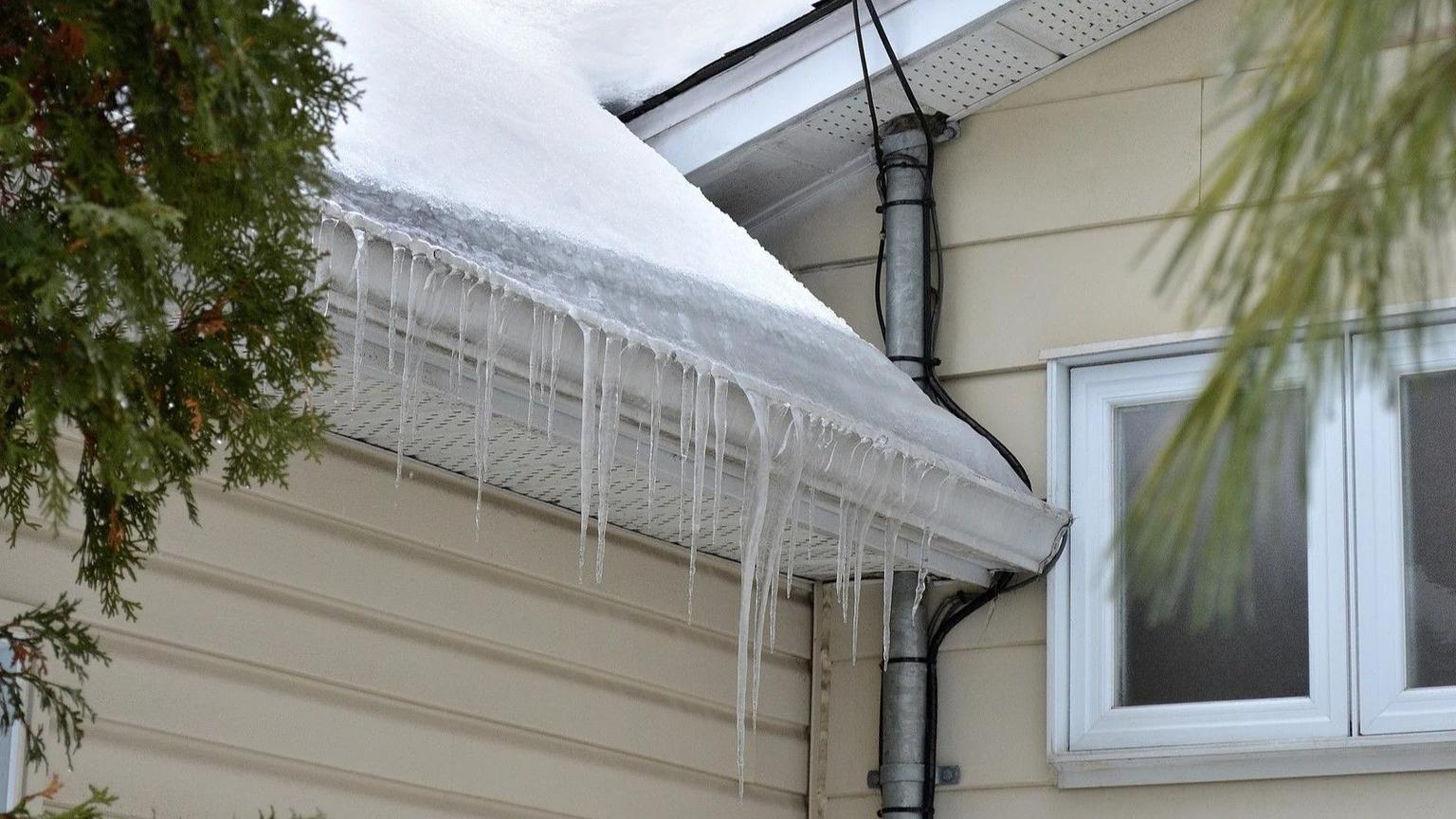
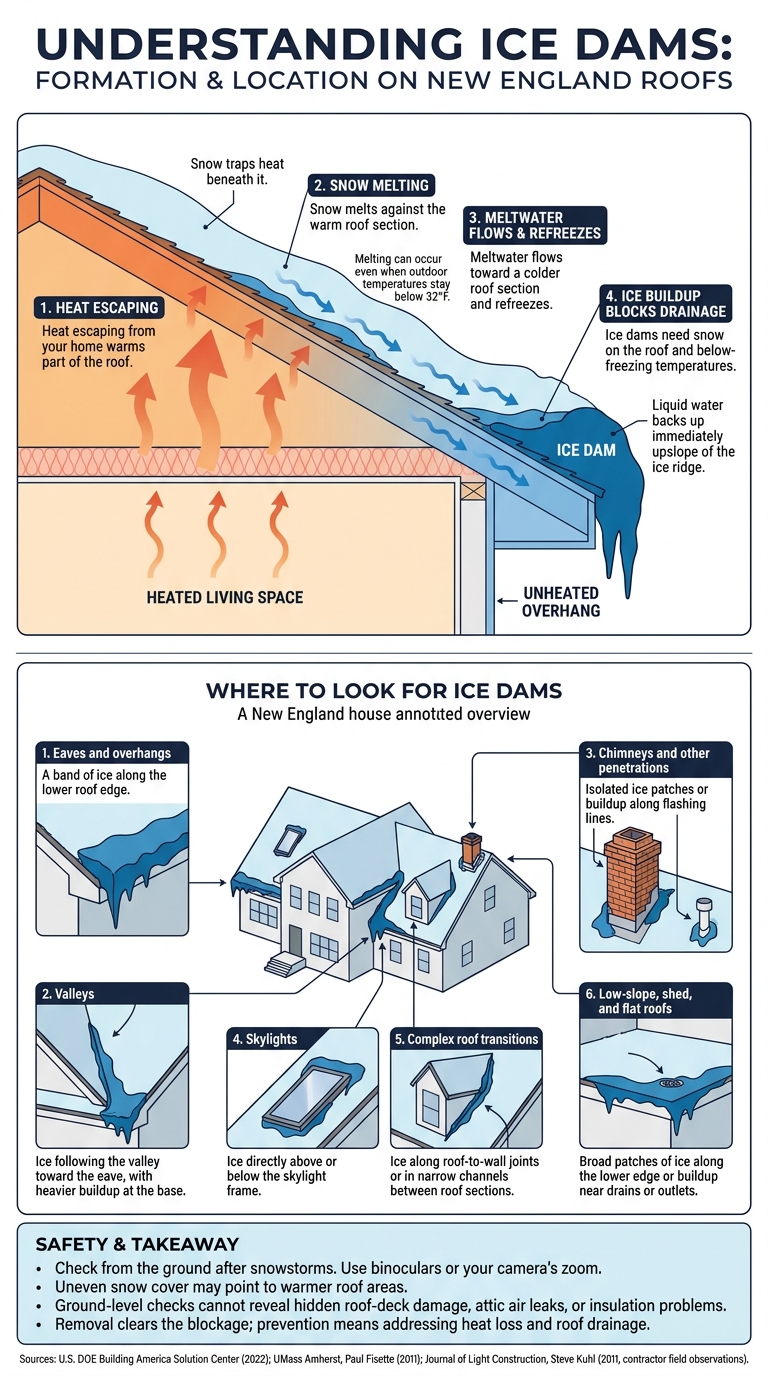
Ice dams form when snow melts on a warm roof section and refreezes on a colder one, blocking drainage. Heat escaping from your home is usually the cause, even when outdoor temperatures stay below 32°F. Snow acts like a blanket that traps that heat against the roof, so attic air leaks, uneven insulation, and warm spots near chimneys or plumbing stacks can start the melting.
On New England roofs, watch eaves, valleys, chimneys, skylights, roof transitions, and low-slope drainage areas. After a snowstorm in Massachusetts, Southern New Hampshire, or Connecticut, check from the ground for ice ridges and uneven snow cover, which can signal trouble. A ground-level view cannot show hidden roof-deck damage, attic air leaks, or insulation problems. If you already see a solid ridge of ice, professional ice dam removal in Massachusetts and Southern New Hampshire is the next step.
Removal clears the blockage, but preventing another dam means addressing heat loss and roof drainage. For the repairs that reduce the risk, see the ice dam prevention guide.
How Ice Dams Form on New England Roofs
Weather Conditions That Allow Ice Dams to Form
Ice dams need snow on the roof and below-freezing temperatures to form.1
Snow acts like a blanket, trapping heat beneath it. That heat can melt snow against the roof even when the air outside stays below freezing. Just one warm section of roof can start the melting.2
After a storm in Massachusetts, southern New Hampshire, or Connecticut, watch for snow that stays on the roof while temperatures remain below freezing. Pay extra attention where the roof’s shape holds snow and meltwater in place.
sbb-itb-238bf3c
Where Ice Dams Form on New England Roofs
After a storm, check roof edges and places where warm and cold roof sections meet. These are the first spots to watch for ice buildup.
Eaves, Overhangs, and Valleys
Eaves and overhangs are the most common trouble spots. They extend beyond the heated building envelope, so they stay colder than the roof above. Valleys are also high-risk areas because they funnel snow and meltwater into a narrow path.12
Chimneys, Roof Penetrations, and Skylights
Warm spots near chimneys, plumbing vents, and exhaust fans can melt nearby snow. Flashing and skylight curbs can then steer that runoff toward colder areas, where it refreezes.13
Complex Roof Transitions and Low-Slope Roofs
Complex roofs with dormers are harder to air seal, insulate, and ventilate. On shed, low-slope, and flat roofs, blocked drainage can let ice spread across a larger area.12
Use this table to check common trouble areas from the ground.
| Roof location | Why ice forms there | What to look for |
|---|---|---|
| Eaves and overhangs | Exposed edges stay colder than the roof above.12 | A band of ice along the lower roof edge. |
| Valleys | Channels collect snow and meltwater from multiple roof planes.13 | Ice following the valley toward the eave, with heavier buildup at the base. |
| Chimneys and other penetrations | Nearby warmth melts snow, while flashing redirects runoff.13 | Isolated ice patches or buildup along flashing lines. |
| Skylights | Curbs redirect runoff, and nearby warmth can melt snow.1 | Ice directly above or below the skylight frame. |
| Complex roof transitions | Uneven warmth can affect roof-to-wall joints and narrow runoff channels.12 | Ice along roof-to-wall joints or in narrow channels between roof sections. |
| Low-slope, shed, and flat roofs | Blocked drainage allows meltwater to pool and refreeze.13 | Broad patches of ice along the lower edge or buildup near drains or outlets. |
How to Check Your Roof From the Ground After a Storm
From a safe spot on the ground, use binoculars or your camera’s zoom to check the trouble spots in the table above. Compare snow cover across roof sections.
Uneven snow cover may point to warmer areas of the roof. Look for ice along the lower roof edge, in valleys, around chimneys and roof penetrations, and at roof transitions.
A ground-level check has limits: it can’t reveal hidden roof-deck damage, attic air leaks, or insulation problems. If you already see a solid ridge of ice, move on to ice dam removal.
Conclusion: Clear the Ice, Then Fix the Cause
Heat escaping from your home usually starts an ice dam, and removing the ice does not stop that heat loss. Attic air leaks, uneven insulation, and warm spots near chimneys or plumbing stacks melt the snow, and the water refreezes at colder eaves, valleys, skylights, and roof transitions.
After each snowstorm, check those spots from the ground for ice ridges and uneven snow cover. A ground-level view cannot show hidden roof-deck damage or attic air leaks, and uneven melting can also come from sun exposure or roof shape, so treat the check as a first look. If water is already coming inside, see what to do about an ice dam leak.
If a solid ridge of ice is blocking drainage, call a professional for removal and stay off the roof. ViewCrew Services offers same-day emergency ice dam removal with low-pressure steam in Massachusetts and Southern New Hampshire, and it shares before-and-after video of every job.
Once the ice is gone, address the heat loss behind it, starting with air sealing, then insulation and ventilation. Use the ice dam prevention guide to plan the repairs in order.
FAQs
Why do ice dams form on only one side of my roof?
Ice dams can form on just one side of your roof because roof deck temperatures aren’t the same everywhere. Heat escaping from your home is usually the cause, but it doesn’t warm every part of the roof equally.
Direct sunlight can melt snow on one side while the shaded side stays colder. Attic air leaks, uneven insulation, and heat from recessed lights, plumbing stacks, or chimneys can also make certain roof sections warmer.
Can ice dams form without an attic?
Yes, ice dams can form on roofs without an attic. Heat escaping from living spaces directly beneath the roof is usually the cause. Warm spots near chimneys or in roof valleys can also melt snow.
When outdoor temperatures stay below freezing and snow remains on the roof, meltwater can refreeze on colder parts of the roof and form an ice dam.
Does uneven roof snow always indicate heat loss?
No. Uneven snowmelt doesn’t always mean your home is losing heat. Escaping heat usually warms a roof enough to form ice dams, but it’s not the only cause.
A roof’s shape and the direction it faces can also leave some spots warmer than others. These include valleys and areas around chimneys and other roof penetrations.