On New England roofs, icicles alone do not mean you have an ice dam; a thick ridge of ice blocking meltwater is the warning sign. Check from the ground for ice buildup along the eaves and soffits, then look indoors for ceiling stains or attic moisture from a safe location.
Keep people and pets away from hanging ice, and never climb onto an icy roof or chip ice away. If there’s no sign of trouble, monitor during thaws and recheck within 24–48 hours. Blocked drainage, active leaks, or ice above an entrance call for prompt professional help, including ice dam removal when a ridge has formed.
The checks below separate hanging icicles from an ice dam and show whether you need removal or prevention. For prevention steps, see ice dam prevention for New England roofs.
Icicles and ice dams: The dangers and how to prevent them
sbb-itb-238bf3c
Ice Dam vs Icicles: What's the Difference?
Roof Icicles vs. Ice Dams: Warning Signs
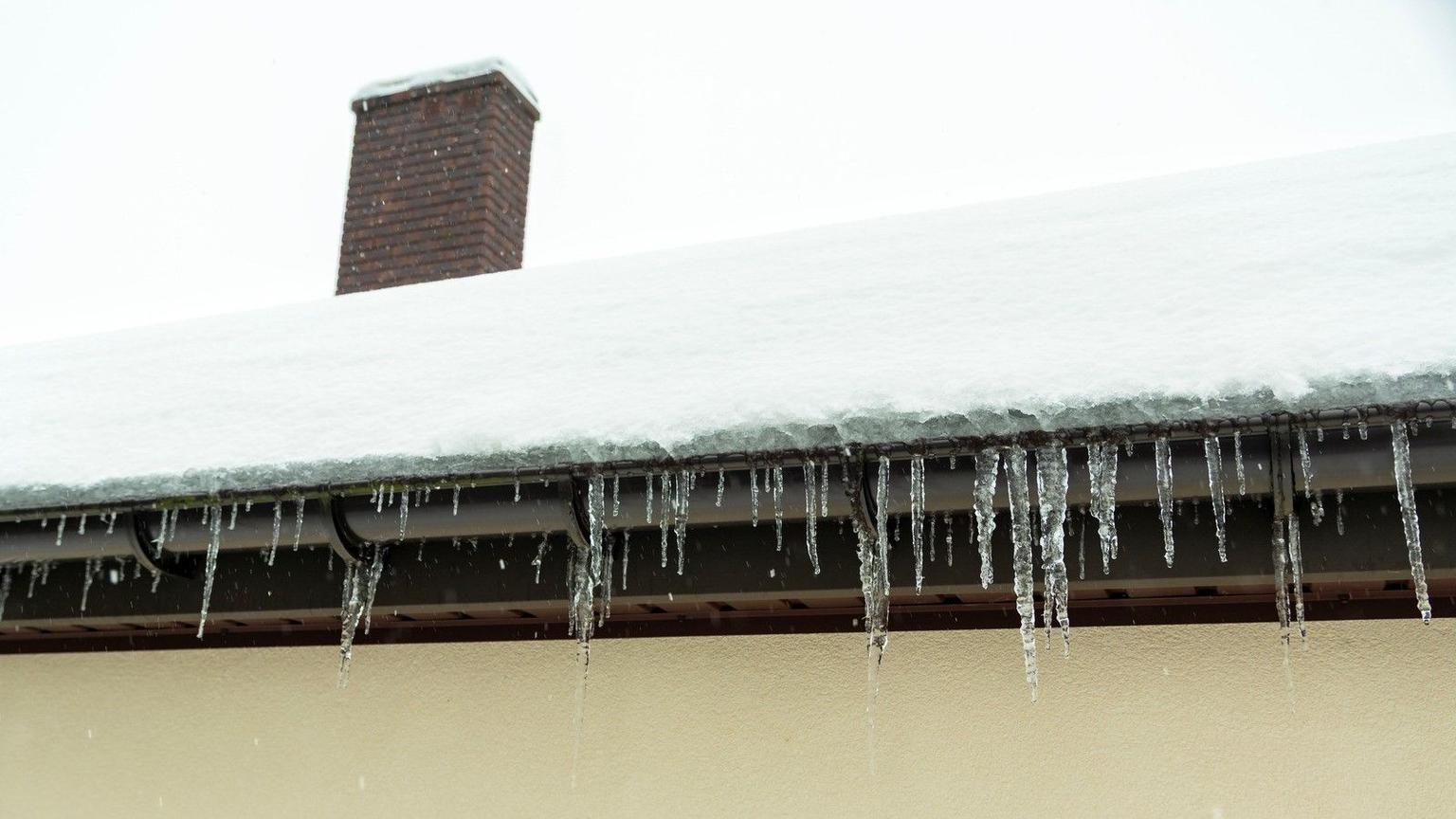
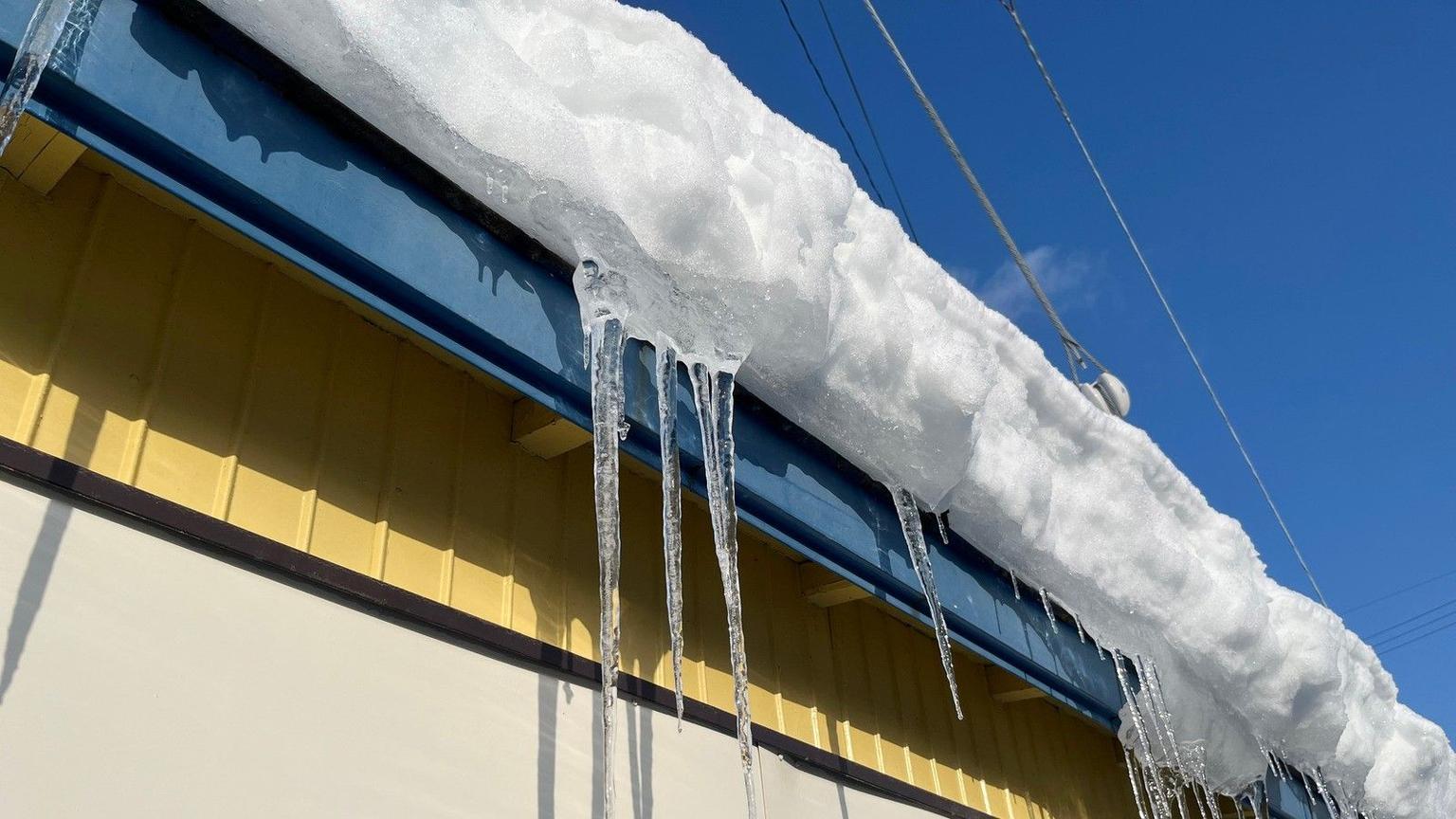
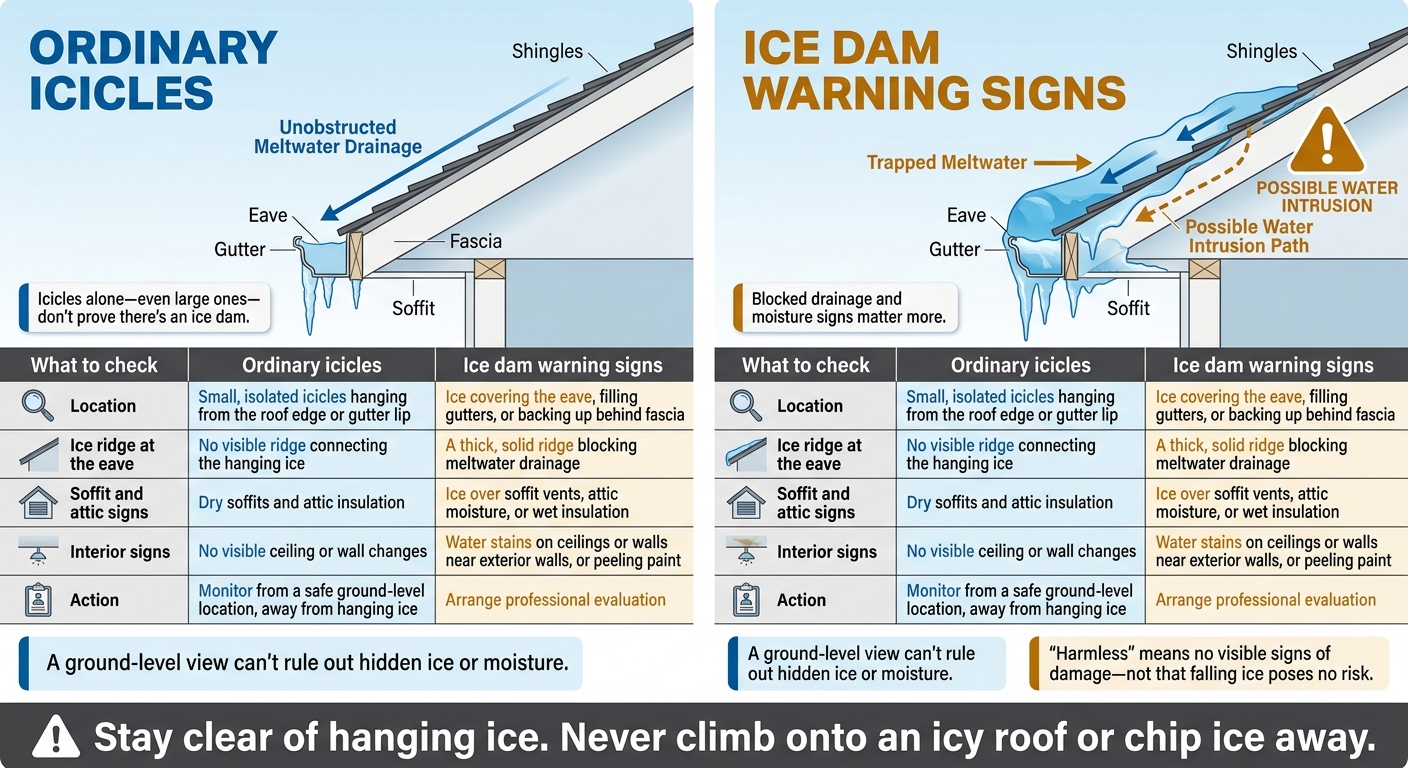
Icicles are cone-shaped pieces of ice that hang freely from eaves or gutters. An ice dam is a thick, solid ridge of ice at the roof edge that blocks meltwater from draining. Trapped water can seep beneath shingles and into the home. Knowing the difference helps you decide where to inspect next.
Harmless Icicles vs Ice Dam Warning Signs
Here, ‘harmless’ means no visible signs of damage - not that falling ice poses no risk.
| What to check | Ordinary icicles | Ice dam warning signs |
|---|---|---|
| Location | Small, isolated icicles hanging from the roof edge or gutter lip | Ice covering the eave, filling gutters, or backing up behind fascia |
| Ice ridge at the eave | No visible ridge connecting the hanging ice | A thick, solid ridge blocking meltwater drainage |
| Soffit and attic signs | Dry soffits and attic insulation | Ice over soffit vents, attic moisture, or wet insulation |
| Interior signs | No visible ceiling or wall changes | Water stains on ceilings or walls near exterior walls, or peeling paint |
| Action | Monitor from a safe ground-level location, away from hanging ice | Arrange professional evaluation |
These checks help distinguish isolated hanging ice from a drainage problem. But a ground-level view can’t rule out hidden ice or moisture.
For details on how ice dams form and ways to prevent them, see this guide to ice dam prevention on New England roofs.
Icicles alone - even large ones - don’t prove there’s an ice dam. Blocked drainage and moisture signs matter more.
Next, check the eaves, soffits, and attic for the signs below.
Where to Check for Ice Dam Warning Signs
Look for Eave Ice Ridges and Soffit Ice
From safe ground, well away from overhanging ice, check the eaves and soffits. Look for a hard, gray-white ridge along the roof edge, sometimes with a clear sheet of ice behind it. Also check for buildup behind the fascia.
Ice at soffit vents, water running down siding, or gutters pulling away from the fascia need prompt professional assessment. Stay off the roof and leave the ice alone.
If you see signs of active icing or runoff at the roof edge, move indoors to check for moisture.
Check for Attic Moisture and Interior Stains
During thaws, check upper corners along exterior walls for new or recurring stains. Staining during a winter thaw, along with active moisture or frost, points to an ice dam. Active leaks need prompt attention.
Inspect the attic only from a safe, permanent walkway. Never step on insulation or ceiling drywall. From a secure position, look for frost underneath the roof deck, damp wood, or wet insulation.
If the same areas change after each thaw, document what you see and check again after the next one.
Plan Follow-Up Checks and Ice Dam Prevention
Recheck trouble spots during a thaw and again within 24–48 hours, using safe indoor or ground-level viewpoints. Take dated photos of any changes to track repeated wetting or icing.
If the same spots keep getting wet, review ice dam prevention before making longer-term repairs.
Stay Safe Around Icicles
When icicles pose a hazard, stop inspecting and put safety first. Ice hanging from gutters or eaves can fall without warning, injuring people or pets, damaging property or vehicles, and leaving slippery debris below. Keep people, pets, and vehicles away from affected eaves. If ice hangs over a doorway or path, use another entrance.
Never stand directly beneath ice to inspect it, climb an icy roof, or try to knock icicles down from a ladder. Avoid hammers, chisels, rock salt, and pressure washers. Chipping and high-pressure water can damage roofing materials. Rock salt can corrode metal and damage nearby surfaces.
Call a professional if you can’t safely avoid the falling ice, especially when it hangs above a front door, side door, or emergency exit.
If you see an ice ridge at the eave or moisture indoors along with icicles, prevention alone isn’t enough. Seek professional steam removal rather than attempting DIY removal. Learn more about how ice dam removal works in New England.
Conclusion: When to Call for Ice Dam Removal
In New England, icicles alone do not confirm an ice dam, but a thick ridge of ice along the roof’s edge calls for a professional inspection. While you wait for help, stay clear of areas where ice could fall. If the ice is only in the gutters or downspouts, see safe fixes for ice in gutters.
If you also notice brown ceiling stains, peeling paint, or moisture in the attic, act promptly.
In the Merrimack Valley and MetroWest, ViewCrew Services melts roof-edge ice with low-pressure steam as part of its ice dam removal service, and its estimates are free and no-obligation.
FAQs
Can you have an ice dam without icicles?
Yes. An ice dam is a ridge of ice along the roof’s edge that traps melting snow and prevents water from draining. Icicles often form alongside ice dams, but ice dams can occur without them. And icicles alone don’t mean an ice dam is present.
Indoor water stains, damp insulation, or moisture on ceilings and walls may point to an ice dam causing damage - even if you don’t see icicles.
Why do icicles keep forming in the same spot?
Icicles keep forming in the same spot because meltwater runs to the colder roof edge - the eaves or overhang - and freezes again. Heat escaping from the attic or roof deck can melt snow farther up the roof, keeping the cycle going.
Over time, repeated freezing can build a ridge of ice that blocks drainage. But icicles alone don’t prove there’s an ice dam.
Can ice dams damage my roof without visible leaks?
Yes. Water trapped behind an ice ridge can seep under shingles, soaking the roof deck and insulation. This can lead to mold or structural damage before you spot a leak inside.
Icicles alone don’t mean you have an ice dam. But if you see an ice ridge at the eaves or signs of water backing up under shingles, professional ice dam removal is recommended.