When should you soft wash your home? Spring (April–May) and early fall (September–October) are the ideal times, especially for homeowners in New England. These seasons align with the region's climate, ensuring effective cleaning that lasts. Here's why:
- Spring (April–May): Clears winter grime like salt, mold, and algae before summer growth accelerates.
- Fall (September–October): Removes late-summer buildup and prevents mold from settling during winter.
Why timing matters: Cleaning too early or late reduces effectiveness. Surfaces need consistent temperatures above 45°F for cleaning solutions to work.
Key tip: Book early, especially for spring, as demand peaks during this season. For homes with shaded areas or north-facing walls, consider a twice-yearly schedule to maintain results.
For New England homeowners, these two windows ensure your exterior stays clean and protected year-round.
What Is The Best Time Of Year To Wash a House?
sbb-itb-238bf3c
Spring: The Best Time to Soft Wash Your Home
Spring is the ideal season for your annual soft washing service. The April–May period is especially effective because it tackles the stubborn buildup left behind by winter. This timing ensures you remove the damage caused by cold weather while preparing your home for the warmer months ahead.
Why Spring Cleaning Matters
Winters in New England can be tough on your home. Road salt often leaves unsightly stains on lower siding panels, while snow traps moisture that encourages algae growth. As temperatures rise in March and April, pine pollen starts accumulating on already-damp surfaces. A spring soft wash clears away this buildup before it hardens, helping to extend the life of your home’s surfaces and minimizing regrowth during the summer.
When to Schedule by Region
Temperature plays a critical role in soft washing. For the cleaning solution to work effectively, surfaces need to be at least 45°F, and overnight lows are just as important as daytime highs. These temperature variations mean the best time to schedule soft washing depends on where you live.
| Region | Earliest Start | Optimal Window |
|---|---|---|
| Coastal Connecticut (Fairfield County) | Late March | Late March–April |
| Massachusetts | Late April | Late April–May |
| New Hampshire (Rockingham & Hillsborough) | Late April | May |
In Connecticut, mild winters allow surfaces to warm up by late March, making it an earlier start for soft washing. In Massachusetts, late April is the sweet spot - warm enough for effective cleaning but still early enough to tackle winter residue before summer growth begins. For New Hampshire towns like Windham, Atkinson, and Hampstead, colder nighttime temperatures push the optimal window into May. If your property has shaded areas, algae can establish itself faster, so booking early within this timeframe is a smart move. Also, keep in mind that demand peaks during April and May, so scheduling 2–3 weeks in advance is a good idea to secure your preferred date.
What Gets Treated During a Spring Soft Wash
A spring house washing goes beyond just cleaning the siding. It also addresses trim, roofs, and foundation edges, removing salt, algae, and moss before they cause long-term damage. The soft wash method doesn’t just clean the surface - it kills algae and mold at their roots. Using biodegradable cleaning solutions and low-pressure techniques, this approach ensures results that last 4–6 times longer compared to traditional pressure washing. Next, we’ll take a closer look at how other seasons compare for soft washing.
Early Fall: Stop Mold Before Winter Sets In
Spring might get all the glory when it comes to cleaning, but don't overlook the benefits of a soft wash in September or October. By late summer, mold, mildew, and algae have had plenty of time to settle in, especially on shaded siding or north-facing walls. If left untreated, these growths can survive the winter and slowly damage your siding and paint.
Why Fall Soft Washing Makes Sense
Soft washing in the fall tackles mold and algae at their source, ensuring they don’t reappear when spring rolls around. Plus, the cleaning solution used leaves a protective layer on treated surfaces, slowing down future growth. This means a fall wash isn’t just about cleaning now - it’s about reducing the grime and pressure washing costs you'll face next year.
"Eliminating organic growth in the fall means mold and mildew won't have months to sit undisturbed and feast on your paint or siding under a blanket of snow." - Clean Machine Power Wash
This proactive approach is especially beneficial for certain types of homes.
Homes That Benefit Most From a Fall Wash
Not every home needs two washes a year, but some are more prone to issues. Homes surrounded by dense trees or with north-facing siding are especially vulnerable because they stay damp longer and get less natural sunlight, which helps inhibit algae growth. For instance, if your house in a town like Windham or Hampstead sits under a thick tree canopy, a fall house washing is critical to preserving your spring cleaning efforts.
Coastal homes face their own challenges. The mix of salt air and high humidity fuels organic buildup all year long, making regular cleaning - every 8 to 10 months - a must to prevent damage.
Extended Fall Season in Coastal CT
In coastal Connecticut, the fall cleaning window lasts longer thanks to milder temperatures. Unlike inland areas, where cleaning solutions lose effectiveness as temperatures drop, coastal homeowners can often schedule soft washing into November, as long as it stays above 40°F. Towns like Greenwich and Darien enjoy this extended season, giving residents extra time to prepare their homes for winter.
One tip: schedule your service before peak leaf fall. This ensures leaves don’t coat your freshly cleaned surfaces or clog gutters, leaving your home ready for winter with proper drainage and protection.
Spring vs. Summer vs. Fall vs. Winter: How Each Season Compares
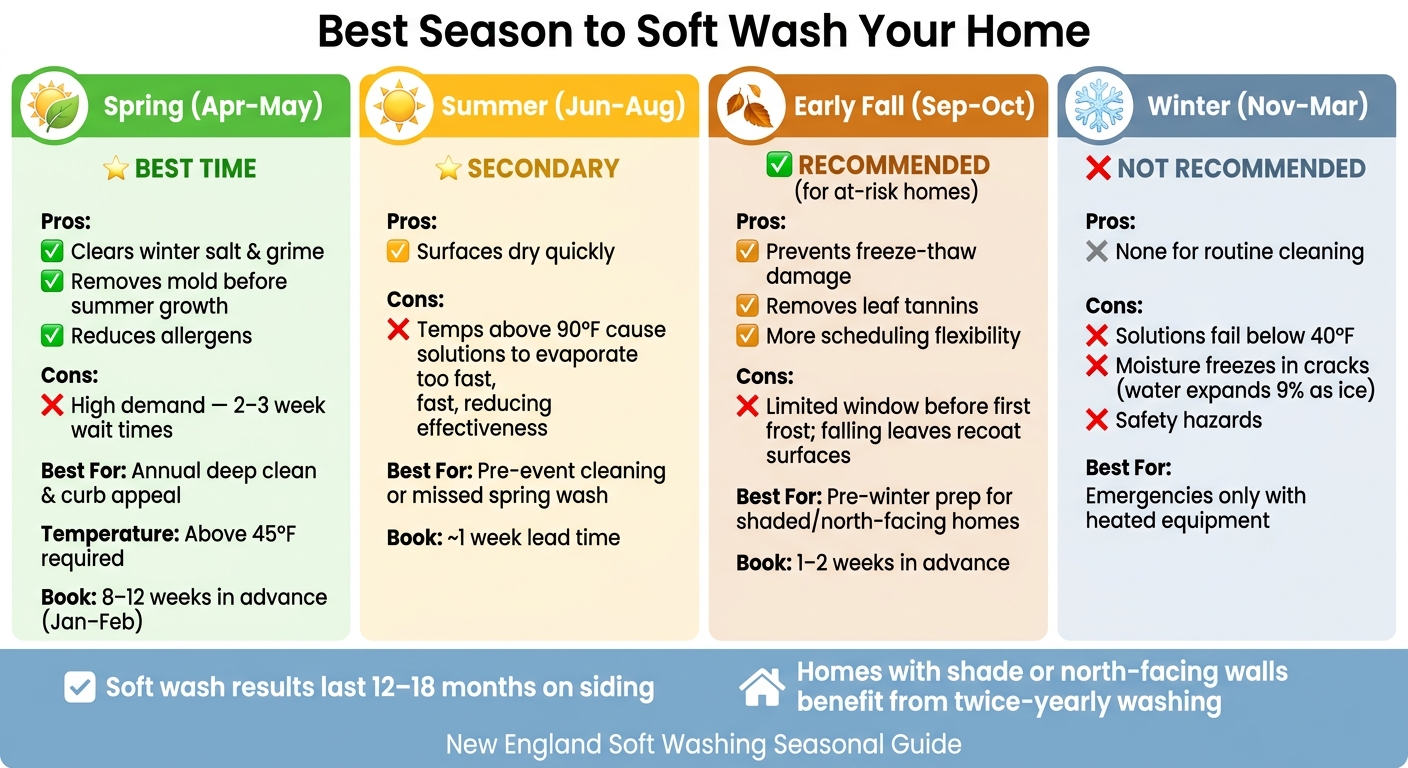
Best Season to Soft Wash Your Home: Season-by-Season Guide
If you're trying to figure out the best time to schedule your soft washing service, it's helpful to weigh the pros and cons of each season. Here's how spring, summer, fall, and winter stack up.
Season-by-Season Comparison Table
| Season | Pros | Cons | Best Use Case |
|---|---|---|---|
| Spring (Apr–May) | Clears out winter grime and salt; tackles mold before summer heat accelerates its growth; reduces allergens | High demand often means 2–3 week wait times | Ideal for an annual deep clean and refreshing your home's curb appeal |
| Summer (Jun–Aug) | Surfaces dry quickly | Temperatures above 90°F can cause cleaning solutions to evaporate too fast, reducing effectiveness | Great for pre-event cleaning or catching up if spring cleaning was missed |
| Early Fall (Sep–Oct) | Protects against freeze-thaw damage; removes leaf tannins before they stain; more scheduling flexibility | Limited time before the first frost; falling leaves can quickly recoat surfaces | Perfect for pre-winter prep, especially for shaded or north-facing areas |
| Winter (Nov–Mar) | Not suitable for routine cleaning | Solutions lose effectiveness below 40°F; risk of freezing on treated surfaces; potential safety hazards | Reserved for emergencies requiring specialized heated equipment |
Why Summer and Winter Fall Short
While summer might seem like a convenient time for soft washing, extreme heat can work against you. When temperatures exceed 90°F, cleaning solutions evaporate too quickly, leaving less time to neutralize mold and algae effectively. This can result in less thorough cleaning, even though the surfaces dry faster.
Winter, on the other hand, brings its own set of challenges. Once temperatures dip below 40°F, soft wash solutions lose their chemical effectiveness. Even worse, any moisture that seeps into cracks or gaps can freeze and expand - water expands by about 9% when it turns to ice - potentially causing cracks or pushing material behind siding. Unless there's an emergency requiring heated equipment, winter isn't a practical choice for soft washing, especially in colder regions like New England.
This breakdown helps you plan your soft washing schedule wisely, ensuring your home gets the care it needs at the right time.
How to Plan Your Annual Soft Washing Schedule
Use seasonal performance to create a reliable soft washing schedule.
The Simple Takeaway for Most Homeowners
For homeowners in New England, the best times for soft washing are spring (April–May) and early fall (September–October).
A spring cleaning in April or May is crucial for removing winter's buildup of salt, grime, and organic debris before it hardens on your siding or roof. This annual cleaning is often enough for most homes. However, if your property is shaded or faces north, consider adding a fall session in September or October. These conditions can keep surfaces damp, encouraging faster mold and algae growth. Since soft washing results generally last 12 to 18 months on siding, homes in high-risk areas benefit from a twice-yearly schedule to maintain protection.
"If you wash at the wrong time, you may get shorter-lasting results, miss peak growth cycles, or allow regrowth sooner than expected." - Pura Softwash
Professional Service vs. DIY Timing
Timing isn’t just about picking a date - it’s about matching the treatment to the right conditions. Professional house washing services can fine-tune chemical concentrations and dwell times based on factors like temperature, surface type, and the specific organisms present. For instance, algae on a roof requires a different approach than mold on vinyl siding. Experts also ensure landscaping is pre-soaked and rinsed, protecting plants from potential damage - something that’s tricky to manage in a DIY effort. This level of precision ensures consistent and effective results.
Book Early During Peak Windows
Plan ahead to secure your spot during high-demand seasons.
May is typically the busiest month for house washing services across Massachusetts, New Hampshire, and Connecticut. Established companies often have 2–3 week lead times during this peak period. To secure a spring appointment in April or early May, it’s smart to book as early as January or February.
Fall scheduling is a bit easier, with September and October usually requiring a 1–2 week lead time. However, in areas like New Hampshire, the season can end abruptly with the first frost, often by mid-October. It’s best to schedule fall services before leaves start dropping to prevent freshly cleaned surfaces from getting dirty again.
| Booking Period | Target Service Window | Recommended Lead Time |
|---|---|---|
| January – February | Early Spring (April–May) | 8–12 weeks |
| Late April | May Peak Season | 2–3 weeks |
| June – August | Summer Maintenance | ~1 week |
| September | Fall Protection | 1–2 weeks |
Here’s a tip: During winter, take photos of any visible stains, green streaks, or dark patches on your siding or roof. Sharing these images when requesting a quote helps crews prepare accurately, saving time and avoiding surprises on the job day.
Conclusion: Get the Timing Right and Your Soft Wash Works Harder
New England's climate offers two ideal windows for soft washing, and timing it right can make all the difference in extending the life of your home's exterior. In spring (April–May), a soft wash clears away winter's buildup of road salt, organic debris, and mold spores before summer's heat gives them a chance to thrive. In early fall (September–October), another wash removes moisture traps and organic debris, helping to protect siding, roofing, and painted surfaces from freeze-thaw damage. For best results, ensure surface temperatures stay consistently above 45°F during these periods.
When timed correctly, soft washing provides residual protection that lasts 12–18 months, keeping regrowth at bay. However, cleaning too early during a cold snap can diminish its effectiveness, so sticking to these seasonal windows is key.
Homes in Massachusetts, New Hampshire, and Connecticut see the greatest benefits when cleaned during these optimal times. For most homeowners, a spring wash in April or May is the most practical choice. But if your property is shaded, faces north, or deals with high humidity, coastal air, or dense tree cover, adding a fall wash in September or October is essential for maintaining your home's exterior.
If you're ready to schedule based on your home's unique needs, ViewCrew Services serves all three states and can help you decide whether a one- or two-service annual plan is best. Search for "house washing near me" to find professional help in your area.
FAQs
How warm does it need to be for soft washing to work?
To get the best results with soft washing, temperatures should stay consistently above 45°F. Although some professionals might work in conditions as low as 40°F, colder temperatures can reduce the effectiveness of the cleaning solution and extend the time it needs to work. On the flip side, avoid working in temperatures over 90°F, as excessive heat can cause the solution to evaporate too quickly, cutting short its ability to break down grime effectively.
Do shaded or north-facing walls need soft washing twice a year?
Shaded or north-facing walls often demand more frequent soft washing. These areas tend to stay damp longer and receive little to no sunlight, creating the perfect environment for algae, mold, and moss to thrive. While most homes can get by with an annual cleaning, homes with significant shade or north-facing surfaces might need a second treatment - particularly in the fall. This extra care can help prevent moisture-related stains and surface damage, which are common issues in New England's climate.
When should I book a soft washing service for spring or fall?
For homeowners in New England, spring is the ideal time to tackle winter grime. Scheduling a wash in April or May can make a big difference in clearing away the buildup from colder months. If your home sits in heavy shade or faces north, consider adding a fall wash in September or October to keep things looking fresh.
To lock in your preferred dates, it’s smart to book at least 2–3 weeks ahead. Spring tends to be a busy season, so aiming for late April, when temperatures consistently stay above 45°F, will give you the best results.