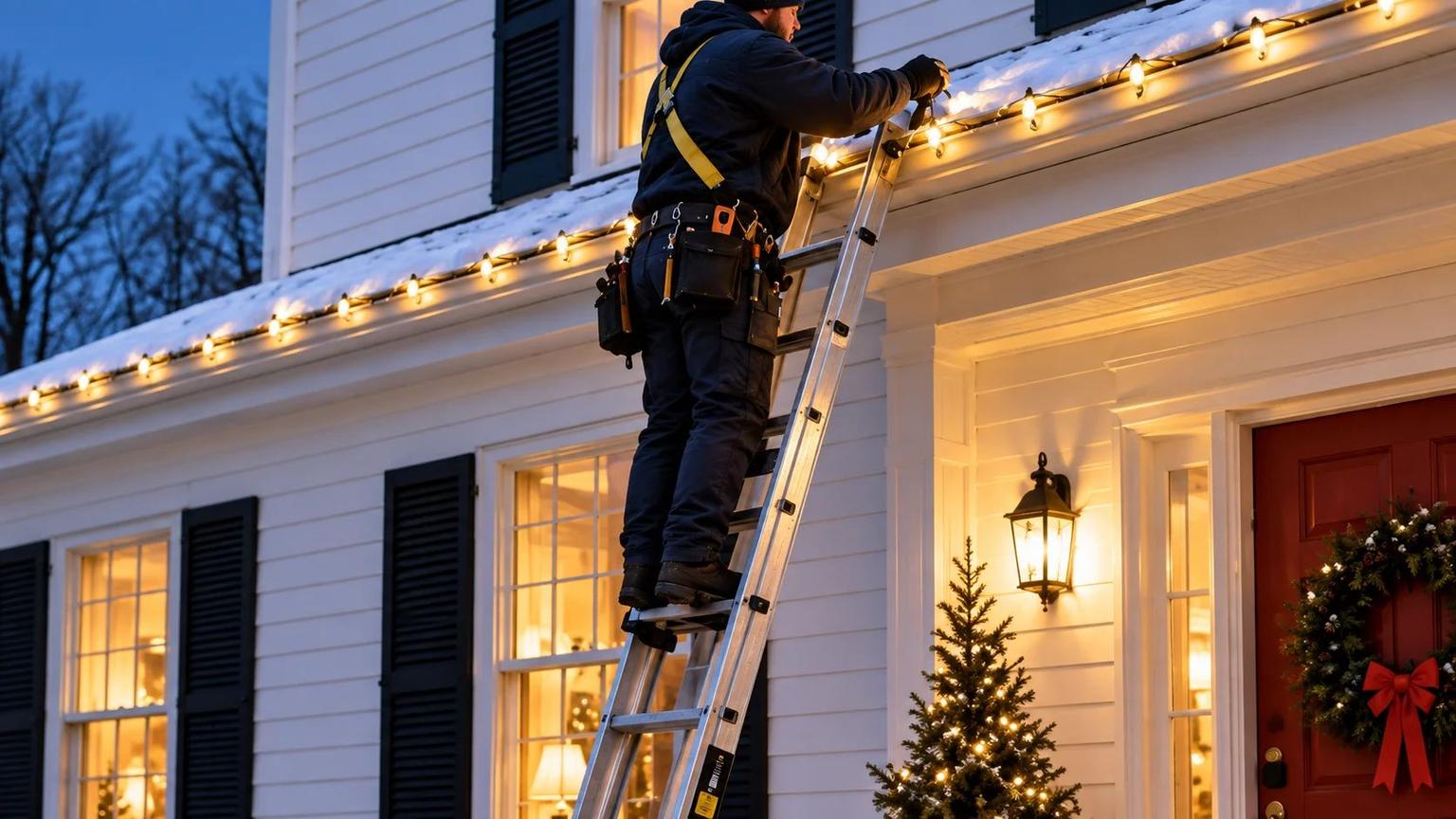
For most homes in Massachusetts, Southern New Hampshire, and Connecticut, putting up Christmas lights before late October is too early. The best install window is usually late October to mid-November, while many homeowners wait until Thanksgiving weekend to switch the lights on.
You do not have to install and turn on lights on the same day. That split matters in New England, where weather can change fast and calendars for hiring a professional Christmas light installer fill up weeks ahead. Early fall is best for planning, testing strands, and booking professional Christmas light installation, not for leaving lights outside for an extra 4 to 8 weeks.
Here’s the short version:
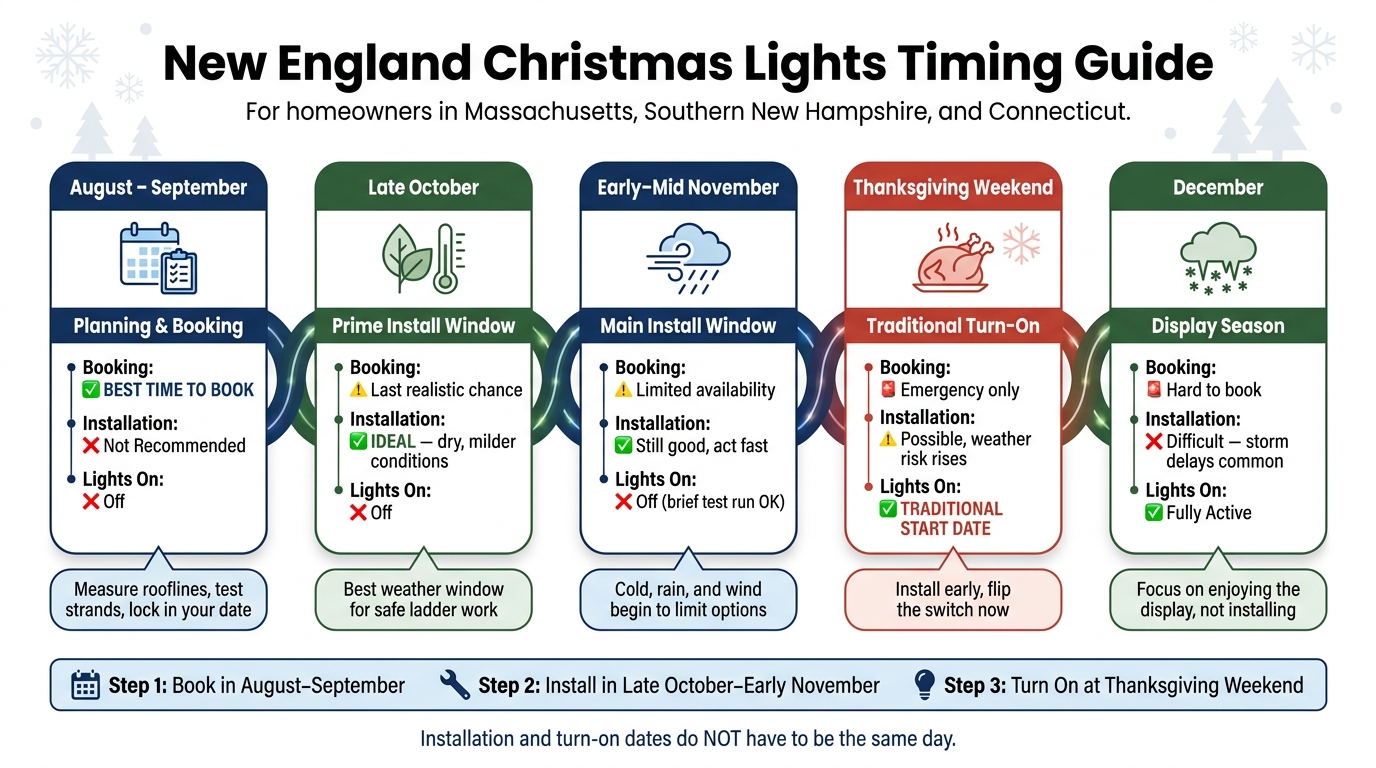
- August to September: good for planning and booking
- Late October to mid-November: best time to install
- Thanksgiving weekend: common time to turn lights on
- December: harder for both weather and scheduling+
New England Christmas Lights: When to Book, Install & Turn On
Quick Comparison
| Time period | Best use | Main risk |
|---|---|---|
| August–September | Measure, test, book | Lights sit out too long if installed now |
| Late October | Install lights | Fewer open dates if you wait too long |
| Early to mid-November | Install and test | Cold, rain, and wind start to limit options |
| Thanksgiving weekend | Turn lights on | Last-minute installs can be harder to schedule |
| December | Keep display running | Storms, ice, and calendar backups |
If you want the job done with fewer weather problems, your best move is simple: book early, install in late October or early November, and turn the lights on whenever your household wants.
sbb-itb-238bf3c
When is too early, and what is the best time to install?
For most New England homes, late October through mid-November is the sweet spot for installation. It gives you enough time to get everything up before the season starts, without leaving the display outside longer than it needs to be. It also gives you a better shot at hiring a professional installer before holiday calendars get packed.
Late October to mid-November is the main installation window
This is usually the strongest window for installation. Temperatures tend to be milder, and there are often fewer surprise storms to deal with. Just as important, scheduling during this stretch can help you grab a better install date before the holiday rush kicks in.
August and September are better for planning than for installing
Early fall is better used for prep work than for putting lights on the house. Use that time to measure rooflines, test strands, finalize your display design, and lock in an installation date. Doing that work ahead of time makes an October install smoother and faster.
Installing too early brings its own headache. When lights sit outside for longer, they take more wear from wind, rain, and debris. Keeping the actual installation within the late October to mid-November window helps cut down on most of that.
That schedule becomes even more important once November gets tighter with holiday plans and changing weather.
Why New England homeowners put lights up before Thanksgiving
That timing matters because New England weather can flip in a hurry once November gets close. A mild stretch in late October can turn into rain, wind, or even early snow just days later. That’s why many homeowners choose to install before Thanksgiving.
Weather changes fast in Massachusetts, Southern New Hampshire, and Connecticut
As Thanksgiving gets closer, dry and mild days are harder to come by. Frost and ice can make ladder work more dangerous, and shorter daylight hours leave less time to install lights safely.
Cold weather can also make clips and wiring more brittle. On top of that, moisture may trip GFCI outlets. Installing during a dry window in late October or early November helps avoid many of those issues before they become a headache. And since the install date doesn’t have to match the turn-on date, homeowners can finish the work early and still wait until Thanksgiving weekend - or later - to switch the lights on.
Waiting until December can limit both weather and scheduling options
Weather isn’t the only thing that gets tighter as the season moves along. Professional installation schedules fill up fast across the region because so many people are trying to book during the same short window.
Waiting until late November or early December doesn’t only mean rougher conditions. It can also mean fewer choices for when the job gets done at all. Booking early helps lock in a spot before the calendar fills up.
That’s why booking, installation, and turn-on dates should stay on separate timelines.
A New England timing guide for booking, installation, and turn-on dates
For New England homeowners, booking, installation, and turn-on should run on separate timelines. That makes planning a lot easier. You can lock in your spot early, wait for a safer weather window for the install, and still keep the lights off until you're ready.
Here’s the practical timing at a glance:
| Period | Booking | Installation | Turn-On |
|---|---|---|---|
| August – September | Best time to book | Not recommended for most homes | Off |
| Late October | Last realistic chance for preferred scheduling | Ideal for safer, drier installation | Off |
| Early-to-Mid November | Limited availability; demand is high | Main install window | Off, or brief test run |
| Thanksgiving Weekend | Emergency or last-minute only | Possible, but weather risk rises | Traditional start date |
| December | Hard to book | Difficult - storm delays are common | Fully active |
Keep planning and display dates on separate timelines
Booking early gets you on the calendar. Installation can happen later, when conditions are safer and drier. And your lights can still stay off until Thanksgiving weekend - or any date you prefer.
Once the lights are installed, it’s smart to do a quick test. Turn them on for a few minutes right after installation so you can spot burnt-out bulbs or connection issues while the weather is still cooperative. That gives you time to fix small problems before the season starts, instead of scrambling during a cold snap.
It also helps to set a timer during installation so the lights turn on automatically.
Safe early installation and why booking ahead matters
Install only in dry, stable conditions with outdoor-rated equipment
Installation is the part where mistakes can happen fast. After you book your slot, the next step is simple: wait for a dry, steady install day.
Before anyone climbs a ladder or steps onto a roof, check that conditions are actually stable. That means no active rain or snow, no frost or black ice on surfaces, and wind calm enough to keep a ladder steady.
A few basics make a big difference for safety and durability:
- Use UL-listed outdoor-rated lights and extension cords.
- Plug everything into a GFCI-protected outlet so power shuts off automatically if moisture causes a current leak.
- Fasten lights with plastic shingle or gutter clips, not nails or staples.
- Keep cords off walkways and away from low spots where water can pool.
- Stop right away if wind or precipitation starts.
That’s a big reason booking ahead matters.
Booking early helps secure a better installation window
Booking early gives you room to wait for the right weather instead of forcing the job into a bad day.
In New England, the practical Christmas light installation window usually runs from late October through mid-November. If you book in August or September, you have the best chance of getting your preferred install date and landing a better weather window.
Conclusion: Early installation is normal in New England for weather and scheduling reasons
In New England, late October through mid-November is the practical sweet spot. Install early, turn the lights on later, and use early fall for planning and booking.
FAQs
Can I install lights early and wait to turn them on?
Yes. A lot of homeowners in New England put up holiday lights early to stay ahead of unpredictable weather and lock in an installation slot.
If you want, you can keep the lights unplugged or turned off until after Thanksgiving - or whenever you're ready to light the display.
How early should I book holiday light installation?
To lock in the installation slot you want, book as early as possible.
In New England, the weather can change fast, and the busy season fills up the calendar before you know it. Even if your lights go up early and get switched on later, spots can still disappear quickly. You can request a no-cost, no-obligation estimate through the ViewCrew Services website to get started.
What weather is safest for putting up Christmas lights?
A dry day with mild temperatures is the safest time to put up Christmas lights. Skip days with frost, ice, rain, or snow, since slick surfaces can lead to falls and other safety issues.
In New England, plenty of people hang their lights early because the weather can shift fast. They may wait until after Thanksgiving to switch them on, but they get the hard part done before colder conditions move in. If you want to hire a professional, it helps to book early so you have a better shot at getting on the schedule.